
Judge, 1920-09-11 · page 11 of 32
Judge — September 11, 1920 — page 11: what you’re looking at
What you’re looking at
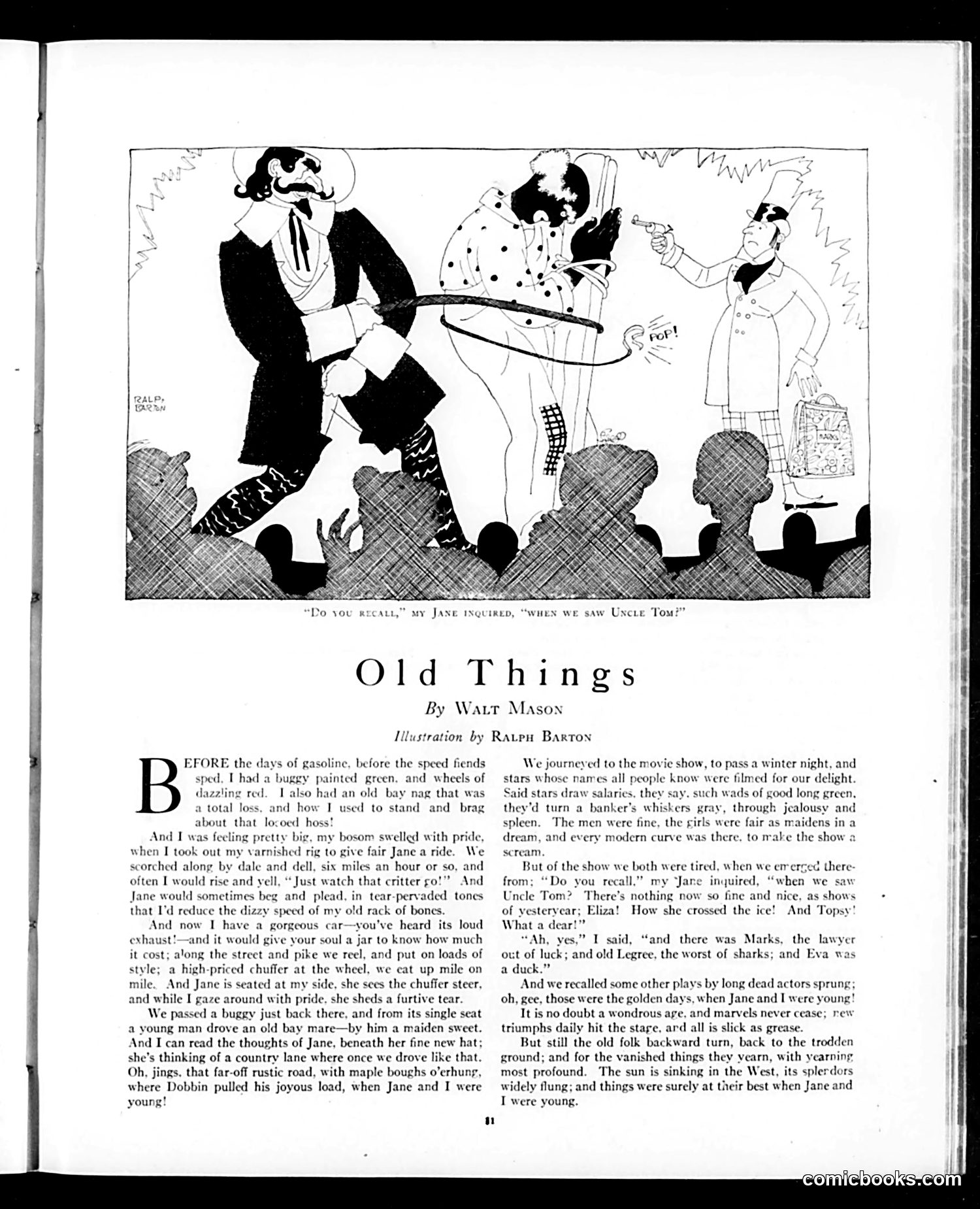
This nostalgic essay-poem laments the loss of simpler pleasures displaced by modern technology and entertainment. The accompanying illustration by Ralph Barton depicts a theater scene where an elegantly dressed couple watches a performance—likely referencing the contemporaneous popularity of cinema over older theatrical forms. Mason contrasts two eras: his youth, when a modest buggy ride with "Jane" felt thrilling, versus the present, where expensive automobiles and lavish movie productions leave him emotionally hollow. Crucially, the text references *Uncle Tom's Cabin*—specifically the characters Marks, Legree, Eliza, and Eva—indicating these were once popular stage productions that moved audiences deeply. The satire targets modern materialism and spectacle. Despite technological advancement and expensive entertainments, the narrator finds them spiritually empty compared to the genuine connection he felt during simpler courtship days and older theatrical works. The "old folk" who "backward turn" represent a broader 1920s anxiety about progress displacing authentic human experience.
📄 Transcribed text from this page (OCR, searchable)
Machine-transcribed from the original scan — historical spelling and the odd misread are preserved.
wen we saw Uncre Tom? Old Things By Watt Mason Hlustration by Rate Barton EFORE the days of gasoline, before the speed fiends sped, T had a buggy painted green. and wheels of dazzling red. I also had an old bay nag that was a total loss, and how I used to stand and brag about that locoed hoss! And I was feeling pretty big, my bosom swelled with pride, when I took out my varnished rig to give fair Jane a ride. We scorched along by dale and dell, six miles an hour or so, and often I would rise and yell, “Just watch that critter go!” And Jane would sometimes beg and plead, in tear-pervaded tones that I'd reduce the dizzy speed of my old rack of bones. And now I have a gorgeous car—you've heard its loud exhaust!—and it would give your soul a jar to know how much it cost; along the strect and pike we reel, and put on loads of style; a high-priced chuffer at the wheel, we cat up mile on mile. And Jane is seated at my side, she sees the chuffer steer, and while I gaze around with pride. she sheds a furtive tear. We passed a buggy just back there, and from its single a young man drove an old bay mare—by him a maiden sweet. And I can read the thoughts of Jane, beneath her fine new hat; she’s thinking of a country lane where once we drove like that. Oh, jings. that far-off rustic road, with maple boughs o’erhung, where Dobbin pulled his joyous load, when Jane and I were young! We journeyed to the movie show, to pass a winter night, and stars whose names all people know were filmed for our delight. salaries. they say. such wads of good long green, they'd turn a banker's whiskers gray, through jealousy and spleen. The men were fine, the girls were fair as maidens in a dream, and every modern curve was there, to make the show a id stars draw scream. But of the show we both were tired, when we emerged there: Do you recall,” my Jane inquired, “when we There’s nothing now so fine and nice, as shows And Topsy! from; Uncle Tom? of yesteryear; Eliza! How she crossed the ice! What a dear!” “Ah, yes,” I said, “and there was Marks, the lawyer out of luck; and old Legree, the worst of sharks; and Eva was a duck.” And we recalled some other plays by long dead actors sprung; oh, gee, those were the golden days, when Jane and I were young! It is no doubt a wondrous age, and marvels never ce: triumphs daily hit the stage, ard all is slick as grease. But still the old folk backward turn, back to the trodden ground; and for the vanished things they yearn, with yearning most profound. The sun is sinking in the West, its splerdors widely flung; and things were surely at their best when Jane and I were young.