
Judge, 1920-07-24 · page 9 of 36
Judge — July 24, 1920 — page 9: what you’re looking at
What you’re looking at
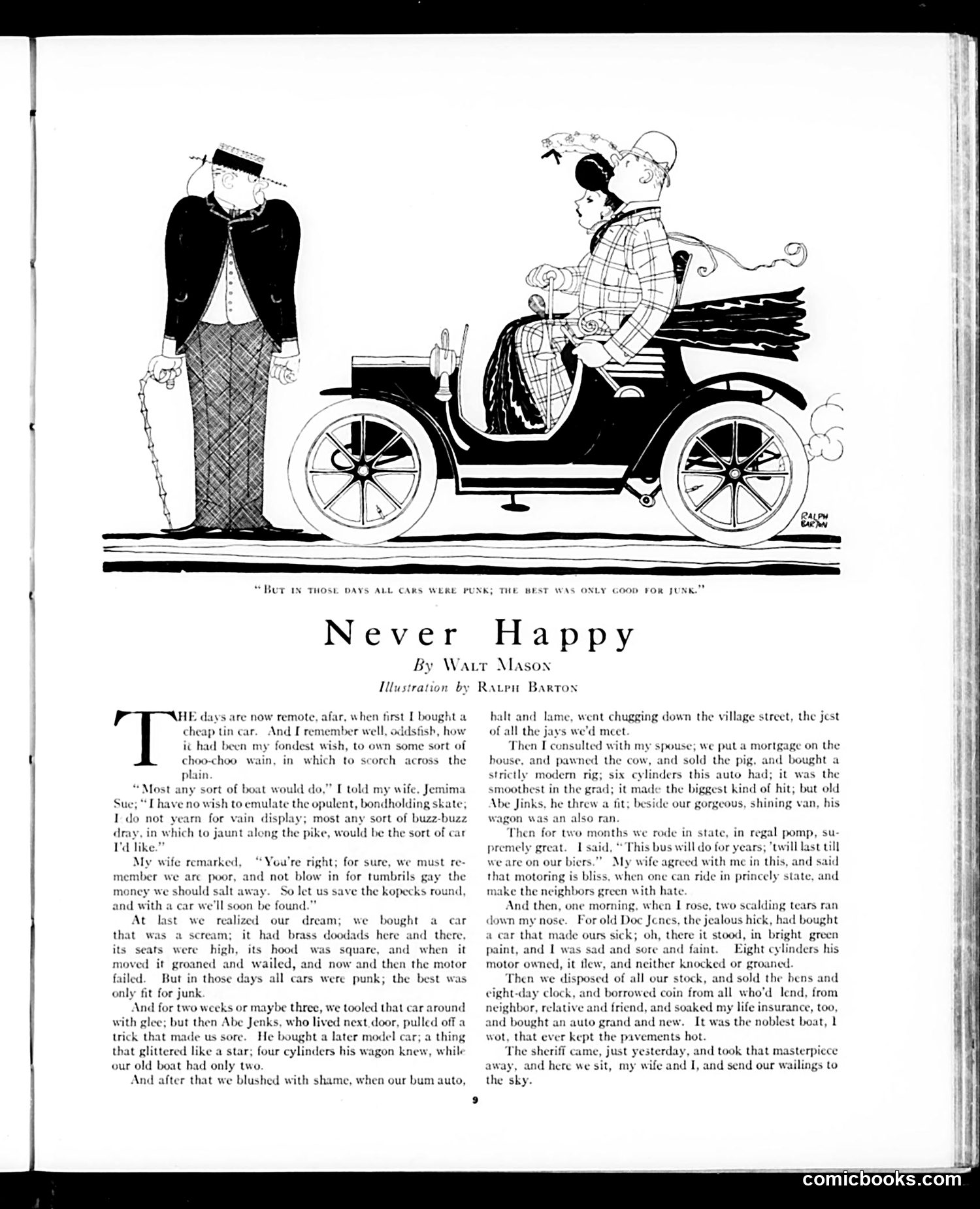
This story-cartoon satirizes the early automobile era's social dynamics. The narrator, a poor man, initially buys a cheap, unreliable car ("all cars were punk"). When his neighbor Abe Jenks acquires a newer, better model, shame drives the narrator to mortgage his house, sell livestock, and buy a superior six-cylinder car. But Jenks one-ups him again with an eight-cylinder vehicle. The cycle of competitive consumption continues until the narrator's final, grandest car is repossessed by the sheriff. The satire targets the "keeping up with the Joneses" mentality consuming Americans during the automobile boom. Each upgrade meant financial ruin, yet status anxiety compelled participation in an endless arms race of consumption. The moral: striving for material superiority leads to disaster. The caption's opening quote sets the theme—even the best cars are "junk," yet people destroy themselves acquiring them.
📄 Transcribed text from this page (OCR, searchable)
Machine-transcribed from the original scan — historical spelling and the odd misread are preserved.
Never T IN THOSE DAYS ALL CARS WERE PUNK; THE BEST WAS ONLY GOOD FOR JUNK. Happy By Warr Mason Mlustration by HE days are now remote, afar, when first I bought a cheap tin car. And [ remember well, oddsfish, how ic had been my fondest wish, to own some sort of choo-choo wain, in which to scorch across the plain “Most any sort of boat would do,” [ told my wife. Jemima Suc; “I have no wish to emulate the opulent, bondholding skate; I do not yearn for vain display; most any sort of buzz-buzz dray, in which to jaunt along the pike, would be the sort of car I'd like.” My wife remarked, “You're right; for sure, we must re- member we arc poor, and not blow in for tumbrils gay the y we should salt away. So let us save the kopecks round, and with a car we'll soon be found.” At last we realized our dream; we bought a car that was a scre it had brass doodads here and there, its seats were high, its hood was square, and when it moved it groaned and wailed, and now and then the motor failed. But in those days all cars were punk; the best was only fit for junk And for two weeks or maybe three, we tooled that car around with glee; but then Abe Jenks, who lived next door, pulled off a trick that made us sore. He bought a later model car; a thing that glittered like a star; four cylinders his wagon knew, while our old boat had only two. And after that we blushed with shame, when our bum auto, Raven Barton halt and lame, went chugging down the village street, the jest of all the jays we'd meet Then I consulted with my spouse; we put a mortgage on the house, and pawned the cow, and sold the pig, and bought a strictly modern rig; six cylinders this auto had; it was the othest in the 3 it m: the biggest kind of hit; but old Abe Jinks, he threw a fit; beside our gorgeous, shining van, his wagon was an also ran Then for two months we rode in state, in regal pomp, su- premely great. L said, “ This bus will do for years; ‘twill last till we are on our biers.””. My wife agreed with me in this, and said that motoring is bliss, when one can ride in princely state, and make the neighbors green with hate. And then, one morning, when I rose, two scalding tears ran down my nose. For old Doc Jencs, the jealous hick, had bought a car that made ours sick; oh, there it stood, in bright green int, and I was sad and sore and faint. ight cylinders his motor owned, it flew, and neither knocked or groaned. Then we disposed of all our stock, and sold the bens and eight-day clock, and borrowed coin from all who'd lend, from neighbor, relative and friend, and soaked my life insurance, too, and bought an auto grand and new. It was the noblest boat, 1 wot, that ever kept the pavements hot The sheriff came, just yesterday, and took that masterpiece away, and here we sit, my wife and I, and send our wailings to the sky. comicbooks.com