
Judge, 1920-06-19 · page 26 of 36
Judge — June 19, 1920 — page 26: what you’re looking at
What you’re looking at
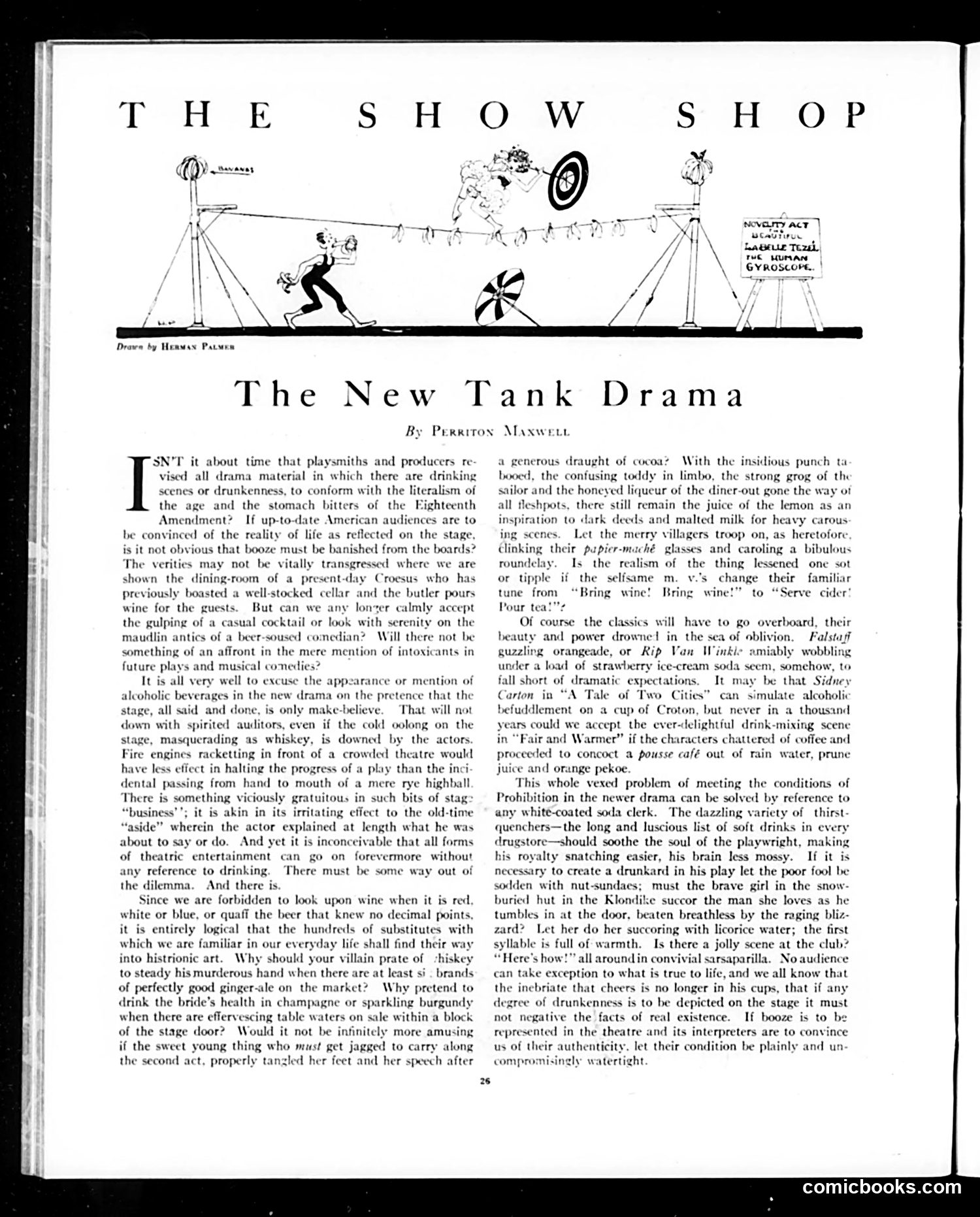
This is a satirical article mocking Prohibition-era theater censorship. The author argues absurdly that since alcohol is now illegal (the 18th Amendment), plays depicting drinking scenes violate realism and must be revised. The satire proposes replacing all alcoholic beverages on stage with substitutes: whiskey becomes oolong tea, champagne becomes ginger-ale or effervescing table water, and drunkenness is achieved through cocoa. The author sarcastically suggests classic scenes—like Sydney Carton's intoxication in *A Tale of Two Cities*—become ridiculous if performed with non-alcoholic substitutes. The illustration shows a vaudeville-style "show shop" setup with performers and equipment, likely depicting the absurdity of these theatrical contortions. The piece ridicules how Prohibition's strict enforcement creates impossible contradictions for theater, which traditionally relied on drinking scenes to convey character and drama. The author's exaggerated "solutions" expose the law's impracticality.
📄 Transcribed text from this page (OCR, searchable)
Machine-transcribed from the original scan — historical spelling and the odd misread are preserved.
Draws by Heawax Patan The New By SN’T it about time that playsmiths and producers re vised all drama material in which there are drinking scenes or drunkenness, to conform with the literalism of the age and the stomach bitters of the Eighteenth Amendment? If up-to-date American audiences are to be convinced of the reality of life as reflected on the stag is it not obvious that booze must be banished from the boards? The verities may not be vitally transgressed where we are shown the dining-room of a present-day Croesus who has previously boasted a well-stocked cellar and the butler pours wine for the guests. But can we any loner calmly accept the gulping of a casual cocktail or look with serenity on the maudlin antics of a beer-soused comedian? Will there not be something of an affront in the mere mention of intoxicants in future plays and musical comedies? It is all very well to excuse the appearance or mention of alcoholic beverages in the new drama on the pretence that the stage, all said and done, is only make-believe. That will not down with spirited auditors, even if the cold oolong on the stage, masquerading as whiskey, is downed by the actors. Fire engines racketting in front of a crowded theatre would have less effect in halting the progress of a play than the inci dental passing from hand to mouth of a mere rye highball There is something viciously gratuitous in such bits of stag “business’’; it is akin in its irritating effect to the old-time “aside” wherein the actor explained at length what he was about to say or do. And yet it is inconceivable that all forms of theatric entertainment can on forevermore without any reference to drinking. There must be some way out of the dilemma. And there is. Since we are forbidden to look upon wine when it is red white or blue, or quaff the beer that knew no decimal points, it is entirely logical that the hundreds of substitutes with which we are familiar in our everyday life shall find their way into histrionic art. Why should your villain prate of chiskey to steady his murderous hand when there are at least si. brands of perfectly good ginger-ale on the market? Why pretend to drink the bride’s health in champagne or sparkling burgundy when there are effervescing table waters on sale within a block of the stage door? Would it not be infinitely more amusing if the sweet young thing who must get jagged to carry along the second act, properly tangled her feet and her speech after lies go 26 Novel acT | wend Tuus Laseus Tez Tue KUMAR GY ROSCOME., Tank Drama Perritron Maxweut a generous draught of cocoa? With the insidious punch ta booed, the confusing toddy in limbo, the strong grog of the sailor and the honeyed liqueur of the diner-out gone the way ot all fleshpots, there still remain the juice of the lemon as an dark deeds and malted milk for heavy carous: ing scenes. Let the merry villagers troop on, as heretofore linking their pupier-maché glasses and caroling a bibulous roundelay. Is the realism of the thing lessened one sc or tipple if the selfsame m change their familiar tune from “Bring wine! Bri to “Serve cider Pour tea!"s Of course the classics will have t beauty and power drowne! in the sea of guzzling orangeade, or Rip Van Wink under a load of strawberry ice-cream soda secm, somehow, to fall short of dramatic expectations, It may be that Sidney Carton in “A Tale of Two Cities” can simulate alcoholic befuddlement on a cup of Croton, but never in a thousand years could we accept the ever-delightful drink-mixing scene ‘air and Warmer”’ if the characters chattered of coffee and proceeded to concoct a pousse café out of rain water, prune juice and orange pekoe. This whole vexed problem of meeting the conditions of Prohibition in the newer drama can be solved by reference to any white-coated soda clerk. The dazzling variety of | thirst- quenchers—the long and luscious list of soft drinks in every drugstore—should soothe the soul of the playwright, making his royalty snatching easier, his brain less mossy. If it is necessary to create a drunkard in his play let the poor fool be sodden with nut-sundaes; must the brave girl in the snow- buried hut in the Klondike succor the man she loves as he tumbles in at the door, beaten breathless by the raging bliz- zard? Let her do her succoring with licorice water; the first syllable is full of warmth. Is there a jolly scene at the club? “Here's how!” all around in convivial sarsaparilla. No audience can take exception to what is truce to life, and we all know that the inebriate that cheers is no longer in his cups, that if any degree of drunkenness is to be depicted on the stage it must not negative the facts of real existence. If booze is to be represented in the theatre and its interpreters are to convince us of their authenticity. let their condition be plainly and un inspiration t v's wine > overboard, their »blivion. Falstaff miably wobbling comicbooks.com