
Judge, 1920-05-29 · page 24 of 36
Judge — May 29, 1920 — page 24: what you’re looking at
What you’re looking at
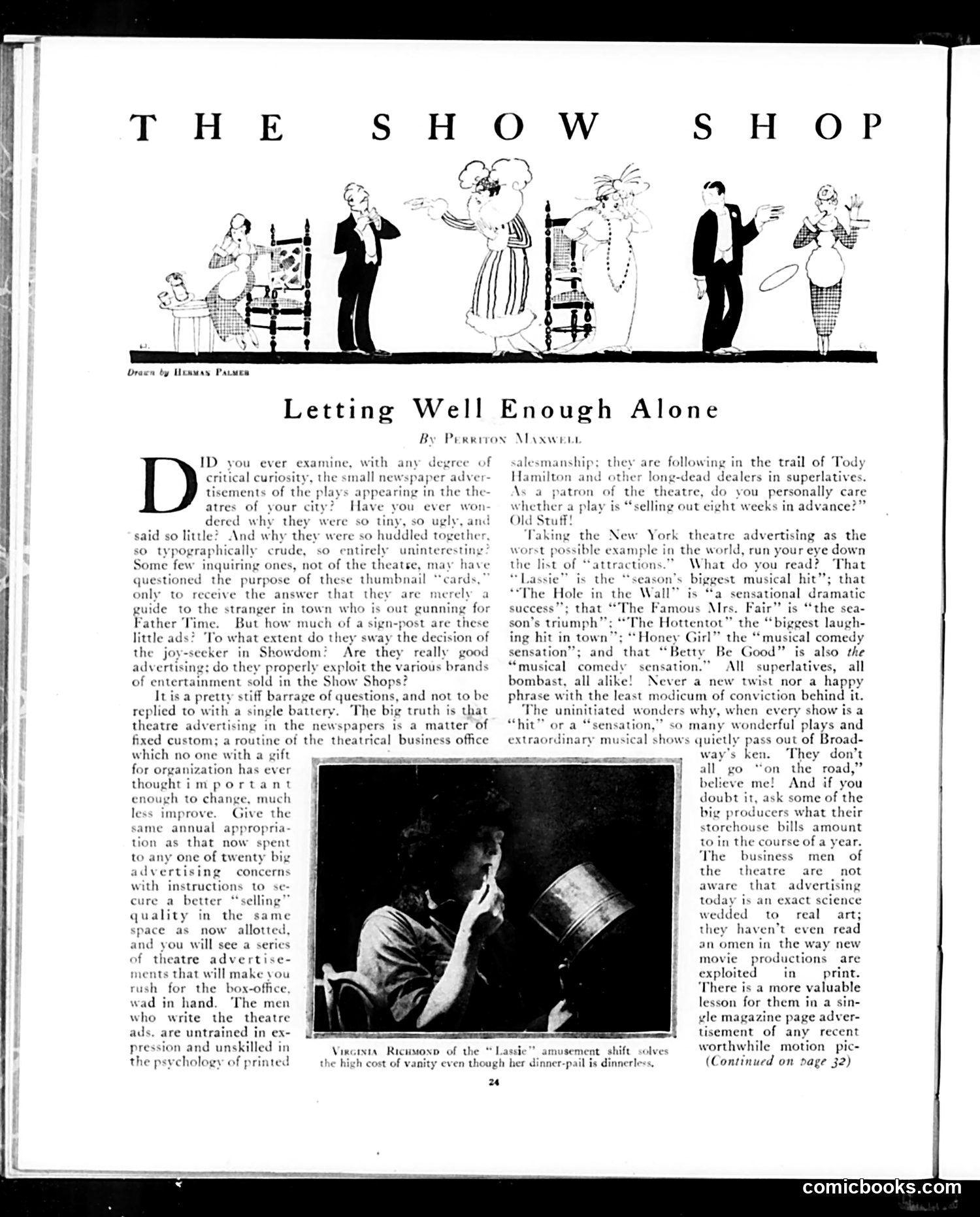
This article by Perriton Maxwell critiques how Broadway theatres advertise plays in newspapers. Maxwell argues that theatre ads are poorly designed, tiny, and filled with exaggerated claims—calling every show a "sensation," "biggest hit," or "musical comedy sensation" without distinction. The illustration depicts various theatrical figures and shows how advertisements use identical superlatives bombastically. Maxwell's point: this approach destroys credibility. He argues theatre owners haven't modernized their advertising methods, contrasting them unfavorably with movie studios, which use sophisticated advertising strategy combined with artistry. The photograph shows Virginia Richmond from "The Lassie," exemplifying the shows being promoted. Maxwell essentially accuses Broadway of lazy, old-fashioned marketing that fails to actually convince potential audiences—all superlatives alike ring hollow, making genuine hits indistinguishable from mediocre productions.
📄 Transcribed text from this page (OCR, searchable)
Machine-transcribed from the original scan — historical spelling and the odd misread are preserved.
Dracn by Hewwas Parsee Letting Well Enough Alone By Perrevon Maxweut f ID you ever examine, with 4 degree ¢ critical curiosity, the small newspaper adver- tisements of the plays appearing in the the- atres of your city? Have you ever wor dered why they were so tiny, so ugly, and said so little? And why they were so huddled together so typographically crude, so entirely uninteresting Some few inquiring ones, not of the theatse, m questioned the purpose of these thumbnail only to receive the answer that they are merely a guide to the stranger in town who is out gunning fo ather Time. But how much of a sign-post are these little ads? ‘To what extent do they sway the decision of the joy-seeker in Showdom? Are they really good advertising; do they properly exploit the various brands of entertainment sold in the Show Shops? It is a pretty stiff barrage of questions, and not to be replied to with a single battery. The big truth is that theatre advertising in the newspapers is a matter of fixed custom; a routine of the theatrical business office have which no one with a gift for organization has ever thoughtim portant enough to change, much Te Sas Ne se less improve. Give the same annual appropria- tion as that now spent to any one of twenty big advertising concerns with instructions to se: cure better “selling” quality in the same space as now. allotted, and you will see a series of theatre advertise- ments that will make you rush for the box-office. wad in hand. ‘The men who write the theatre ads. are untrained in ex- pression and unskilled in Vinctxta. Ricuwoxp of the “ Lass vanity even though her dinner-pail is dinnerle the high cost the psychology of printed “4 alesmanship; Hamilton and \s a patron ¢ whether a play Old Stuff! Faking the the list of *s “Lassie” is th “The Hole i success’; that son’s triumph”; ing hit in town they are following in the trail of Tody other long-dead dealers in superlatives. f the theatre, do you personally care is “selling out eight weeks in advance?” New York theatre advertising as the example in the world, run your eye down ractions.”” What do you read? That re “season's biggest musical hit”; that the Wall” is “ta sensational dramatic “The Famous Mrs. Fair” is “the sea- The Hottentot” the “biggest laugh- 1” the “musical comedy 1”; “Honey Gi sensation”; and that “Betty Be Good” is also the “musical comedy sensation.” All superlatives, all bombast, all alike! phrase with th The uniniti. “hit” or a’ extraordinary mu amusement Never a new twist nor a happy e least modicum of conviction behind it. ted wonders why, when every show is a sensation,” so many wonderful plays and ical shows quietly pass out of Broad- way’s ke They don’t all go “on the road,” believe me! And if you doubt it, ask some of the big producers what their storchouse bills amount to in the course of a year. The business men of the theatre are not aware that advertising today is an exact science wedded to real art; they haven't even read an omen in the way new movie productions are exploited in print. ‘There is a more valuable lesson for them in a sin- gle magazine page adver- tisement of any recent worthwhile motion pic- (Continued on page 32) shift solves comicbooks.com