
Judge, 1920-05-22 · page 9 of 36
Judge — May 22, 1920 — page 9: what you’re looking at
What you’re looking at
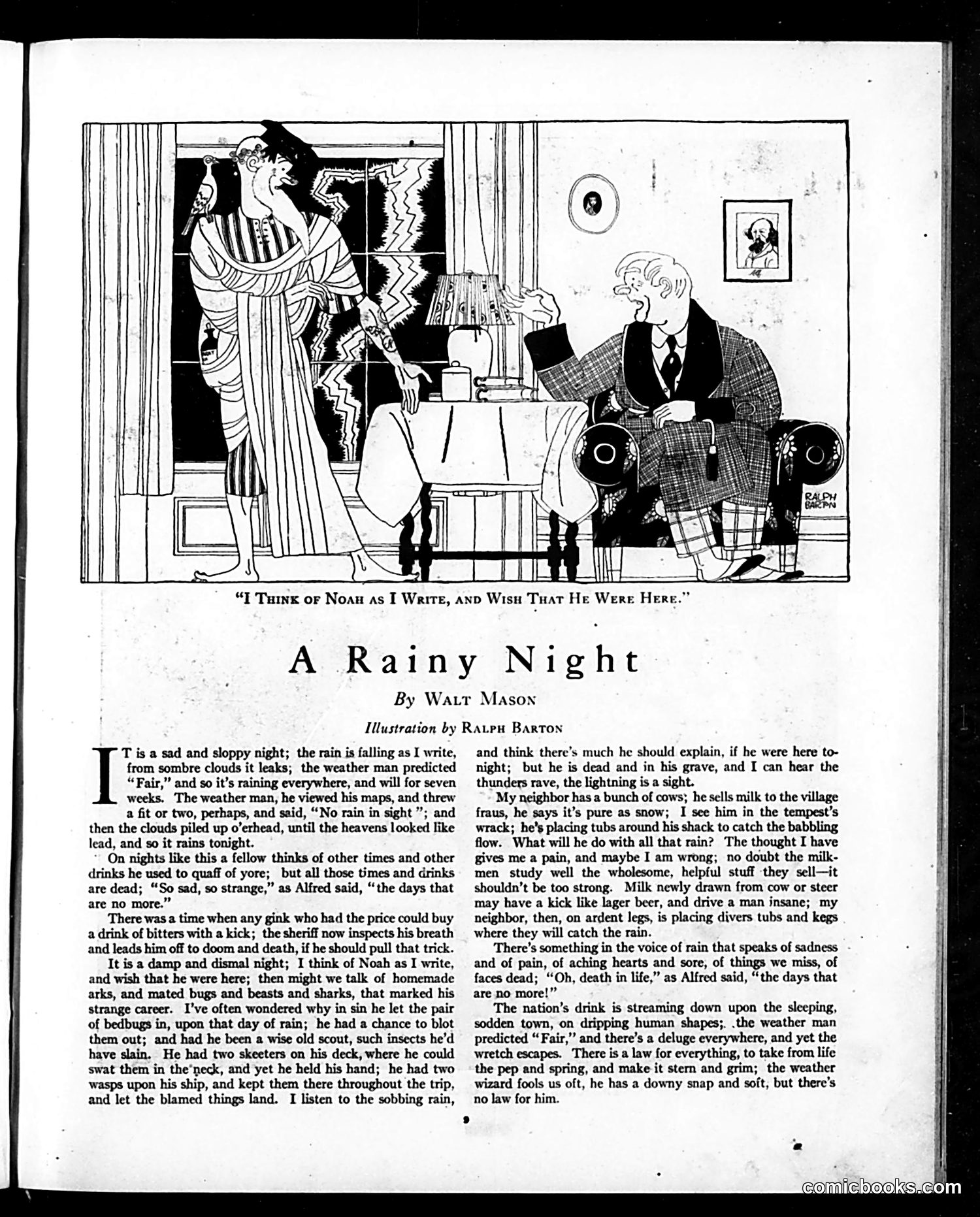
This is a humorous short story by Walt Mason (illustrated by Ralph Barton) that uses a rainy night as a springboard for social commentary, particularly about **Prohibition**. The narrator, stuck indoors during rain, reflects nostalgically on drinking ("drinks he used to quaff of yore"), noting that those days are gone. He mentions that sheriffs now inspect people's breath and arrest them for drinking—a direct reference to Prohibition enforcement. The satirical point: the weather forecaster predicted "Fair" but it rains anyway, mirroring how Prohibition promised to improve society but failed. The joke extends to the neighbor collecting rainwater in buckets—possibly implying he'll use it for illicit alcohol production, or simply that he's foolishly collecting useless water. The cartoon's caption references Noah, wishing he were present—likely suggesting Noah's experience with water parallels modern Americans' relationship with drink under Prohibition. The overall tone is wistful complaint about lost freedoms and broken promises.
📄 Transcribed text from this page (OCR, searchable)
Machine-transcribed from the original scan — historical spelling and the odd misread are preserved.
“I Turnx or Noau as I Warrte, anp Wish Toat He Were Here.” A Rainy Night By Watt Mason Illustration by Raueuw Barton T is a sad and sloppy night; the rain is falling as I write, from sombre clouds it leaks; the weather man predicted “Fair,” and so it’s raining everywhere, and will for seven weeks. The weather man, he viewed his maps, and threw a fit or two, perhaps, and said, “No rain in sight”; and then the clouds piled up o’erhead, until the heavens looked like lead, and so it rains tonight. On nights like this a fellow thinks of other times and other drinks he used to quaff of yore; but all those times and drinks are dead; “So sad, so strange,” as Alfred said, “the days that are no more.” There was a time when any gink who had the price could buy a drink of bitters with a kick; the sheriff now inspects his breath and leads him off to doom and death, if he should pull that trick. It is a damp and dismal night; I think of Noah as I write, and wish that he were here; then might we talk of homemade arks, and mated bugs and beasts and sharks, that marked his strange career. I’ve often wondered why in sin he let the pair of bedbugs in, upon that day of rain; he had a chance to blot them out; and had he been a wise old scout, such insects he’d have slain. He had two skeeters on his deck, where he could swat them in the’neck, and yet he held his hand; he had two wasps upon his ship, and kept them there throughout the trip, and let the blamed things land. I listen to the sobbing rain, and think there’s much he should explain, if he were here to- night; but he is dead and in his grave, and I can hear the thunders rave, the lightning is a sight. My neighbor has a bunch of cows; he sells milk to the village fraus, he says it’s pure as snow; I see him in the tempest’s wrack; he’s placing tubs around his shack to catch the babbling flow. What will he do with all that rain? The thought I have gives me a pain, and maybe I am wrong; no doubt the milk- men study well the wholesome, helpful stuff they sell—it shouldn’t be too strong. Milk newly drawn from cow or steer may have a kick like lager beer, and drive a man insane; my neighbor, then, on ardent legs, is placing divers tubs and kegs where they will catch the rain. There’s something in the voice of rain that speaks of sadness and of pain, of aching hearts and sore, of things we miss, of faces dead; “Oh, death in life,” as Alfred said, “the days that are no more!” The nation’s drink is streaming down upon the sleeping, sodden town, on dripping human shapes;, .the weather man predicted “Fair,” and there’s a deluge everywhere, and yet the wretch escapes. There is a law for everything, to take from life the pep and spring, and make it stern and grim; the weather wizard fools us oft, he has a downy snap and soft, but there’s no law for him.