
Judge, 1920-02-14 · page 13 of 44
Judge — February 14, 1920 — page 13: what you’re looking at
What you’re looking at
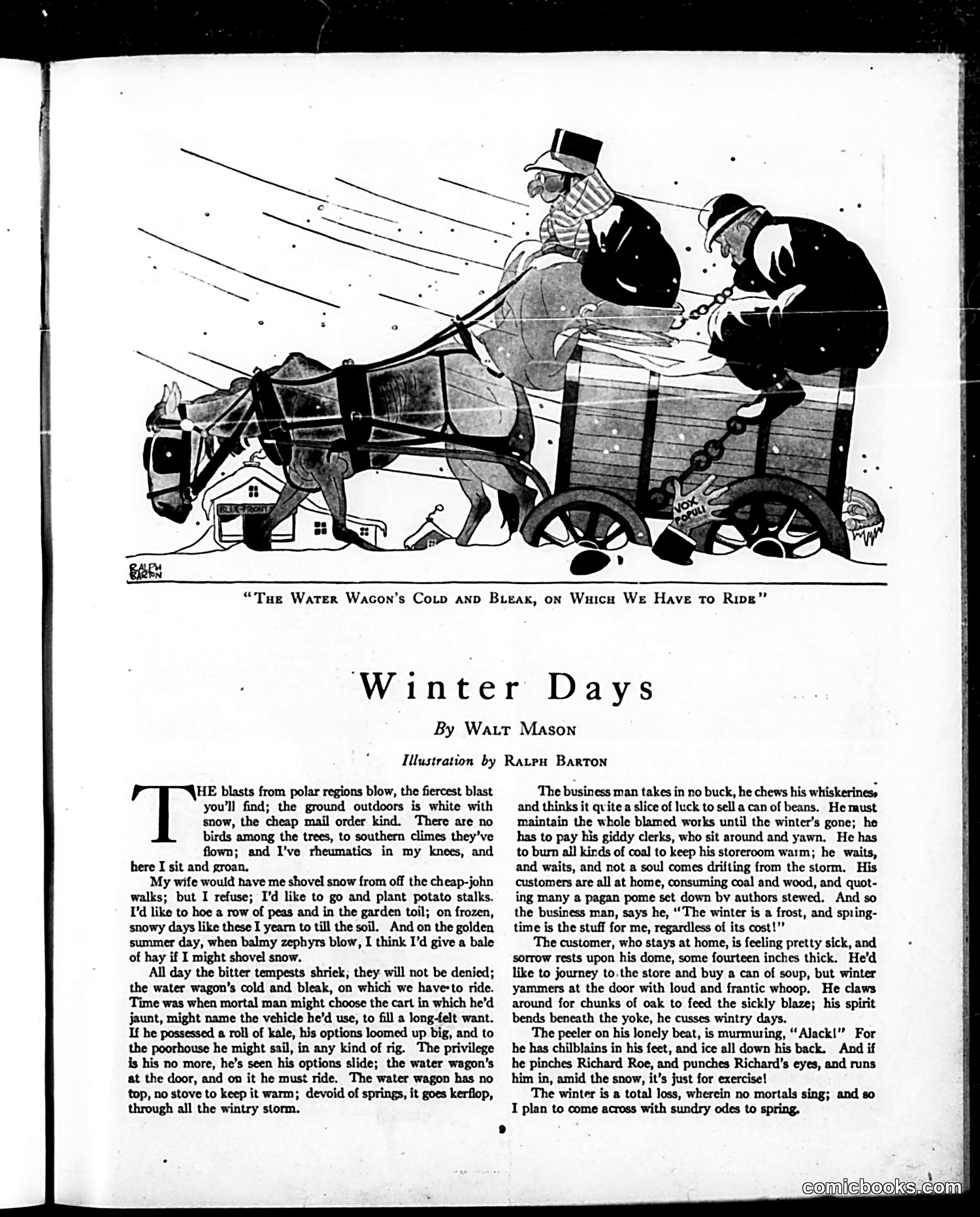
This is a humorous poem with accompanying illustration about winter hardships in early 20th-century America. The cartoon depicts three men riding uncomfortably on an exposed, springless "water wagon" (a vehicle for delivering water) during a snowstorm—illustrating the poem's central metaphor: winter forces everyone onto this miserable shared conveyance. The satire mocks how winter affects different classes: businessmen lose customers (people stay home), workers can't get proper jobs, and even police officers resort to making arrests just for activity. The poem's narrator complains of rheumatics and forced idleness while longing for spring work. The "water wagon" represents winter's leveling effect—rich or poor, everyone suffers equally in the cold, jolting ride. The recurring complaint about lack of choice ("options slide") suggests broader frustrations about loss of individual agency during harsh seasons, when survival takes priority over preference.
📄 Transcribed text from this page (OCR, searchable)
Machine-transcribed from the original scan — historical spelling and the odd misread are preserved.
“Tue Water Wacon’s Cotp ano Bieax, on Wuicu We Have to Ripe” Winter Days By War Mason Illustration by Ratpu Barton HE blasts from polar regions blow, the fiercest blast you'll find; the ground outdoors is white with snow, the cheap mail order kind. There are no birds among the trees, to southern climes they’ve flown; and I’ve rheumatics in my knees, and here I sit and groan, My wife would have me shovel snow from off the cheap-john walks; but I refuse; I’d like to go and plant potato stalks. I'd like to hoe a row of peas and in the garden toil; on frozen, snowy days like these I yearn to till the soil, And on the golden summer day, when balmy zephyrs blow, I think I’d give a bale of hay if I might shovel snow. All day the bitter tempests shriek, they will not be denied; the water wagon’s cold and bleak, on which we have-to ride. Time was when mortal man might choose the cart in which he’d jaunt, might name the vehicle he'd use, to fill a long-felt want. If he possessed a roll of kale, his options loomed up big, and to the poorhouse he might sail, in any kind of rig. The privilege is his no more, he’s seen his options slide; the water wagon’s at the door, and on it he must ride. The water wagon has no top, no stove to keep it warm; devoid of springs, it goes kerflop, through all the wintry storm. The business man takes in no buck, he chews his whiskeriness and thinks it quite a slice of luck to sell a can of beans. He must. maintain the whole blamed works until the winter’s gone; he has to pay his giddy clerks, who sit around and yawn. He has to burn all kinds of coal to keep his storeroom warm; he waits, and waits, and not a soul comes drifting from the storm. His customers are all at home, consuming coal and wood, and quot- ing many a pagan pome set down by authors stewed. And so the business man, says he, ‘The winter is a frost, and spring- time is the stuff for me, regardless of its cost!’’ The customer, who stays at home, is feeling pretty sick, and sorrow rests upon his dome, some fourteen inches thick. He’d like to journey to.the store and buy a can of soup, but winter yammers at the door with loud and frantic whoop. He claws around for chunks of oak to feed the sickly blaze; his spirit bends beneath the yoke, he cusses wintry days. The peeler on his lonely beat, is murmuring, “AJack!”” For he has chilblains in his feet, and ice all down his back. And if he pinches Richard Roe, and punches Richard’s eyes, and runs him in, amid the snow, it’s just for exercise! The winter is a total loss, wherein no mortals sing; and so I plan to come across with sundry odes to spring.