
Judge, 1920-01-03 · page 25 of 36
Judge — January 3, 1920 — page 25: what you’re looking at
What you’re looking at
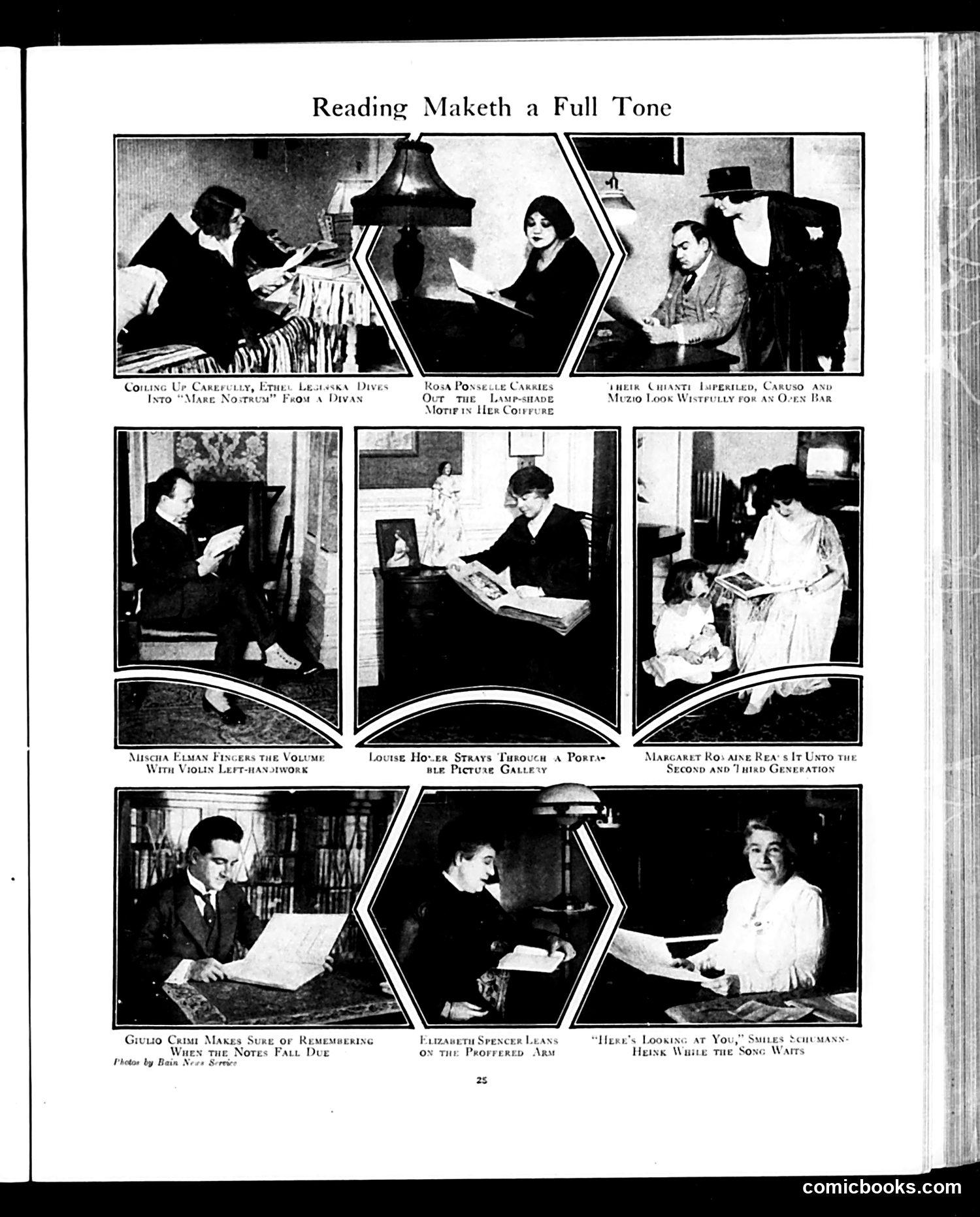
This page illustrates how reading cultivates refinement and cultural sophistication across generations. The top panels show opera singers and society figures engaged with literature—suggesting that serious reading elevates one's artistic sensibility and social standing. The bottom panels depict musicians (including names like Caruso, a famous tenor) and performers studying scores and texts, implying that intellectual engagement through reading produces better artistry. The final image shows a woman smiling while reading, captioned with a musical reference, connecting literary appreciation to happiness and cultural fulfillment. The overall message is a *genteel endorsement of reading* as a marker of civilization and taste—particularly among the wealthy and artistically accomplished. For a 1910s-era *Judge* audience, this was aspirational propaganda: reading signals you belong to the cultured classes. The satire, if present, is subtle—possibly mocking the pretension that mere book-holding confers sophistication.
📄 Transcribed text from this page (OCR, searchable)
Machine-transcribed from the original scan — historical spelling and the odd misread are preserved.
Carerutty, Eruee Lesteska Dives Kosa Possecce Cannes tue Caanti Lurgrtten, Caruso anv Mare Nostaum” From a Divan Our tue Lasp-sHave Muzio Look WistruLty ror AN Ovex Bar Morir is Her Corrrure Marcaret Ros aine Rea’ s It Usto tue Srconp AND ‘]utKD GENERATION Maiscna Euan Fincers tug Votume Wrrn Vious Lert-1axotworK i Givuo Cent Manes Sure or Restestuenixe Euzauetu Srexcer brass “Hlgxe’s Looxixe ar You,” Sunes Seeman Wues tne Notes Faut Due ox THe Prorrerey .\nst Heixk Waite Tae Soxe Warrs | Photos by Bain Neve S: a it i comicbooks.com