
Judge, 1919-12-27 · page 9 of 37
Judge — December 27, 1919 — page 9: what you’re looking at
What you’re looking at
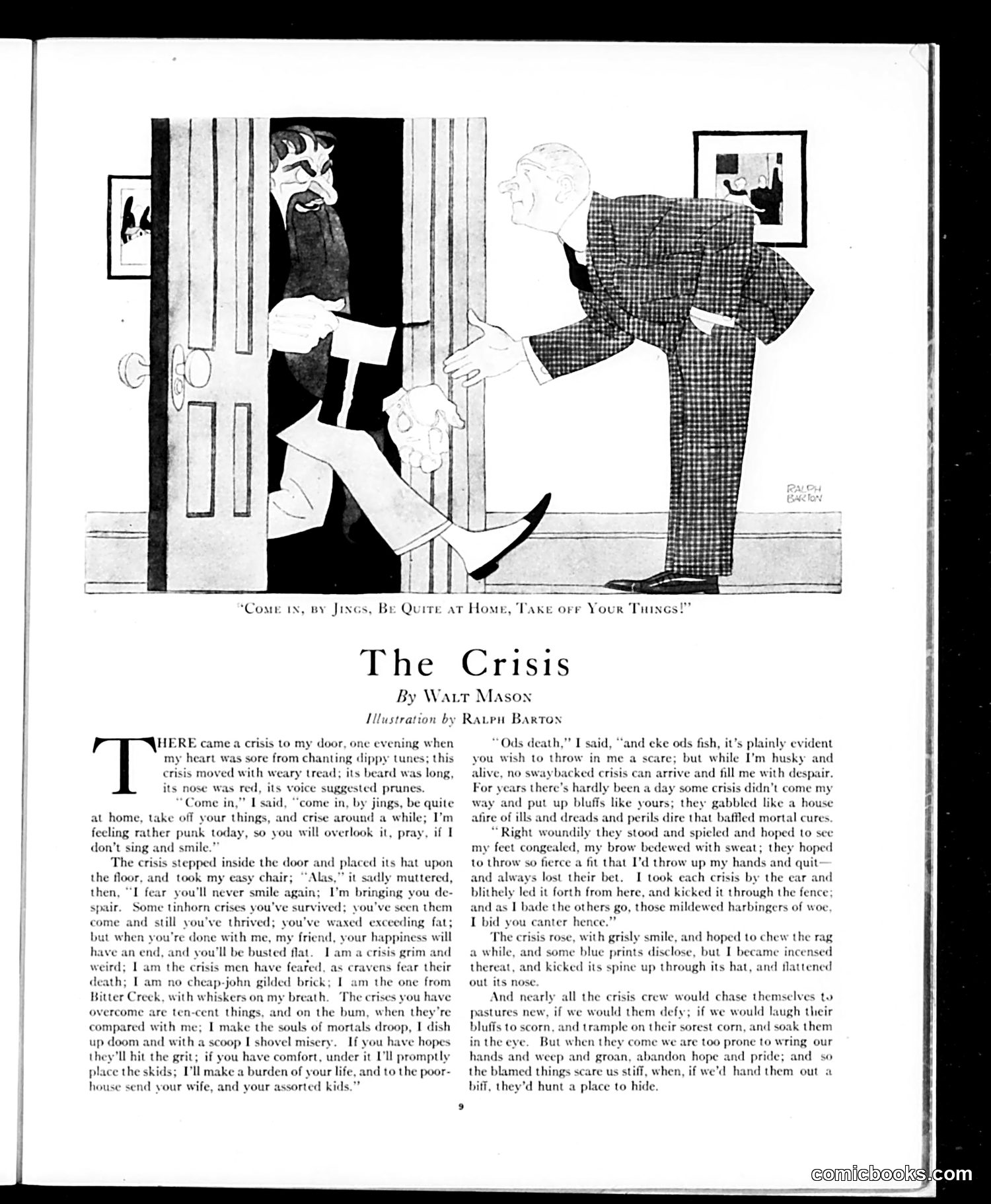
This page combines a humorous illustration with Walt Mason's moralizing poem about facing adversity. **The Cartoon:** Shows a well-dressed man literally kicking a grotesque, demon-like "Crisis" figure out his door. The caption quotes the narrator inviting the crisis inside, establishing the story's setup. **The Message:** The poem personifies "Crisis" as a boastful visitor who threatens the narrator with ruin—loss of wealth, comfort, and family. However, the narrator rejects its threats, recounting how he's survived countless previous crises through determination and defiance. **The Satire's Point:** This is inspirational/morale-boosting rather than political satire. It's a commentary on *resilience during hard times*—likely written during an economic crisis (the early 1900s saw several). Mason argues that crises only have power over us if we surrender to fear; by confronting them aggressively ("hand them out a biff"), we can defeat them. The humor comes from treating abstract hardship as a literal nuisance to be kicked out, transforming despair into slapstick comedy.
📄 Transcribed text from this page (OCR, searchable)
Machine-transcribed from the original scan — historical spelling and the odd misread are preserved.
“Comer IN, BY Jixes, Be Quire at Home, Take ore Your Tiincs!” The Crisi By Wait Mason Mlustration by Raven Barton HERE came a crisis to my door, one evening when my’ heart was sore from chanting dippy tunes; this crisis moved with weary tread; its beard was long, , its voice suggested prunes. Come in,” [ said, “come in, by jings, be quite at home, take off your things, and crise around a while; I’m feeling rather punk today, so you will overlook it, pray, if I don’t sing and smile The crisis stepped inside the door and placed its hat upon the floor, and took my easy chair; “Alas,” it sadly muttered, then, “I fear you'll never smile again; I’m bringing you de- spair. Some tinhorn crises you've survived; you've seen them come and still you've thrived; you've waxed exceeding fat; I one with me, my friend, your happiness will have an end, and you'll be busted flat. 1am a crisis grim and weird; | am the crisis men have feared, as cravens fear their death; Lam no cheap-john gilded brick; 1 am the one from Bitter Creek, with whiskers on my breath. ‘The crises you have overcome are ten-cent things, and on the bum, when they're compared with me; I make the souls of mortals droop, I dish up doom and with a scoop I shovel misery. If you have hopes they'll hit the grit; if you have comfort, under it I'll promptly place the skids; I'll make a burden of your life, and to the poor- house send your wife, and your assorted kids. its nose was req ut when you're “ Ods death,” I said, “and eke ods fish, it’s plainly evident you wish to throw in me a scare; but while I’m husky and alive, no swaybacked crisis can arrive and fill me with despair. For years there's hardly been a day some crisis didn’t come my way and put up bluffs like yours; they gabbled like a house afire of ills and dreads and perils dire that baffled mortal cures. “Right woundily they stood and spieled and hoped to see my feet congealed, my brow bedewed with sweat; they hoped to throw so fierce a fit that I’d throw up my hands and quit and always lost their bet, I took each crisis by the car and blithely led it forth from here, and kicked it through the fence and as I bade the others go, those mildewed harbingers of woe I bid you canter hence.” The crisis rose, with grisly smile, and hoped to chew the rag a while, and some blue prints disclose, but I became incensed thereat, and kicked its spine up through its hat, and flattened out its nose And nearly all the crisis crew would chase themselves to pastures new, if we would them defy; if we would laugh their bluffs to scorn, and trample on their sorest corn, and soak them in the eye. But when they come we are too prone to wring our hands and weep and groan, abandon hope and pride; and so the blamed things scare us stiff, when, if we'd hand them out a biff, they’d hunt a place to hide.