
Judge, 1919-06-28 · page 9 of 37
Judge — June 28, 1919 — page 9: what you’re looking at
What you’re looking at
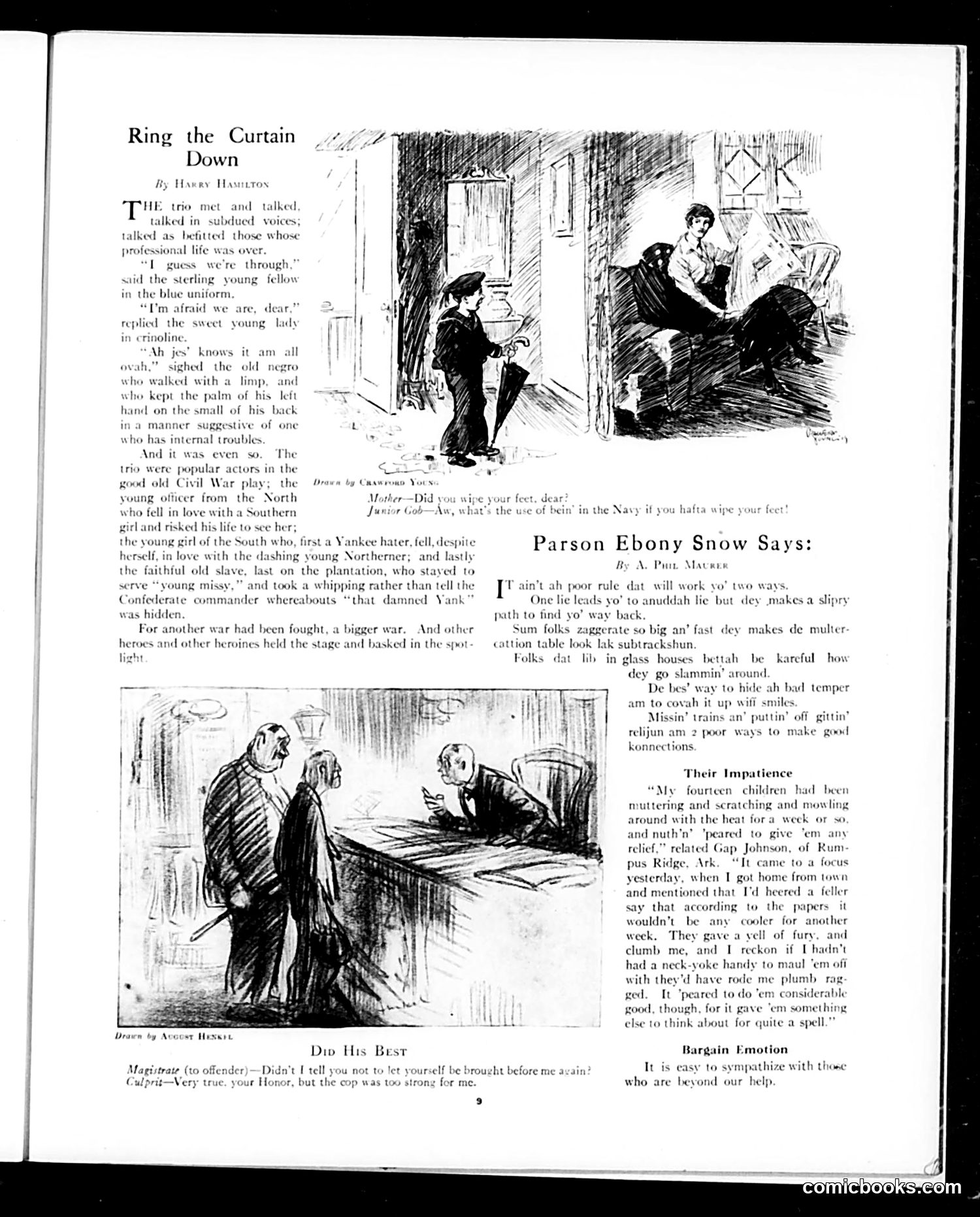
This page contains three separate satirical pieces from *Judge* magazine: **"Ring the Curtain Down"** (top): A sentimental story about three actors—a Union soldier, a Southern belle, and an elderly enslaved man—who portrayed these same roles in Civil War theatrical productions. The satire suggests that post-war America is trying to "close the curtain" on Civil War narratives, yet these stock characters (the noble North, the conflicted South, the faithful servant) had become worn theatrical clichés. The story implies these simplified war-story archetypes are exhausted and no longer resonate. **"Did His Best"** (middle): A magistrate's court scene where a man explains his arrest philosophically—the policeman's strength overcame his good intentions. It's light satirical commentary on urban law enforcement. **"Parson Ebony Snow Says"** and other items (right): These are humorous dialect pieces using African American vernacular, typical of the era's casual racial humor in mainstream magazines—representing the prejudiced comedic conventions of early 20th-century American periodicals.
📄 Transcribed text from this page (OCR, searchable)
Machine-transcribed from the original scan — historical spelling and the odd misread are preserved.
Ring the Curtain 47, Down By Haney Hasietos HE trio met and talked talked in talked as befitted those whose 1 voices; sional life w j s over, I guess we're through,’ | said the sterling young fellow 1 in the blue uniform, “Dm afraid we are, dear.” replied the sweet young. lady oline | “Ah jes’ knows it am all ovah,” sighed the old negro | who walked with a limp, and ' who kept the palm of his left hand on the small of his back ina manner suggestive of one t bles who has internal trc And it was eve trio were popular actors in the good old Civil War play; the 0 young officer from the North who fell in love with a Southern and risked his life to see her; g girl of the South who, first a Yankee hater, fell, despite herself, in love with the dashing young Northerner; and lastly the faithful old slave, last on the plantation, who stayed to und took a whipping rather than tell the the y serve “young missy. Confederate commander whereabouts “that damned Yank was hidden. For another war had been fought heroes and other heroines held the sta a bigger war. And other and basked in the spot Dio His Best Didn't | tell y ut Honor, but the cop was too strong fer me. Magistrate (to offen prit—Very truc ti cattion table look u not to let yourself be brought before me avain yur feet, dear he use of bein’ in the Navy i Parson Ebony Snow Says: By A, Pui Maceee [ain't ah poor rule dat will work yo" two ways Onc lie leads yo" to anuddah lie but dey makes a slipry path to find yo’ way back. Sum folks zaggerate so big an’ fast dey makes de multer subtrackshun Folks dat lib in glass houses bettah be kareful how dey go slammin’ around De bes’ way to hide ah bad temper am to covah it up wifi smiles in’ puttin? Missin’ trai i gittin’ relijun am 2 poor ways to make good konnections. Their Impatience “My fourteen children had been muttering and scratching and mowling around with the heat fora week or so and nuth'n’ ‘peared to give ‘em any relief,” related Gap Johnson, of Rum pus Ridge, Ark. “It came to a focus yesterday, when I got home from town and mentioned that I'd heered a feller say that according to the papers it wouldn't. be any cooler for another week. They gave a yell of fury. and clumb me, and I reckon if Thadn't had a neck-yoke handy to maul ‘em off with they'd have rode me plumb rag considerable ged. [t "peared to do 'e h. for it gave ‘em someth Bargain Emotion It is easy to sympathize with those who are beyond our help