
Judge, 1919-06-07 · page 7 of 36
Judge — June 7, 1919 — page 7: what you’re looking at
What you’re looking at
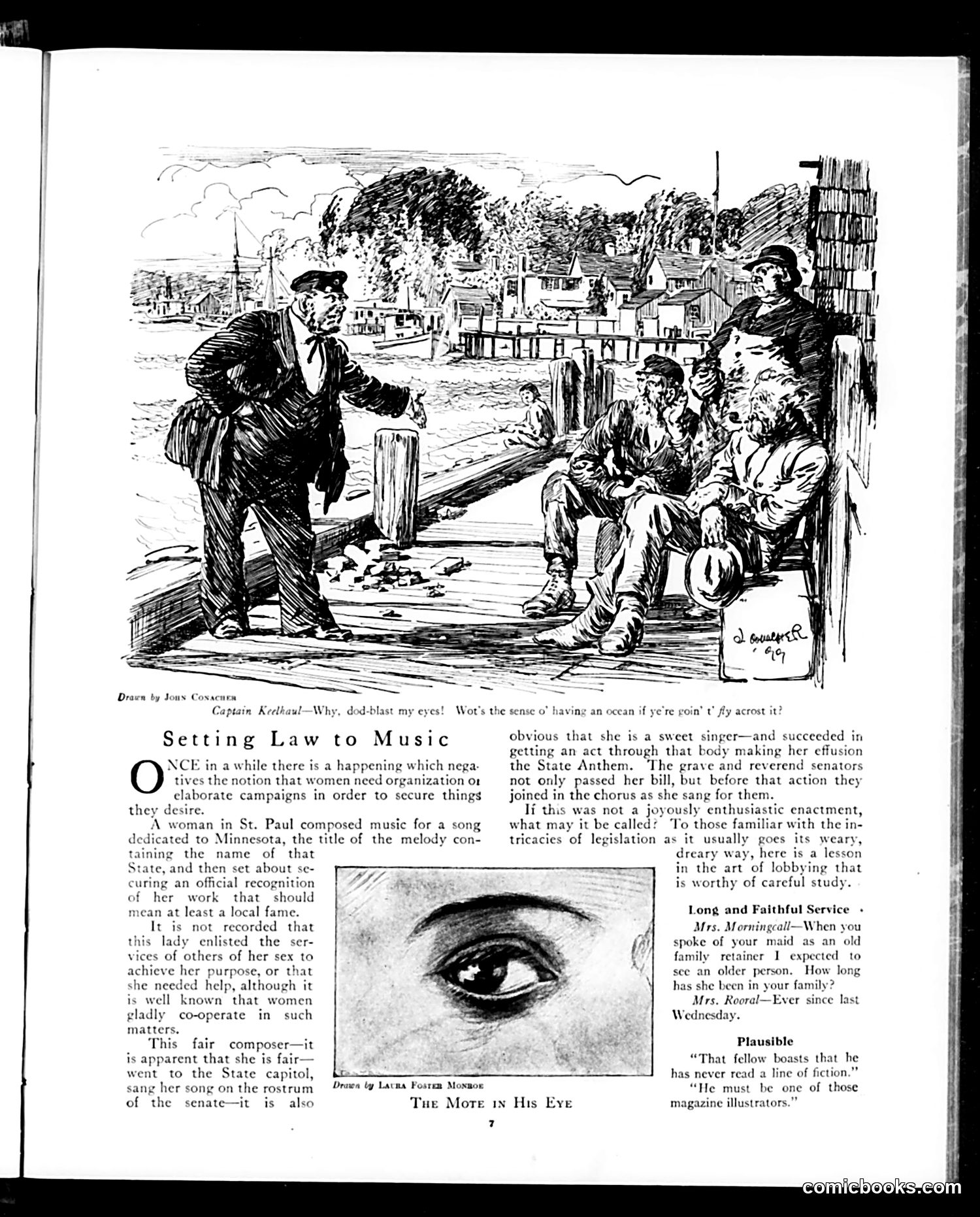
This Judge magazine page contains two distinct satirical pieces: **"Captain Keelhaul" cartoon** (top): A nautical-themed joke where an old sea captain expresses bewilderment at modern air travel, questioning why anyone would fly across an ocean when it exists to be crossed by ship. The satire mocks resistance to new technology and outdated thinking. **"Setting Law to Music" article**: Satirizes a woman composer from St. Paul who successfully lobbied the Minnesota state legislature to adopt her song as the State Anthem—apparently by performing it directly for senators, who then voted for it. The satire's point appears ironic: judges this as surprisingly effective "lobbying" compared to traditional legislative processes, noting she needed no organized campaign or female allies to succeed. The piece seems to mock both the ease of swaying legislators through charm and perhaps the frivolousness of legislative priorities. The small jokes at bottom mock outdated attitudes (pretending not to read fiction, family servants) with light satire.
📄 Transcribed text from this page (OCR, searchable)
Machine-transcribed from the original scan — historical spelling and the odd misread are preserved.
ran by Jous Coxacuen Captain Keelhaul—Why, dod-blast my eyes! Setting Law to Music OX in awhile there is a happening which nega tives the notion that women need organization on elaborate campaigns in order to secure things sire. woman in St. Paul composed music for a song ated to Minnesota, the title of the melody con- taining the name of that Wot's the sense o” having an ocean if ye're goin’ t' fly acrost it? obvious that she is a sweet singer—and succeeded in getting an act through that body making her effusion the State Anthem. The grave and reverend senators not only passed her bill, but before that action they joined in the chorus as she sang for them. li this was not a joyously enthusiastic enactment, what may it be called? To those familiar with the in- tricacies of legislation as it usually goes its weary, dreary way, here is a lesson in the art of lobbying that State, and then set about se- curing an official recognition of her work that should mean at least a local fame. It is not recorded that this lady enlisted the ser- vices of others of her sex to achieve her purpose, or that she needed help, although it well known that women gladly co-operate in such atters. This fair composer—it is apparent that she is fair— is worthy of careful study. Long and Faithful Service + Mrs. Morningcall—When you spoke of your maid as an old family retainer I expected to sce an older person. How long has she been in your family? Mrs. Rooral—Ever since last Wednesday. Plausible b, “That fellow boasts that he - has never read a line of fiction.”” went to the State capitol, sang her song on the rostrum of the senate—it is also Drawn ty Lacna Poste Mo Tue More in His Eye 7 “He must be one of those magazine illustrators.”