
Judge, 1918-09-07 · page 12 of 32
Judge — September 7, 1918 — page 12: what you’re looking at
What you’re looking at
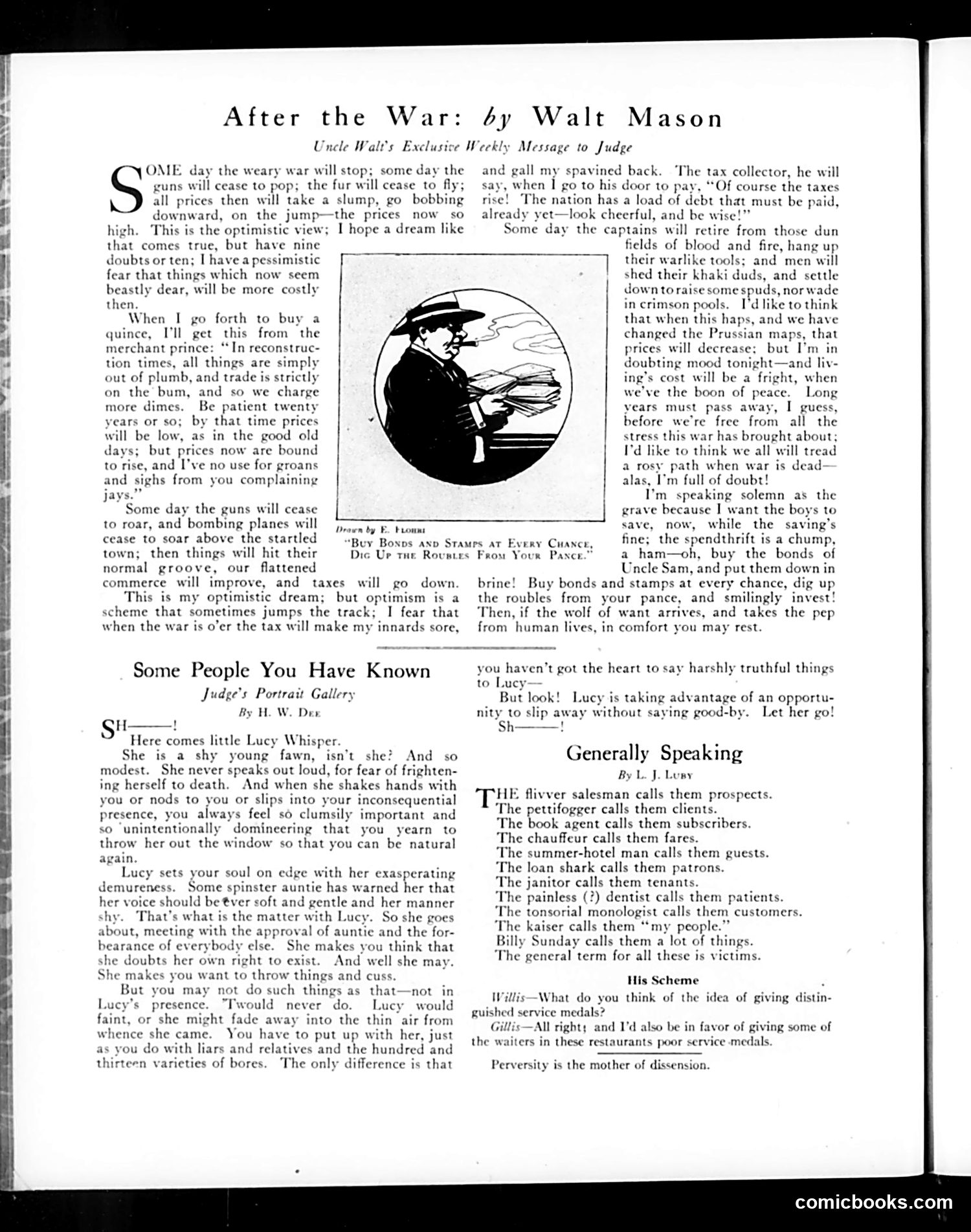
This page contains two distinct pieces from Judge magazine: **"After the War" by Walt Mason**: A pessimistic poem disguised as optimism about post-WWI economics. Mason warns that while warfare will end, inflation and taxes will persist or worsen. The accompanying illustration shows a merchant or profiteer. The satire targets economic opportunists who exploited wartime scarcity—Mason predicts they'll continue raising prices during "reconstruction," claiming shortages justify high costs. The piece also urges readers to buy war bonds to reduce national debt. **"Some People You Have Known" portrait**: A character sketch of "Lucy Whisper," a painfully shy young woman whose excessive modesty and meekness make others uncomfortable. The satire ridicules both Lucy's affected femininity (coached by disapproving aunties to be soft-spoken and demure) and society's expectation that women behave this way—suggesting such enforced passivity is absurd and annoying rather than virtuous. Both pieces critique post-WWI anxieties: economic instability and restrictive gender norms.
📄 Transcribed text from this page (OCR, searchable)
Machine-transcribed from the original scan — historical spelling and the odd misread are preserved.
¥ { { H di | j 1 After the War: Uncle Walt’s Exclusive OME day the weary war will stop; some day the guns will cease to pop; the fur will cease to fly all prices then will take a slump, go bobbing downward, on the jump—the prices now so h. This is the optimistic view; I hope a dream like that comes true, but have nine 6y Walt Mason Weekly Message to Judge and gall my spavined back. The tax collector, he will say, when I go to his door to pay, “Of course the taxes rise! The nation has a load of debt that must be paid, already yet—look cheerful, and be wise!” Some day the captains will retire from those dun fields of blood and fire, hang up doubts or ten; I have a pessimistic fear that things which now seem beastly dear, will be more costly then. When I go forth to buy a quince, I'll. get this from the merchant prince: “In reconstruc- tion times, all things are simply out of plumb, and trade is strictly on the bum, and so we charge more dimes. Be patient twenty years or so; by that time prices will be low, as in the good old days; but prices now are bound to rise, and I've no use for groans and sighs from you complaining jays Some day the guns will cease their warlike tools; and men will shed their khaki duds, and settle down to raise some spuds, nor wade in crimson pools. I'd like to think that when this haps, and we have changed the Prussian maps, that prices will decrease; but I’m in doubting mood tonight—and liv- ing’s cost will be a fright, when we've the boon of peace. Long years must pass away, I guess, before we're free from all the stress this war has brought about; I'd like to think we all will tread a rosy path when war is dead alas, I’m full of doubt! I'm speaking solemn as the grave because | want the boys to to roar, and bombing planes will cease to soar above the startled town; then things will hit their normal groove, our flattened commerce will improve, and taxes will go down. This is my optimistic dream; but optimism is a scheme that sometimes jumps the track; I fear that when the war is o’er the tax will make my innards sore, Drown by EB. Fromm “Buy Bonps ann Sta Dic Ur tne Rovere Some People You Have Known Judge's Portrait Gallery By H.W. Der H—! Here comes little Lucy Whisper. She is a shy young fawn, isn’t she? And so modest. She never speaks out loud, for fear of frighten- ing herself to death. And when she shakes hands with you or nods to you or slips into your inconsequential presence, you always feel so clumsily important and so ‘unintentionally domineering that you yearn to throw her out the window so that you can be natural again. Lucy sets your soul on edge with her exasperating demureness. Some spinster auntie has warned her that her voice should be €ver soft and gentle and her manner shy. That's what is the matter with Lucy. So she goes about, meeting with the approval of auntie and the for- bearance of everybody else. She makes you think that she doubts her own right to exist. And well she may. he makes you want to throw things and cuss. : But you may not do such things as that—not in Lucy’s presence. “would never do. Lucy would faint, or she might fade away into the thin air from whence she came. You have to put up with her, just you do with liars and relatives and the hundred and teen varieties of bores. The only difference is that save, now, while the saving’s fine; the spendthrift is a chump, a ham—oh, buy the bonds of Uncle Sam, and put them down in brine! Buy bonds and stamps at every chance, dig up the roubles from your pance, and smilingly invest! Then, if the wolf of want arrives, and takes the pep from human lives, in comfort you may rest. ups at Every Cuance, s From Your Pance.” you haven’t got the heart to say harshly truthful things to Lucy But look! Lucy is taking advantage of an opportu- nity to slip away without saying good-by. Let her go! Sh——! Generally Speaking By L. J. Lusy HE flivver salesman calls them prospects. The pettifogger calls them clients. The book agent calls them subscribers. The chauffeur calls them fare: ‘The summer-hotel man calls them guests. The loan shark calls them patrons. The janitor calls them tenants. The painless (?) dentist calls them patients. ‘The tonsorial monologist calls them customers. The kaiser calls them “‘my people.” Billy Sunday calls them a lot of things The general term for all these is victims. His Scheme Willis—What do you think of the id guished service medals? Gillis—All righty and I'd also be in favor of giving some of the waiters in these restaurants poor service medals. of giving distin- Perversity is the mother of dissension. comicbooks.com