
Judge, 1918-02-02 · page 24 of 36
Judge — February 2, 1918 — page 24: what you’re looking at
What you’re looking at
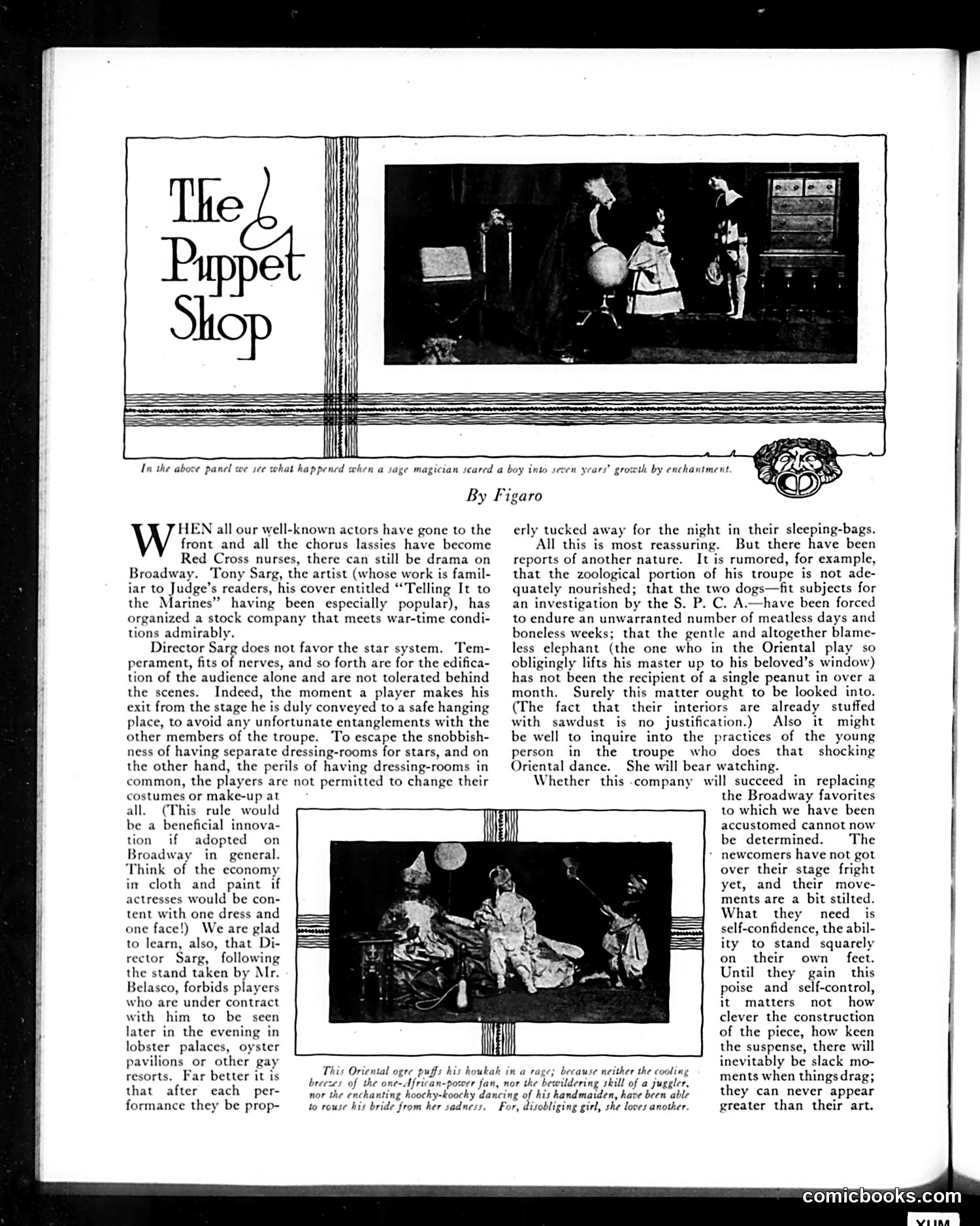
This is a satirical piece by Figaro about director Tony Sarg's experimental theater company during wartime (likely WWI, when actors enlisted and women became nurses). The joke: Sarg has replaced human actors with **puppets and trained animals**—the images show an elephant, dogs, and what appear to be marionettes performing. The satire mocks this as a cost-cutting measure while pretending it solves theatrical problems like temperament and dressing-room drama. The article humorously critiques both the concept and rumors about it: the animals are supposedly underfed (meatless days for dogs, no peanuts for the elephant), and there's concern about a young female dancer's "shocking Oriental dance" and whether she can be trusted. The underlying social commentary targets wartime sacrifices and the absurdity of theatrical conventions—suggesting that even puppet shows would be better managed than real actors, while poking fun at actual Broadway's pretensions and waste.
📄 Transcribed text from this page (OCR, searchable)
Machine-transcribed from the original scan — historical spelling and the odd misread are preserved.
HEN all our well-known actors have gone to the front and all the chorus | s have become Red Cross nurses, there can still be drama on Broadway. Tony Sarg, the artist (whose work is famil- iar to Judge’s readers, his cover entitled “Telling It to the Marines” having been especially popular), has organized a stock company that mects war-time condi- tions admirably. Director Sarg does not favor the star system. Tem- perament, fits of nerves, and so forth are for the edifica- tion of the audience alone and are not tolerated behind the scenes. Indeed, the moment a player makes his exit from the stage he is duly conveyed to a safe hanging place, to avoid any unfortunate entanglements with the other members of the troupe. To escape the snobbish- ness of having separate dressing-rooms for stars, and on the other hand, the perils of having dressing-rooms in common, the players are not permitted to change their costumes or make-up at all. (This rule would be a beneficial innova- tion if adopted on Broadway in general. Think of the economy in cloth and paint if actresses would be con- tent with one dress and one face!) We are glad to learn, also, that Di- rector Sarg, following the stand taken by Mr. Belasco, forbids players who are under contract with him to be n later in the evening in lobster palaces, oyster pavilions or other gay resorts. Far better it is that after each per- formance they be prop- This Oriental ogre puffs h breezes of the i nor the enchanting hooch: nagician scared a boy into seven years’ gre By Figaro oukah ina rage fan, nor the bewildering 5 y-koocky dancing of his handmaiden, have been able to rowse his bride from her sadness. For, disobliging girl, she loves another. th by erly tucked away for the night in their sleeping-bags. All this is most reassuring. But there have been reports of another nature. It is rumored, for example, that the zoological portion of his troupe is not ade- quately nourished; that the two dogs—fit subjects for an investigation by the S. P. C. A—have been forced to endure an unwarranted number of meatless days and boneless weeks; that the gentle and altogether blame- less elephant (the one who in the Oriental play so obligingly lifts his master up to his beloved’s window) has not been the recipient of a single peanut in over a month. Surely this matter ought to be looked into. (The fact that their interiors are already stuffed with sawdust is no justification.) Also it might be well to inquire into the practices of the young person in the troupe who does that shocking Oriental dance. She will bear watching. Whether this company will succeed in replacing the Broadway favorites to which we have been accustomed cannot now be determined. The newcomers have not got over their stage fright yet, and their move- ments are a bit stilted. What they need is self-confidence, the abil- ity to stand squarely on their own fee Until they gain th poise and self-control, it matters not how clever the construction of the piece, how keen the suspense, there will inevitably be slack mo- ments when things drag; they can never appear greater than their art. because neither the cooling ill of a juggler, comicbooks.com