
Judge, 1918-01-12 · page 16 of 28
Judge — January 12, 1918 — page 16: what you’re looking at
What you’re looking at
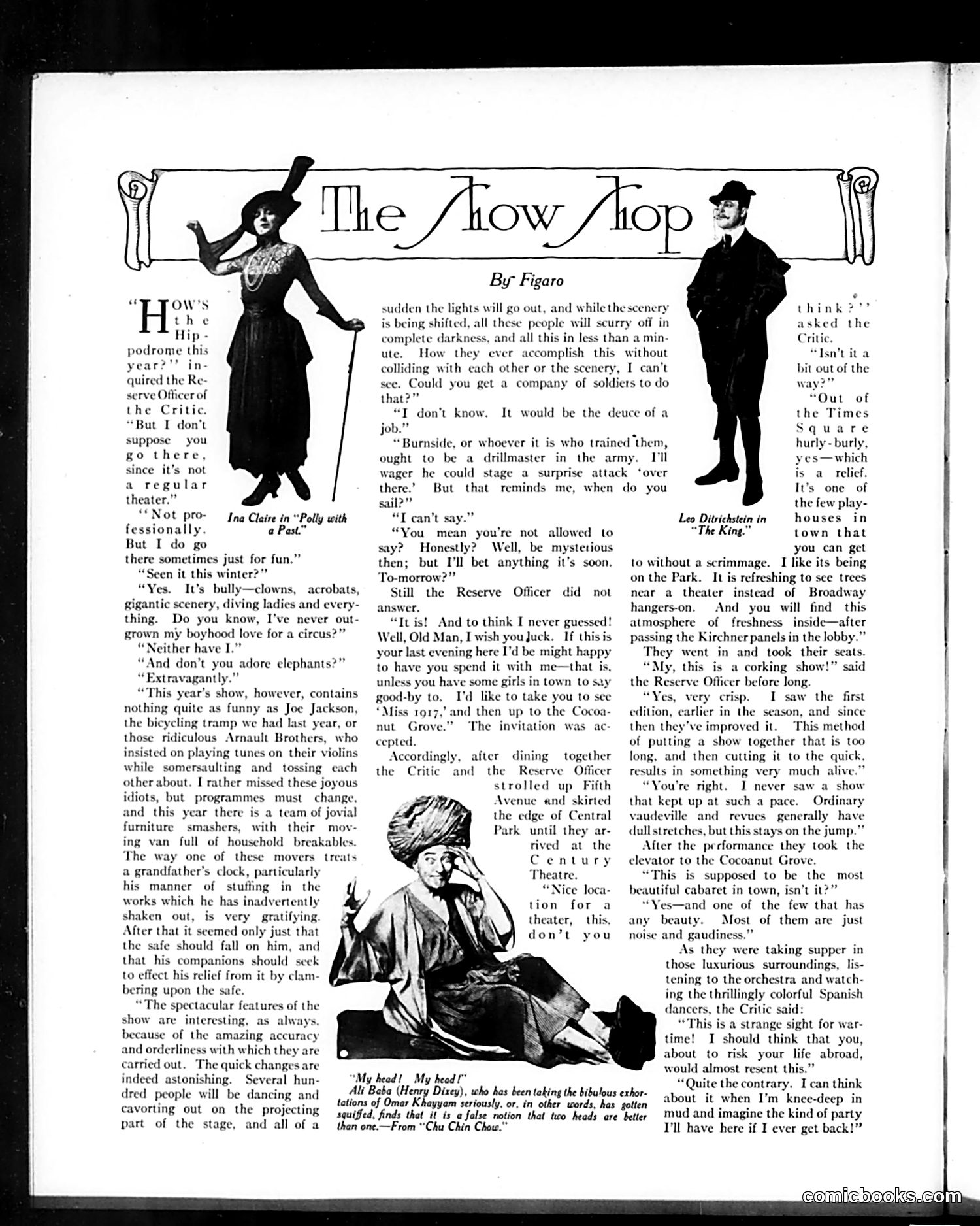
This piece by Figaro satirizes theater-going culture and the Hippodrome theatre's spectacle-driven entertainment. Two characters—a Reserve Officer and a Critic—discuss the Hippodrome's elaborate productions, which featured massive ensemble numbers, quick scene changes, and acrobatic acts (clowns, elephants, "ridiculous Arnault Brothers" performing destructive furniture stunts). The satire mocks how audiences, including supposedly sophisticated critics, enjoy circus-like entertainment despite its lack of artistic substance. The dialogue suggests tension between "serious" theater and popular spectacle. References to actors like Ina Claire and Henry Dixey ground this in contemporary Broadway. The side caption about Ali Baba in "Chu Chin Chow" continues the vein of absurdist comedy. Figaro's point: even cultivated theater-goers secretly love the lowbrow entertainment the Hippodrome offers—contradicting their pretensions to refined taste.
📄 Transcribed text from this page (OCR, searchable)
Machine-transcribed from the original scan — historical spelling and the odd misread are preserved.
OW's the Hip - podrome this year?’’ in- quired the Re- serve Officer of the Critic “But I don’t suppose you go there, since it’s not a regular By Figaro is being shifted, ut colliding with each other or the scene! that job.” ought to be a drillmaster in the army. wager he could stage theater.” sail? “Not pro- Ina Claire in “Polly with “T can’t sa} fessionally. @ Past. “You mean you're not allowed to But I do go there sometimes just for fun.” “Seen it this winter?” “Yes. It’s bully—clowns, acrobats, and every- thing. Do you know, I've never out- grown my boyhood love for a circus?” gigantic scenery, diving ladi “Neither have I.” “And don’t you adore elephants? antly. “Extray nothing quite the bicycling tramp we had last y those ridiculous Arnault Brothers furniture smashers, with their The way one of these movers a grandfather's clock, particularly his manner of stuffing in the works which he has inadvertently shaken out, is very gratifying After that it seemed only just that the safe should fall on him, and that his companions should seck to effect his relief from it by clam- bering upon the safe. “The spectacular features of the show are interesting, as always. because of the amazing accura and orderliness with which they are carried out. ‘The quick changes are indeed astonishing. Several hun- dred people will be dancing and cavorting out on the projecting part of the stage, and all of a his year’s show, however, contains good-h as funny as Joe Jackson, rar, OF nut Grove insisted on playing tunes on their violins while somersaulting and tossing cach the Critic and the Reserve Oflicer other about. I rather missed these joyous idiots, but’ programmes must chang and this year there is a team of jovial mov- ing van full of houschold breakable: treats say? Honestly? Well, be mystetious then; but I'll bet anything it’s soon. answer. “Itis! And to think I never guessed! Well, Old Man, I wish youJuck. If thisis — pa your last evening here I’d be might happy to have you spend it with me—that is, unless you have some girls in town to sa The invitation was ac- Accordingly, after dining together strolled up Fifth Avenue and skirted the edge of Central Park until they ar- rived at the Century Theatre. ice loca- tion for theater, this, don’t you “My head! ~My head! Ali Baba (Henry Dixey), who has been taking the bibulous exhor- tations of Omar Khayyam seriously, or, in other words, has gotten squiffed, finds that il is a false notion that two heads are better than one.—From “Chu Chin Chow. sudden the lights will go out, and while the scenery I these people will scurry off in complete darkness, and all this in less than a min- How they ever accomplish this without I can't see. Could you get a company of soldiers to do “T don’t know. It would be the deuce of a “Burnside, or whoever it is who trained them, rl surprise attack ‘over there.’ But that reminds me, when do you think?" asked the Critic. “Isn't it a bit out of the way?” “Out of the Times Square hurly relief. It's one of the few play- Leo Ditrichstein in hous in “The King. town that you can get to without a scrimmage. I like its being To-morrow?” on the Park. It is refreshing to see tr ill the Reserve Officer did not — near hangers-on. atmosphere of freshness inside—after sing the Kirchner panels in the lobby They went in and took their seats. “My, this is a corking show! the Reserve Officer before long. a theater instead of Broadway And you will find this said y to. I'd like to take you to se “Yes, very crisp. 1 saw the first “Miss 1917,’ and then up to the Cocoa- — edition, earlier in the season, and. since then they've improved it. This method of putting a show together that is too long, and then cutting it to the quick. results in something very much alive.” “You're right. I never saw a show that kept up at such a pace. vaudeville and revue dull stretches, but this st After the perforn elevator to the Cocoanut Grove. This is supposed to be the most beautiful cabaret in town, isn’t it?” “Yes—and one of the few that has any beauty. noise and gaudine: Ordinary ays on the jump.”” ce they took the Most of them are just As they were taking supper in those luxurious surroundings, lis- tening to the orchestra and watch- ing the thrillingly colorful Spanish dancers, the Critic said: “This is a strange sight for war- time! I should think that you, about to risk your life abroad, would almost resent this.” “Quite the contrary. I can think about it when I’m knee-deep in mud and imagine the kind of party I'll have here if I ever get back!”