
Judge, 1917-04-14 · page 4 of 28
Judge — April 14, 1917 — page 4: what you’re looking at
What you’re looking at
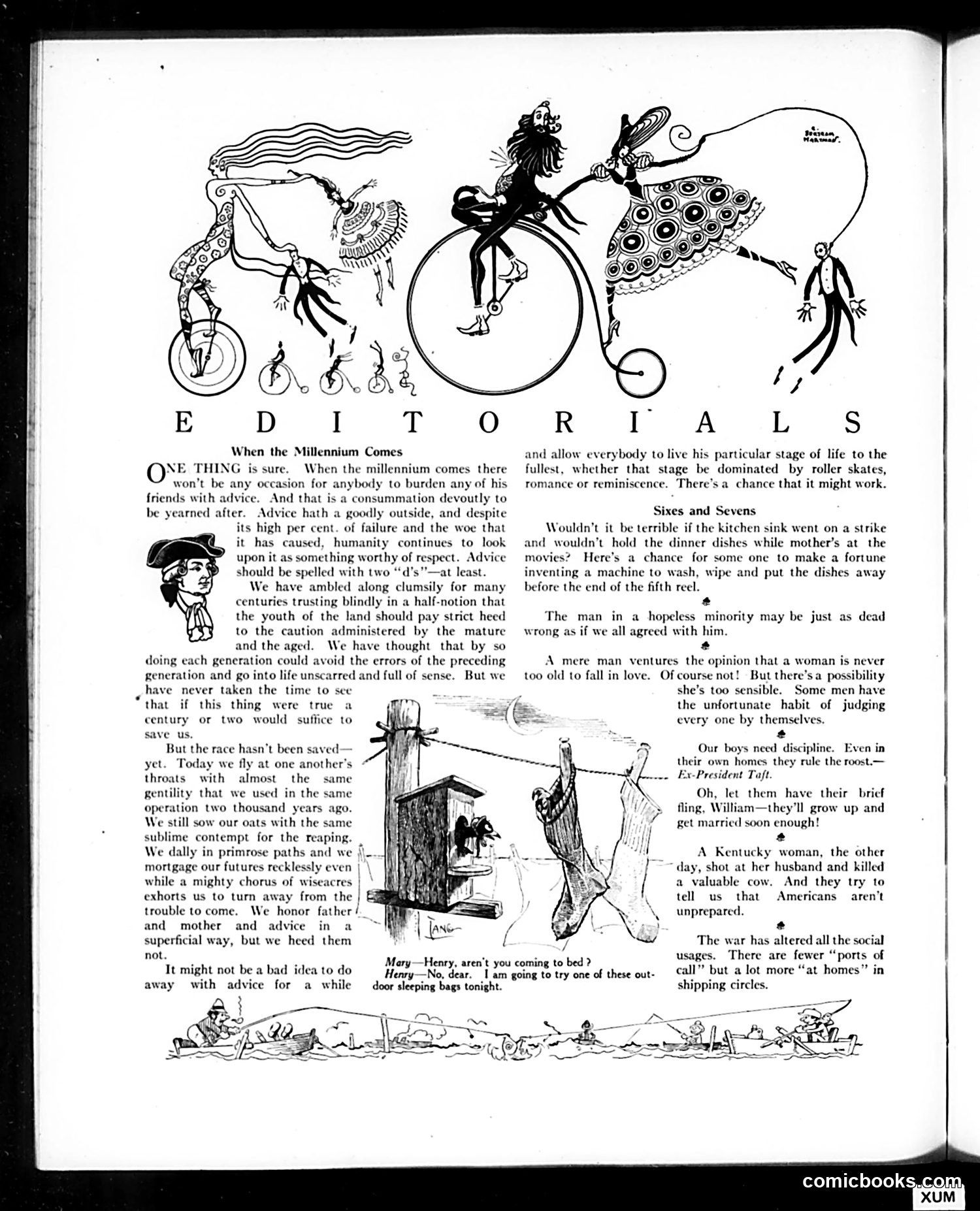
This satirical editorial page uses decorative header illustrations (figures on unicycles and wheels) to frame social commentary. The main text discusses generational conflict, arguing that older generations shouldn't burden youth with unsolicited advice. The author defends the younger generation against criticism, suggesting their apparent recklessness stems from living through turbulent times. The included illustrations and brief anecdotes mock contemporary social issues: women's independence (the "Sixes and Sevens" section about kitchen strikes), gender relations, and post-war social disruption. A cartoon showing laundry on a clothesline with dialogue about "outdoor sleeping bags" appears to satirize domestic discord, possibly related to marital conflicts or changing family structures during this period. The overall tone critiques older Americans' judgmental attitudes toward social change.
📄 Transcribed text from this page (OCR, searchable)
Machine-transcribed from the original scan — historical spelling and the odd misread are preserved.
ee. When the Millennium Comes NE THING is sure. When the millennium comes there won't be any occasion for anybody to burden any of his friends with advice. And that is a consummation devoutly to be yearned after. Advice hath a goodly outside, and despite its high per cent. of failure and the woe that it has caused, humanity continues to look upon it as something worthy of respect. Advice should be spelled with two “d’s"—at least. We have ambled along clumsily for many centuries trusting blindly in a half-notion that the youth of the land should pay strict heed to the caution administered by the mature and the aged. We have thought that by so doing each generation could id the errors of the preceding generation and go into life unscarred and full of sense. But we have never taken the time to see “that if this thing were true a "a century or two would suffice to save us. But the race hasn't been saved yet. Today we fly at one another's throats with almost the same gentility that we used in the same operation two thousand years ago. We still sow our oats with the same sublime contempt for the reaping. We dally in primrose paths and we mortgage our futures reckl yeven while a mighty chorus of wiseacres | exhorts us to turn away from the | trouble to come. We honor father / and mother and advice in a superficial way, but we heed them not It might not be a bad idea to do Mary—Henry, aren't you coming to bed ? i 4 < Henry—No, dear. | am going to try one of these out- away with advice for a while door sleeping bags tonight. and allow everybody to live his particular stage of life to the fullest, whether that stage be dominated by roller skates, romance or reminiscence. There’s a chance that it might work. Sixes and Sevens Wouldn't it be terrible if the kitchen sink went on a strike and wouldn’t hold the dinner dishes while mother’s at the movies? Here’s a chance for some one to make a fortune inventing a machine to wash, wipe and put the dishes away before the end of the fifth reel. * The man in a hopeless minority may be just as dead wrong as if we all agreed with him. s A mere man ventures the opinion that a woman is never too old to fall in love. Of course not! But there’s a possibility she’s too sensible. Some men have the unfortunate habit of judging every one by themselves. * Our boys need ine. Even in their own homes they rule the roost.— Ex-President Taft. Oh, let them have their brief fling, William—they’ll grow up and get married soon enough! 2 A Kentucky woman, the other shot at her husband and killed a valuable cow. And they try to tell us that Americans aren't unprepared. 2 The war has altered all the social usages. There are fewer “ports of call” but a lot more “at homes” in shipping circles. comichooks am