
Judge, 1917-03-10 · page 16 of 28
Judge — March 10, 1917 — page 16: what you’re looking at
What you’re looking at
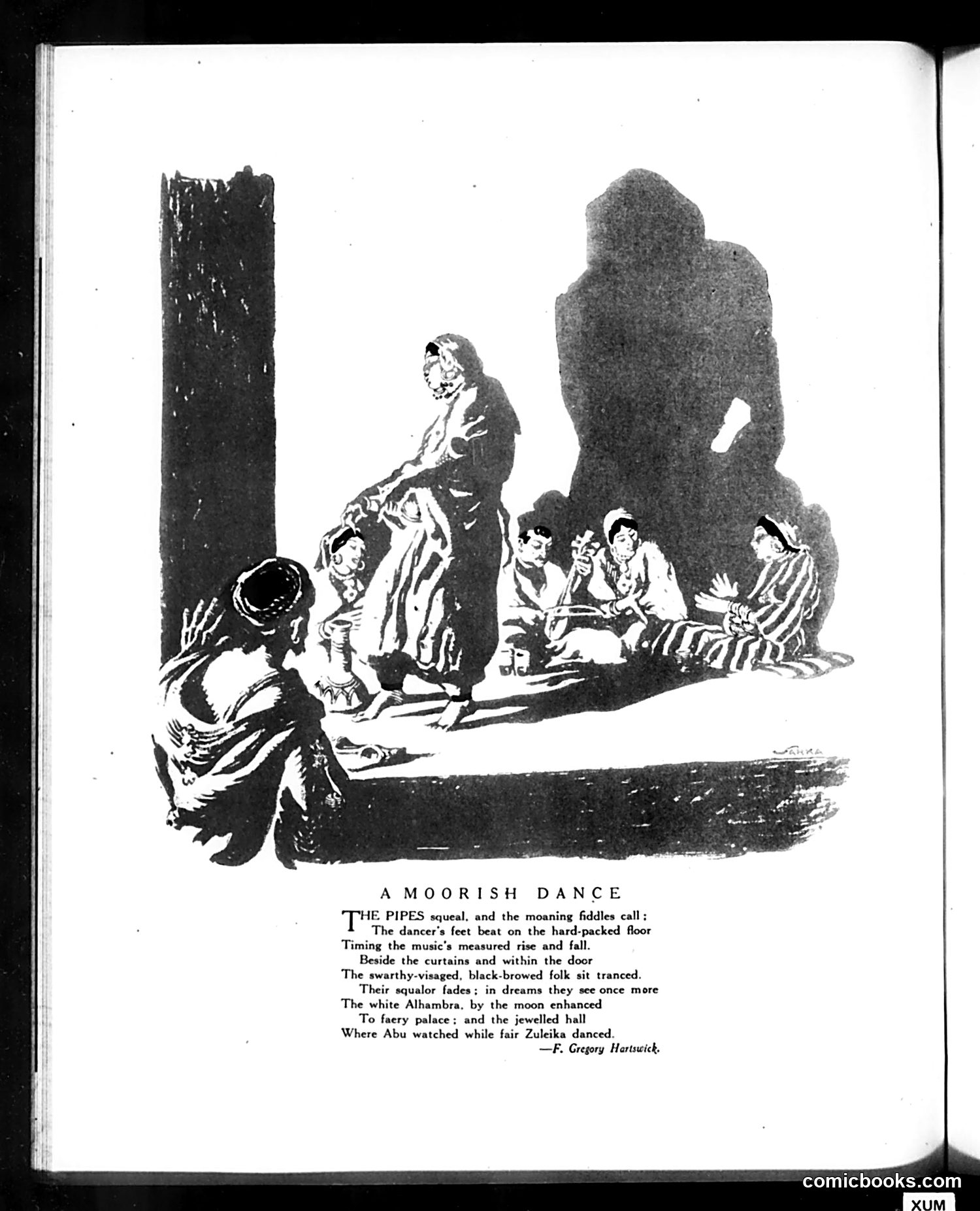
This is a poem illustrated with a dramatic black-and-white drawing, not a political cartoon. The piece is romantic orientalism—a popular late 19th/early 20th-century literary genre. The poem depicts a Moorish dance performance watched by an audience of working-class people ("squalor fades"). The text references the Alhambra palace and characters "Abu" and "Zuleika," invoking exoticized Islamic Spain and the Arabian Nights tradition. The satire appears gentle: the poem suggests that momentarily, through art and imagination, poor spectators can escape their dreary lives and envision themselves in fantastical palaces. It's sentimental rather than sharp-edged critique—typical of Judge's lighter content. The illustration shows the dancer elevated on a platform while seated figures around her are entranced, visualizing the "jewelled hall" of their dreams. The author credits F. Gregory Hartswick.
📄 Transcribed text from this page (OCR, searchable)
Machine-transcribed from the original scan — historical spelling and the odd misread are preserved.
A MOORISH DANCE 'HE PIPES squeal, and the moaning fiddles call ; The dancer's feet beat on the hard-packed floor Timing the music's measured rise and fall. Beside the curtains and within the door The swarthy-visaged, black-browed folk sit tranced. Their squalor fades; in dreams they see once more The white Alhambra, by the moon enhanced To faery palace ; and the jewelled hall Where Abu watched while fair Zuleika danced. —F. Gregory Hartswick. comicbooks.com