
Judge, 1916-12-09 · page 4 of 28
Judge — December 9, 1916 — page 4: what you’re looking at
What you’re looking at
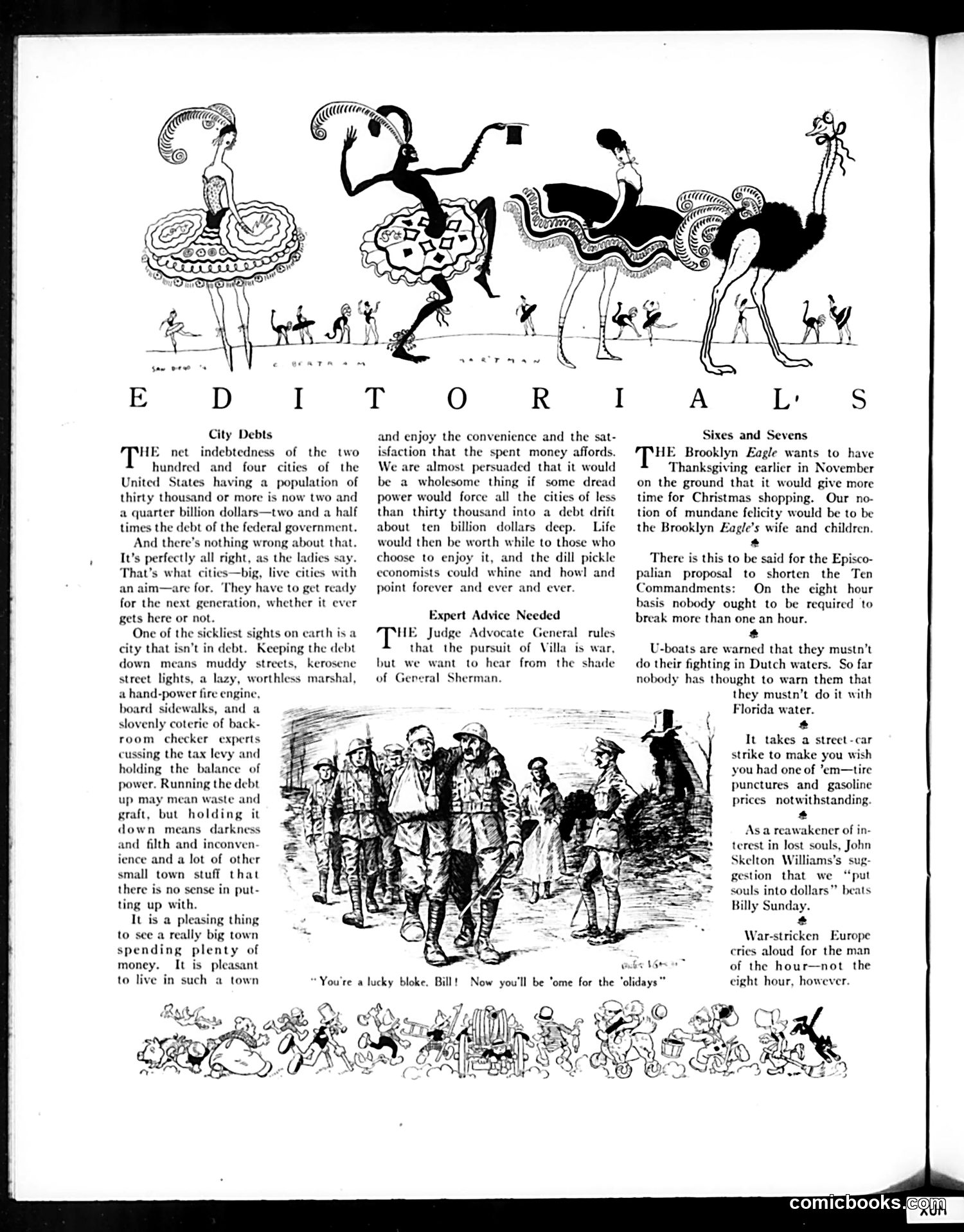
This Judge magazine page contains two satirical sections: **"City Debts"** critiques American municipal overspending. The text argues that while federal debt of $2.5 billion is acceptable, cities should not accumulate similar debts. It mocks cities that maintain expensive infrastructure (street lights, police) while claiming poverty—suggesting fiscal irresponsibility and bloated bureaucracy. **"Sixes and Sevens"** addresses the Brooklyn *Eagle* newspaper's proposal for an eight-hour Thanksgiving day, arguing this reduces shopping time before Christmas. The section also comments on various minor grievances: streetcar strikes, Florida dangers, and European war issues. The decorative header features elongated Art Deco figures, typical of 1920s Judge style. The central illustration depicts soldiers, likely referencing World War I military organization.
📄 Transcribed text from this page (OCR, searchable)
Machine-transcribed from the original scan — historical spelling and the odd misread are preserved.
City Debts HE net indebtedness of the two hundred and four cities of the United States having a population of thirty thousand or more is now two and a quarter billion dollars—two and a half times the debt of the federal government. And there’s nothing wrong about that. It’s perfectly all right, as the ladies say. That’s what cities—| live cities with They have to get ready for the next generation, whether it ever gets here or not. One of the sickliest sights on earth is a city that isn’t in debt. Keeping the debt down means muddy streets, kerosene street lights, a lazy, worthless marshal, a hand-power fire engine, board sidewalks, and a slovenly coterie of back- room checker experts cussing the tax lev: holding the balan power. Running the debt up may mean waste and graft, but holding it down means darkness and filth and inconven- ience and a lot of other small town stuff that there is no sense in put- ting up with. It is a pleasing thing to see a really big town spending plenty of money. It is pleasant to live in such a town AZ “You're a lucky bloke. Bill! and enjoy the convenience and the sat- isfaction that the spent money affords. We are almost persuaded that it would be a wholesome thing if some dread power would force all the cities of less than thirty thousand into a debt drift about ten billion dollars deep. Life would then be worth while to those who choose to enjoy it, and the dill pickle economists could whine and howl and point forever and ever and ever. Expert Advice Needed THe Judge Advocate General rules that the pursuit of Villa is war, but we want to hear from the shade of General Sherman. Now you'll be ‘ome for the ‘olidays” Sixes and Sevens HE Brooklyn Eagle wants to have Thanksgiving earlier in November on the ground that it would give more time for Christmas shopping. Our no- tion of mundane felicity would be to be the Brooklyn Eagle’s wife and children. & There is this to be said for the Episco- palian proposal to shorten the Ten Commandments: On the cight hour basis nobody ought to be required to break more than one an hour. ¢ U-boats are warned that they mustn’t do their fighting in Dutch waters. So far nobody has thought to warn them that they mustn't do it with Florida water. # It takes a strect-car strike to make you wish you had one of ’em—tire punctures and _ gasoline prices notwithstanding. 2 Asa reawakener of in- terest in lost souls, John Skelton Williams's sug- gestion that we “put souls into dollars” beats Billy Sunday. £ War-stricken Europe cries aloud for the man of the hour—not the eight hour, however. comicbooks,