
Judge, 1916-11-25 · page 10 of 32
Judge — November 25, 1916 — page 10: what you’re looking at
What you’re looking at
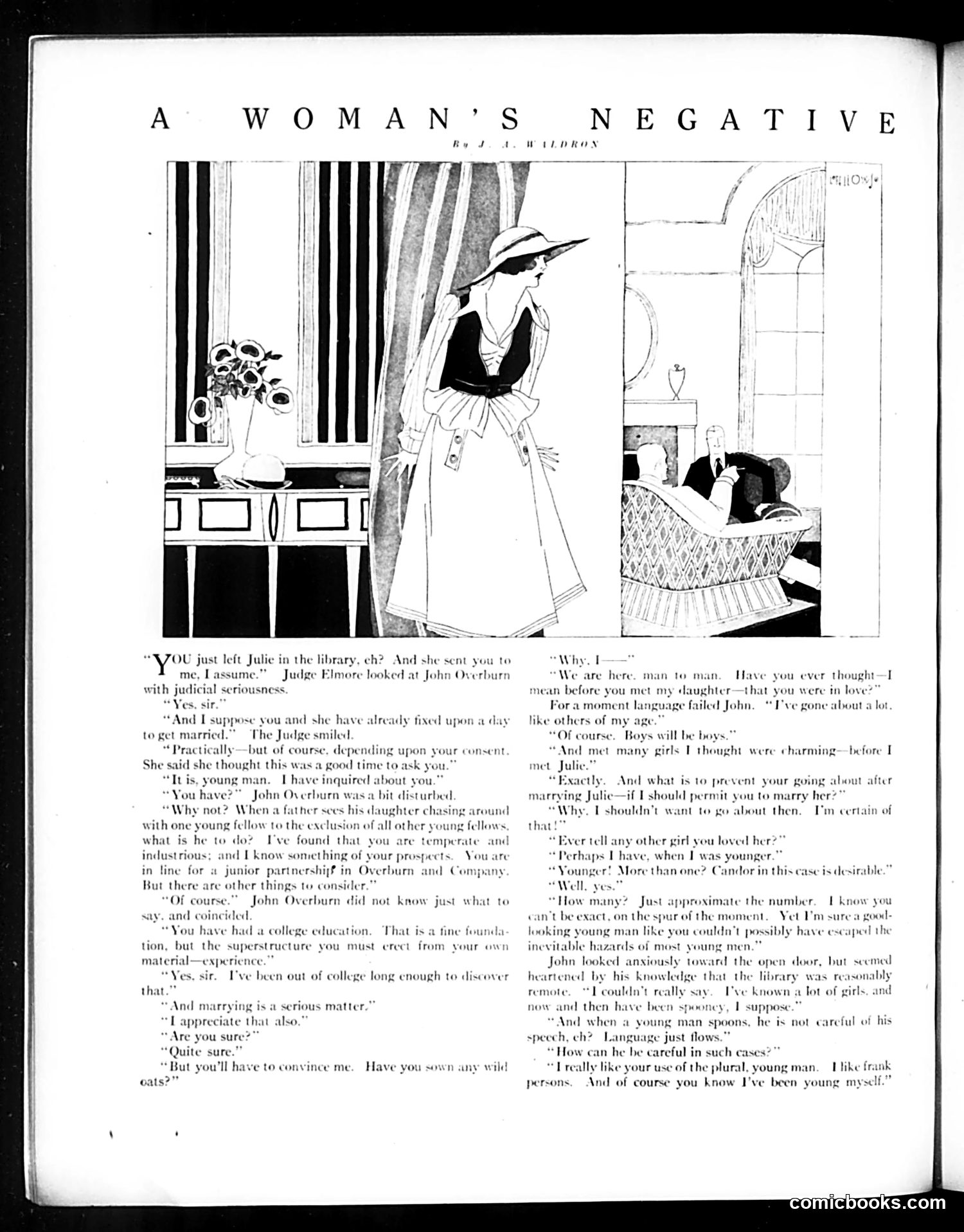
This is a satirical dialogue between a young man (John Overburn) and Judge Elmore, the father of the woman he wishes to marry. The satire targets the hypocrisy of Victorian-era courtship standards. The Judge interrogates John about his past romantic history—whether he's "sown wild oats," loved other girls, and "spooned" (courted) before meeting Julie. John admits to multiple past romantic entanglements. The Judge then reveals the cartoon's title: the woman's "negative"—her refusal to marry him. **The joke**: The Judge uses John's own frank admissions against him, showing that a man with a romantic past is deemed unsuitable for marriage, despite the Judge himself admitting "I've been young myself." The satire exposes the double standard: men were expected to have youthful indiscretions, yet these same indiscretions disqualify them from marrying respectable women. The "negative" is the woman's rejection based on the man's candid honesty about his past—a critique of restrictive courtship customs and female autonomy in marriage decisions.
📄 Transcribed text from this page (OCR, searchable)
Machine-transcribed from the original scan — historical spelling and the odd misread are preserved.
eh? re loo! ‘OU just left Julie in the librar, me, Lassume.” Judge E with judicial seriousness Yes, sir.” “And I suppose you and she have already fixed upon a day to get married.” The Judge smiled “Practically—but of course. dependin, y said she thought this was a good time to ask you.” It is, young man. I have inquired about you.” “You have?” John Overburn was a bit disturbed “Why not? When a father sees his daughter ch with one young fellow to the exclusic what I've found that you are temperate and industrious; and I know something of your prospects. Vou are in line for a junior partnershiff in Overburn and Com; But there are other things to consider.” John Overburn did not know just what to upon your consent sing around all other young fellows is he to do? “OF course.” say. and have had a college education, That is a tine founda tion, but the material Yes. that.” And marrying is “TL appreciate that also.” “Are you sure?” “Quite sure.” “But you'll hav oats?” from your own superstructure you must erect experience ir. I've been out of college long enough to discover serious matter.” avince me. Have you sown any wild NEGATIVE tLDRON as Why. I We are here mean before you met my daughter—t For a moment language failed John like others of my a “OF course man to man. Have you ever thoug aut you were in love? “Pye gone about a lot Boys will be boys.” “And met many girls T thought were eharming—before I met Julie.” xactly. And what is to prevent your marrying Julie—if I should permit you to marry her?" “Why. T shouldn't want to go about then. that!” ng about after I'm certain of ver tell any other girl you loved her? Perhaps I have, when I ¥ “Younger! More than one? Candor in this case is de “Well. yes.” “How many? Just approximate the number Vet Pm sure a good- looking young man like you couldn't possibly have escaped the younger.” rable.” I know you can’t be exact, on the spur of the moment inevitable hazards of most young men.” John looked anxiously toward the open heartened by his knowledge that the library “Tcouldn’t really say. P've known a fot of girls nd then have been s 1 suppose.” And when a young man spoons, he is not careful of his speech, ch? Language just flows.” “How can he be careful in such cases?” “Treally like your use of the plural, young man. ike fr And of course you know I've been young myself. oor, but seemed was reasonably remote now ¢ voney persons comicbooks.com