
Judge, 1916-11-04 · page 13 of 32
Judge — November 4, 1916 — page 13: what you’re looking at
What you’re looking at
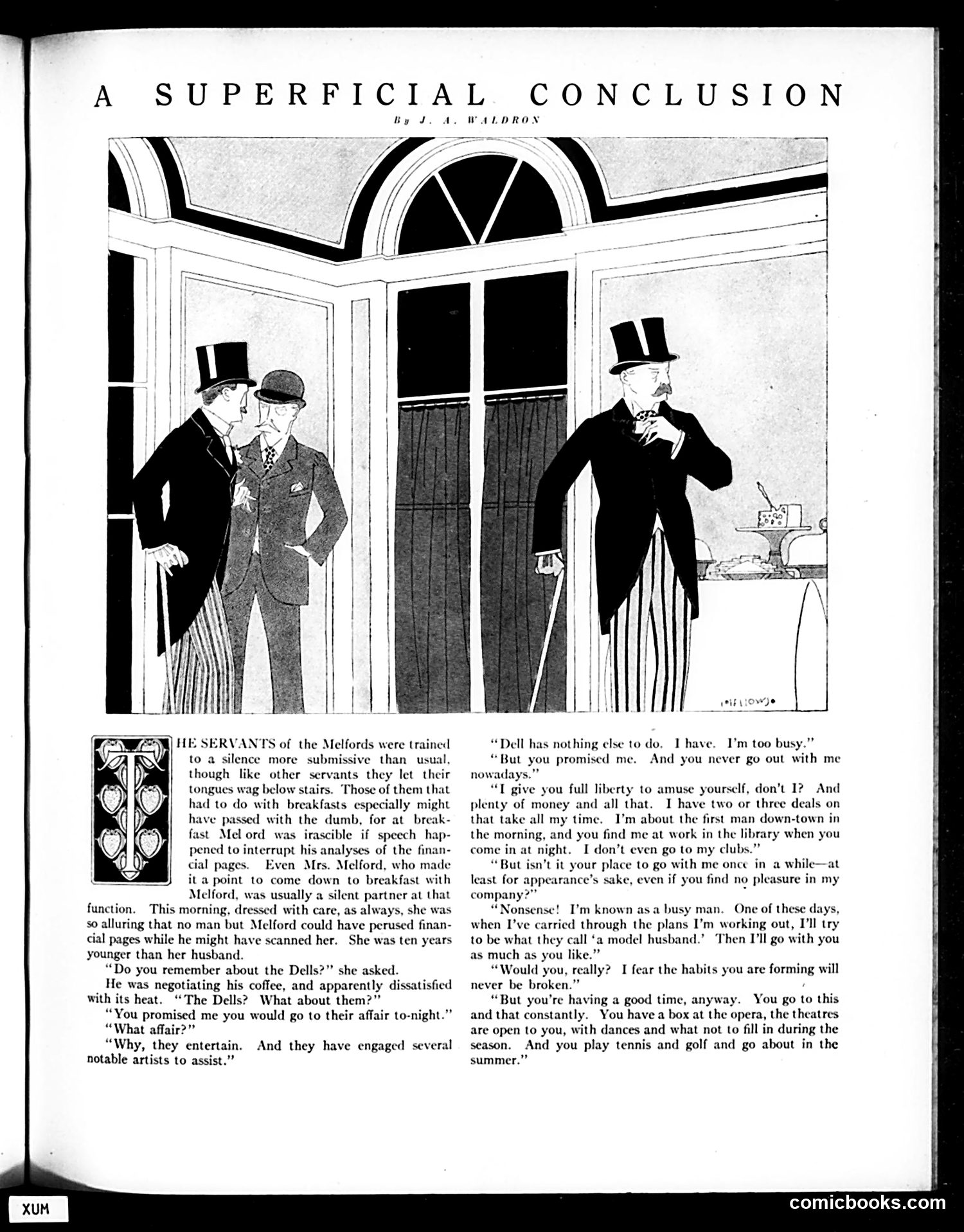
This story excerpt satirizes a wealthy married couple's deteriorating relationship. Mr. Melford, an obsessed businessman, repeatedly breaks promises to accompany his wife to social events, claiming financial deals demand all his time. He justifies his neglect by providing her money and access to entertainment—opera boxes, theaters, dances—as if material indulgences substitute for his presence and attention. The satire targets the era's "self-made" businessman archetype: men so consumed by financial advancement they neglect personal relationships, yet believe wealth absolves them of marital duties. Mrs. Melford's gentle protests expose the hollowness of this arrangement. The title "A Superficial Conclusion" suggests that financial success masks deeper personal failure—the couple's marriage is deteriorating precisely because Melford mistakes money for genuine partnership.
📄 Transcribed text from this page (OCR, searchable)
Machine-transcribed from the original scan — historical spelling and the odd misread are preserved.
A SUPERFICIA By J. A, to a silence more submissive than usual, though like other servants they let their irs. Those of them that had to do with breakfasts especially might have passed with the dumb, for at_ break- fast Mel ord was irascible if speech hap- pened to interrupt his analyses of the finan- cial pages. Even Mrs. Melford, who made ita point to come down to breakfast with Melford, was usually a silent partner at that function. This morning, d ed with care, as alw: she was so alluring that no man but Melford could have perused finan- cial pages while he might have scanned her. She was ten years younger than her husband. “Do you remember about the Dells?” she asked. He was negotiating his coffee, and apparently dissatisfied with its heat. “The Dells? What about them?” “You promised me you would go to their affair to-night.” “What affair?” “Why, they entertain. And they have engaged several notable artists to assist.” L CONCLUSION WALDRON “Dell has nothing else to do, I have. I’m too busy.” “But you promised me. And you never go out with me nowadays.” “T give you full liberty to amuse yourself, don’t 1?) And plenty of money and all that. I have two or three deals on that take all my time. I’m about the first man down-town in the morning, and you find me at work in the library when you come in at night. I don’t even go to my clubs.” “But isn’t it your place to go with me once in a while—at least for appearance’s sake, even if you find no pleasure in my company?” . “Nonsen: I’m known asa busy man. One of these days, when I’ve carried through the plans I’m working out, I’ll try to be what they call ‘a model husband.’ Then I'll go with you as much as you like.” “Would you, really? I fear the habits you are forming will never be broken.” “But you're having a good time, anyway. You go to this and that constantly. You have a box at the opera, the theatres. are open to you, with dances and what not to fill in during the season. And you play tennis and golf and go about in the summer.” comicbooks.com