
Judge, 1916-09-30 · page 21 of 28
Judge — September 30, 1916 — page 21: what you’re looking at
What you’re looking at
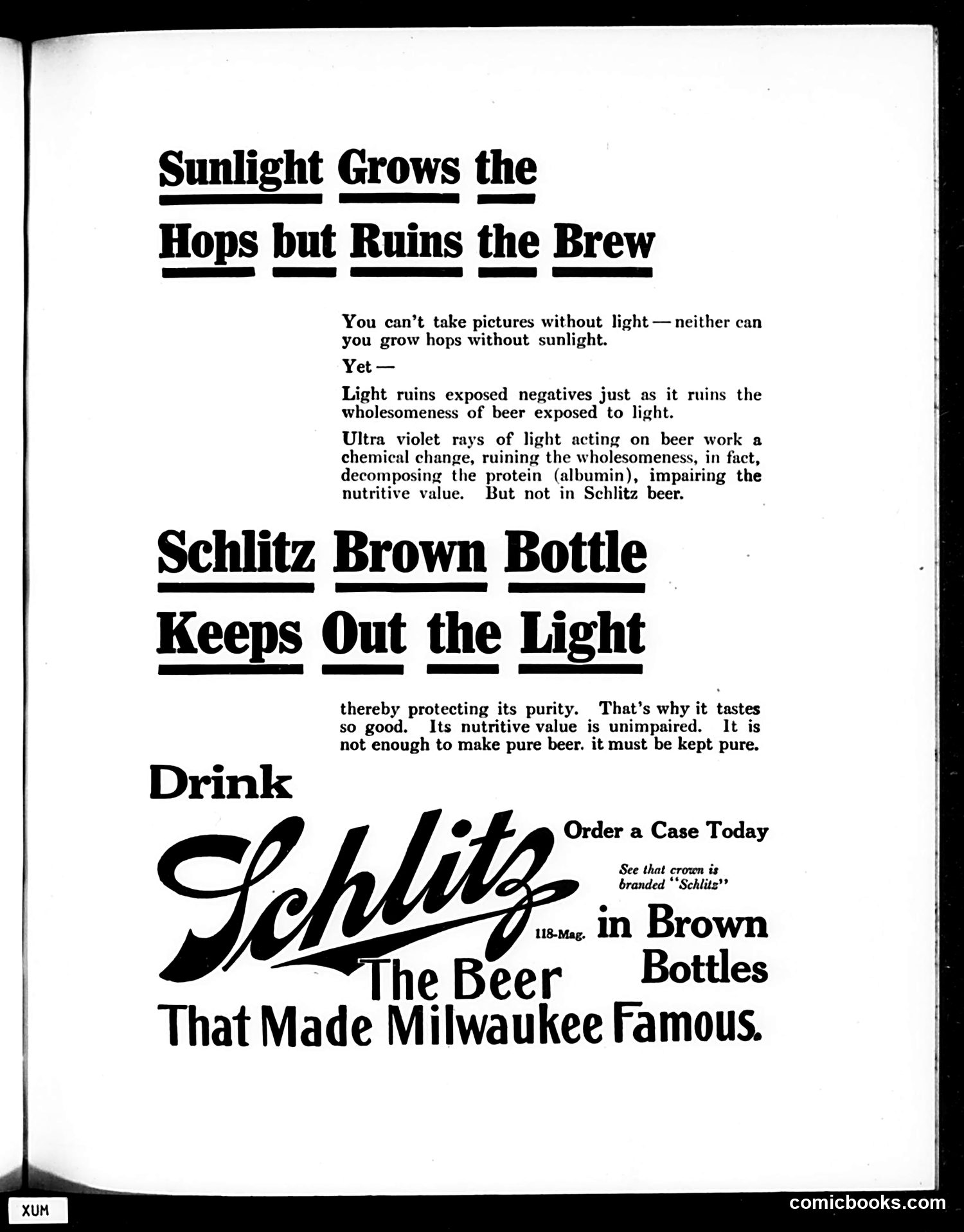
This is an advertisement, not a political cartoon. It promotes Schlitz beer's distinctive brown bottle as a scientific innovation. The ad exploits contemporary understanding of UV light damage to explain why Schlitz uses brown glass: ultraviolet rays chemically degrade beer's proteins and nutritional value, similar to how light ruins photographic negatives. The argument is that while sunlight is necessary to grow hops, it ruins the finished product—*unless* protected by brown bottles. The tagline "The Beer That Made Milwaukee Famous" references Milwaukee's dominance in American beer production during the early 20th century. For modern readers, this highlights how brewers marketed scientific rationales for packaging choices, and how "purity" was a key selling point in beer advertising before modern food safety regulations.
📄 Transcribed text from this page (OCR, searchable)
Machine-transcribed from the original scan — historical spelling and the odd misread are preserved.
Sunlight Grows the Hops but Ruins the Brew You can’t take pictures without light — neither can you grow hops without sunlight. Yet — Light ruins exposed negatives just as it ruins the wholesomeness of beer exposed to light. Ultra violet rays of light acting on beer work a chemical change, ruining the wholesomeness, in fact, decomposing the protein (albumin), impairing the nutritive value. But not in Schlitz beer. Schlitz Brown Bottle Keeps Out the Light thereby protecting its purity. That’s why it tastes so good. Its nutritive value is unimpaired. It is not enough to make pure beer. it must be kept pure. Drink @ Order a Case Today See that crown is branded ‘*Schlits”” ww, IN Brown he er Bottles That Made Milwaukee Famous. comicbooks.com