
Judge, 1915-05-15 · page 10 of 24
Judge — May 15, 1915 — page 10: what you’re looking at
What you’re looking at
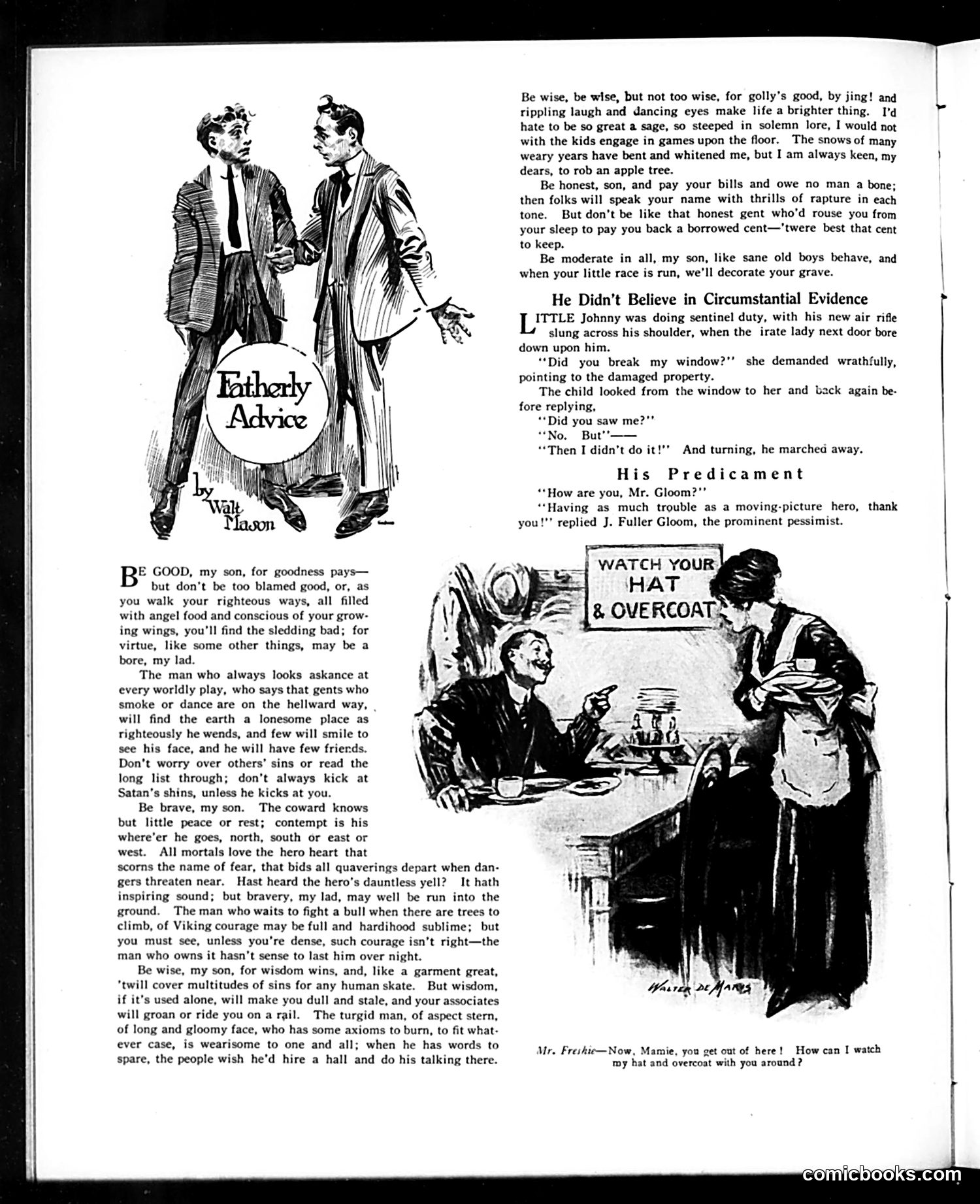
This Judge magazine page contains three distinct pieces: **"Fatherly Advice"** (left): A humorous essay-in-verse about parenting, warning against *excessive* virtue. The satire targets self-righteous moralists—men so obsessed with goodness, temperance, and rule-following that they become unbearably tedious bores whom nobody likes. The twist: moderation in virtue is better than rigid sanctimoniousness. This mocks the stern, joyless moralism of early 20th-century social reformers. **"He Didn't Believe in Circumstantial Evidence"** (top right): A brief comic anecdote where young Johnny, confronted about breaking a neighbor's window, denies it because she didn't actually *see* him do it—despite obvious circumstantial guilt. The joke satirizes literal-minded logic and a child's sophistry. **"His Predicament"** (bottom right): A one-panel gag about Mr. Gloom, a "prominent pessimist," complaining that his movie-star troubles rival those of cinema heroes. The humor lies in his self-absorbed, dramatic pessimism. All three mock human pretension and absurdity in everyday life.
📄 Transcribed text from this page (OCR, searchable)
Machine-transcribed from the original scan — historical spelling and the odd misread are preserved.
E GOOD, my son, for goodness pays— but don’t be too blamed good, or, as you walk your righteous ways, all filled with angel food and conscious of your grow- ing wings, you'll find the sledding bad; for virtue, like some other things, may be a bore, my lad. The man who always looks askance at every worldly play, who says that gents who smoke or dance are on the hellward way, will find the earth a lonesome place as righteously he wends, and few will smile to see his face, and he will have few friends. Don't worry over others’ sins or read the long list through; don’t always kick at Satan's shins, unless he kicks at you. Be brave, my son. The coward knows but little peace or rest; contempt is his where’er he goes, north, south or east or west. All mortals love the hero heart that scorns the name of fear, that bids all quaverings depart when dan- gers threaten near. Hast heard the hero's dauntless yell? It hath inspiring sound; but bravery, my lad, may well be run into the ground. The man who waits to fight a bull when there are trees to climb, of Viking courage may be full and hardihood sublime; but you must see, unless you're dense, such courage isn't right—the man who owns it hasn't sense to last him over night. Be wise, my son, for wisdom wins, and, like a garment great, "twill cover multitudes of sins for any human skate. But wisdom, if it’s used alone, will make you dull and stale, and your associates will groan or ride you on a rail. The turgid man, of aspect stern, of long and gloomy face, who has some axioms to burn, to fit what- ever case, is wearisome to one and all; when he has words to spare, the people wish he'd hire a hall and do his talking there. Be wise, be wise, but not too wise, for golly’s good, by jing! and rippling laugh and dancing eyes make life a brighter thing. I'd hate to be so great a sage, so steeped in solemn lore, I would not with the kids engage in games upon the floor. The snows of many weary years have bent and whitened me, but I am always keen, my dears, to rob an apple tree. Be honest, son, and pay your bills and owe no man a bone; then folks will speak your name with thrills of rapture in each tone. But don’t be like that honest gent who'd rouse you from your sleep to pay you back a borrowed cent—'twere best that cent to keep. Be moderate in all, my son, like sane old boys behave, and when your little race is run, we'll decorate your grave. He Didn’t Believe in Circumstantial Evidence ITTLE Johnny was doing sentinel duty, with his new air rifle slung across his shoulder, when the irate lady next door bore down upon him. “Did you break my window?’’ she demanded wrathfully, pointing to the damaged property. The child looked from the window to her and back again be- fore replying, “Did you saw me?"’ “No. But’’. “Then I didn't do it!’" His Predicament “‘How are you, Mr. Gloom?" ‘Having as much trouble as a moving-picture hero, thank you!" replied J. Fuller Gloom, the prominent pessimist. And turning, he marched away. Mr. Freskico—Now, Mamie, you get out of here! How can I watch my hat and overcoat with you around ?