
Judge, 1914-10-03 · page 4 of 24
Judge — October 3, 1914 — page 4: what you’re looking at
What you’re looking at
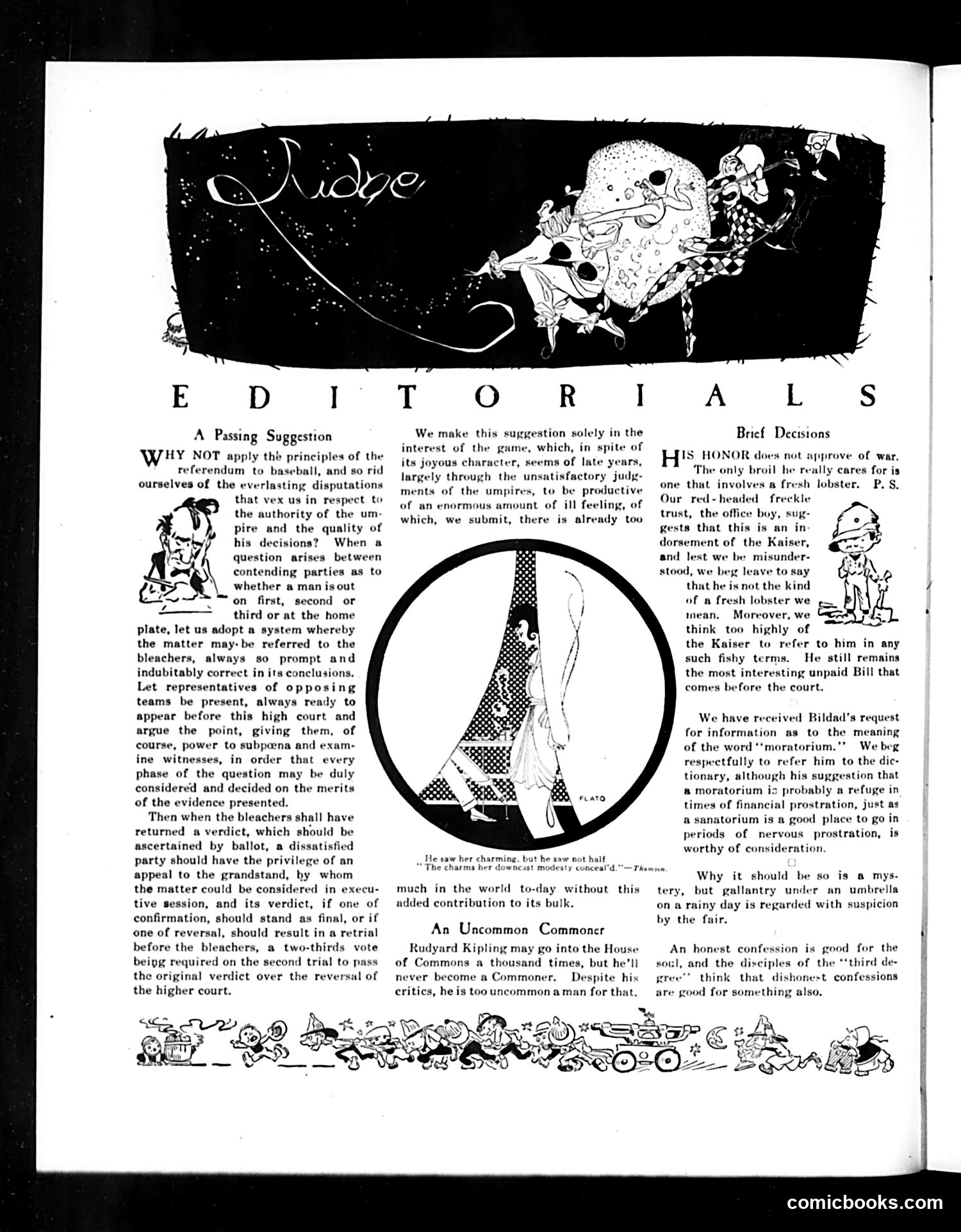
This editorial page contains three sections criticizing baseball umpire decisions and related matters: 1. **"A Passing Suggestion"** (left): Argues for applying referendum principles to baseball disputes, suggesting umpire decisions be subject to review by opposing teams and bleachers, with appeals possible to higher authority. 2. **Central illustration**: Shows a woman's leg, captioned with a Parisian quote about charm and modesty—likely satirizing contemporary debates about women's fashion (hemlines were rising during this era). 3. **"Brief Decisions"** (right): Defends the Kaiser against "fresh lobster" insults, discusses "moratoriums" versus sanitariums, and debates whether dishonest confessions benefit the soul. The page blends sports satire with social commentary typical of Judge's mixed editorial content.
📄 Transcribed text from this page (OCR, searchable)
Machine-transcribed from the original scan — historical spelling and the odd misread are preserved.
E D 1 A Passing Suggestion WHY NOT apply thé principles of the referendum to baseball, and so rid ourselves of the everlasting disputations that vex us in respect to SS the authority of the um- pire and the quality of ‘why? his decision?” Whew 2 UY question arises between contending parties as to (3 A" whether a man is out ri > on first, second or third or at the home plate, let us adopt a system whereby the matter may-be referred to the bleachers, always so prompt and indubitably correct in its conclusions. Let representatives of opposing teams be present, always ready to appear before this high court and argue the point, giving them, of course, power to subpcena and exam- ine witnesses, in order that every phase of the question may be duly considered and decided on the merits of the evidence presented. Then when the bleachers shall have returned a verdict, which should be ascertained by ballot, a dissatisfied party should have the privilege of an appeal to the grandstand, hy whom the matter could be considered in execu- tive session, and its verdict, if one of confirmation, should stand as final, or if one of reversal, should result in a retrial before the bleachers, a two-thirds vote beiyg required on the second trial to pass the original verdict over the reversal of the higher court. T O R ] We make this suggestion solely in the interest of the game, which, in spite of its joyous character, seems of late years, largely through the unsatisfactory judg- ments of the umpires, to be productive of an enormous amount of ill feeling, of which, we submit, there is already too He saw her charming. but he s: "The charms her downcast mod. much in the world to-day without this added contribution to its bulk. An Uncommon Commoner Rudyard Kipling may go into the House of Commons a thousand times, but he'll never become a mmoner. Despite his critics, he is too uncommon aman for that. — Thome A L_S§ Brief Decisions HS HONOR does not approve of war. ‘The only broil he really cares for is one that involves a fresh lobster. P, S, Our red-headed fre trust, the office buy, sug- gests that this is an dorsement of the Kaiser, and lest we be misunde stood, we beg leave to say Klee that he is not the kind of a fresh lobster we mean. Moreover, we think too highly of the Kaiser to refer to him in any such fishy terms. He still remains the most interesting unpaid Bill that comes before the court. We have received Bildad’s request for information as to the meaning of the word ‘moratorium. We beg pectfully to vr him to the dic- tionary, although his suggestion that a moratorium is probably a refuge in times of financial prostration, just as a sanatorium is a good place to go in periods of nervous prostration, is worthy of consideration. Why it should be so is a mys- tery, but gallantry under an umbrella ona rainy day is re rded with suspicion by the fair. An honest confession is good for the :I, and the disciples of the ‘third de- think that dishonest confessions comicbooks.com