
Judge, 1912-09-07 · page 10 of 24
Judge — September 7, 1912 — page 10: what you’re looking at
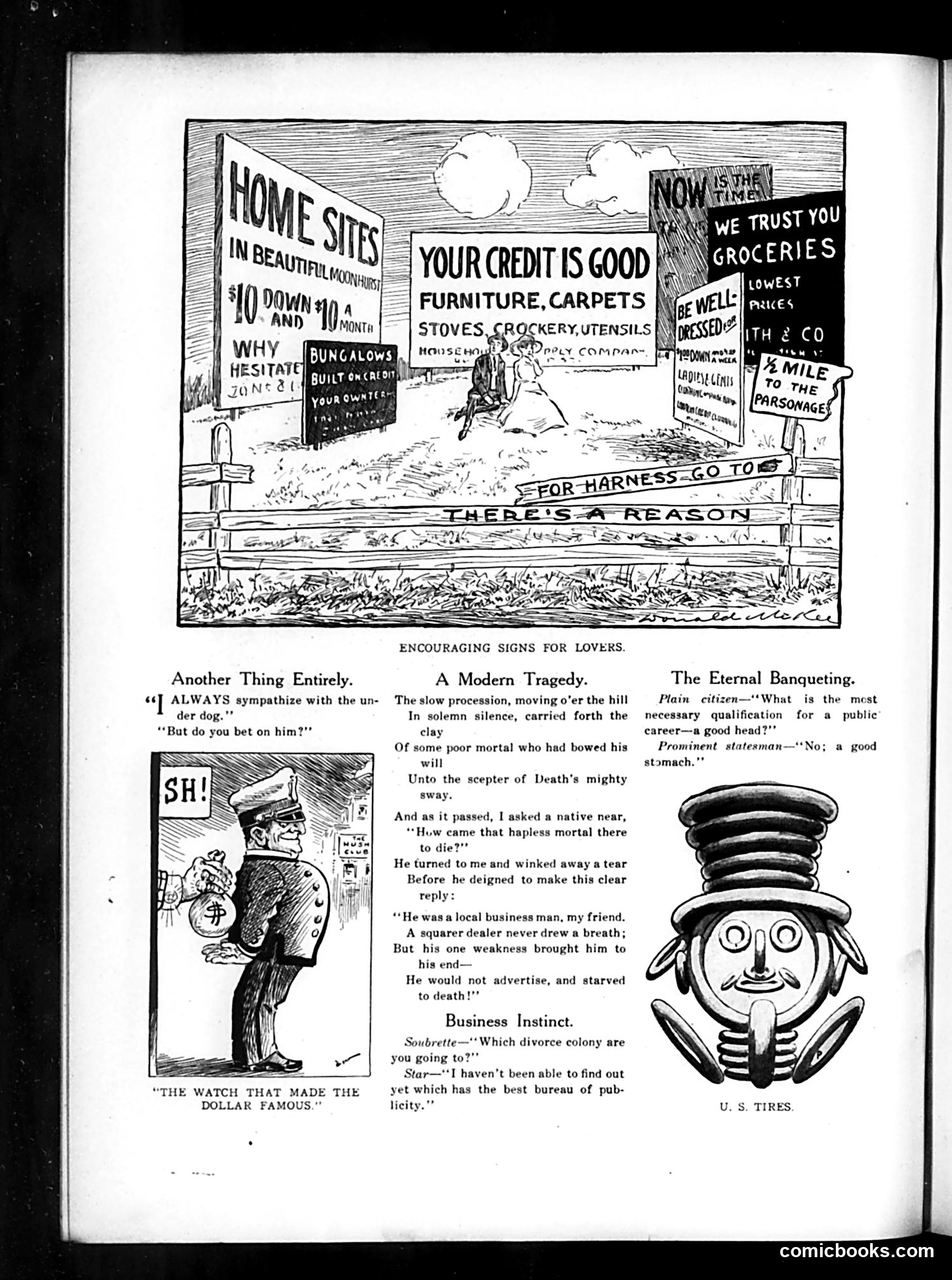
What you’re looking at
This satirical page mocks early 20th-century American consumer culture and business ethics through several interconnected jokes. The top cartoon depicts a rural couple surrounded by commercial signs offering credit for homes, furniture, and groceries—satirizing aggressive marketing to unsophisticated buyers with limited means ("$10 down and $10 a month"). Below, "The Watch That Made the Dollar Famous" shows a businessman, likely referencing a real famous watch advertisement, emphasizing commerce's grip on American identity. The main satirical pieces target business hypocrisy: "A Modern Tragedy" darkly jokes that a local businessman died from refusing to advertise—implying that in modern commerce, self-promotion matters more than honest dealings. "Business Instinct" mocks that publicity trumps actual qualification. "The Eternal Banqueting" suggests politicians prioritize appetite (greed) over intellect. Together, these pieces critique 1920s American capitalism's emphasis on marketing, credit consumption, and appearance over substance—a surprisingly modern critique for the era.
📄 Transcribed text from this page (OCR, searchable)
Machine-transcribed from the original scan — historical spelling and the odd misread are preserved.
FURNITURE, CARPETS LOWEST PRICES STOVES, CR CKERY, UTENSILS . iP aI Se RY PP COMPAn= est Another Thing Entirely. 46] ALWAYS sympathize with the un- der dog.’ “But do you bet on him?” “THE WATCH THAT MADE THE DOLLAR FAMOUS." ENCOURAGING SIGNS FOR LOVERS. A Modern Tragedy. The slow procession, moving o'er the hill In solemn silence, carried forth the clay Of some poor mortal who had bowed his will Unto the scepter of Death's mighty sway. And as it passed, I asked a native near, ‘How came that hapless mortal there to die?”” He turned to me and winked away a tear Before he deigned to make this clear reply: “He was a local business man, my friend. A squarer dealer never drew a breath; But his one weakness brought him to his end— He would not advertise, and starved to death!"’ Business Instinct. Soubrette—" Which divorce colony are you going to?”" Star—''I haven't been able to find out yet which has the best bureau of pub- licity.”” The Eternal Banqueting. Plain citizen—**What necessary qualification career—a good head?” Prominent statesman—‘'No; is the most for a public a good stomach.”” U. S. TIRES. comicbooks.com