
Judge, 1911-05-20 · page 9 of 24
Judge — May 20, 1911 — page 9: what you’re looking at
What you’re looking at
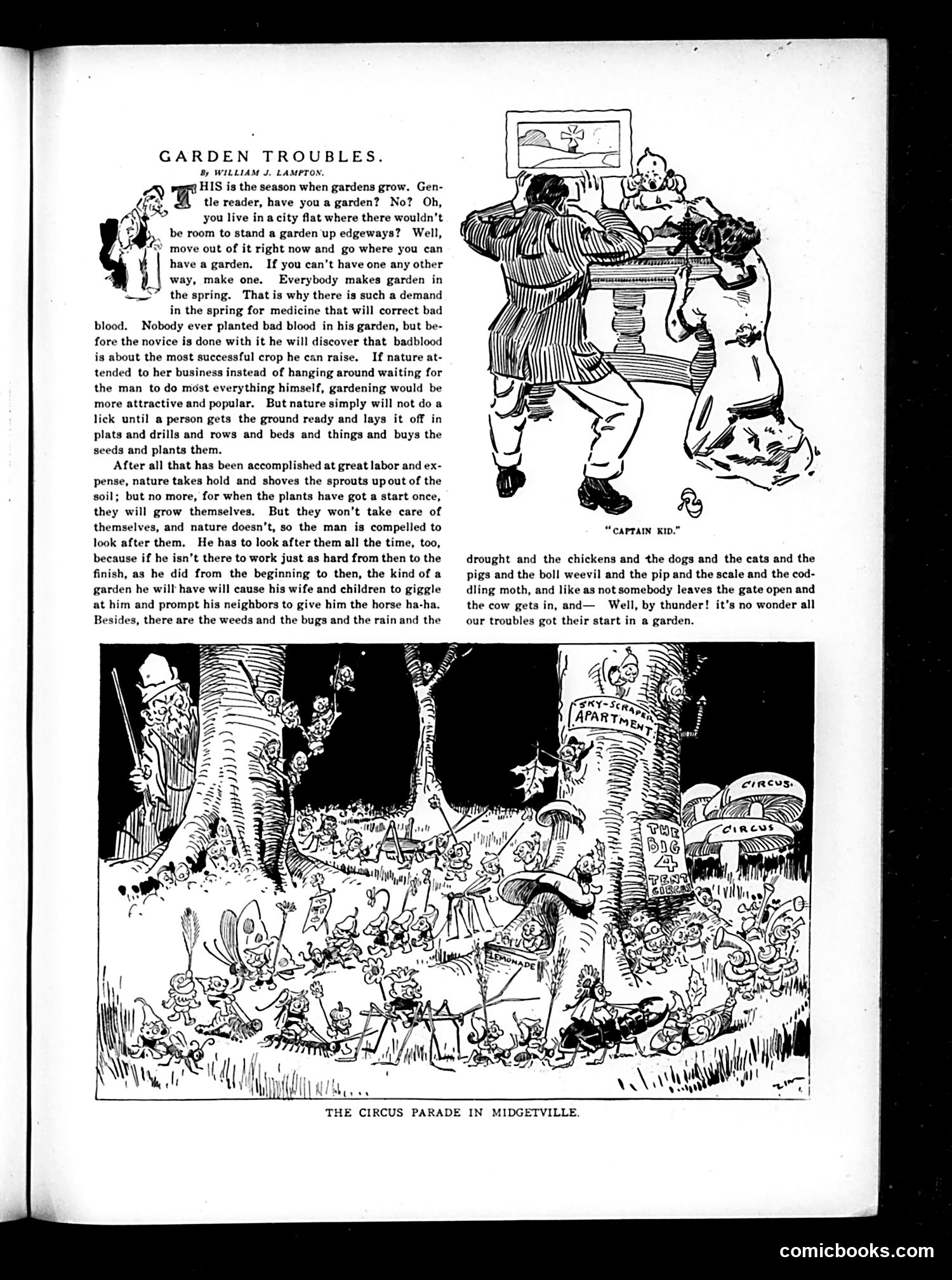
This page contains two distinct pieces. The main article by William J. Lampton humorously catalogs the frustrations of spring gardening through satirical exaggeration. The author ironically suggests everyone should garden, then systematically details why gardening is actually a disaster: it requires backbreaking labor, nature refuses to cooperate beyond sprouting, pests multiply (weeds, bugs, animals), weather interferes, and domestic chaos ensues. The final punchline—"it's no wonder all our troubles got their start in a garden"—references the biblical Garden of Eden, sardonically blaming humanity's original sin location for all modern problems. The accompanying illustrations are light comic supplements: "Captain Kid" depicts people at a desk (possibly a pun on Kidd the pirate), and "The Circus Parade in Midgetville" shows a whimsical miniature circus among giant trees—likely a fantastical scene for entertainment. The satire targets the romanticization of gardening as simple, therapeutic work when reality proves exhausting and futile.
📄 Transcribed text from this page (OCR, searchable)
Machine-transcribed from the original scan — historical spelling and the odd misread are preserved.
GARDEN TROUBLES. By WILLIAM J. LAMPTON. HIS is the season when gardens grow. Gen- tle reader, have you a garden? No? Oh, you live inacity flat where there wouldn’t _ be room to stand a garden up edgeways? Well, * move out of it right now and go where you can have a garden. If you can’t have one any other way, make one. Everybody makes garden in the spring. That is why there is such a demand in the spring for medicine that will correct bad blood. Nobody ever planted bad blood in his garden, but be- fore the novice is done with it he will discover that badblood is about the most successful crop he can raise. If nature at- tended to her business instead of hanging around waiting for the man to do most everything himself, gardening would be more attractive and popular. But nature simply will not do a lick until a person gets the ground ready and lays it off in plats and drills and rows and beds and things and buys the seeds and plants them. After all that has been accomplished at great labor and ex- pense, nature takes hold and shoves the sprouts upout of the soil; but no more, for when the plants have got a start once, they will grow themselves. But they won't take care of themselves, and nature doesn’t, so the man is compelled to look after them. He has to look after them all the time, too, because if he isn’t there to work just as hard from then to the finish, as he did from the beginning to then, the kind of a garden he will have will cause his wife and children to giggle at him and prompt his neighbors to give him the horse ha-ha. Besides, there are the weeds and the bugs and the rain and the i AUN HALA ke os “CAPTAIN KID.” drought and the chickens and the dogs and the cats and the pigs and the boll weevil and the pip and the scale and the cod- dling moth, and like as not somebody leaves the gate open and the cow gets in, and— Well, by thunder! it’s no wonder all our troubles got their start in a garden. SY t \ RN wy THE CIRCUS PARADE IN MIDGETVILLE. comicbooks.com