
Judge, 1909-02-20 · page 15 of 16
Judge — February 20, 1909 — page 15: what you’re looking at
What you’re looking at
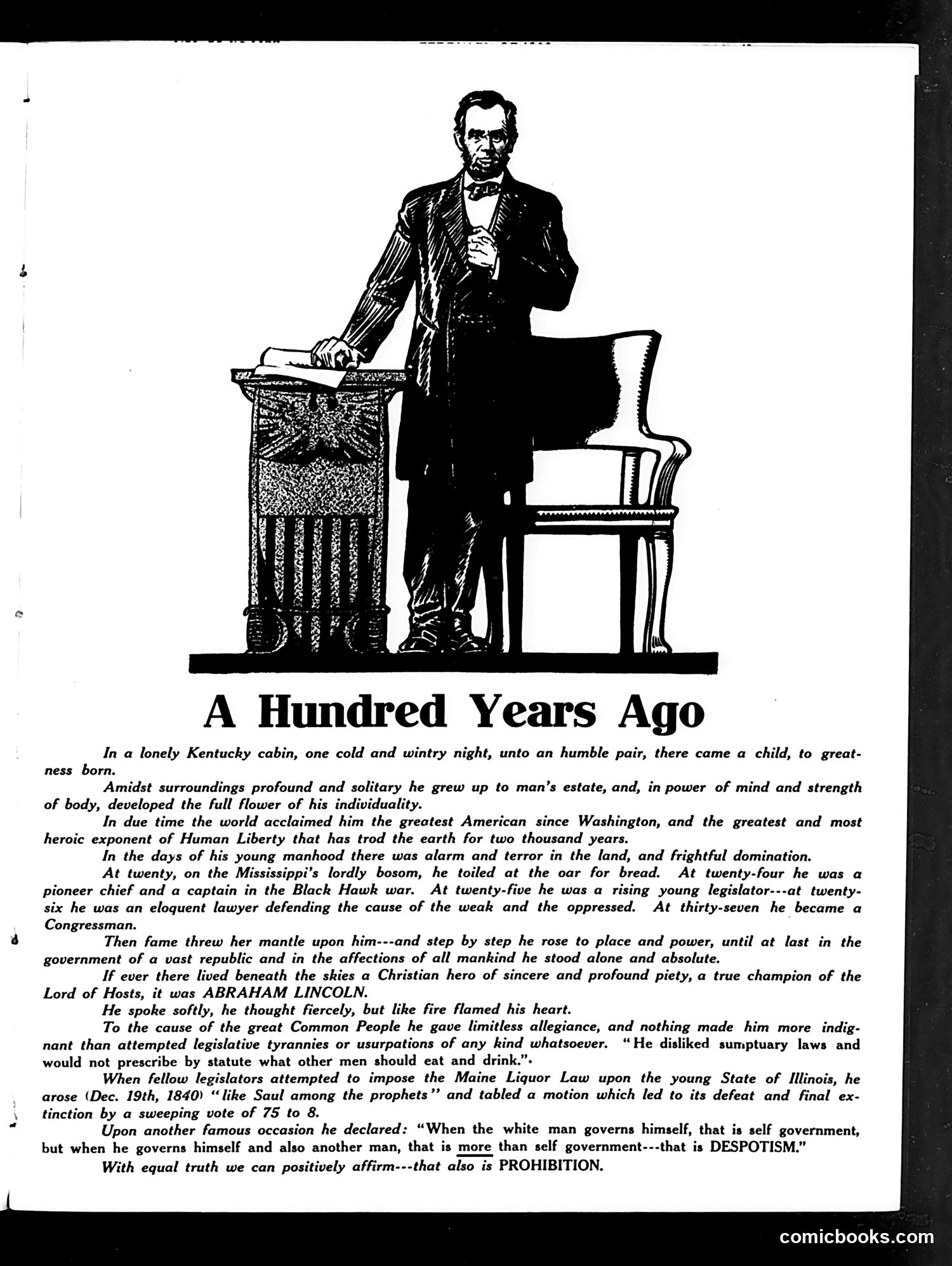
This commemorative piece celebrates Abraham Lincoln's centennial birth (100 years prior to publication). The engraving shows Lincoln at a lectern, positioned as a statesman and orator. The text glorifies Lincoln's life trajectory from Kentucky poverty to presidency, emphasizing his defense of "the weak and the oppressed" and his opposition to governmental overreach. The final section reveals the satire's actual purpose: it's an anti-Prohibition argument. By quoting Lincoln's famous 1840 declaration against government controlling citizens' behavior ("that is DESPOTISM"), the piece uses Lincoln's authority to argue that Prohibition laws—specifically the Maine Liquor Law—constitute tyranny. The conclusion equates Prohibition with despotism, using Lincoln's legacy as rhetorical ammunition against temperance legislation that was gaining momentum in early 20th-century America.
📄 Transcribed text from this page (OCR, searchable)
Machine-transcribed from the original scan — historical spelling and the odd misread are preserved.
A Hundred Years Ago In a lonely Kentucky cabin, one cold and wintry night, unto an humble pair, there came a child, to great- ness born. Amidst surroundings profound and solitary he grew up to man’s estate, and, in power of mind and strength of body, developed the full flower of his individuality. In due time the world acclaimed him the greatest American since Washington, and the greatest and most heroic exponent of Human Liberty that has trod the earth for two thousand years. In the days of his young manhood there was alarm and terror in the land, and frightful domination. At twenty, on the Mississippi’s lordly bosom, he toiled at the oar for bread. At twenty-four he was a pioneer chief and a captain in the Black Hawk war. At twenty-five he was a rising young legislator---at twenty- six he was an eloquent lawyer defending the cause of the weak and the oppressed. At thirty-seven he became a Congressman. Then fame threw her mantle upon him---and step by step he rose to place and power, until at last in the government of a vast republic and in the affections of all mankind he stood alone and absolute. If ever there lived beneath the skies a Christian hero of sincere and profound piety, a true champion of the Lord of Hosts, it was ABRAHAM LINCOLN. He spoke softly, he thought fiercely, but like fire flamed his heart. To the cause of the great Common People he gave limitless allegiance, and nothing made him more indig- nant than attempted legislative tyrannies or usurpations of any kind whatsoever. “He disliked sumptuary laws and would not prescribe by statute what other men should eat and drink.”- When fellow legislators attempted to impose the Maine Liquor Law upon the young State of Illinois, he arose (Dec. 19th, 1840) “like Saul among the prophets’ and tabled a motion which led to its defeat and final ex- tinction by a sweeping vote of 75 to 8. Upon another famous occasion he declared: “When the white man governs himself, that is self government, but when he governs himself and also another man, that is more than self government---that is DESPOTISM.” With equal truth we can positively affirm---that also is PROHIBITION. comicbooks.com