
Judge, 1904-07-09 · page 9 of 24
Judge — July 9, 1904 — page 9: what you’re looking at
What you’re looking at
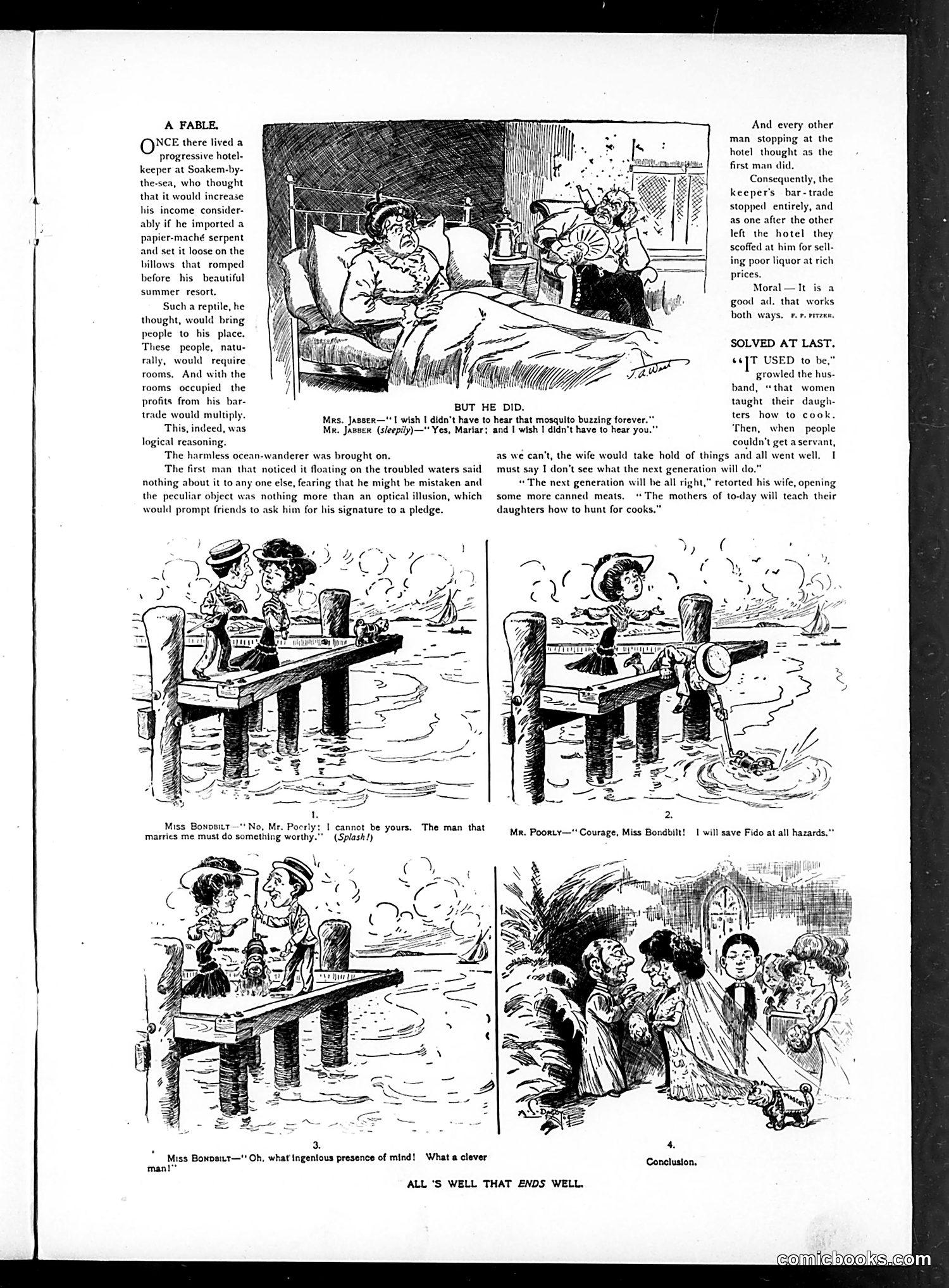
This page contains three separate satirical pieces: **"A Fable"** mocks resort marketing fraud. A hotel-keeper imports a fake papier-maché sea serpent to attract tourists, hoping increased guests will boost bar profits. Instead, guests recognize the hoax, lose confidence in the establishment (fearing the owner is a charlatan or drunk), and leave—ruining business. The moral criticizes dishonest advertising. **"Solved at Last"** satirizes changing domestic labor. A husband laments that modern mothers no longer teach daughters to cook, making servants essential. His wife retorts that modern mothers will instead teach daughters "how to hunt for cooks"—implying the servant shortage means women must find cooks rather than be them. This reflects early 20th-century anxieties about domestic help scarcity and shifting gender roles. **The comic strips** appear to depict a melodramatic romantic subplot involving Miss Bombelt rejecting a suitor, a man saving a dog, and a wedding conclusion—though specifics are unclear from image quality alone. The page satirizes consumer deception, domestic service crises, and romantic conventions typical of Judge's humor.
📄 Transcribed text from this page (OCR, searchable)
Machine-transcribed from the original scan — historical spelling and the odd misread are preserved.
A FABLE, NCE there lived a progressive hotel- keeper at Soakem-by- the-sea, who thought that it would increase his income consider- ably if he imported a papier-maché serpent and set it loose on the billows that romped before his beautiful summer resort. Such a reptile, he thought, would bring people to his place. These people, natu- rally, would require rooms. And with the rooms occupied the profits from his bar- trade would multiply. This, indeed, was logical reasoning. The harmless ocean-wanderer was brought on. The first man that noticed it floating on the troubled waters said nothing about it to any one else, fearing that he might be mistaken and the peculiar object was nothing more than an optical illusion, which would prompt friends to ask him for his signature to a pledge. L Miss Bopsitr "No, Mr. Pocrly: I cannot be yours. The man that marries me must do something worthy.” (Splash!) 3. man! BUT HE DID. Mrs. Jasser—"'I wish I didn't have to hear that mosquito buzzing forever."* Mr. Jansen (sleepily)—"* Yes, Marlar; and I wish I didn’t have to hear you." Miss Bonpai.t—"‘ Oh, what ingenlous presence of mind! What a clever " ALL 'S WELL THAT ENDS WELL. And every other man stopping at the hotel thought as the first man did. Consequently, the keeper's bar-trade stopped entirely, and as one after the other left the hotel they scoffed at him for sell- ing poor liquor at rich prices. Moral —It is a good ad. that works both ways, rr. rrrzen, SOLVED AT LAST. 66]T USED to be,” growled the hus- band, “that women taught their daugh- ters how to cook. Then, when people couldn't get a servant, as we can't, the wife would take hold of things and all went well, I must say I don’t see what the next generation will do.” “The next generation will he all right,” retorted his wife, opening some more canned meats. “The mothers of to-day will teach their daughters how to hunt for cooks.” a a ee '\ Ln Mr. Poorty—‘* Courage, Miss Bondbilt! | will save Fido at all hazards."