
Judge, 1902-09-13 · page 16 of 16
Judge — September 13, 1902 — page 16: what you’re looking at
What you’re looking at
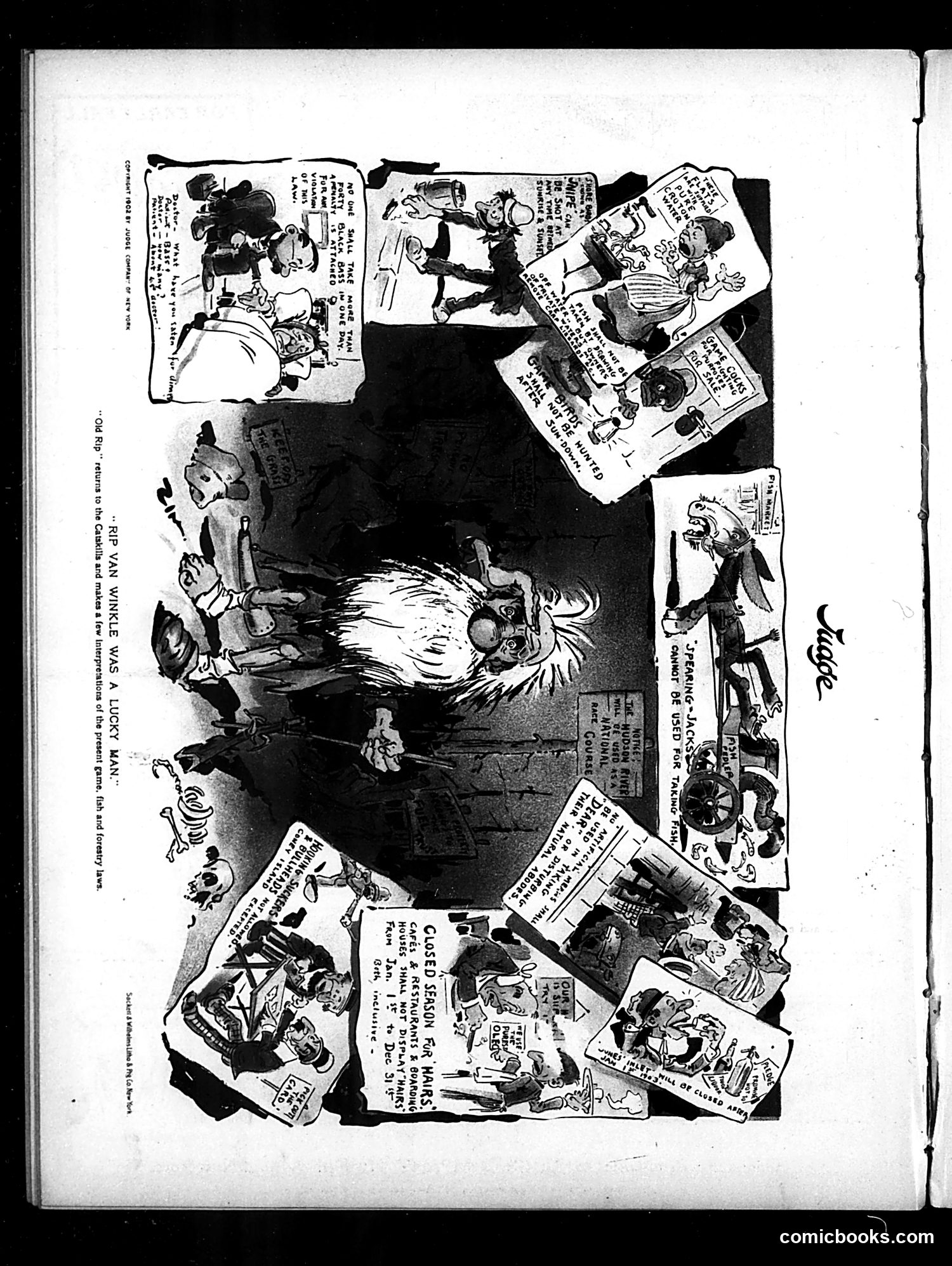
This page satirizes New York State's newly enacted game and fishing regulations through the conceit of Washington Irving's "Rip Van Winkle"—a man who slept for decades and awoke to a changed world. The central figure appears to be "Old Rip" encountering bewildering modern conservation laws. The surrounding comic panels mock specific regulations: a "closed season for hairs" in restaurants (likely addressing unsanitary food practices), restrictions on black bass catches (40-fish daily limit), and other forestry/game laws. The satire suggests these regulations are absurdly bureaucratic and overly restrictive—treating citizens like Rip, confused and regulated beyond comprehension. The title "Rip Van Winkle Was a Lucky Man" implies he's fortunate to have slept through an era of increasing governmental interference in everyday activities. This reflects turn-of-the-century anxiety about expanding state regulation of commerce and leisure.
📄 Transcribed text from this page (OCR, searchable)
Machine-transcribed from the original scan — historical spelling and the odd misread are preserved.
E io) Q n x ° fo) 2 2 = 5 cs) { CLOSED SEASON Fur HAIRS" Cafés & RESTAURANTS & BOARDING! HOUSES SHALL NOT DISPLAY “HAIRS Feom Jan. IF te Dec 31 iF Beth inclusive — MO OME SHALE TAKE MaGRE THAN FoRTy BLACK BASS IM ONE Day, APENATY SSUATTACHEO FoR aw eo viowatan | oF ws (epee bve you Saten Vf Tine COPYMONT 1902 BY JUDGE COMPANY OF MEW YORK. . ‘Sachee $ Witbeims ithe 8 Pr (o.New York “RIP VAN WINKLE WAS A LUCKY MAN.” “Old Rip" returns to the Catskills and makes a few interpretations of the present game, fish and forestry laws.