
Judge, 1902-06-28 · page 5 of 17
Judge — June 28, 1902 — page 5: what you’re looking at
What you’re looking at
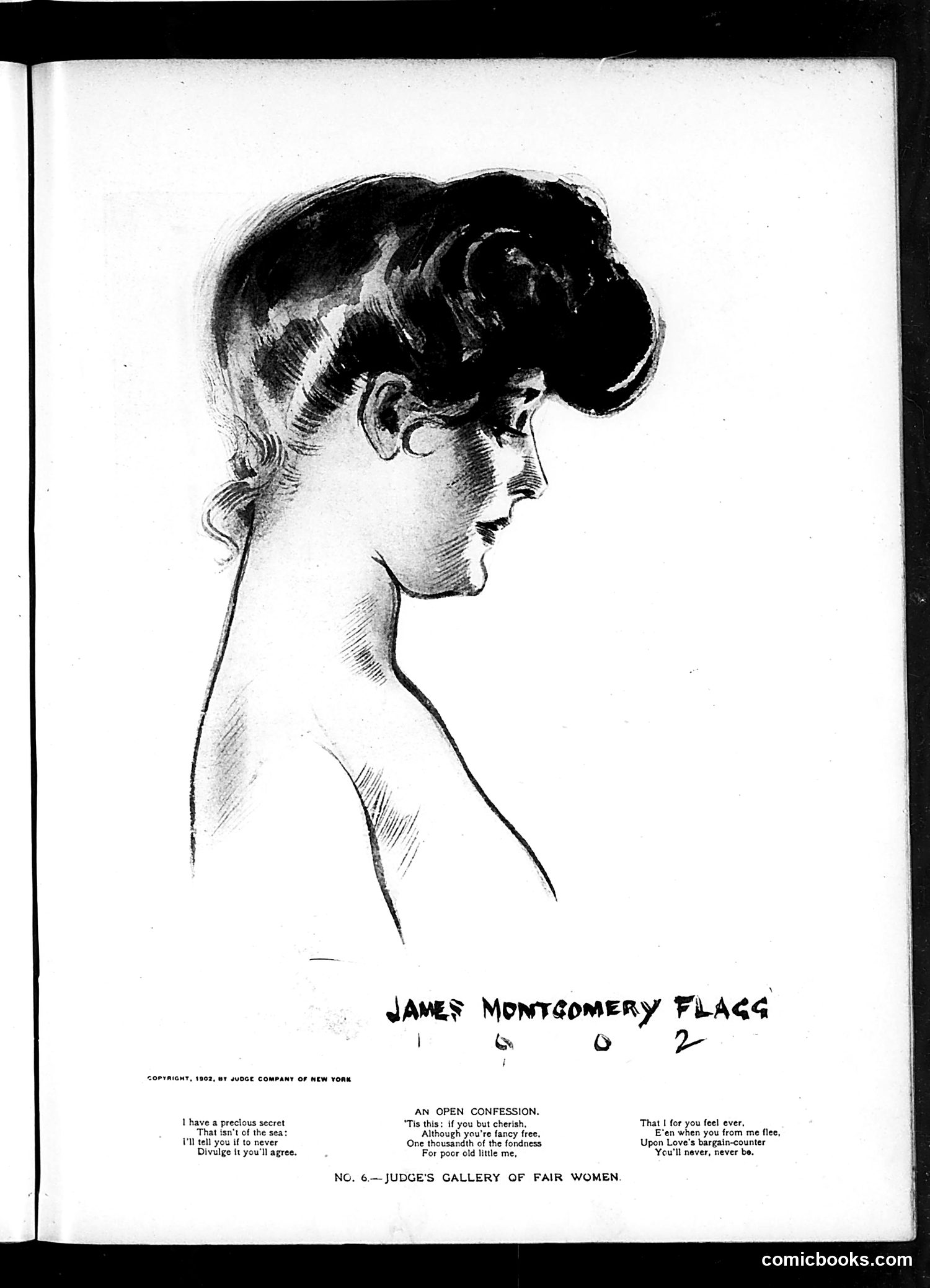
This page features a profile portrait by James Montgomery Flagg, a prominent American illustrator, presented as part of Judge's "Gallery of Fair Women" — a recurring feature celebrating attractive women, likely actresses or socialites of the era. The accompanying poem, "An Open Confession," is a sentimental love declaration expressing unrequited devotion. The speaker confesses a secret: their deep affection for the woman pictured, hoping she reciprocates even slightly. The final couplet reassures her that despite her romantic freedom ("fancy free"), she won't be "bargained" away on "Love's counter" — a somewhat awkward attempt at romantic flattery. This reflects early-1900s magazine culture: combining high-quality artistic portraiture with sentimental verse to appeal to middle-class readers. The content is decorative rather than satirical, typical of Judge's softer editorial content alongside its political cartoons.
📄 Transcribed text from this page (OCR, searchable)
Machine-transcribed from the original scan — historical spelling and the odd misread are preserved.
COPYRIGHT, 1902, BT JUDGE COMPANY OF NEW YORK, Ihave a precious secret That isn’t of the sea: V1 tell you if to never Divulge it you'll agree. JAMES MONTGOMERY FLAGS | Ge i AN OPEN CONFESSION. ‘Tis this: if you but cherish, Although you're fancy free, One thousandth of the fondness For poor old little me, NO. 6.— JUDGE'S GALLERY OF FAIR (e) 2? That | for you feel ever, E’en when you from me flee, Upon Love's bargain-counter You'll never, never be, comicbooks.com