
Judge, 1901-11-02 · page 16 of 16
Judge — November 2, 1901 — page 16: what you’re looking at
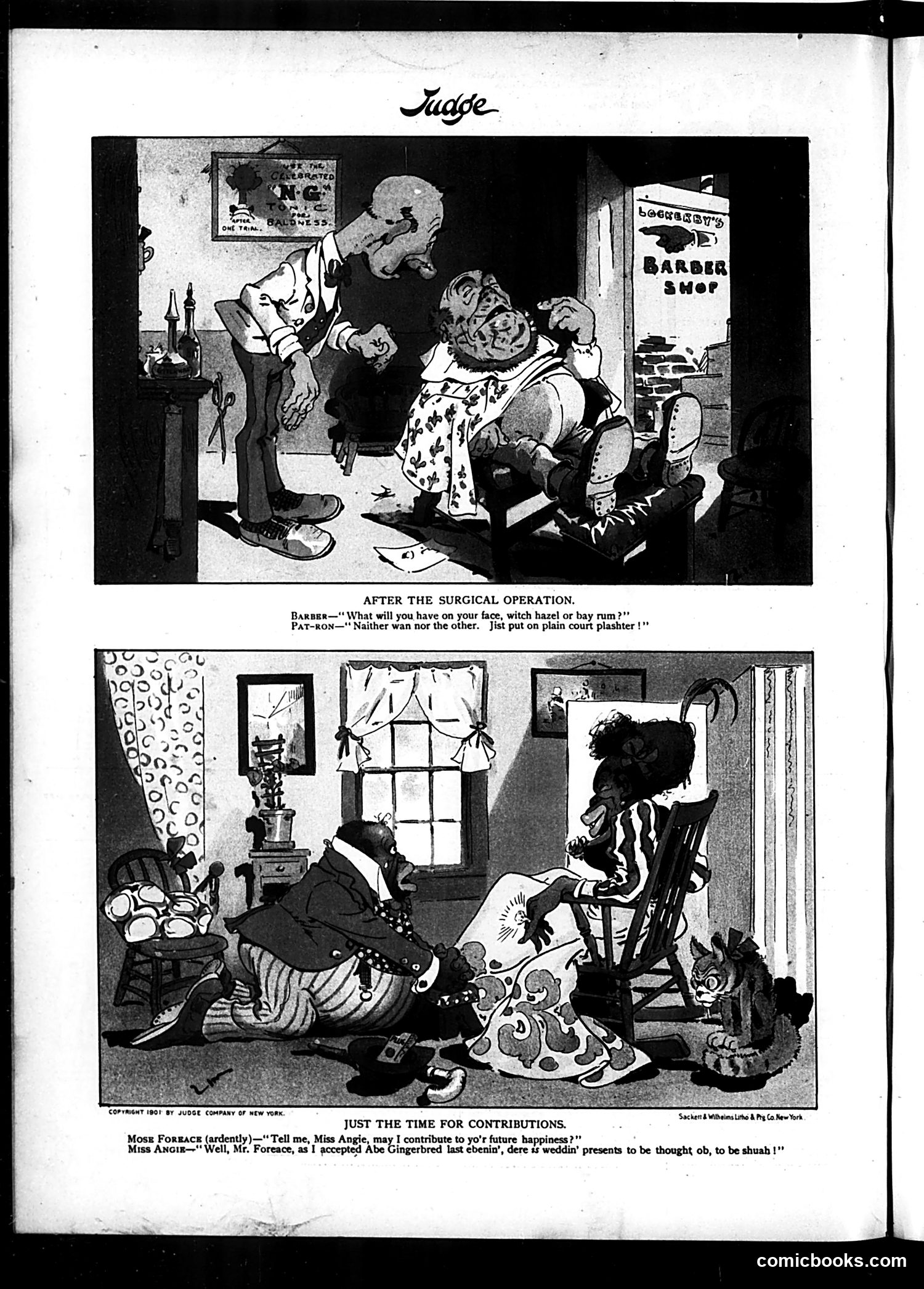
What you’re looking at
These two cartoons use ethnic caricature humor typical of early 20th-century American satire. **Top cartoon:** A barber tends to a client with facial bandages after "surgical operation." The joke plays on Irish dialect ("Naither wan nor the other") and suggests the client's face needed medical intervention—implying Irish people's appearance as inherently flawed or comical. **Bottom cartoon:** "Moss Forback" (depicted with exaggerated features) proposes to "Miss Angie," but she's already accepted "Abe Gingerbred" the previous evening. Her response—focused on wedding gifts rather than romance—satirizes women as mercenary. The names and accents suggest Jewish and Irish characters, common targets for ethnic ridicule in Judge's satire. Both rely on period stereotypes: Irish and Jewish immigrants portrayed through dialect, caricatured features, and dismissive characterization. The humor assumes readers shared these prejudices.
📄 Transcribed text from this page (OCR, searchable)
Machine-transcribed from the original scan — historical spelling and the odd misread are preserved.
AFTER THE SURGICAL OPERATION. Barsgr—“ What will you have on your face, witch hazel or bay rum?” Pat-Ron—"' Naither wan nor the other. Jist put on plain court plashter !"* copa JUST THE TIME FOR CONTRIBUTIONS. ‘Seeentiemeiatl ate An cores Mosn Fonzace (ardently) ="Tell me, Miss Angi, may I contribute to yor future happiness?” Miss Ancir—“‘ Well, Mr. Foreace, as I accepted Abe Gingerbred last ebenin’, dere #5 weddin’ presents to be thought ob, to be shuah !'” comicbooks.com