
Judge, 1901-04-06 · page 6 of 16
Judge — April 6, 1901 — page 6: what you’re looking at
What you’re looking at
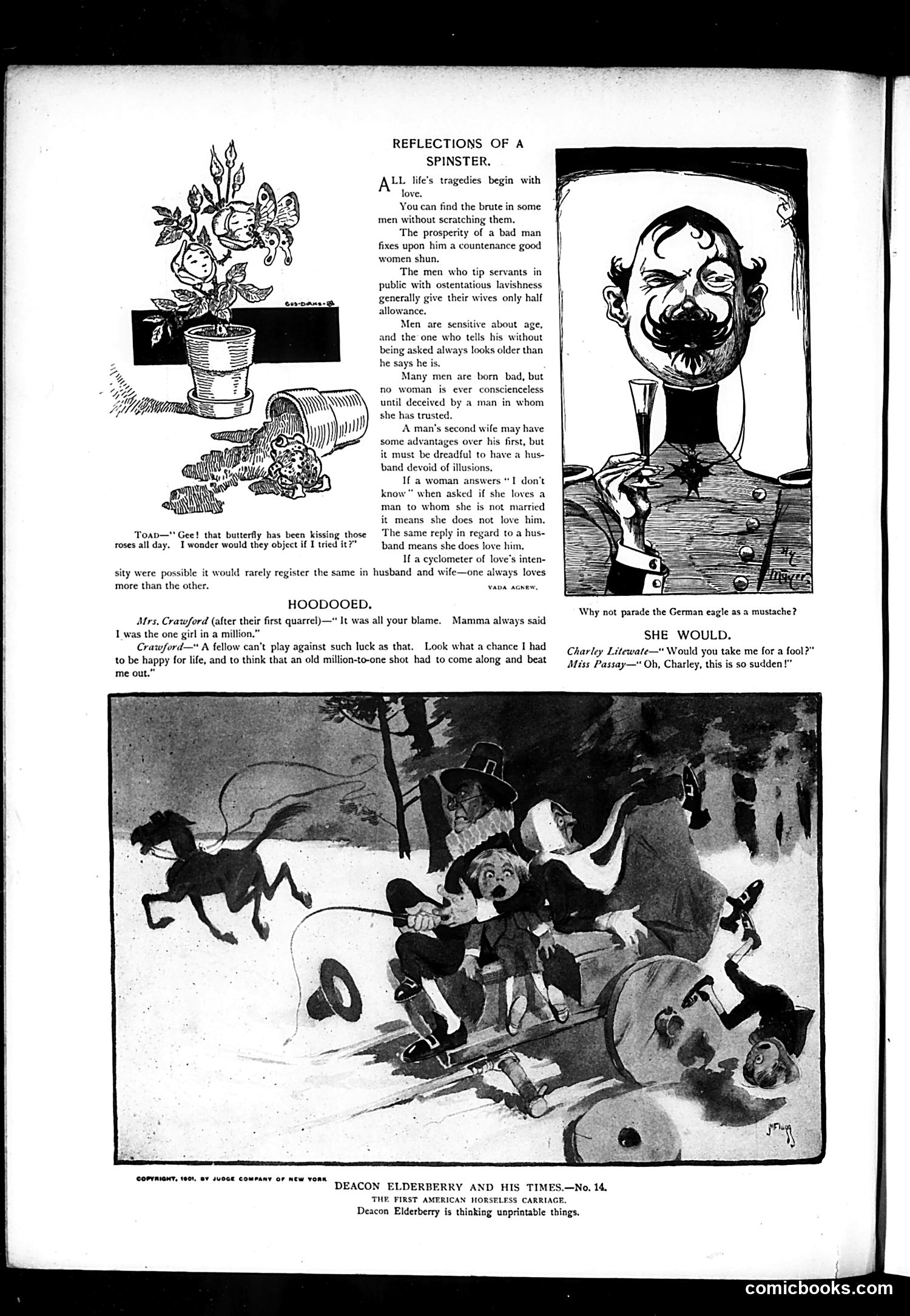
This page contains early-20th-century satirical humor targeting romantic and marital relationships. The main content includes: **"Reflections of a Spinster"**: Cynical observations about men and marriage, presumably from an unmarried woman's perspective, touching on infidelity, materialism, and the different intensities of love between spouses. **The cartoons** feature domestic humor typical of the era: - A toad kissing roses (innuendo humor) - A caricatured man's head commenting on German eagles/mustaches (unclear reference, possibly anti-German sentiment given the 1901 copyright date) - "Deacon Elderberry and His Times": Shows a man apparently disturbed by an early motorcar ("horseless carriage"), suggesting generational anxiety about new technology replacing traditional transportation The humor relies on period stereotypes about gender relations, class pretension, and technological disruption. The tone is condescending toward both women and social climbers, characteristic of early Judge magazine's satirical approach.
📄 Transcribed text from this page (OCR, searchable)
Machine-transcribed from the original scan — historical spelling and the odd misread are preserved.
REFLECTIONS OF A SPINSTER. ALE life's tragedies begin with love. You can find the brute in some men without scratching them. The prosperity of a bad man fixes upon him a countenance good women shun, The men who tip servants in public with ostentatious lavishness generally give their wives only half allowance. Men are sensitive about age, and the one who tells his without being asked always looks older than he says he is. Many men are born bad, but no woman is ever conscienceless until deceived by a man in whom she has trusted. A man's second wife may have some advantages over his first, but it must be dreadful to have a hus- band devoid of illusions, If a woman answers “I don’t know” when asked if she loves a man to whom she is not married it means she does not love him. Toap—"' Gee! that butterfly has been kissing those The same reply in regard to a hus- roses all day, I wonder would they object if I tried it?” band means she does love him. If a cyclometer of love's inten- sity were possible it would rarely register the same in husband and wife—one always loves more than the other. VADA AGHEW, HOODOOED. Mrs, Crawford (after their first quarrel) —“ It was all your blame. Mamma always said I was the one girl in a million.” Crawford—" A fellow can't play against such luck as that. Look what a chance I had Why not parade the German eagle as a mustache? SHE WOULD. Charley Litewate—" Would you take me for a fool?” Miss Passay—* Oh, Charley, this is so sudden!" to be happy for life, and to think that an old million-to-one shot had to come along and beat COPYRIGHT, 1801, ay JUDGE COMPANY OF REW YORK DEACON ELDERBERRY AND HIS TIME THE FIRST AMERICAN HORSELFSS CARRIA Deacon Elderberry is thinking unprintable things. comicbooks.com