
Judge, 1898-02-05 · page 16 of 16
Judge — February 5, 1898 — page 16: what you’re looking at
What you’re looking at
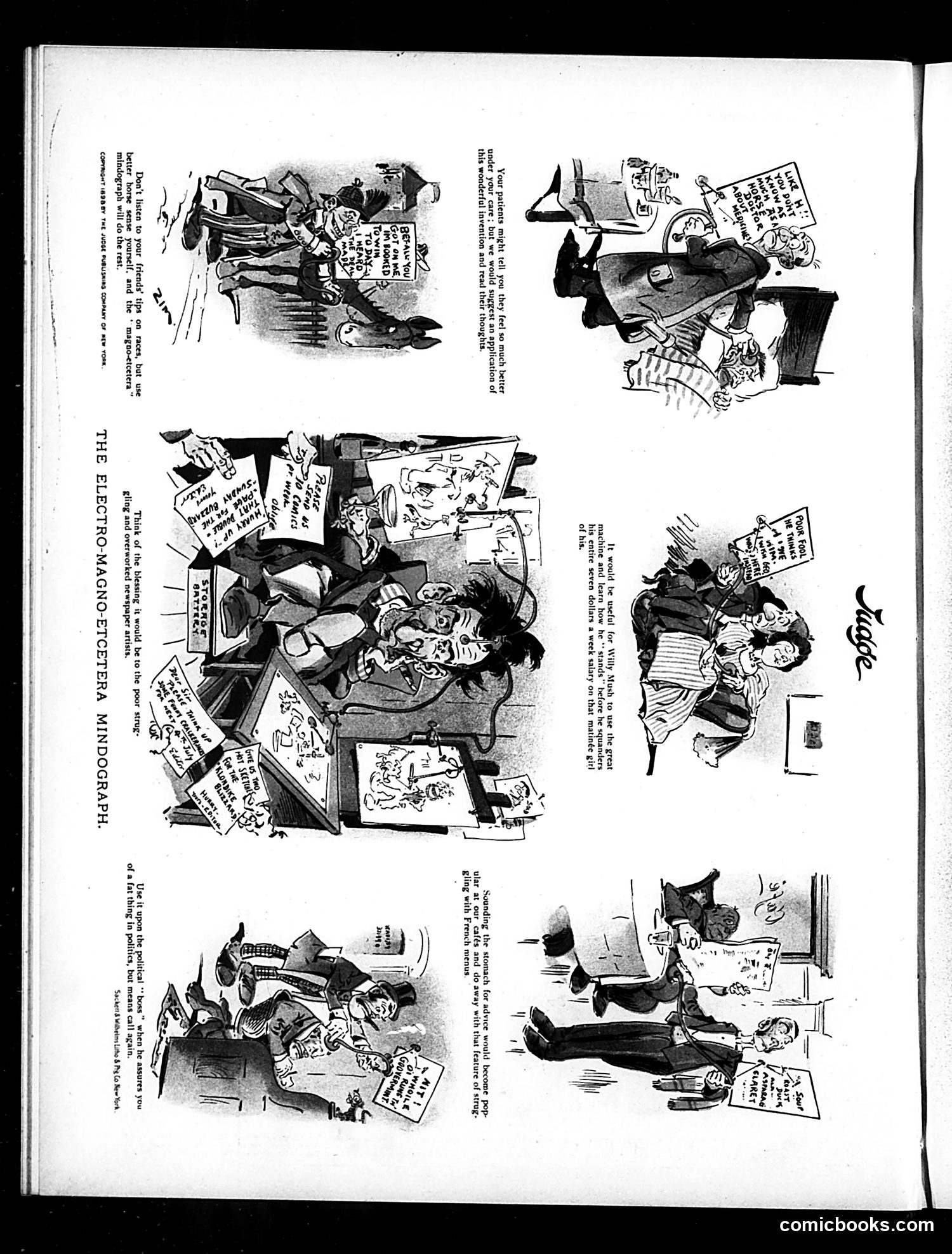
This page satirizes the late-19th-century craze for pseudoscientific "mind-reading" machines and electrical cure-alls. The cartoon depicts an invented device that purports to reveal people's true thoughts—exposing the gap between what they say and what they actually think. The satire targets multiple groups: doctors who claim patients feel better (when they don't), horse-racing tipsters offering false advice, newspaper artists struggling with deadlines, physicians using dubious diagnostic methods, French restaurants serving poor food, and dishonest employers. Each vignette shows the machine revealing hidden truths—patients' real suffering, skepticism about tips, genuine exhaustion, stomach problems, and broken promises. The joke relies on the public's familiarity with both electromagnetic "wonder machines" marketed as cure-alls and the gap between public claims and private reality. It mocks gullibility while satirizing various professions through their exposed hypocrisy.
📄 Transcribed text from this page (OCR, searchable)
Machine-transcribed from the original scan — historical spelling and the odd misread are preserved.
Your patients might tell you they feel so much better under your but we would suggest an application of this wonderful invention and read their thoughts. Sf aera vou BAGoT on we, aw Don’t listen to your friends’ tips on races, but use se yourself, and the * magno-etcetera” Jo the rest. THE ELECTRO-MAGNO-ETCETERA MINDOGRAPH. STORAGE | BATTERY Think of the blessing it would be to the poor strug- gling and overworked newspaper artists. comicbooks.com Sounding the stomach for advice would become pop- our cafés and do away with that feature of strug. fh French menus Use it upon ical ** boss” when he assures you thing in , but means call again, ‘Sackett Wilbelns Litho 8 Pg (o Rew York.