
Judge, 1896-12-19 · page 9 of 46
Judge — December 19, 1896 — page 9: what you’re looking at
What you’re looking at
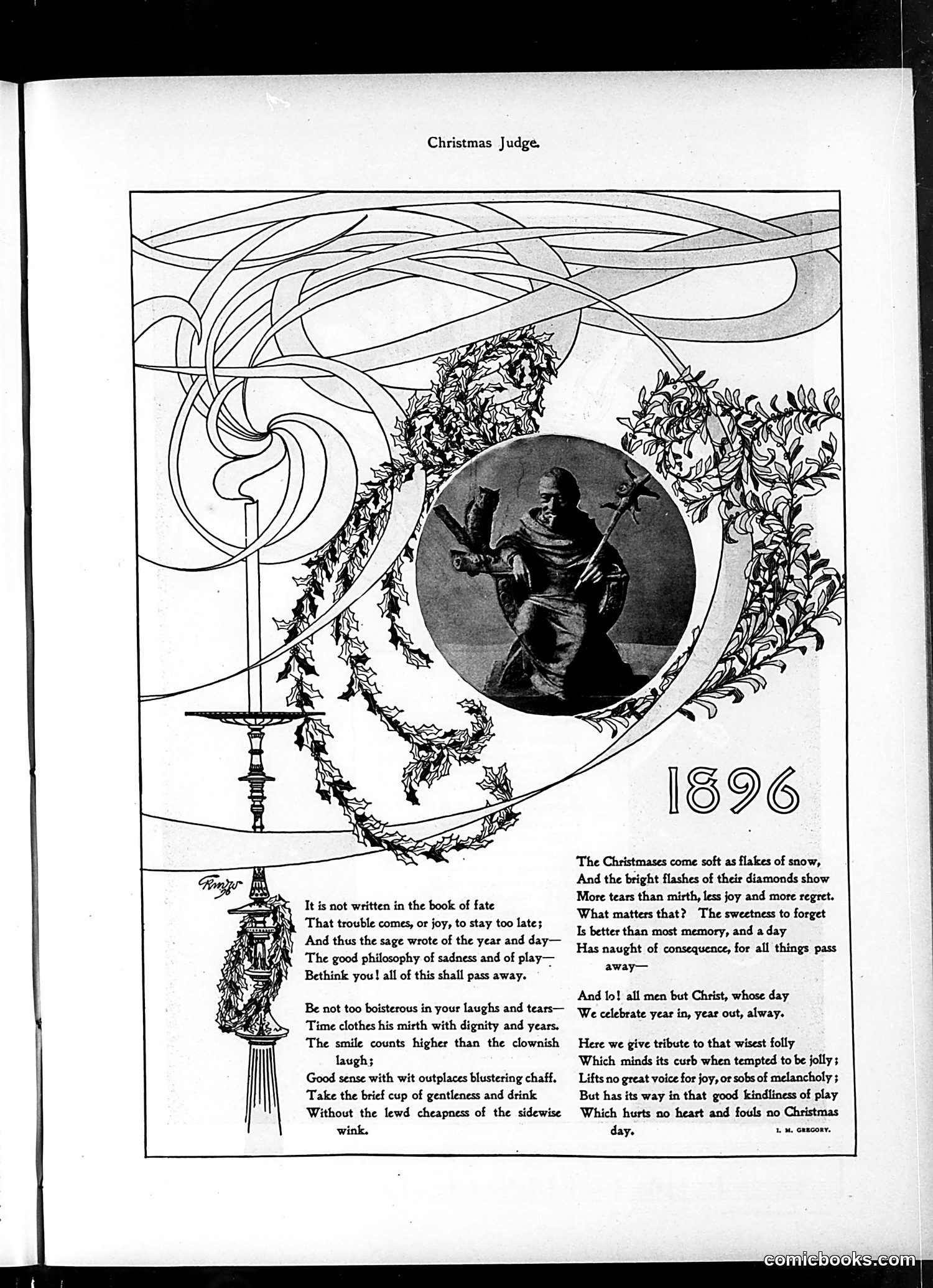
This is the cover/title page of Judge magazine's Christmas issue from 1896. Rather than satirical political cartoons, it presents a philosophical meditation on Christmas through decorative Art Nouveau design. The central circular medallion shows a figure (likely representing Christmas or a holiday personification) surrounded by ornamental garland. The lengthy poem—credited to I.M. Gregory—emphasizes restraint and dignity during holiday celebration: avoid excessive laughter or tears, choose gentle smiles over "clownish" behavior, and practice kindness without rowdiness. The message reflects late-Victorian sensibilities about proper genteel conduct, particularly the concern that working-class holiday celebrations were becoming too boisterous or vulgar (suggested by phrases like "lewd cheapness" and warnings against "blustering chaff"). It's essentially an upper-class exhortation toward refined, measured celebration rather than uninhibited merrymaking.
📄 Transcribed text from this page (OCR, searchable)
Machine-transcribed from the original scan — historical spelling and the odd misread are preserved.
Christmas Judge. It is not written in the book of fate That trouble comes, or joy, to stay too late; And thus the sage wrote of the year and day— The good philosophy of sadness and of play— Bethink you! all of this shall pass away. Be not too boisterous in your laughs and tears— Time clothes his mirth with dignity and years. The smile counts higher than the clownish laugh; Good sense with wit outplaces blustering chaff. Take the brief cup of gentleness and drink Without the lewd cheapness of the sidewise wink. ‘The Christmases come soft as flakes of snow, And the bright flashes of their diamonds show More tears than mirth, less joy and more regret. What matters that? ~The sweetness to forget Is better than most memory, and a day Has naught of consequence, for all things pass away— And fo! all men but Christ, whose day We celebrate year in, year out, alway. Here we give tribute to that wisest folly Which minds its curb when tempted to be jolly; Lifts no great voice for joy, or sobs of melancholy ; But has its way in that good kindliness of play Which hurts no heart and fouls no Christmas day. 1M, Gancory.