
Judge, 1894-11-03 · page 1 of 16
Judge — November 3, 1894 — page 1: what you’re looking at
What you’re looking at
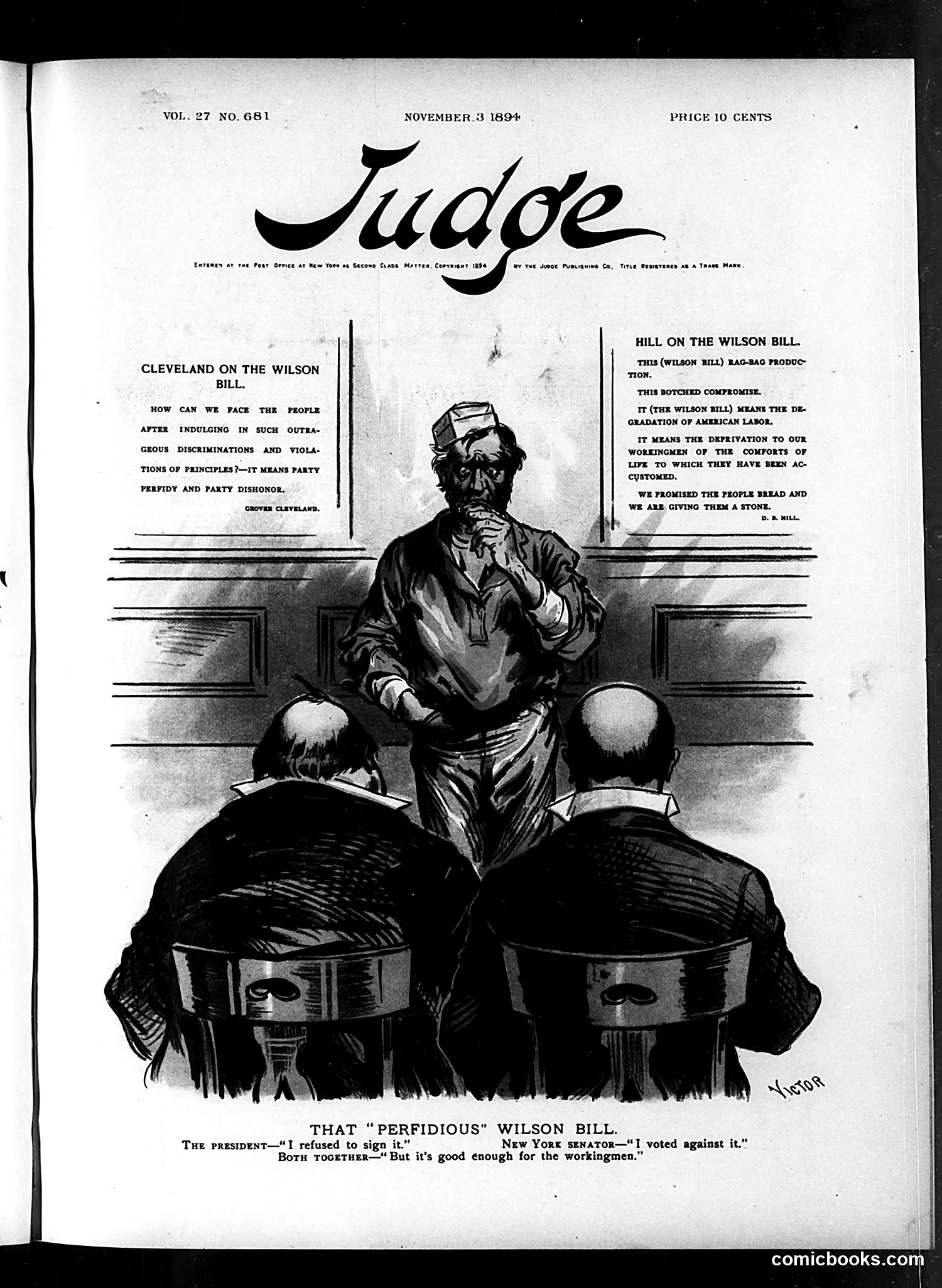
This political cartoon criticizes the Wilson Bill, a tariff measure from the Cleveland administration. The central figure (labeled "Lady Justice") sits blindfolded between two men representing Cleveland (who "refused to sign it") and a New York Senator (who "voted against it"), yet both claim "it's good enough for the workingmen." The satire exposes hypocrisy: politicians opposed the bill publicly but were willing to impose its labor-degrading effects on working-class Americans. The cartoon suggests the bill would degrade American labor standards and undermine workers' living conditions, while political leaders cynically sacrificed working people's interests.
📄 Transcribed text from this page (OCR, searchable)
Machine-transcribed from the original scan — historical spelling and the odd misread are preserved.
VOL. 27 NO. 681 NOVEMBER.3 1894 PRICE 10 CENTS: Enrenes at rae Poor Orrice ar New Yous as Secono Case Morten, Coprment 1896 (oy Twe Jowoe Punuismine Co, Tiree Resrevence As A Tasos Mame HILL ON THE WILSON BILL. CLEVELAND ON THE WILSON ‘ : eae nner me rete BILE: ‘THIS BOTCHED COMPROMISE. HOW CAN WE FACE THE PEOPLE 4 Tv (THE WILSON BILL) MEANS THE DE- GRADATION OF AMERICAN LABOR. AFTER INDULGING IN SUCH OUTRA- IT MEANS THE DEPRIVATION TO OUR WORKINGMEN OF THE COMFORTS OF y TIONS OF PRINCIPLES ?—IT MRANS PARTY f D LIVE TO WHICH THEY HAVE BEEN AC- CYUSTOMED. GEOUS DISCRIMINATIONS AND VIOLA- PERFIDY AND PARTY DISHONOR. WE PROMISED THE PEOPLE BREAD AND WE ARE GIVING THEM A STONE. D.B MILL, Gos THAT “PERFIDIOUS” WILSON BILL. Tue presipent—“I refused to sign it New York senator—“I voted against it.” Boru TocETHER—“ But it’s good ¢nough for the workingmen.” comicbooks.com