
Judge, 1893-05-20 · page 3 of 16
Judge — May 20, 1893 — page 3: what you’re looking at
What you’re looking at
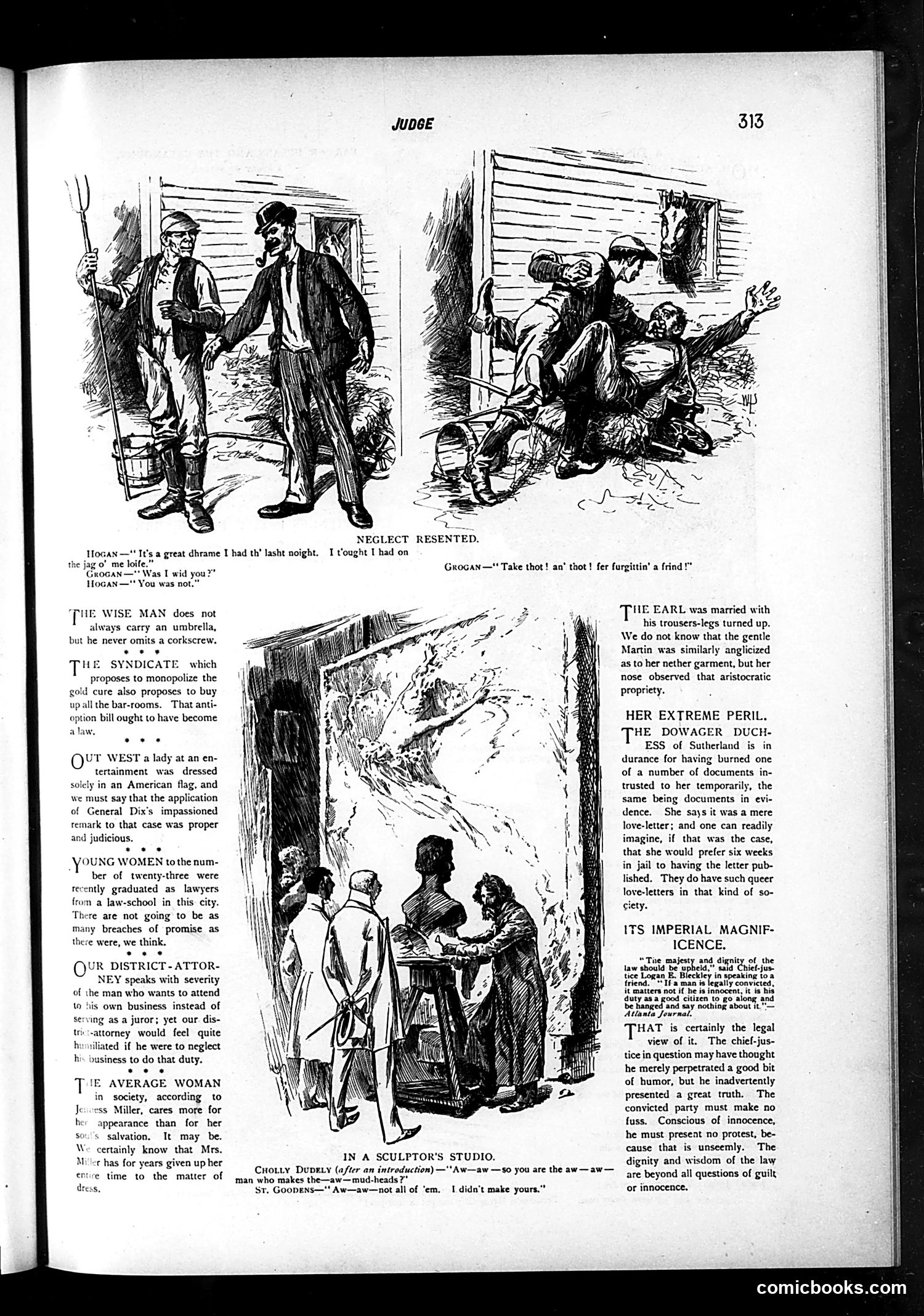
This page contains several satirical pieces on legal and social matters: **"Neglect Resented"** shows two scenes mocking judicial negligence—apparently judges ignoring their duties or shirking responsibilities. **"The Wise Man"** and **"The Syndicate"** sections satirize wealth concentration and monopolistic business practices of the era, suggesting the wealthy use umbrellas (protection) while proposing to monopolize care, with ironic commentary on how "vision will ought to have become a law." **"Her Extreme Peril"** mocks aristocratic anxieties, specifically the Dowager Duchess of Sutherland's scandal involving compromised documents—suggesting her concern over love-letters is exaggerated vanity. **"In a Sculptor's Studio"** presents a brief comic exchange about artistic identity and imitation. The overall theme critiques legal incompetence, monopolistic greed, aristocratic pretension, and class disparities typical of Gilded Age American satire.
📄 Transcribed text from this page (OCR, searchable)
Machine-transcribed from the original scan — historical spelling and the odd misread are preserved.
the jag o” me loife, Grocan —"* Was I wid you?” Hocan —"* You was not.” ‘THE WISE MAN does not always carry an umbrella, but he never omits a corkscrew. eee HE SYNDICATE which proposes to monopolize the gold cure also proposes to buy upall the bar-rooms. That anti- option bill ought to have become alaw, UT WEST a lady at an en- tertainment was dressed solely in an American flag, and Wwe must say that the application of General Dix’s impassioned ‘k to that case was proper and judicious. ees YOUNG WOMEN tothe num- ber of twenty-three were recently graduated as lawyers from a law-school in this. city. There are not going to be as many breaches of promise as there were, we think, eee UR DISTRICT-ATTOR- NEY speaks with severity the man who wants to attend his own business instead of ing as a juror; yet our dis- attorney would feel quite viliated if he were to neglect nusiness to do that duty. eee AVERAGE WOMAN Tr in society, according to ess Miller, cares more for appearance than for her s salvation, It may be. We certainly know that Mrs. Miller has for years given up her entive time to the matter of dress, rs EGLECT RESENTED. “*Tt's a great dhrame I had th’ lasht noight. I t’ought I had on Cuotty Dupexy (after an introduction) — ‘man who makes the—aw—mud-heads ?" St. Goopens—“* Aw—aw—not all of ‘em. Grocan—"' Take thot! an’ thot! fer furgittin’ a frind !" “Aw—aw —So you are the aw—aw— I didn't make yours.” THE EARL was married with his trousers-legs turned up. We do not know that the gentle Martin was similarly anglicized as to her nether garment, but her nose observed that aristocratic propriety. HER EXTREME PERIL. HE DOWAGER DUCH- ESS of Sutherland is in durance for having burned one of a number of documents in- trusted to her temporarily, the same being documents in evi- dence. She says it was a mere love-letter; and one can readily imagine, if that was the case, that she would prefer six weeks in jail to having the letter pub- lished. They do have such queer love-letters in that kind of so- ciety. ITS IMPERIAL MAGNIF- ICENCE, Tie majesty and dignity of the law should be upheld,” said Chief-jus- tice Logan E. Bleckley in speaking to a friend. ““If a man is legally convicted, it matters not i he is innocent, it is hig Juty as a good citizen to go along an be hanged and say nothing about Atlanta Journal. THAT is cenainly the legal view of it. The chief-jus- tice in question may have thought he merely perpetrated a good bit of humor, but he inadvertently presented a great truth. The convicted party must make no fuss. Conscious of innocence, he must present no protest, be- cause that is unseemly. The dignity and wisdom of the law are beyond all questions of guilt or innocence. comicbooks.com