
Judge, 1892-12-03 · page 32 of 52
Judge — December 3, 1892 — page 32: what you’re looking at
What you’re looking at
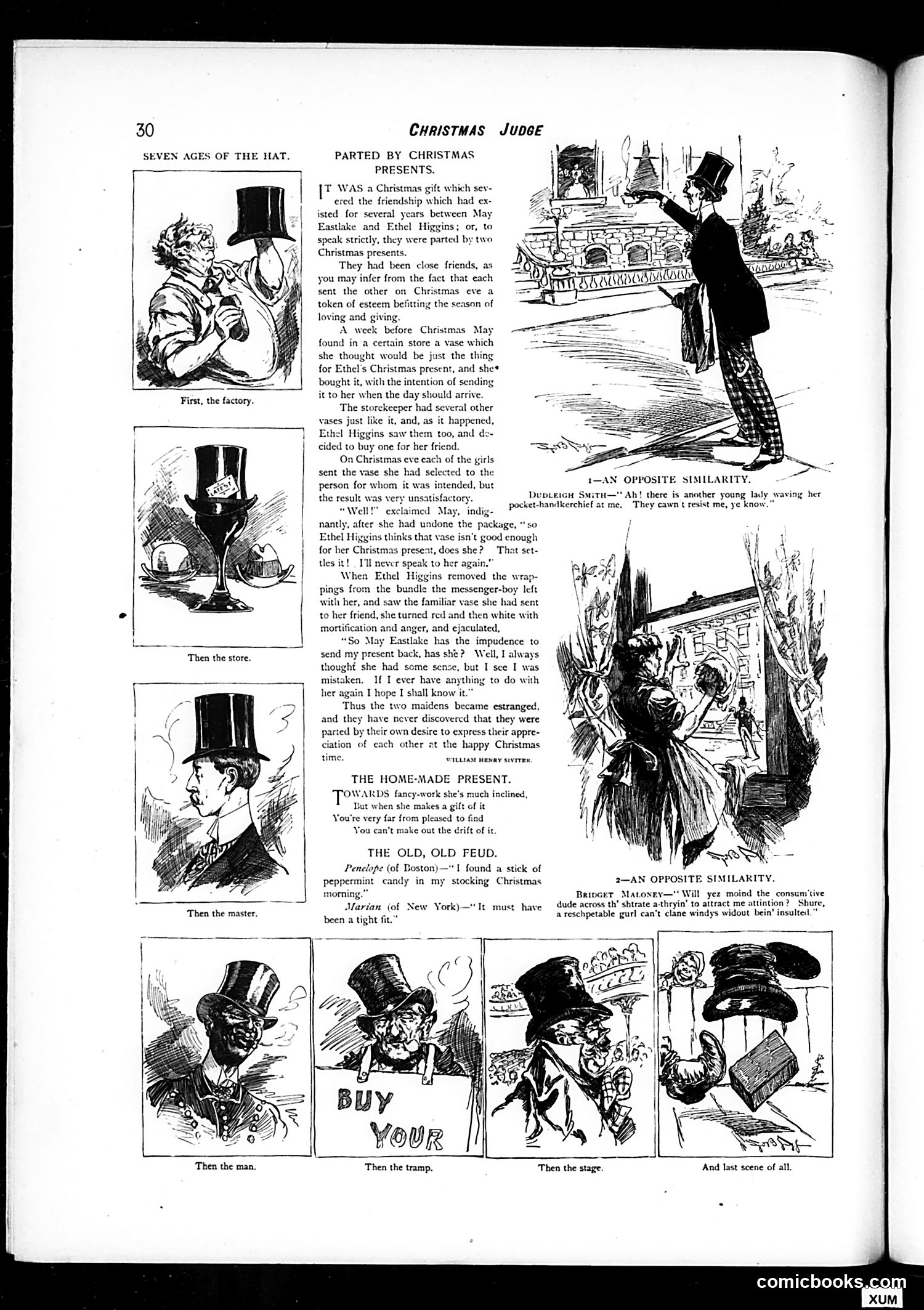
This page from *Judge* magazine contains several Christmas-themed satirical pieces satirizing Victorian social conventions and gift-giving etiquette. The main story "Parted by Christmas Presents" ridicules the absurdity of wounded pride between close friends. May and Ethel unknowingly both purchase identical vases as gifts for each other. Each receives the same vase back, each interpreting it as rejection—leading to permanent estrangement, neither realizing they both made the identical choice. The satire mocks how easily superficial misunderstandings destroy relationships. "Seven Ages of the Hat" shows how a top hat transforms through different social roles (factory worker, store clerk, gentleman, and finally poor man/tramp/street performer/worn-out vagrant). The brief items "The Home-Made Present" and "The Old, Old Feud" joke about poorly-executed homemade gifts and regional American pretensions respectively. The page satirizes Victorian sensitivities, class anxiety, and how material goods become fraught with social meaning during the gift-giving season.
📄 Transcribed text from this page (OCR, searchable)
Machine-transcribed from the original scan — historical spelling and the odd misread are preserved.
30 CHRISTMAS JUDGE SEVEN AGES OF THE HAT. PARTED BY CHRISTMAS PRESENTS. T WAS a Christmas gift which sev- ered the friendship which had ex- isted for several years between May e and Ethel Higgins; or, to speak strictly, they were parted by two Christmas presents. They had been close friends, as you may infer from the fact that each sent the other on Christmas eve a token of esteem befitting the season of loving and giving. A week before Christmas May found in a certain store a vase which she thought would be just the thing for Ethel's Christmas present, and she bought it, with the intention of sending it to her when the day should arrive. ‘The storekeeper had several other vases just like it, and, as it happened, ww them too, and de- cided to buy one for her friend. On Christmas eve each of the girls sent the vase she had selected to the ‘ — , person for whom it was intended, but IOAN TORFOSIT Be S{SILARETYs the result was very unsatisfactory. s Ah! there is another young. lady waving her “Well!” exclaimed May, indig- Eo Eee Ureestimes ye knowe nantly, after she had undone the package, “so Ethel Higgins thinks that vase isn’t good enough for her Christmas present, does she? That set- tles it! I'll never speak to her again,” When Ethel Higgins removed the wrap- pings from the bundle the messenger-boy left with her, and saw the familiar vase she had sent to her friend, she turned red and then white with mortification and anger, and ejaculated, a “So May Eastlake has the impudence to Then the swore: send my present back, has she? Well, I always thought she had some sense, but I sce I was mistaken. If I ever have anything to do with het again I hope I shall know it.” Thus the two maidens became estranged, and they have never discovered that they were parted by their own desire to express their appre- ciation of cach other at the happy Christmas time. WILLIAM HeNRy stvETR®. THE HOME-MADE PRESENT. TOWARDS fancy-work she's much inclined, But when she makes a gift of it You're very far from pleased to find You can't make out the drift of it. THE OLD, OLD FEUD. Penelope (of Boston)—"I found a stick of peppermint candy in my stocking Christmas 2—AN OPPOSITE SIMILARITY. _} morning. BrivcetT Matoxgy—" Will yez moind the consum'tive _ Marian (of New York)—‘It must have dude across th’ shtrate a-thryin’ to attract me tion? Shure, been a tight fit.” a reschpetable gurl can’t clane windys widout bein’ insulted ‘Then the man. Then the tramp, ‘Then the stage. And last scene of all. comicbooks,co