
Judge, 1892-09-24 · page 7 of 16
Judge — September 24, 1892 — page 7: what you’re looking at
What you’re looking at
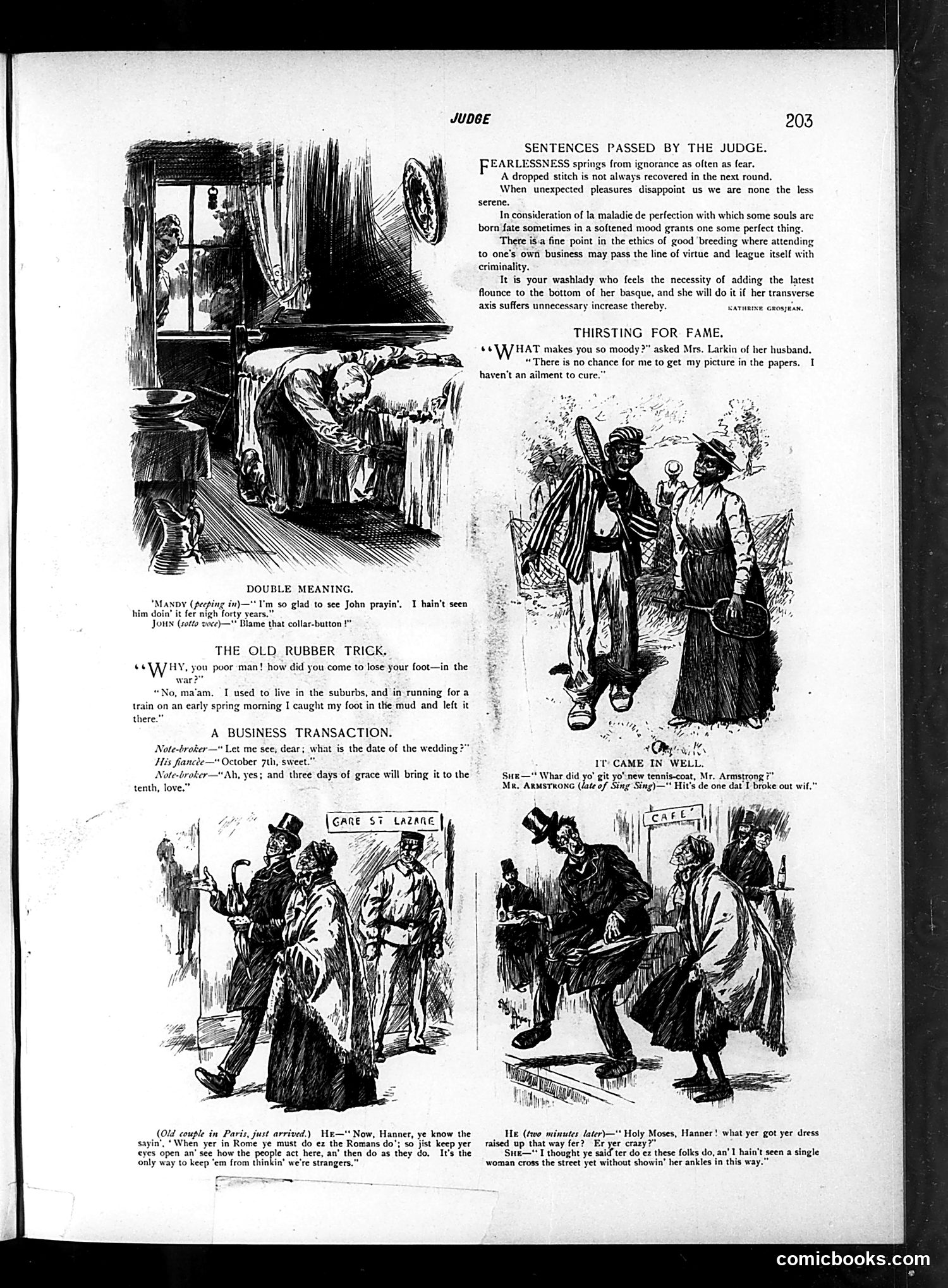
This page presents various short comedic sketches typical of Judge magazine's satirical format. The cartoons mock everyday social situations and human nature: **"Thirsting for Fame"** ridicules a man's desire for newspaper publicity, lamenting he lacks even an ailment newsworthy enough to print. **"Double Meaning"** plays on a pun: a man appears devout praying, but he's actually cursing a stuck collar button. **"The Old Rubber Trick"** and other vignettes feature working-class characters whose misadventures—losing a foot to suburban mud, lost train commutes—are presented as absurd alternatives to wartime injury. **"It Came in Well"** and the Paris couple sketches use sexual innuendo and crude humor about respectability and imitation of local customs. The opening "Sentences" section offers genteel aphorisms about proper conduct and social etiquette. Overall, the page blends genteel moralizing with crude working-class humor—typical of Judge's appeal to middle-class readers amused by both refined wit and vulgar pratfalls.
📄 Transcribed text from this page (OCR, searchable)
Machine-transcribed from the original scan — historical spelling and the odd misread are preserved.
JUDGE 203 SENTENCES PASSED BY THE JUDGE. FEARLESSNESS springs {rom ignorance as often as fear. A dropped stitch is not always recovered in the next round. When unexpected pleasures disappoint us we are none the less serene. In consideration of la maladie de perfection with which some souls are born fate sometimes in a softened mood grants one some perfect thing. There is.a fine point in the ethics of good ‘breeding where attending to one’s owl business may pass the line of virtue and league itself with criminality. It is your washlady who feels the necessity of adding the latest flounce to the bottom of her basque, and she will do it if her transverse axis suffers unnecessary increase thereby. KATURINR GROSjRAN, THIRSTING FOR FAME. . Wat makes you so moody?” asked Mrs. Larkin of her husband. “There is no chance for me to get my picture in the papers. I haven't an ailment to cure.” DOUBLE MEANING. "Manby (peeping in)—"I'm so glad to see John prayin’, I hain’t seen him doin’ it fer nigh forty years. Jou (sotto voce)}—"" Blame that collar-button !” THE OLD RUBBER TRICK, SeVV/HY, you poor man! how did you come to lose your foot—in the war?” No, ma‘am. I used to live in the suburbs, and in running for a train on an early spring morning I caught my foot in the mud and left it there.” A BUSINESS TRANSACTION. Note-broker—" Let me see, dear; what is the date of the wedding?” His fiancte—" October 7th, sweet.” It CAME IN WELL. Note-broker—"Ah, yes; and three days of grace will bring it to the Sue—"' Whar did yo’ git younew tennis-coat, Mr. Armstrong 7” tenth, love.” Ma. AnmstKone (late of Sing Sing)—" Hit's de one dat I broke out wif." (Old couple in Paris, just arrived.) He—" Now, Hanner, ye know the He (100 minutes later)—'* Holy Moses, Hanner! what yer got yer dress sayin’, ‘When yer in Romie ye must do ez the Romans do’; so jist keep yer raised up that way fer? Er yer crazy?” eyes open an’ see how the people act here, an’ then do as they do, It's the Sue—''I thought ye said ter do ez these folks do, an’I hain't seen a single only way to keep ‘em from thinkin’ we're strangers.” woman cross the street yet without showin’ her ankles in this way.” comicbooks.com