
Judge, 1888-12 · page 4 of 51
Judge — December 1888 — page 4: what you’re looking at
What you’re looking at
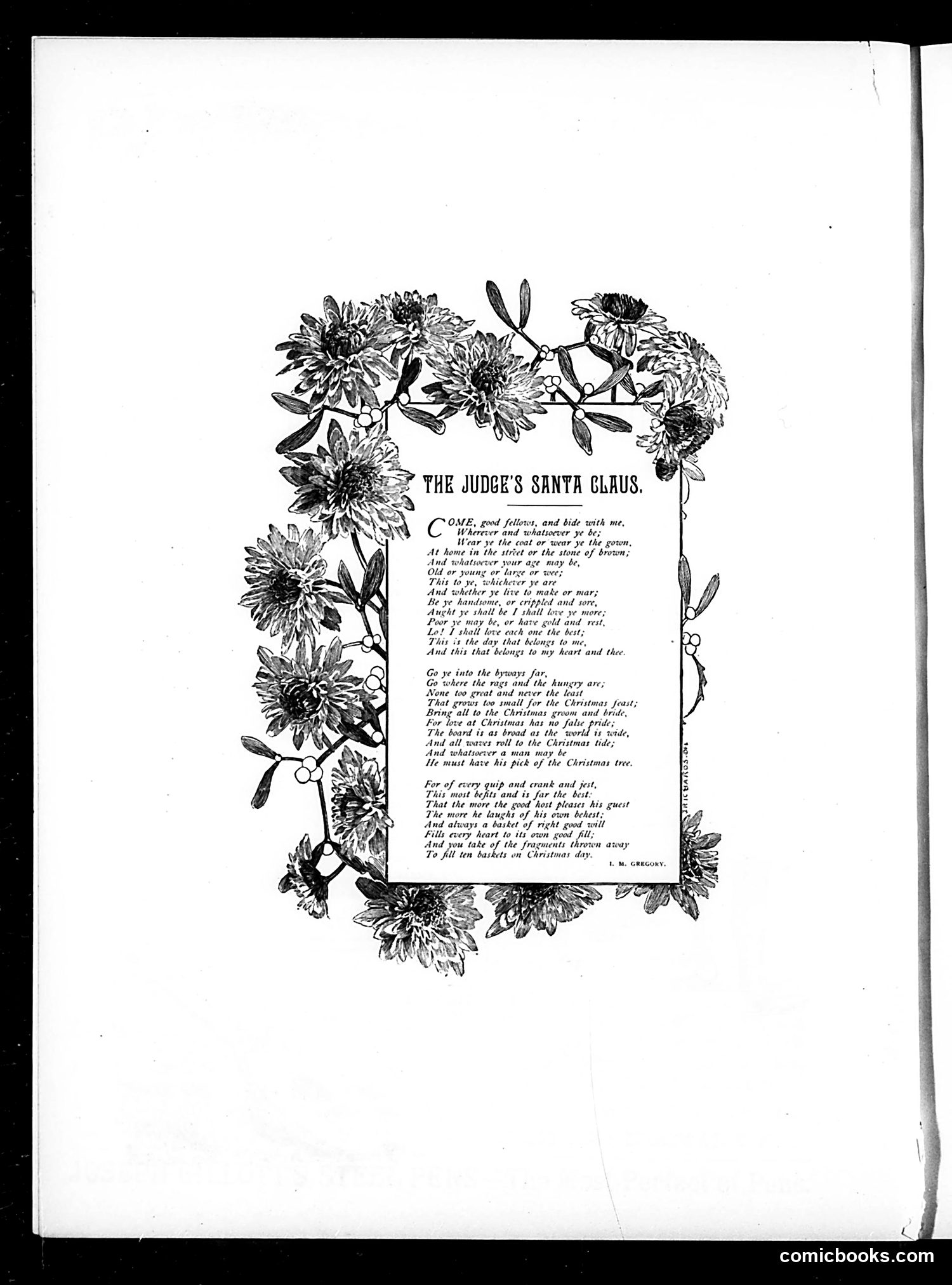
This is a sentimental Christmas poem, not political satire. The text presents an idealized vision of Santa Claus as a figure of universal charity and democratic equality. The poem emphasizes that Christmas transcends class boundaries—addressing rich and poor, healthy and infirm, young and old equally. Key themes include: charity toward the destitute ("Go where the rags and the hungry are"), abundance shared without pride, and the redemptive power of generosity. The florally-decorated border frames this as an aspirational moral message rather than mockery. The credited author "I.A. Gregory" appears to be offering Judge magazine readers an earnest holiday sentiment about radical inclusivity and Christian charity—a humanistic ideal rather than political commentary. This reflects late 19th/early 20th-century Progressive-era faith in benevolent social values.
📄 Transcribed text from this page (OCR, searchable)
Machine-transcribed from the original scan — historical spelling and the odd misread are preserved.
a THE JUDGE'S SANTA CLAUS. = OME, good fellows, and bide with me, Wherever and whatsoever ye be; Wear ye the coat or wear ye the gown, At home in the street or the stone of brown; And whatsoever your age may be, or large or wees her ye live to make or mar; Be ye handsome, or crippled and sore, Aught ye shalt be I shall love ye more; Poor ye may be, or have gold and re: Lo! I shall love each one the best; This is the day that belongs to me, And this that belongs to my heart and thee Go ye into the byways far, Go where the rags and the hungry are; None too great and never the least That grows too small for the Christmas feast, Bring all to the Christmas groom and bride, For love at Christmas has no false pride, The board is as broad as the “world is wide, And all waves roll to the Christmas tide; And whatsocver a man may be He must have his pick of the Christmas tree. For of every quip and crank and jest, This most befits and is far the best: That the more the good host pleases his guest The more he laughs of his own behest: And always a basket of right good will Fills every heart to its own good fill dnd you take of the fragments thrown away To fill ten baskets on Christmas day. 1 a. GREGORY, comicbooks.com