
A ComicBooks.com exhibition
European Proto-Comics
Panels, speech, motion lines, recurring characters, the wordless picture-story — the grammar of the comic was drawn in Paris and London a half-century before the Yellow Kid. Here are the artists who wrote it.
The American comic strip is usually dated to the newspaper wars of the 1890s, when color supplements and a yellow-shirted street kid taught the country to read pictures in sequence. But the visual language those Sunday pages spoke was already half a century old, and it was invented in Europe.
Drawn first in Paris and London
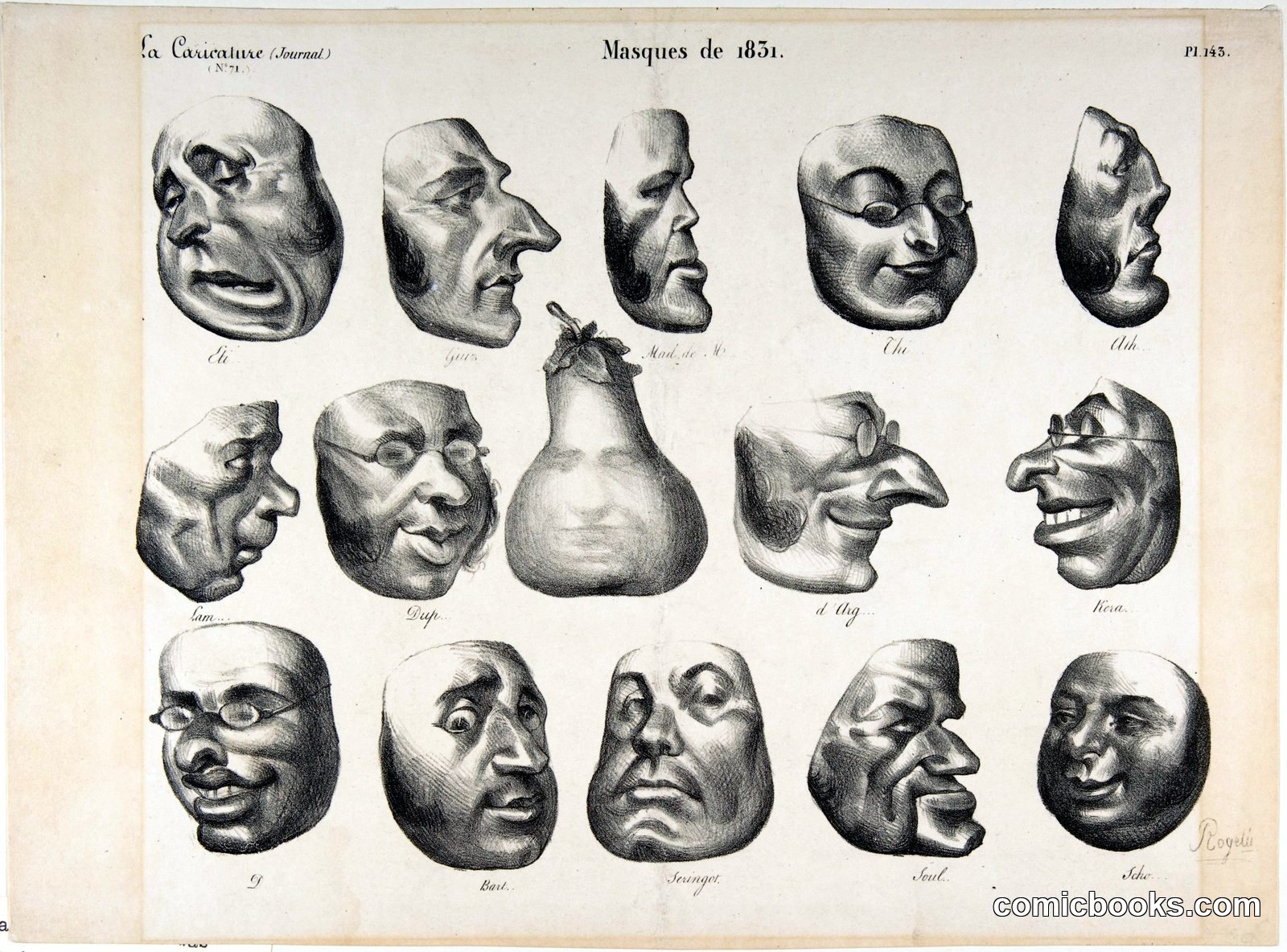
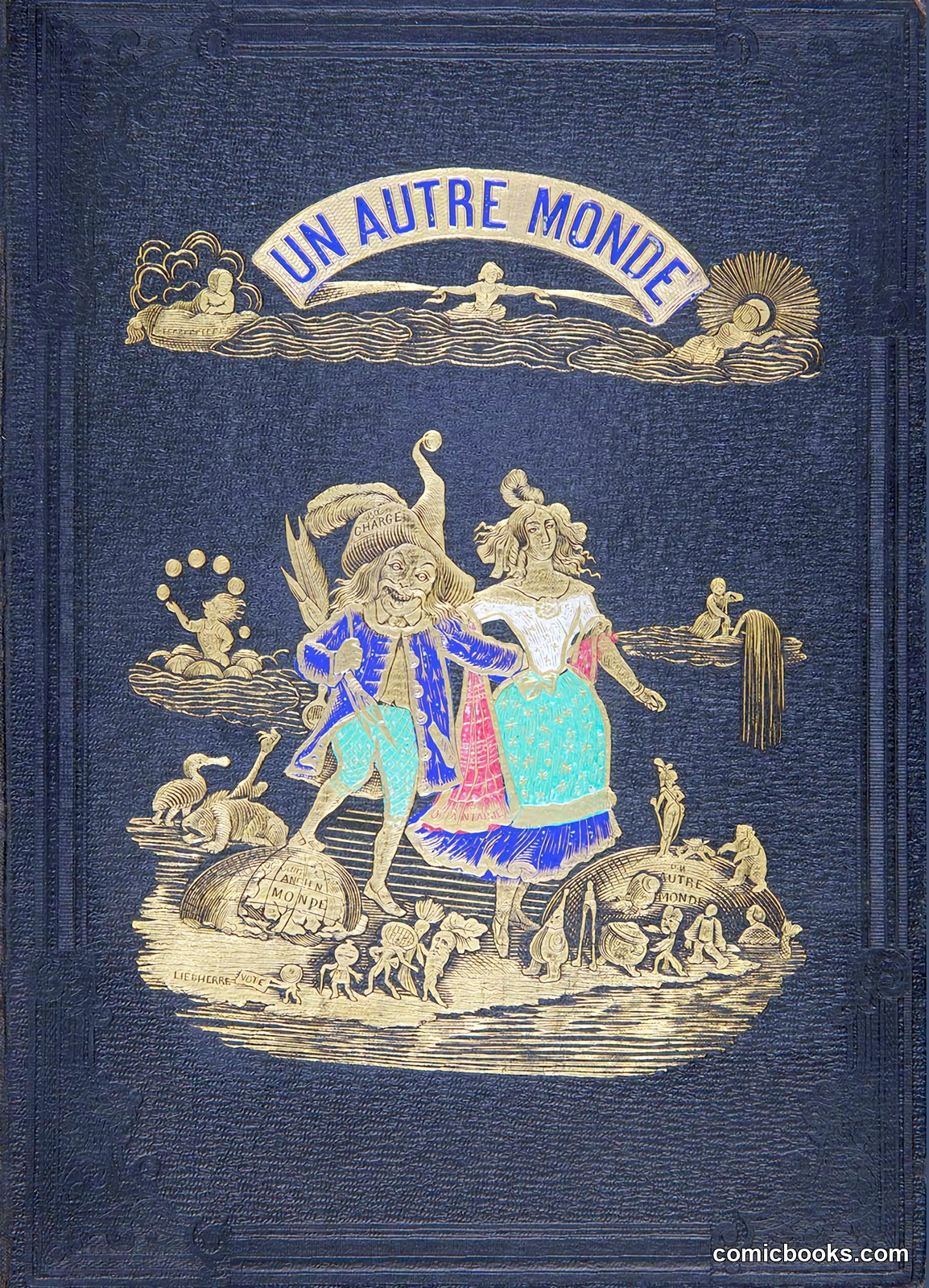
The pieces came together across two cities. In Paris after 1830, cheap lithography and a combative publisher, Charles Philipon, produced the satirical weekly: a paper built around a single drawing aimed at power. Honoré Daumier gave it teeth, modelling the political class into recurring grotesques and going to prison for a caricature of the king; Paul Gavarni supplied the gentler comedy of social types. In London, Punch took up the form in 1841 and handed the word "cartoon" its modern sense. Alongside the weeklies, a separate line of invention ran through the picture-book. Grandville populated Un Autre Monde with anthropomorphic beasts and living objects; the young Gustave Doré, in his mock Histoire de la Sainte Russie, laid a story out in variable panels with motion lines and blank frames, thinking on the page exactly as a modern cartoonist does. By the century's end Caran d'Ache was telling wordless stories in sequence, the silent strip in all but name.
Put these together, caricature and the recurring type, the panel grid and the caption, motion drawn as line, the fantastic world imagined whole, and you have very nearly the complete toolkit of the comics. None of these artists thought they were inventing a medium. Working to weekly deadlines and serialized in picture-books, answerable to censors and printers, they were solving the practical problem of how to make drawings tell stories and land arguments. The Americans would supply the newsprint, the color, and the mass audience. The grammar was already drawn.
A timeline
- 1830Charles Philipon founds La Caricature in Paris, the combative weekly built around a single lithograph.
- 1831Philipon reduces King Louis-Philippe's face to a pear, la poire; the pun becomes the regime's mocking emblem.
- 1832Daumier is jailed for his caricature Gargantua; La Caricature runs his Masques de 1831.
- 1841Punch launches in London and soon gives "cartoon" its modern meaning.
- 1844Grandville's Un Autre Monde appears in installments, a full dream-world of living objects and costumed beasts.
- 1854Gustave Doré publishes Histoire de la Sainte Russie, variable panels, motion lines, and a solid black frame included.
- 1858John Leech's The Great Lozenge-Maker runs in Punch, one image built to land a public-health scandal.
- 1876John Tenniel's The Dogs of War distills the Balkan crisis into a single Punch frame.
- c. 1890sCaran d'Ache perfects the histoire sans paroles, the wordless strip that directly anticipates the comic.
Trace any comic page back far enough and you arrive here, in the lithographers' studios and the offices of the satirical weeklies. The conventions we now take for granted were hard-won solutions to ordinary problems: how to make a printed drawing carry a joke, indict a minister, or move a reader from one moment to the next. Daumier's recurring grotesques, Grandville's living objects, Doré's black panel, Caran d'Ache's wordless sequence, each was an experiment that worked and stuck. That these images remain funny, strange, and sharp more than a century and a half later is the real point. They were made to be printed cheap and read fast, then thrown away, and instead they taught an entire art form how to speak. The newspaper strip, the comic book, the graphic novel: all of them are still drawing in a grammar first worked out by these European hands.