
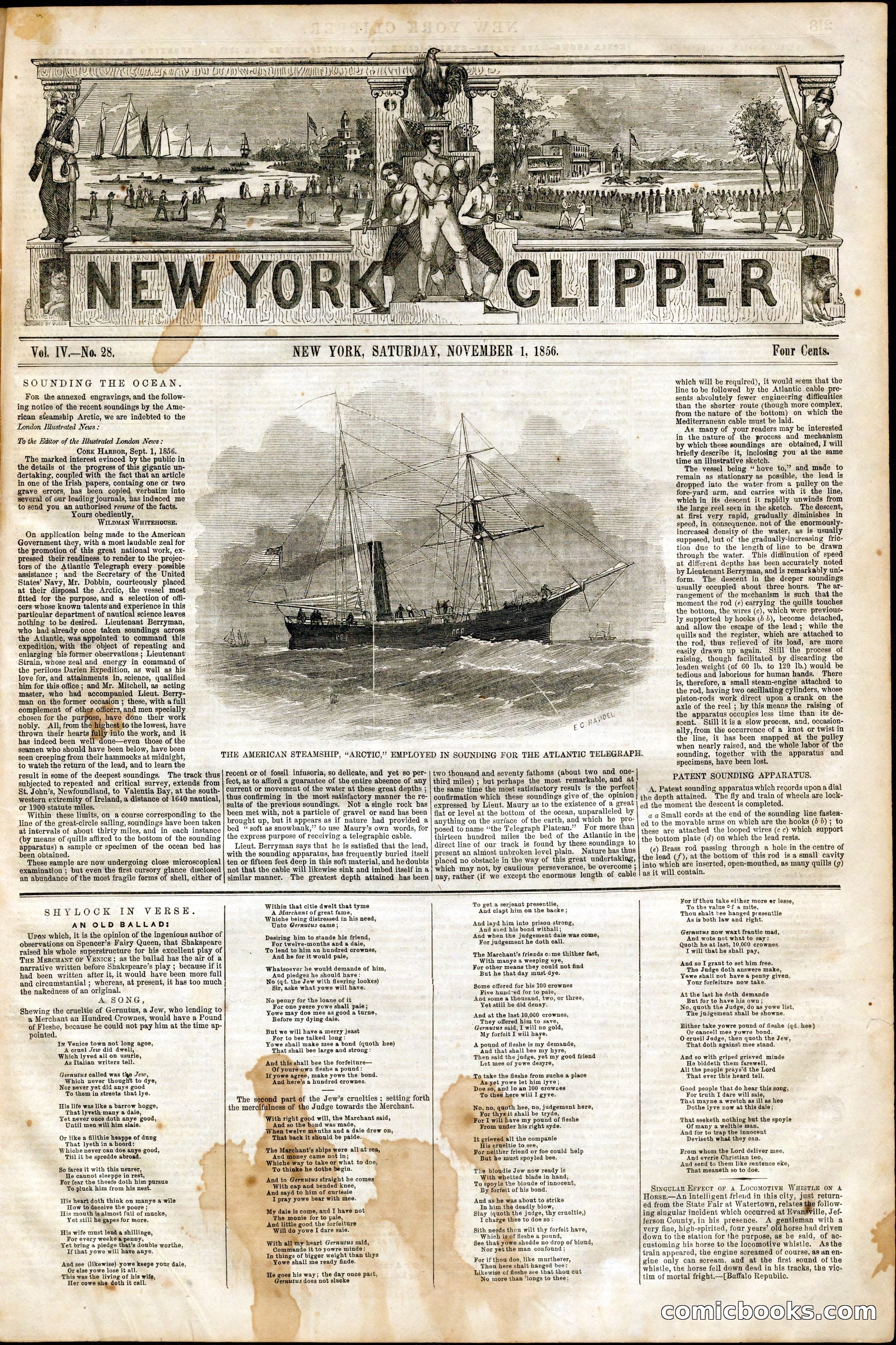
The New York Clipper, November 1, 1856, displays the visual vocabulary of mid-nineteenth-century entertainment journalism. An ornate engraved masthead features classical allegorical figures flanking scenes of maritime activity and public gathering. The lead article, "Sounding the Ocean," illustrates a steamship with an accompanying wood-engraved illustration of the vessel at sea. Dense columns of theatrical notices, sporting news, and verse fill the page—including "Shylock in Verse, an Old Ballad" and other entertainment coverage. Published at four cents, the Clipper served as the leading trade weekly for American popular amusement, reaching a mass audience through its heavy reliance on wood engravings and accessible reporting. The paper functioned as both newsstand publication and industry gazette, establishing visual journalism conventions that would influence later entertainment periodicals.
About this artifact
- Date
- Saturday, November 1, 1856
- Rights
- Public domain — free to view, share, and reuse.
- Restoration
- Digitally restored and hosted by ComicBooks.com · high-resolution version available.
Part of our mission to preserve and restore the public-domain heritage of the medium.