
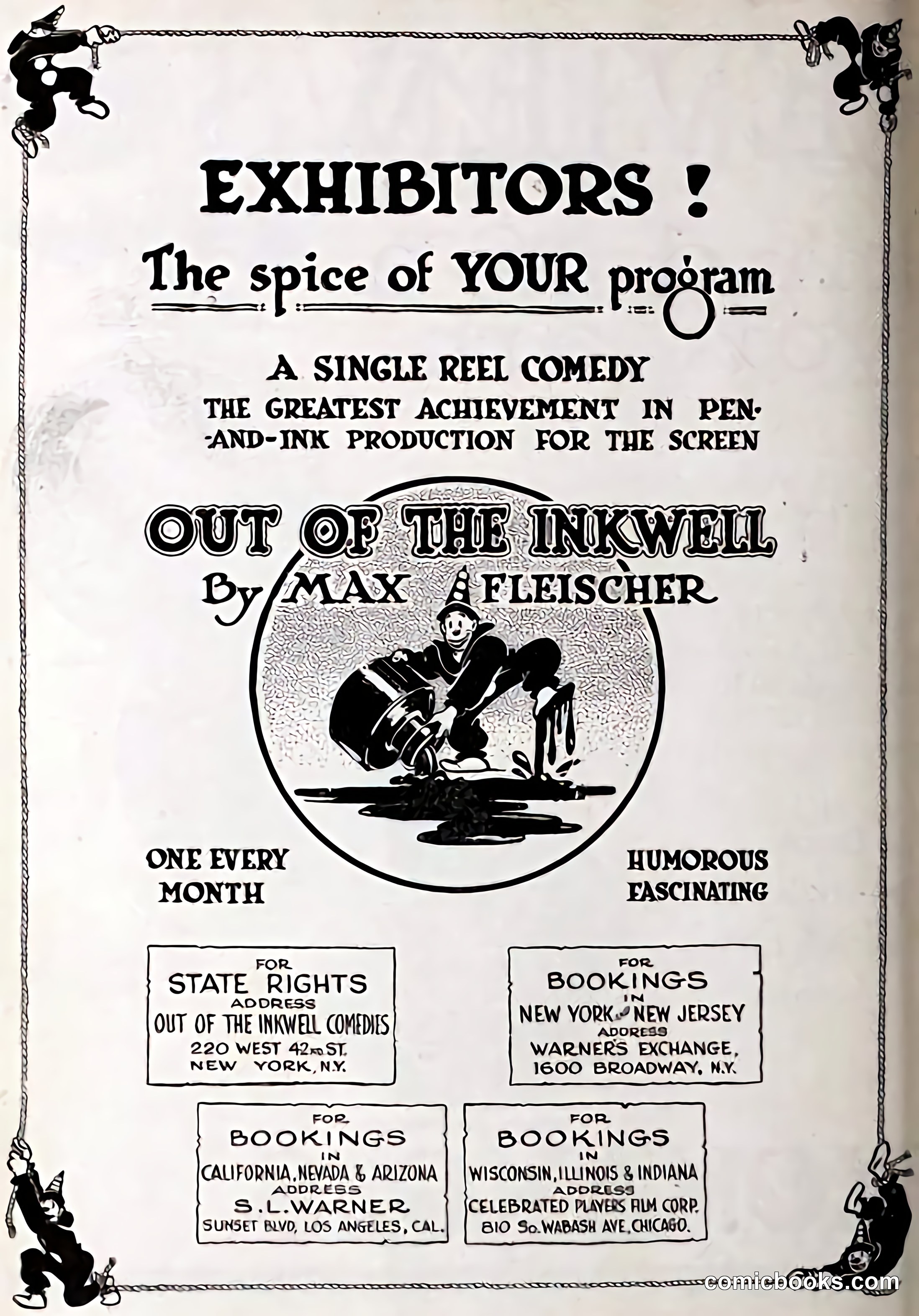
In Max Fleischer's Out of the Inkwell, the clown Koko literally springs from an inkwell into the live-action world of the artist's drawing board, blurring the line between the hand-drawn and the real. This delightful conceit — a cartoon character interacting with a filmed human environment — made the series a landmark, but its deepest importance lies in the technique Fleischer pioneered to make Koko move so uncannily well: the rotoscope. By tracing over filmed footage of live performers frame by frame, Fleischer captured the fluid, lifelike motion of a real body and transferred it to animation, achieving a naturalness of movement that pure imagination struggled to match. It matters because rotoscoping became one of animation's foundational tools, shaping the look of countless films for decades and offering a bridge between photographic reality and drawn fantasy. Just as significant was the series' playful fascination with its own artifice — the cartoon aware of the artist, the drawn world spilling into the filmed one — a self-reflexive wit that felt strikingly modern. Fleischer stands among the true innovators who expanded what animation could be, technically and conceptually. In Koko clambering out of the ink, we watch the medium delightedly discovering the trick of bringing drawings convincingly, mischievously, to life.
About this artifact
- Creator
- Max Fleischer
- Date
- 1921
- Rights
- Public domain — free to view, share, and reuse.
- Restoration
- Digitally restored and hosted by ComicBooks.com · high-resolution version available.
Part of our mission to preserve and restore the public-domain heritage of the medium.