
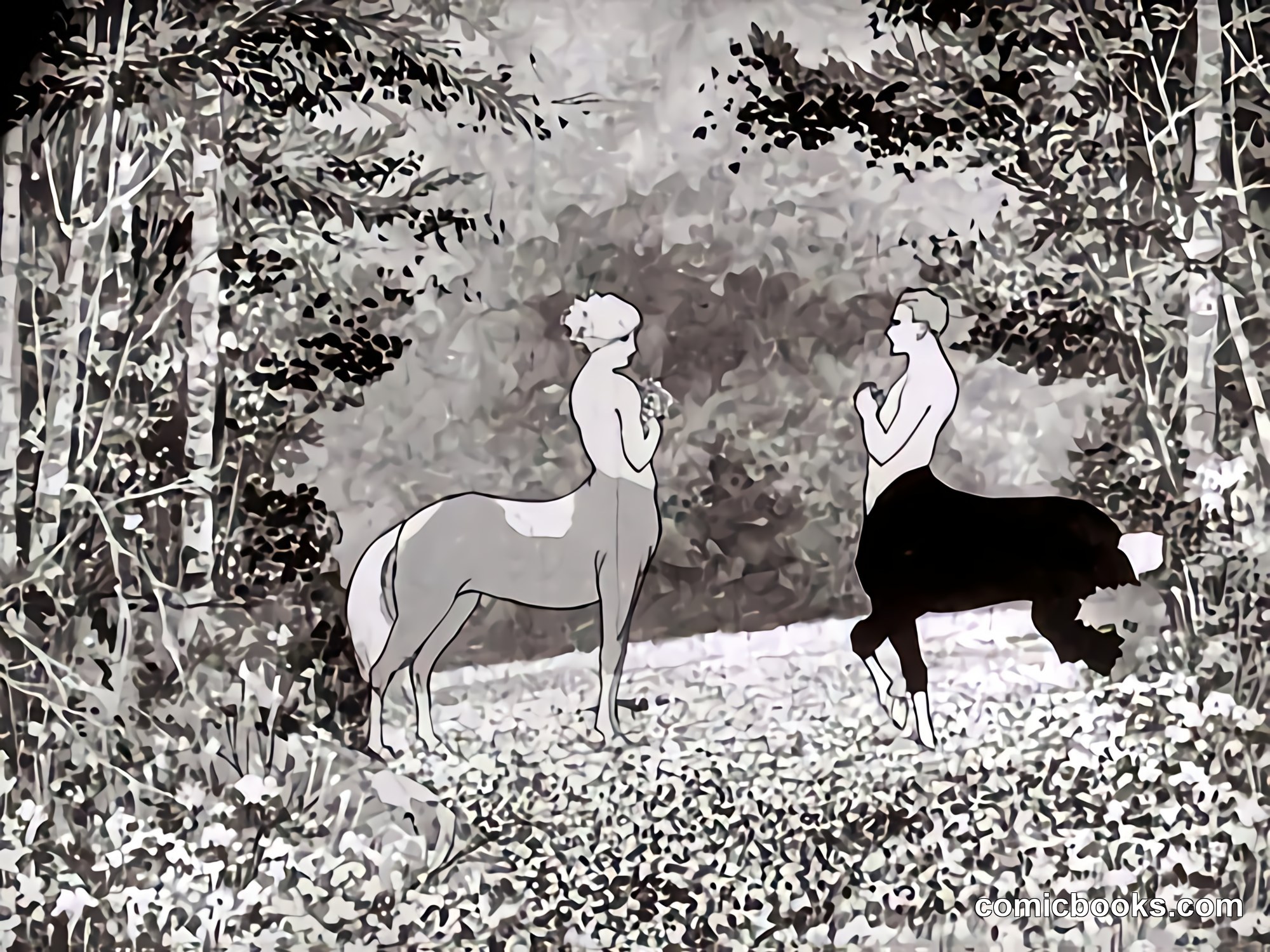
The Centaurs survives only as a fragment, but even in its incomplete state it reveals Winsor McCay's extraordinary command of the animated figure. The surviving footage depicts centaurs—human above, horse below—moving with a naturalism and anatomical confidence that few of McCay's contemporaries could match. It is a reminder that McCay approached animation as a serious draftsman, studying how bodies actually move and translating that observation into thousands of hand-drawn images.
Much of McCay's animation work has been lost or damaged over the intervening century, which makes each surviving fragment precious. The Centaurs is preserved by the Library of Congress, part of the national effort to protect the earliest achievements of the moving image. Even as a fragment it is instructive: here is the same artist who filled newspaper pages with fantastical dream-worlds, now making mythological beings walk and gesture on screen. The piece stands as evidence of both McCay's ambition and the fragility of early animation—a tantalizing glimpse of what the medium's founding master could do.
About this artifact
- Creator
- Winsor McCay
- Date
- 1921
- Rights
- Public domain — free to view, share, and reuse.
- Restoration
- Digitally restored and hosted by ComicBooks.com · high-resolution version available.
Part of our mission to preserve and restore the public-domain heritage of the medium.