
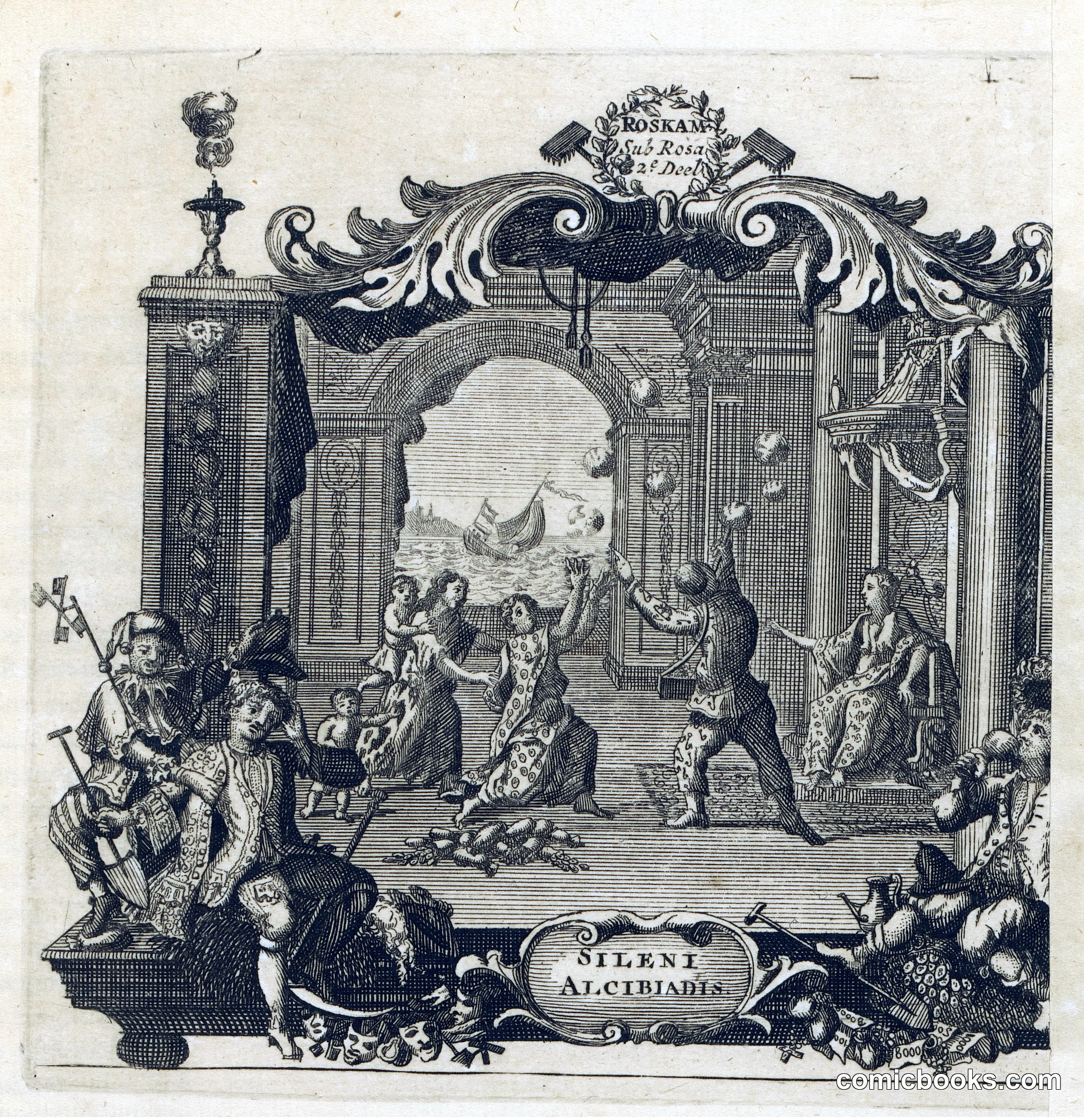
This Dutch engraving stages an allegorical scene within a classical architectural frame: richly dressed courtiers and figures gesture theatrically around a harbor viewed through a grand arch, while putti and emblematic figures populate the ornamental border. The print belongs to the Northern European tradition of moral-political satire inherited from Renaissance emblem books and developed through Reformation-era broadsheets. The Latin title references Plato's Symposium—the contrast between outward appearance and inner truth. Such engravings, circulating as single sheets, established conventions later central to caricature: framing narratives within decorated borders, layering symbolic and naturalistic detail, and addressing viewers as participants in decoding visual argument. This genealogy runs directly to 18th-century satirists like Hogarth and Gillray, and thence to the sequential comic form.
About this artifact
- Date
- 1720
- Rights
- Public domain — free to view, share, and reuse.
- Restoration
- Digitally restored and hosted by ComicBooks.com · high-resolution version available.
Part of our mission to preserve and restore the public-domain heritage of the medium.