
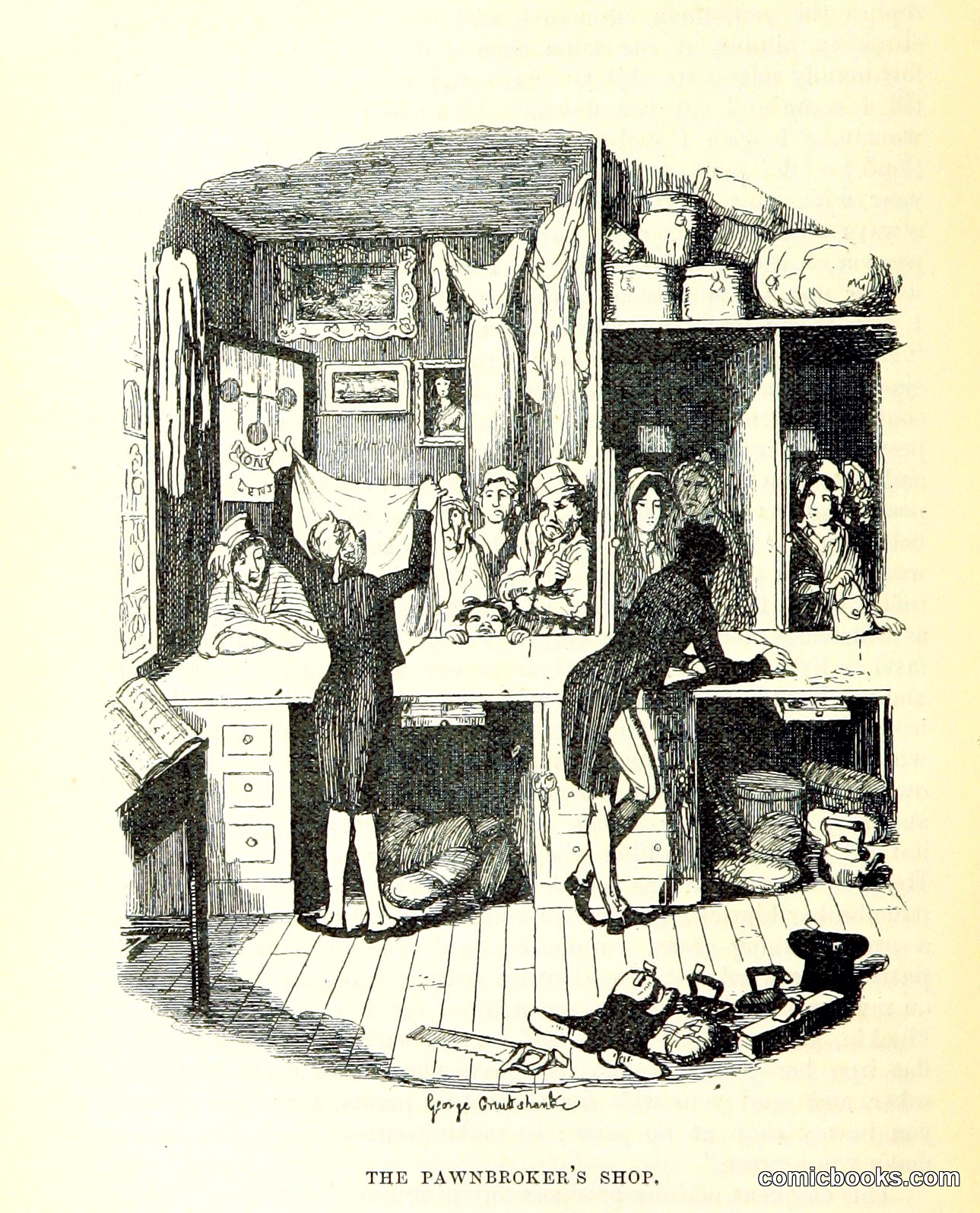
This wood engraving depicts a crowded pawnbroker's shop, a common subject in Victorian satirical illustration. The print shows working-class figures in a cramped interior—customers, a proprietor, and children amid bundles and goods—rendered with the social observation characteristic of 19th-century print satire. The composition derives from the pictorial tradition of Hogarth and Rowlandson, where domestic scenes and commercial transactions became vehicles for social commentary. The pawnbroker's shop itself was a symbol of urban poverty and economic desperation in the period. This engraving's attention to crowded space, expressive faces, and moral subject matter reflects how satirical printmaking documented class conditions while entertaining middle-class audiences. Such images established conventions of sequential narrative and social caricature that would later shape comic art.
About this artifact
- Date
- 19th century
- Rights
- Public domain — free to view, share, and reuse.
- Restoration
- Digitally restored and hosted by ComicBooks.com.
Part of our mission to preserve and restore the public-domain heritage of the medium.