
Arthur Conan Doyle
Comics debut 1944
![Sherlock Holmes #[nn]](https://img.comicbooks.com/covers/isbndb/0944099009.jpg)
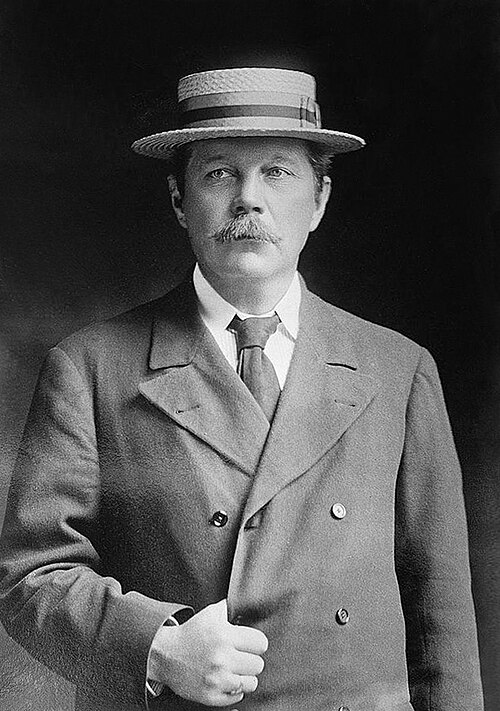
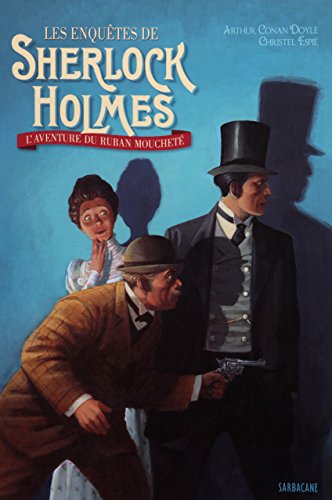
Sir Arthur Ignatius Conan Doyle was born on 22 May 1859 in Edinburgh, Scotland, and died on 7 July 1930. While he is not a comics creator in the modern sense, his literary works have been adapted into comics for decades, with his name appearing on 33 issues across series such as *Sherlock Holmes*, *Classics Illustrated*, and *Cases of Sherlock Holmes*. Doyle is best known for creating the consulting detective Sherlock Holmes and his assistant Dr. Watson, a duo that debuted in the novel *A Study in Scarlet* (1887) and became a cornerstone of crime fiction. He also introduced Professor Challenger in *The Lost World* (1912), which lent its name to a speculative fiction subgenre.
![The Hound of the Baskervilles #[nn]](https://img.comicbooks.com/covers/isbndb/0831714646.jpg)
Doyle studied medicine at the University of Edinburgh Medical School, publishing his earliest stories while a student. He served as a doctor on two sea voyages before opening an unsuccessful medical practice in Portsmouth. His time at sea inspired the story "J. Habakuk Jephson's Statement" (1884), which popularized the mystery of the Mary Celeste. His Sherlock Holmes stories, particularly those in *The Strand Magazine*, made him one of the most famous and well-paid authors of his era. After killing off Holmes in "The Final Problem" (1893), public demand led to his return in *The Hound of the Baskervilles* (1901). Doyle also wrote humorous tales about the Napoleonic soldier Brigadier Gerard.
![Sherlock Holmes #[nn]](https://img.comicbooks.com/covers/amazon/3926438681.jpg)
Beyond fiction, Doyle was a political activist, twice standing for Parliament, and a fervent advocate for justice who personally investigated two closed cases, leading to exonerations that helped establish the Court of Criminal Appeal in 1907. Knighted in 1902, he later became a spiritualist mystic after family tragedies.
Known for
![Detective English #[nn]](https://img.comicbooks.com/covers/amazon/1899888160.jpg)
Shop Arthur Conan Doyle's comics
✦ Is this your page? Are you Arthur Conan Doyle, or represent their estate? Claim it.
Full bibliography · 26 series
Original biography and editorial content © ComicBooks.com LLC. Information drawn in part from Wikipedia and the Grand Comics Database. Portrait by The Library of Congress / Wikimedia Commons (Public domain). Cover thumbnails shown under fair use, each linking to its issue.