★ comicbooks.com Reading Room
Science Comics #1 (1946)
Free to read · restored edition by comicbooks.com · Issue details →
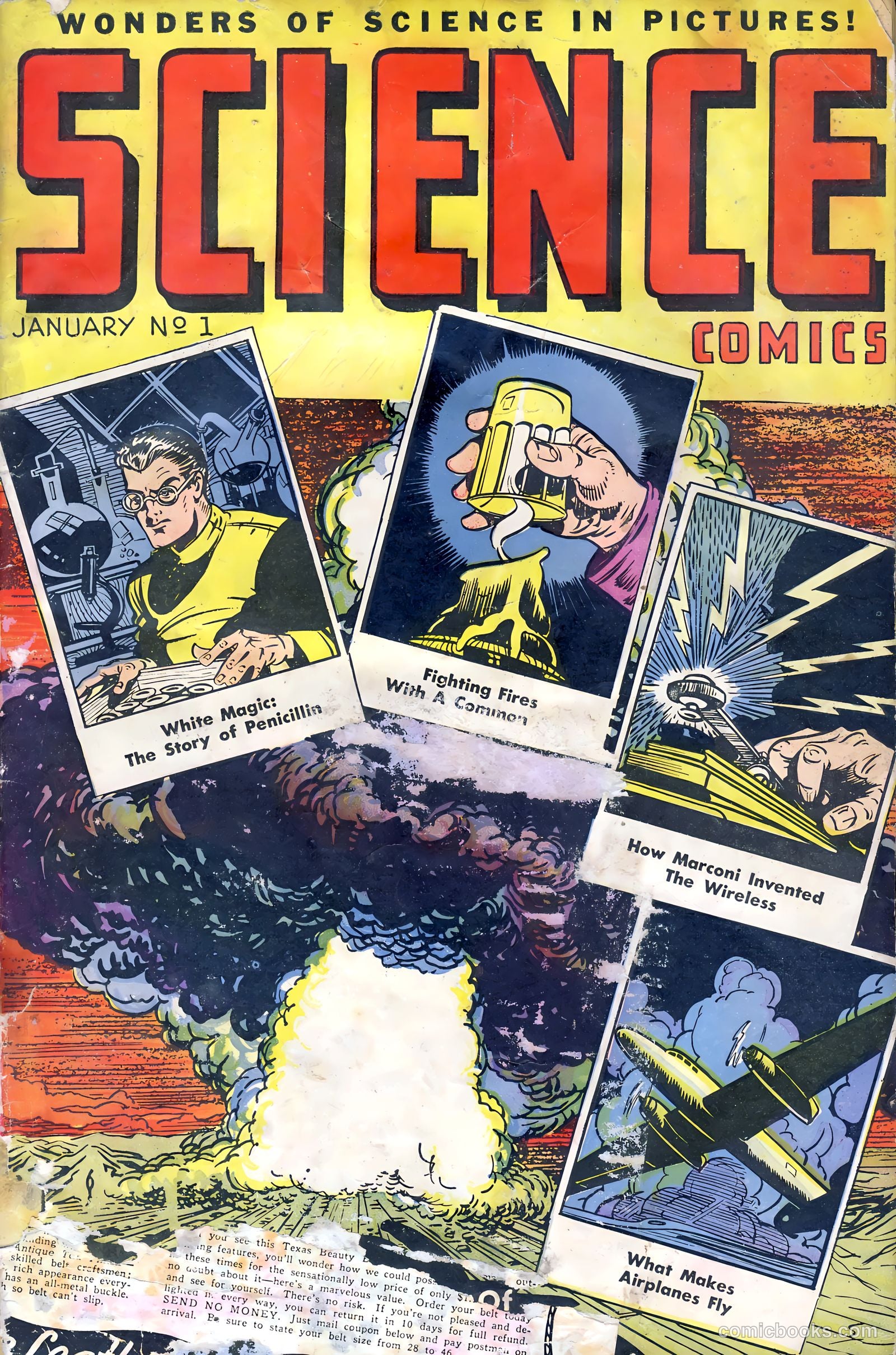
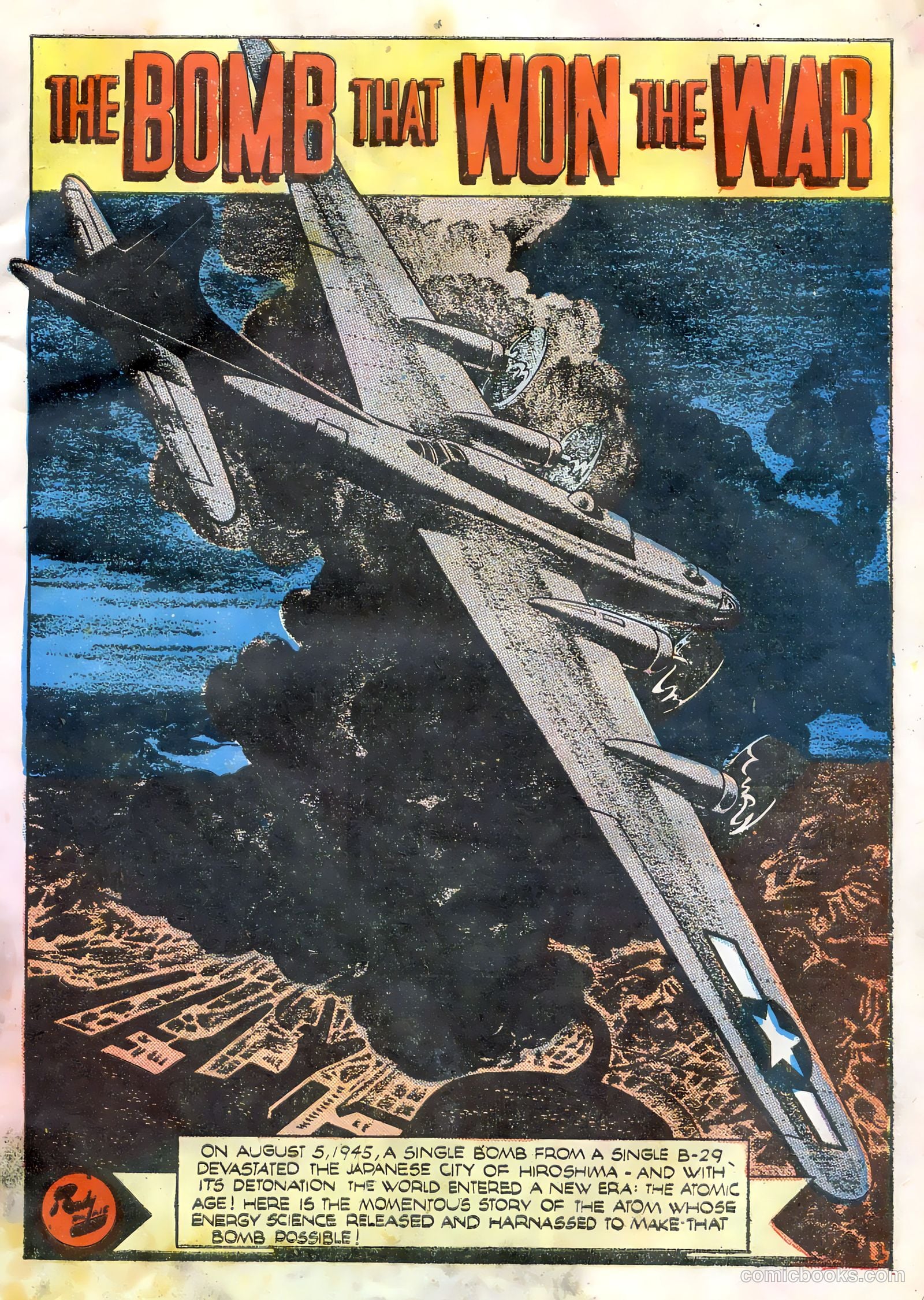
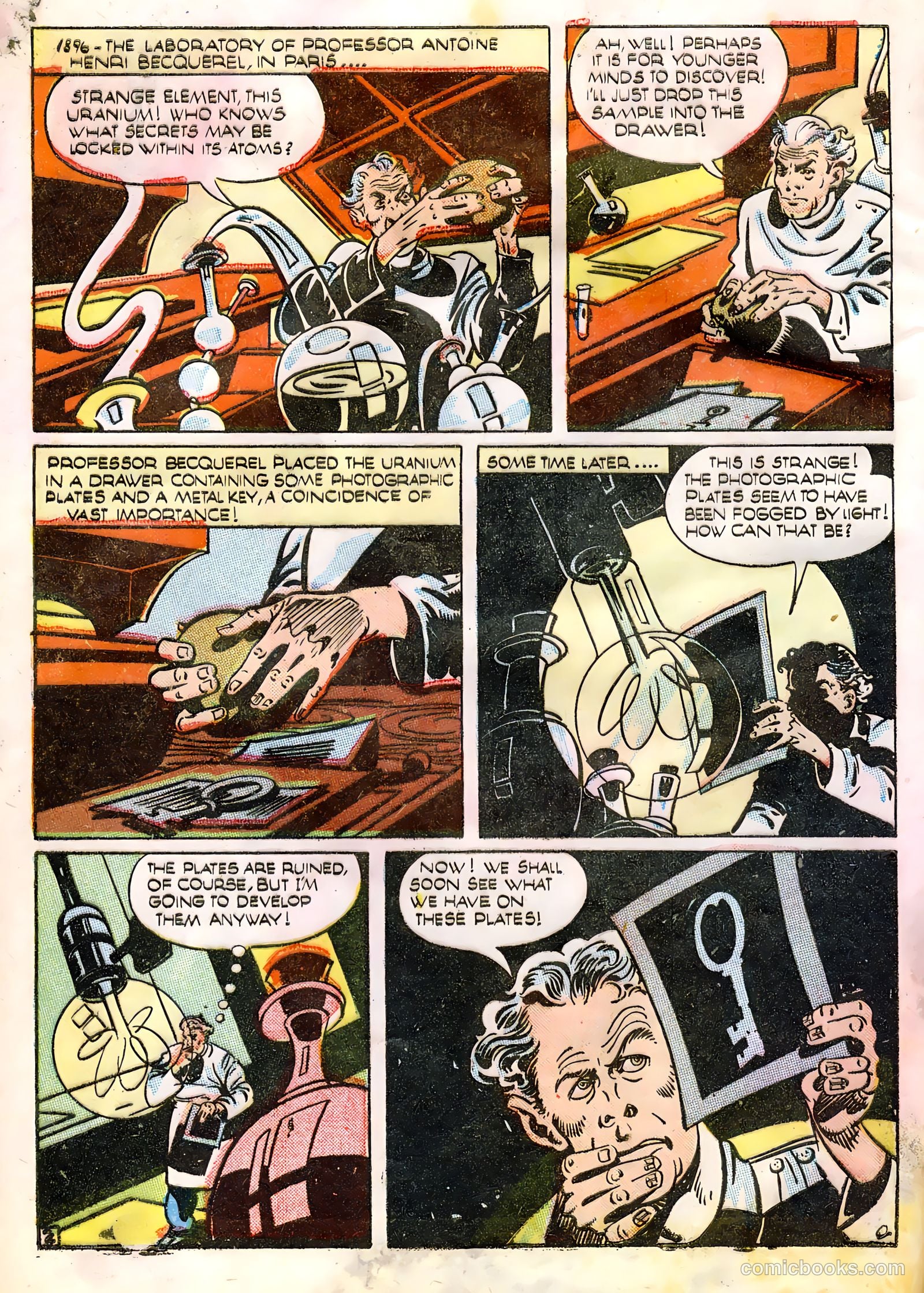
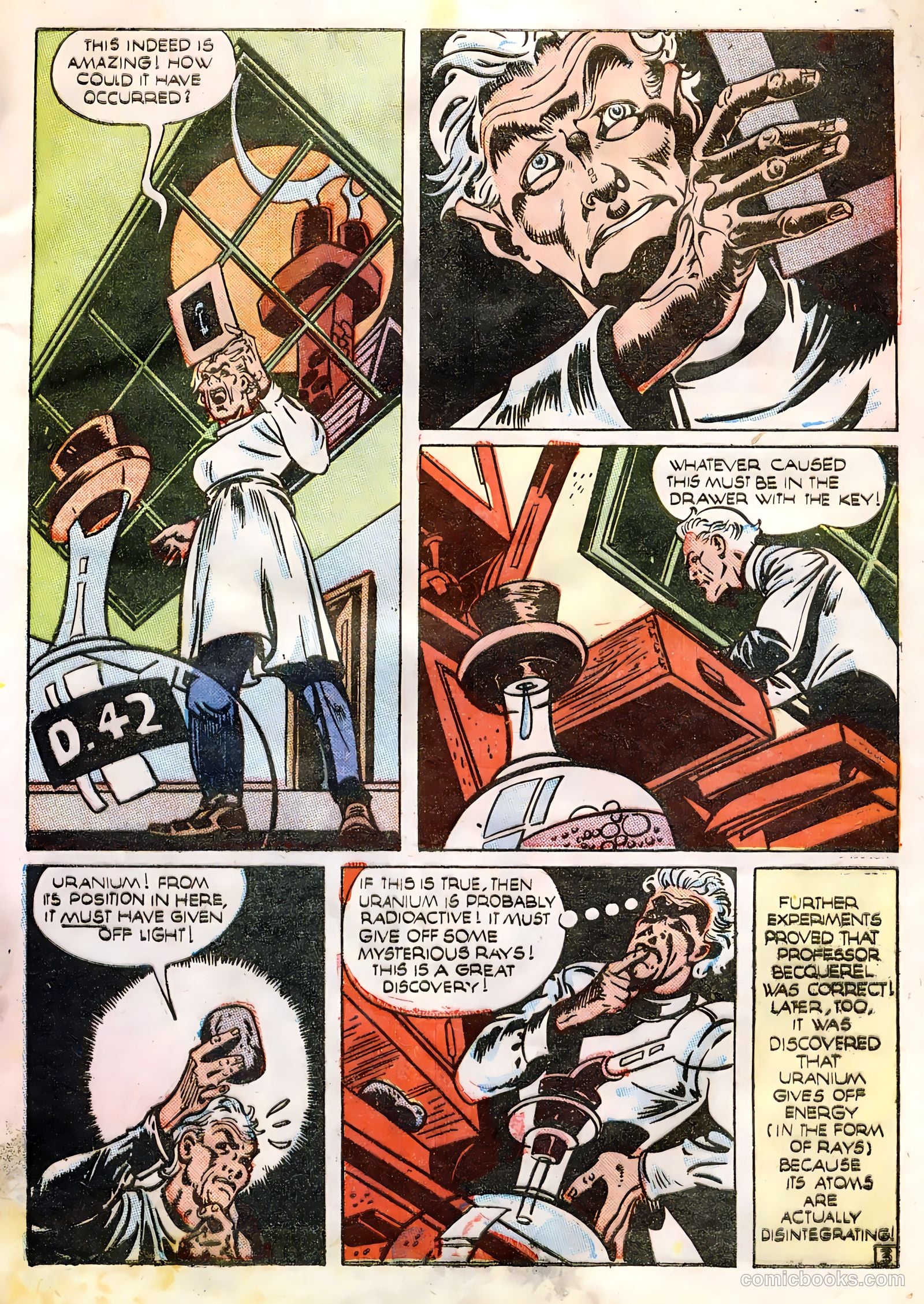
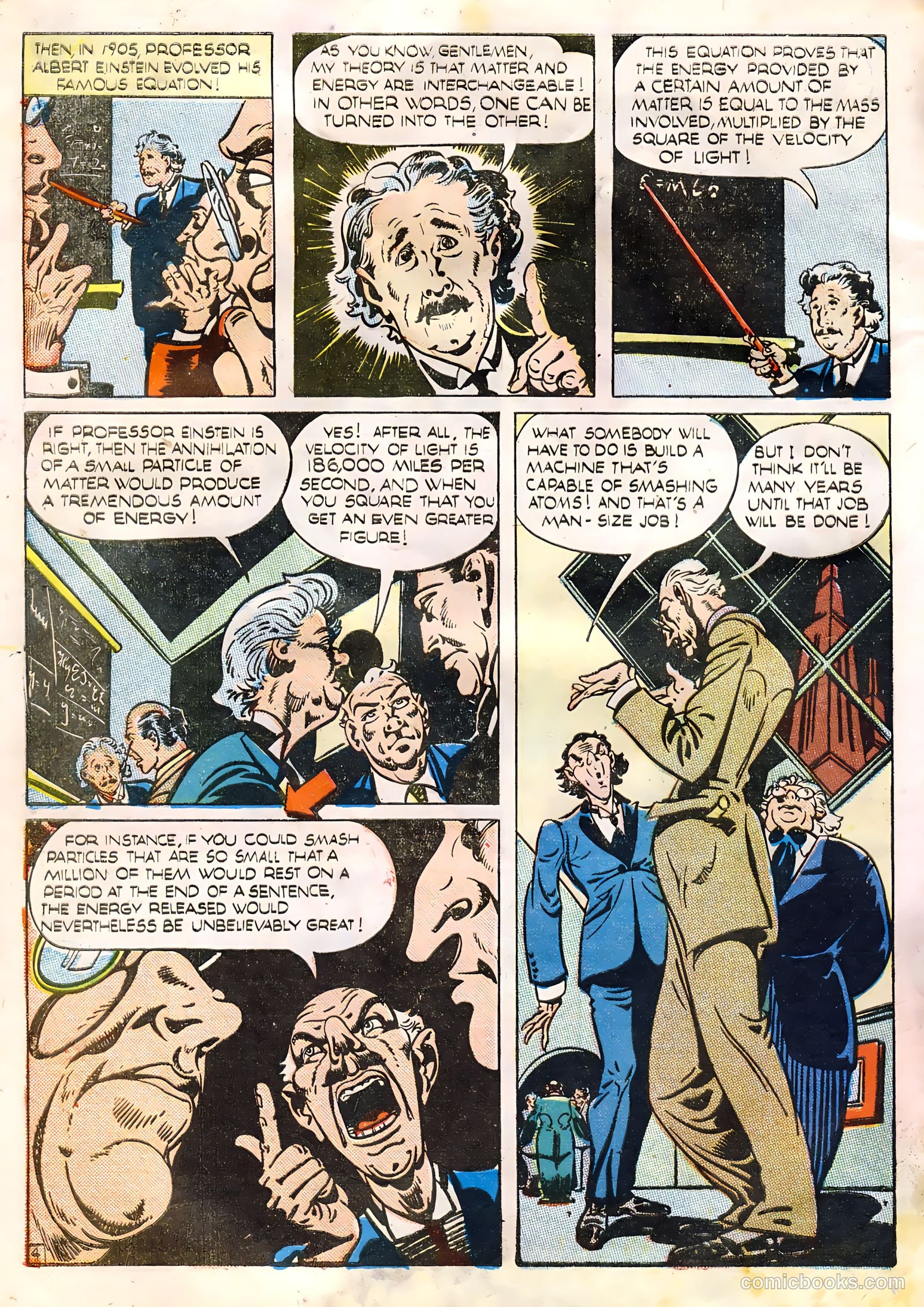
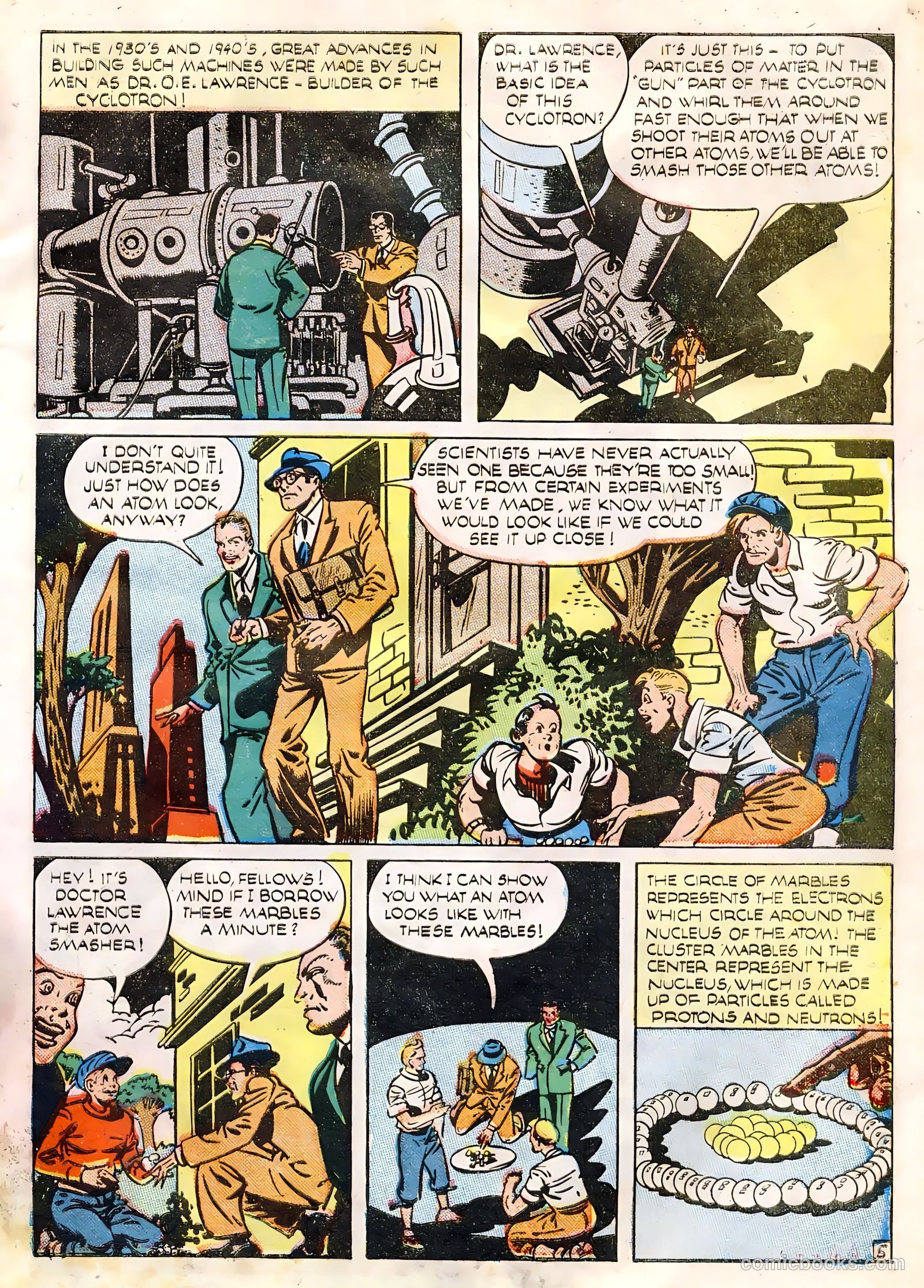
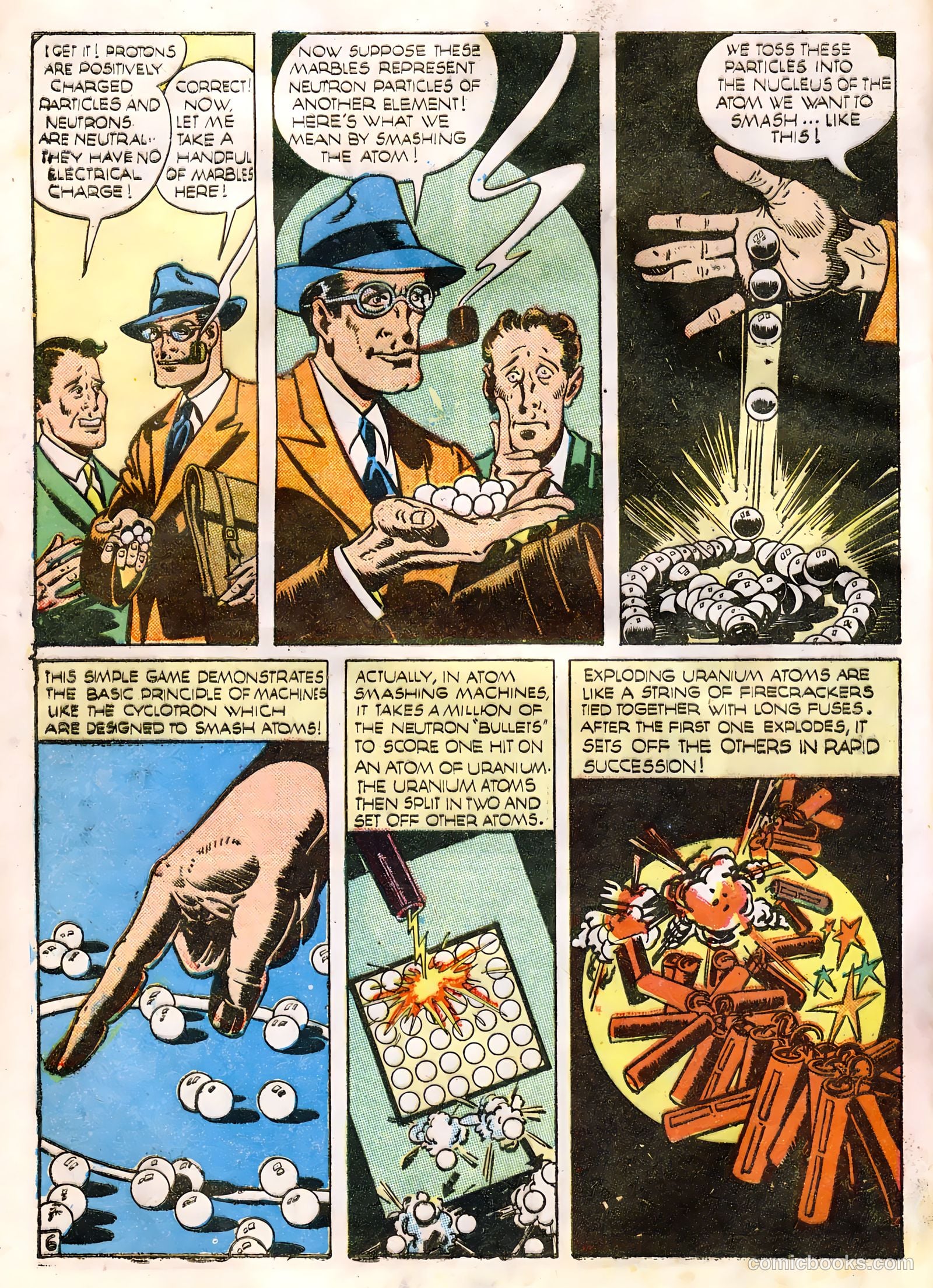
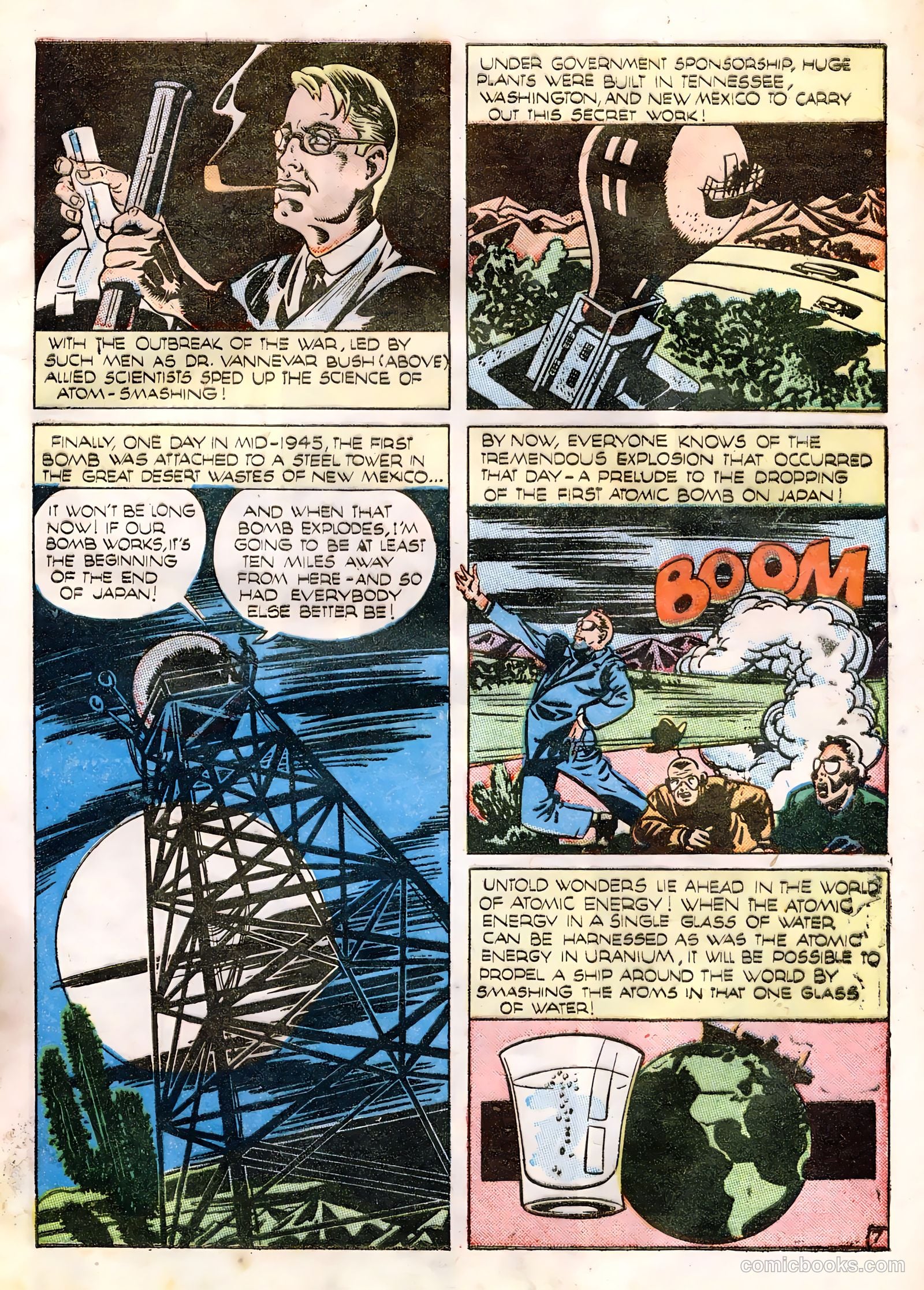
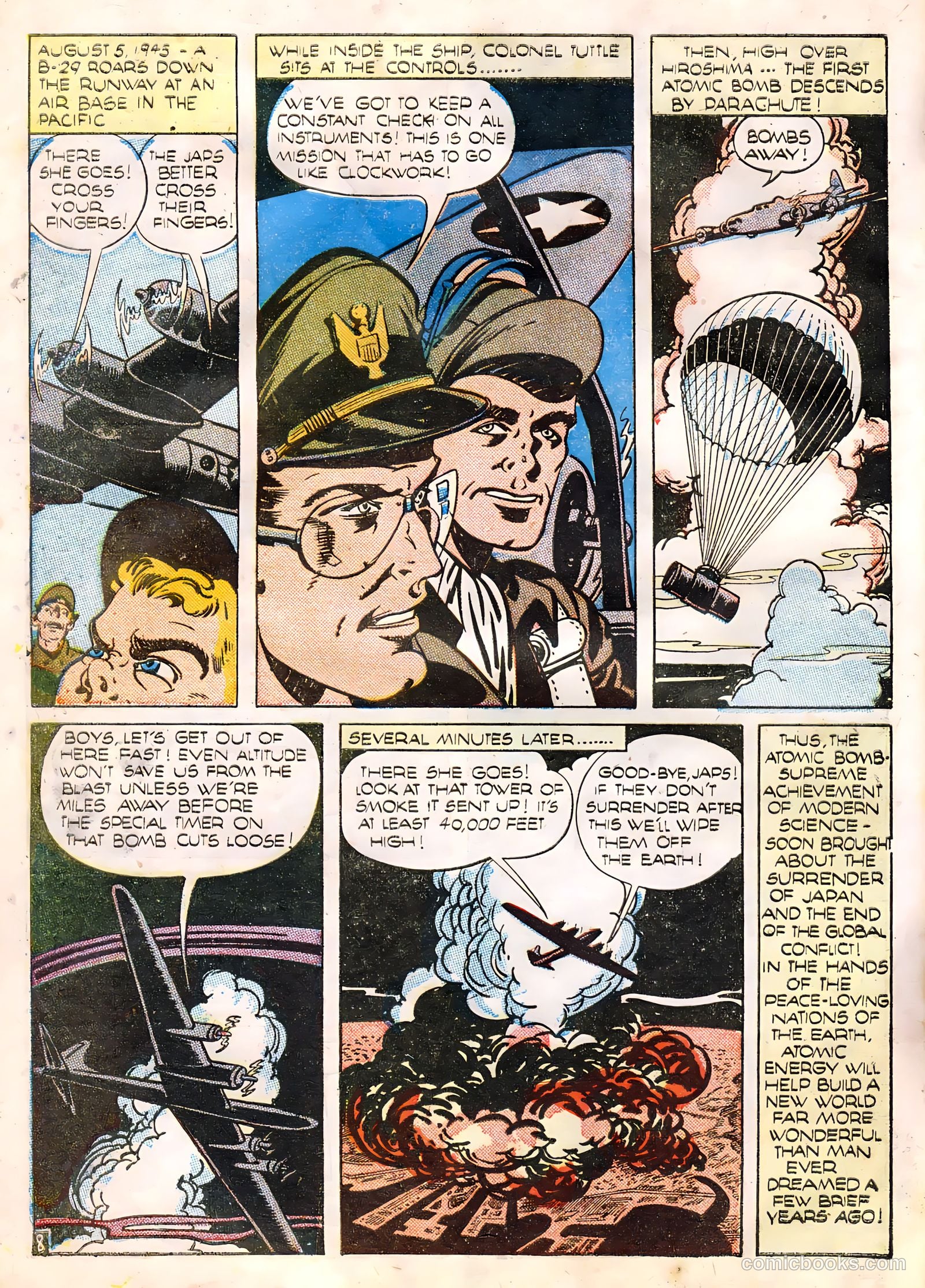
In 1945, a single atomic bomb dropped on Hiroshima marked the dawn of the atomic age, a moment made possible by decades of scientific discovery—from Becquerel’s accidental observation of radioactivity to Einstein’s groundbreaking equation E=MC². The story traces how scientists like Lawrence and Bush advanced the understanding of atomic structure and energy, culminating in the development of machines like the cyclotron and the eventual creation of the first atomic bomb.
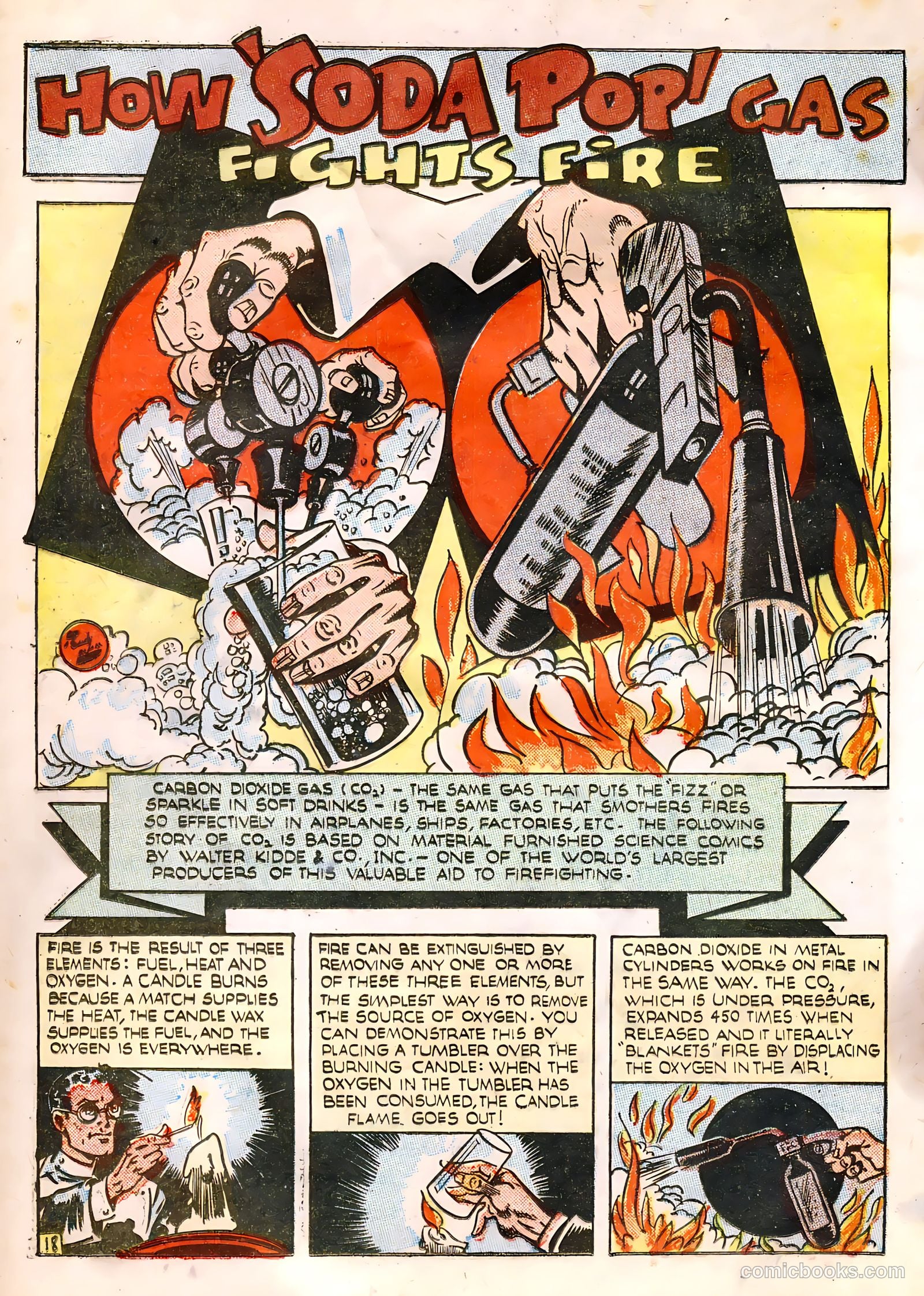
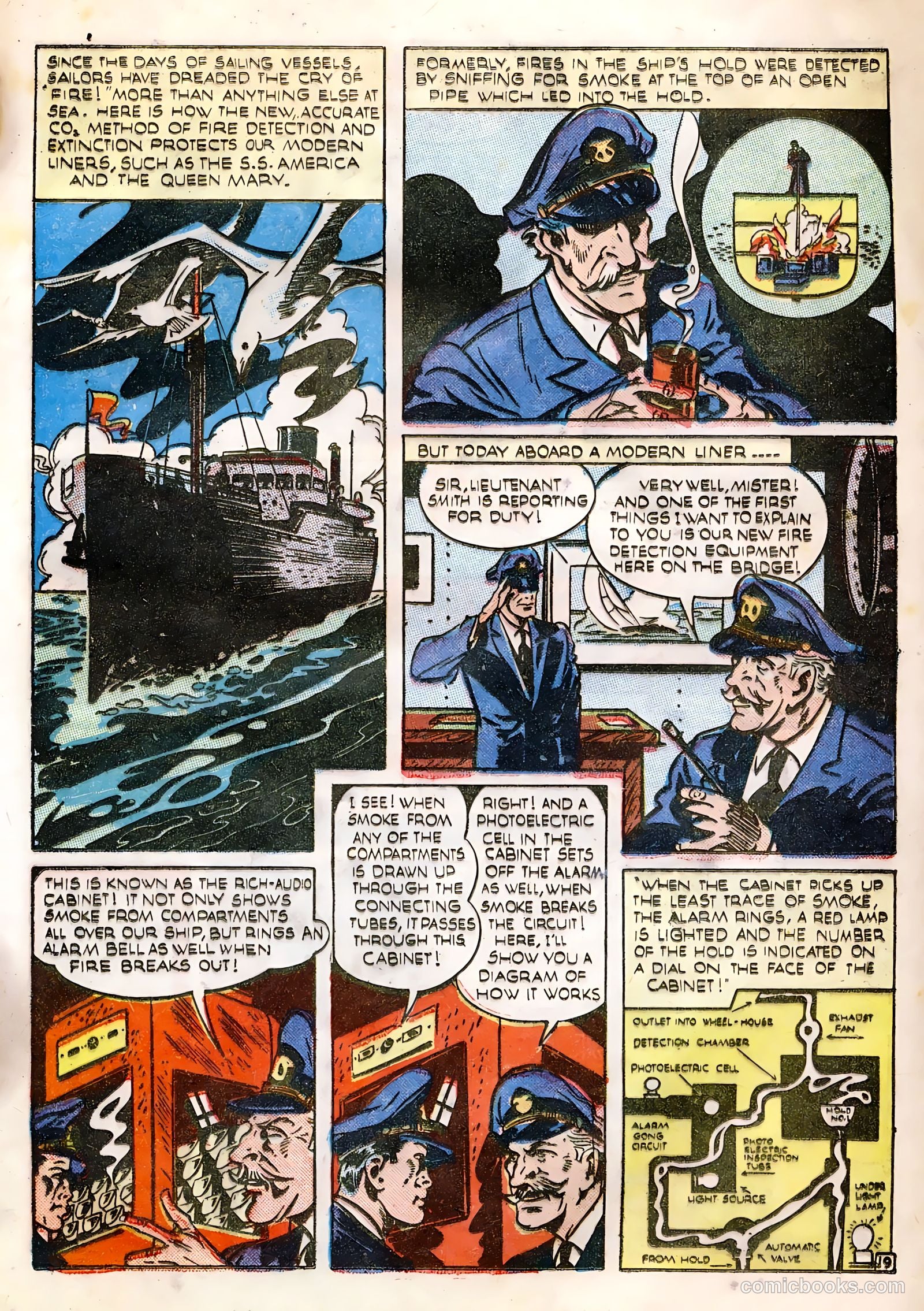
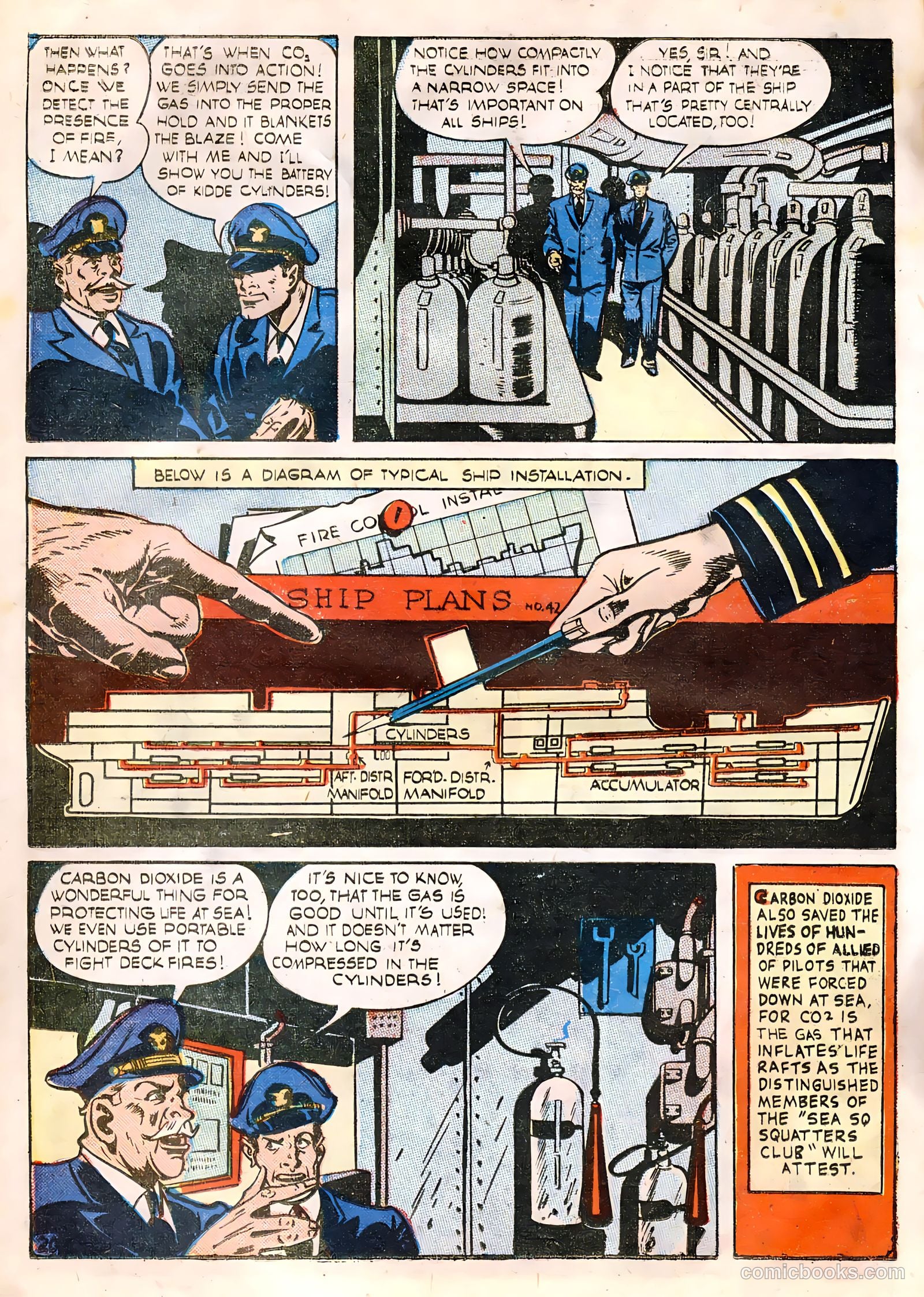
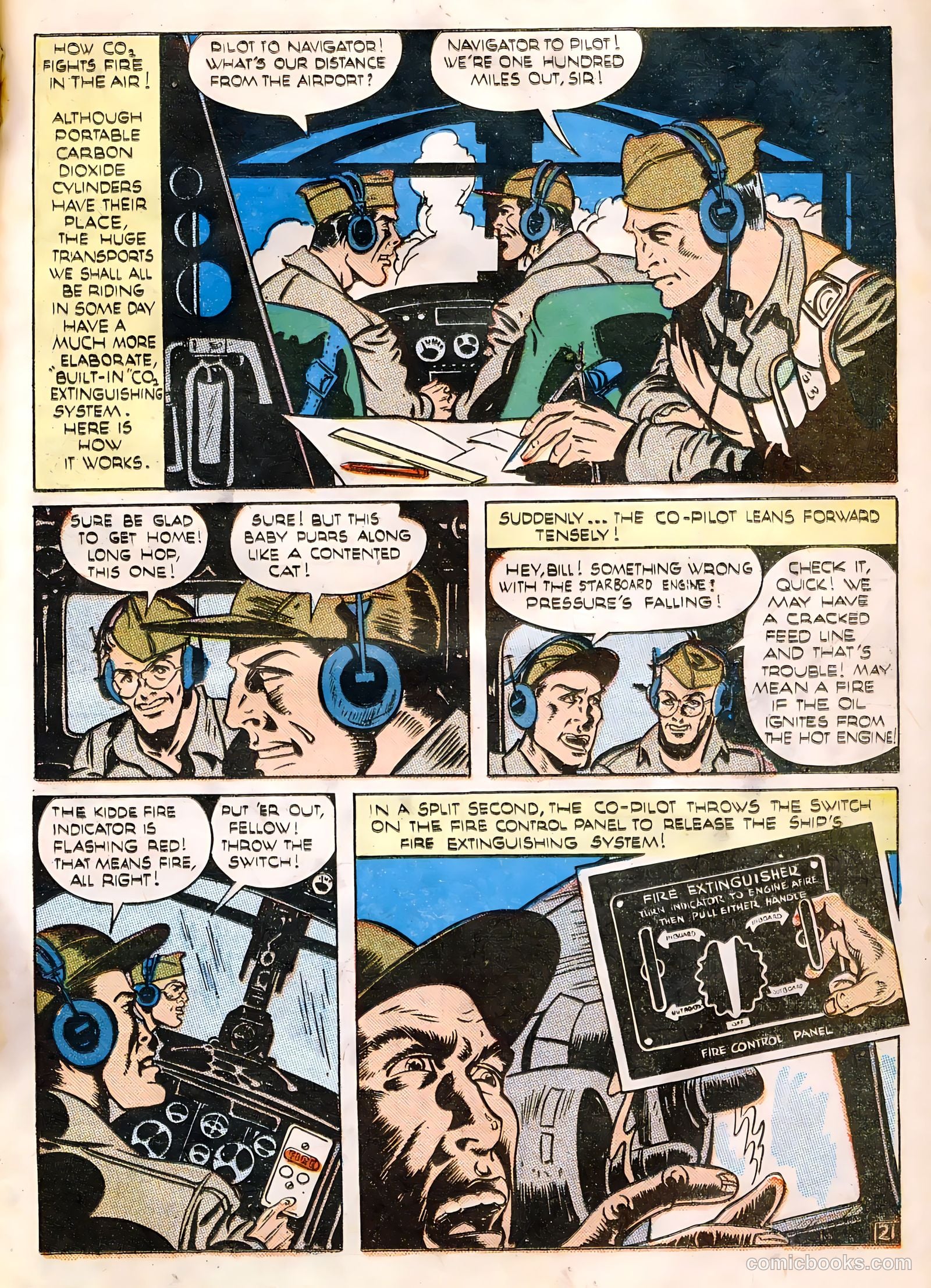
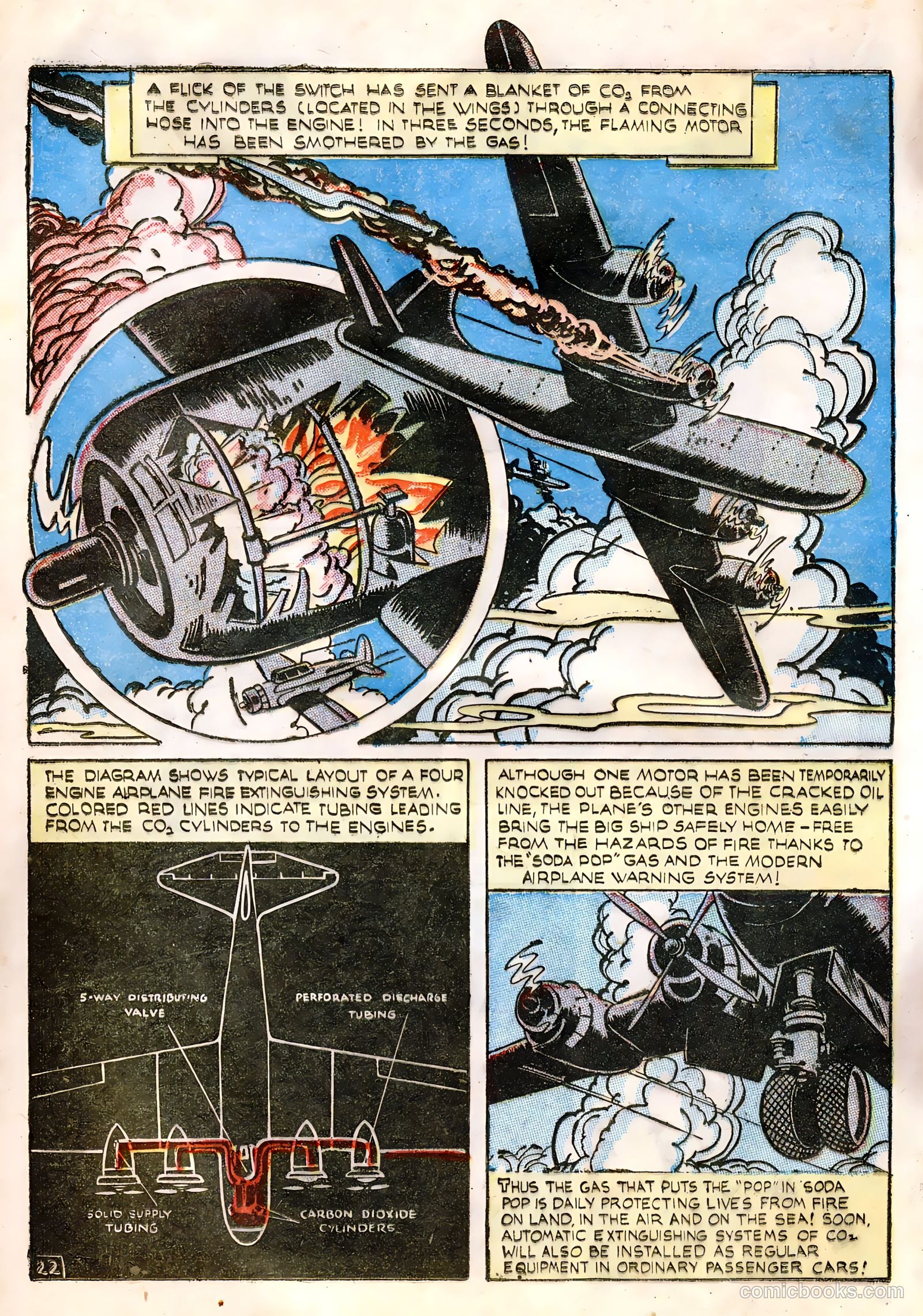
In a 1946 Science Comics story, the surprising science behind carbon dioxide—best known for giving soda its fizz—is explored as a powerful fire suppressant used in airplanes, ships, and factories. The story explains how CO₂ extinguishes flames by displacing oxygen, demonstrating its role in modern detection systems and emergency suppression, from ship holds to aircraft engines.
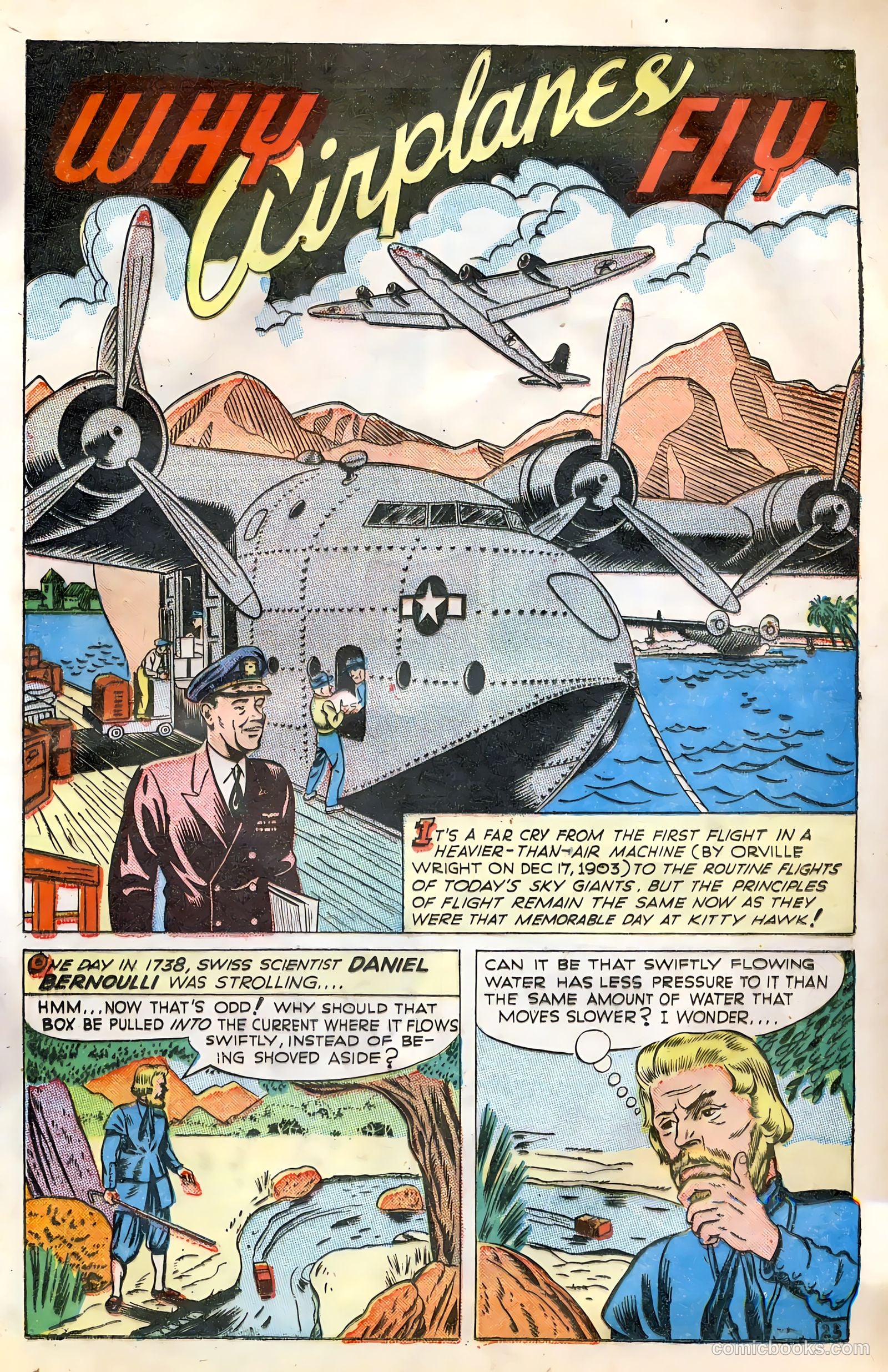
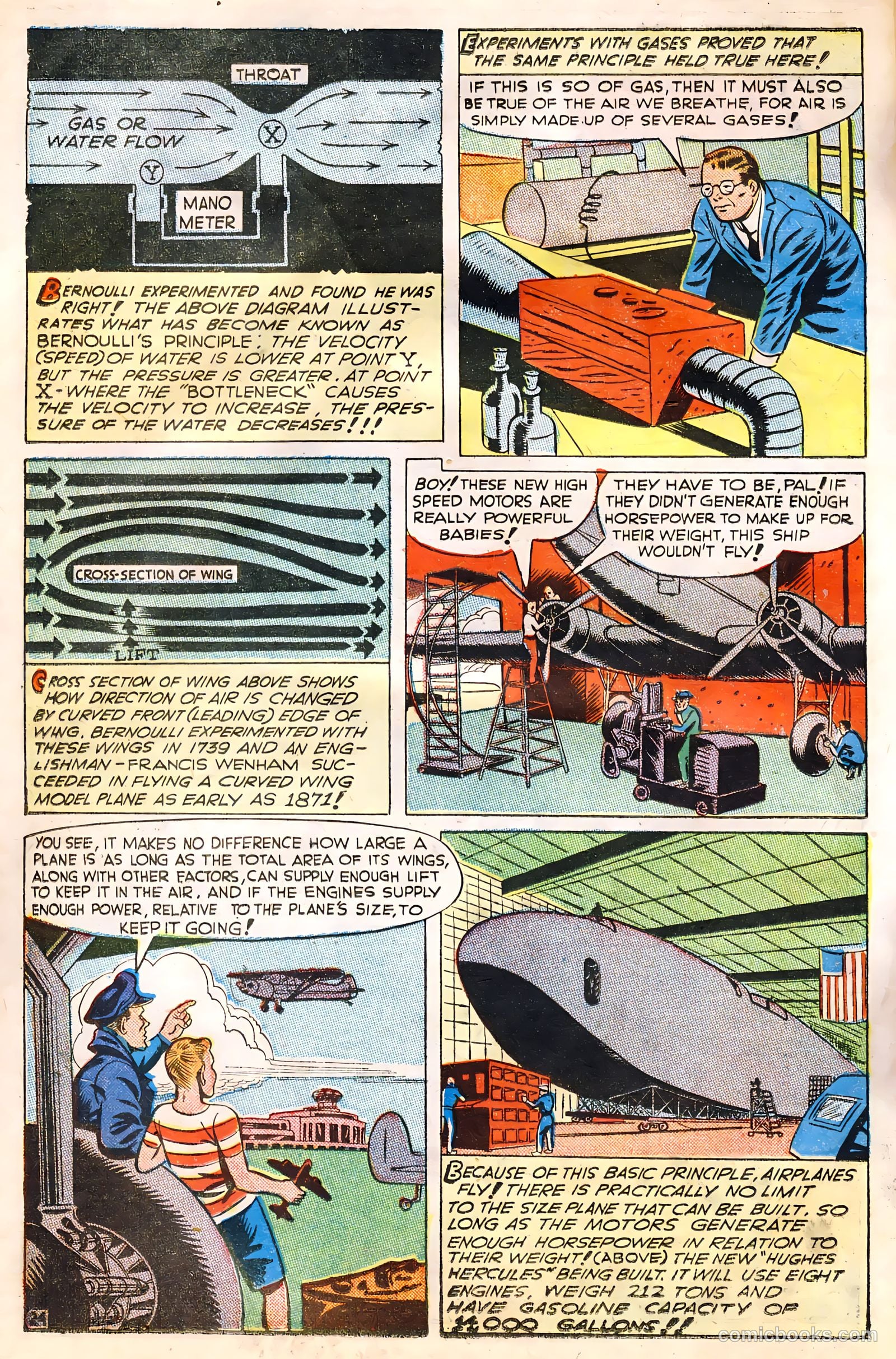
In a clear, illustrated explanation from 1946, the story explores the science behind why airplanes fly, tracing the principle back to Swiss scientist Daniel Bernoulli’s discovery that faster-moving air exerts less pressure. Using simple experiments with water and gas, the narrative explains how this concept applies to airplane wings, showing how their curved shape creates lift. The piece concludes with a glimpse at the future of aviation, highlighting massive planes like the "Hughes Hercules" built to harness these same principles.