comicbooks.com Join Free
HomeMarvels of Science#3Read

★ comicbooks.com Reading Room

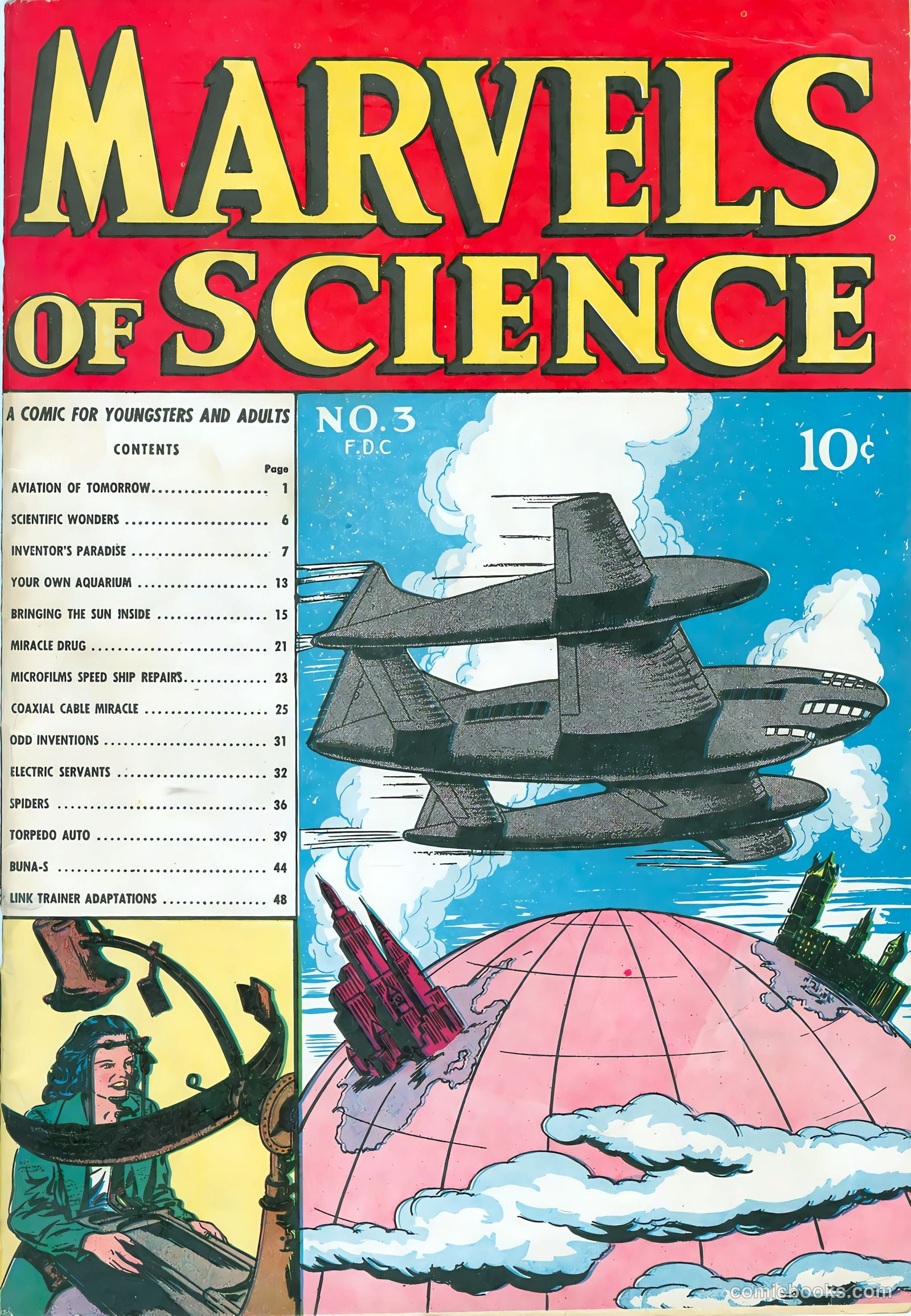
Marvels of Science #3 (1946)

Charlton · 1946 · 52 pages

Free to read · restored edition by comicbooks.com · Issue details →
Marvels of Science #3 (1946) — page 1 of 52
1 / 52
Marvels of Science #3 (1946) — page 2 of 52
2 / 52
Marvels of Science #3 (1946) — page 3 of 52
3 / 52
Marvels of Science #3 (1946) — page 4 of 52
4 / 52
Marvels of Science #3 (1946) — page 5 of 52
5 / 52
Marvels of Science #3 (1946) — page 6 of 52
6 / 52
Marvels of Science #3 (1946) — page 7 of 52
7 / 52
Marvels of Science #3 (1946) — page 8 of 52
8 / 52
Marvels of Science #3 (1946) — page 9 of 52
9 / 52
Marvels of Science #3 (1946) — page 10 of 52
10 / 52
Marvels of Science #3 (1946) — page 11 of 52
11 / 52
Marvels of Science #3 (1946) — page 12 of 52
12 / 52
Marvels of Science #3 (1946) — page 13 of 52
13 / 52
Marvels of Science #3 (1946) — page 14 of 52
14 / 52
Marvels of Science #3 (1946) — page 15 of 52
15 / 52
Marvels of Science #3 (1946) — page 16 of 52
16 / 52
Marvels of Science #3 (1946) — page 17 of 52
17 / 52
Marvels of Science #3 (1946) — page 18 of 52
18 / 52
Marvels of Science #3 (1946) — page 19 of 52
19 / 52
Marvels of Science #3 (1946) — page 20 of 52
20 / 52
Marvels of Science #3 (1946) — page 21 of 52
21 / 52
Marvels of Science #3 (1946) — page 22 of 52
22 / 52
Marvels of Science #3 (1946) — page 23 of 52
23 / 52
Marvels of Science #3 (1946) — page 24 of 52
24 / 52
Marvels of Science #3 (1946) — page 25 of 52
25 / 52
Marvels of Science #3 (1946) — page 26 of 52
26 / 52
Marvels of Science #3 (1946) — page 27 of 52
27 / 52
Marvels of Science #3 (1946) — page 28 of 52
28 / 52
Marvels of Science #3 (1946) — page 29 of 52
29 / 52
Marvels of Science #3 (1946) — page 30 of 52
30 / 52
Marvels of Science #3 (1946) — page 31 of 52
31 / 52
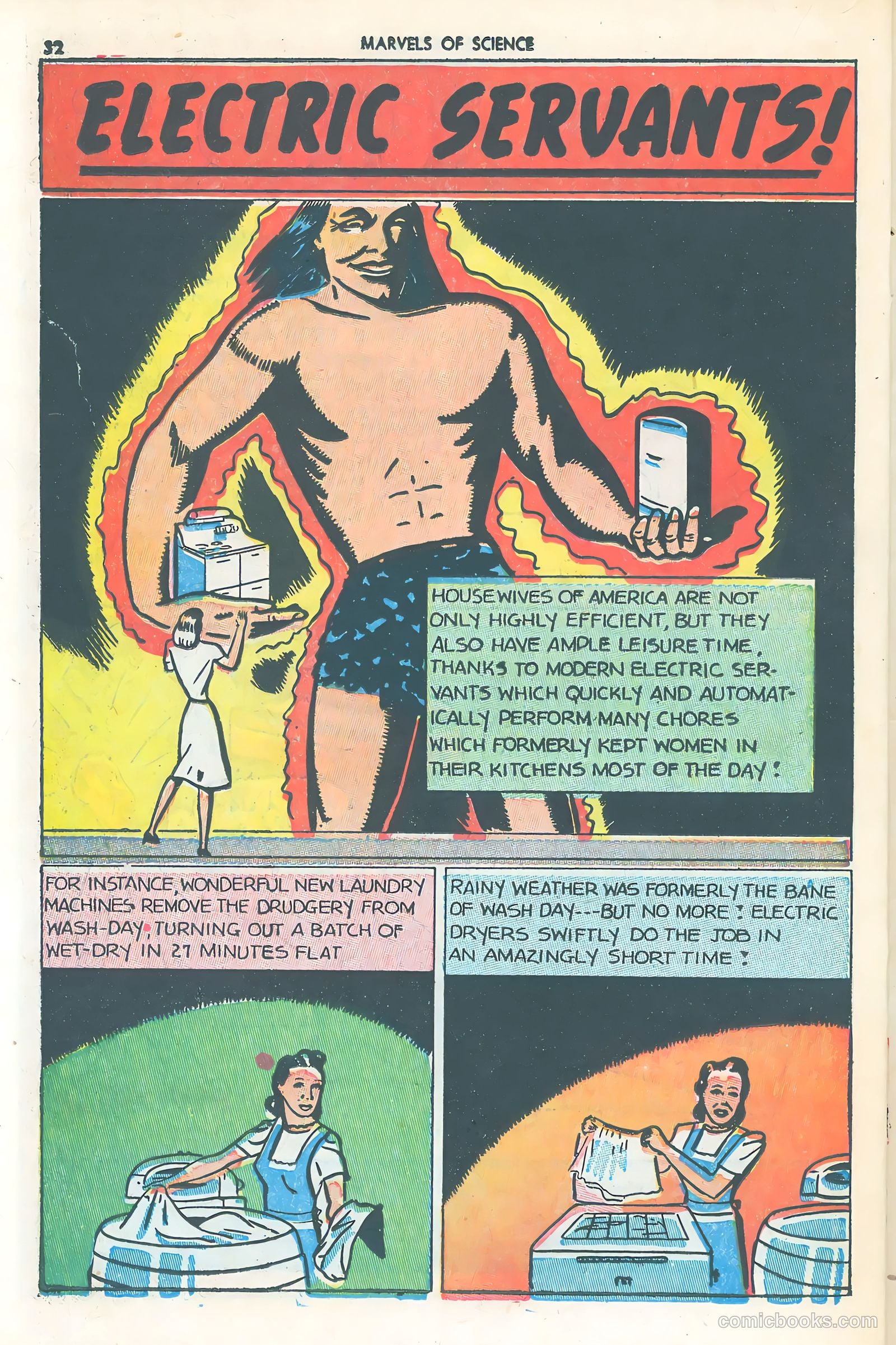
Marvels of Science #3 (1946) — page 32 of 52
32 / 52
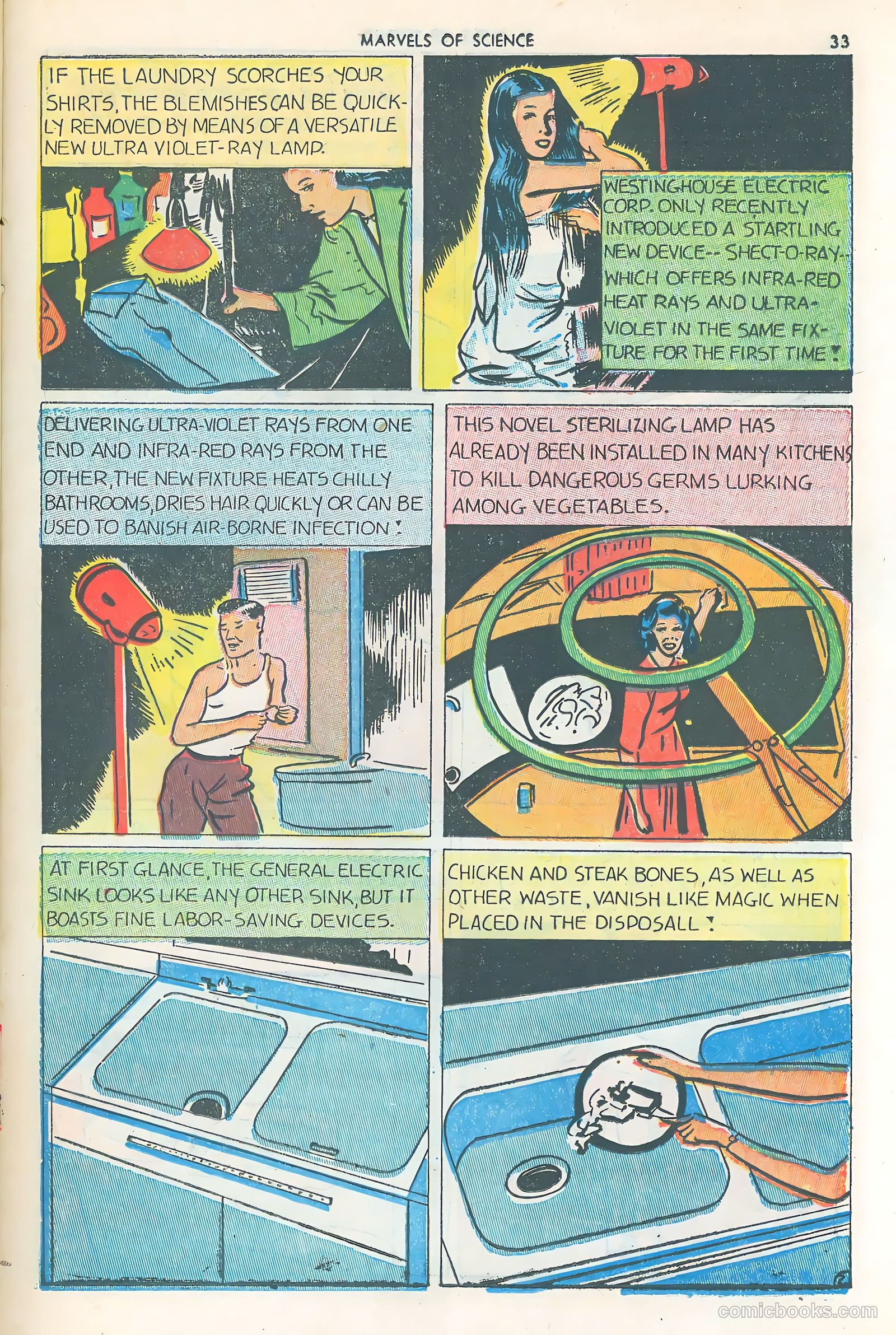
Marvels of Science #3 (1946) — page 33 of 52
33 / 52
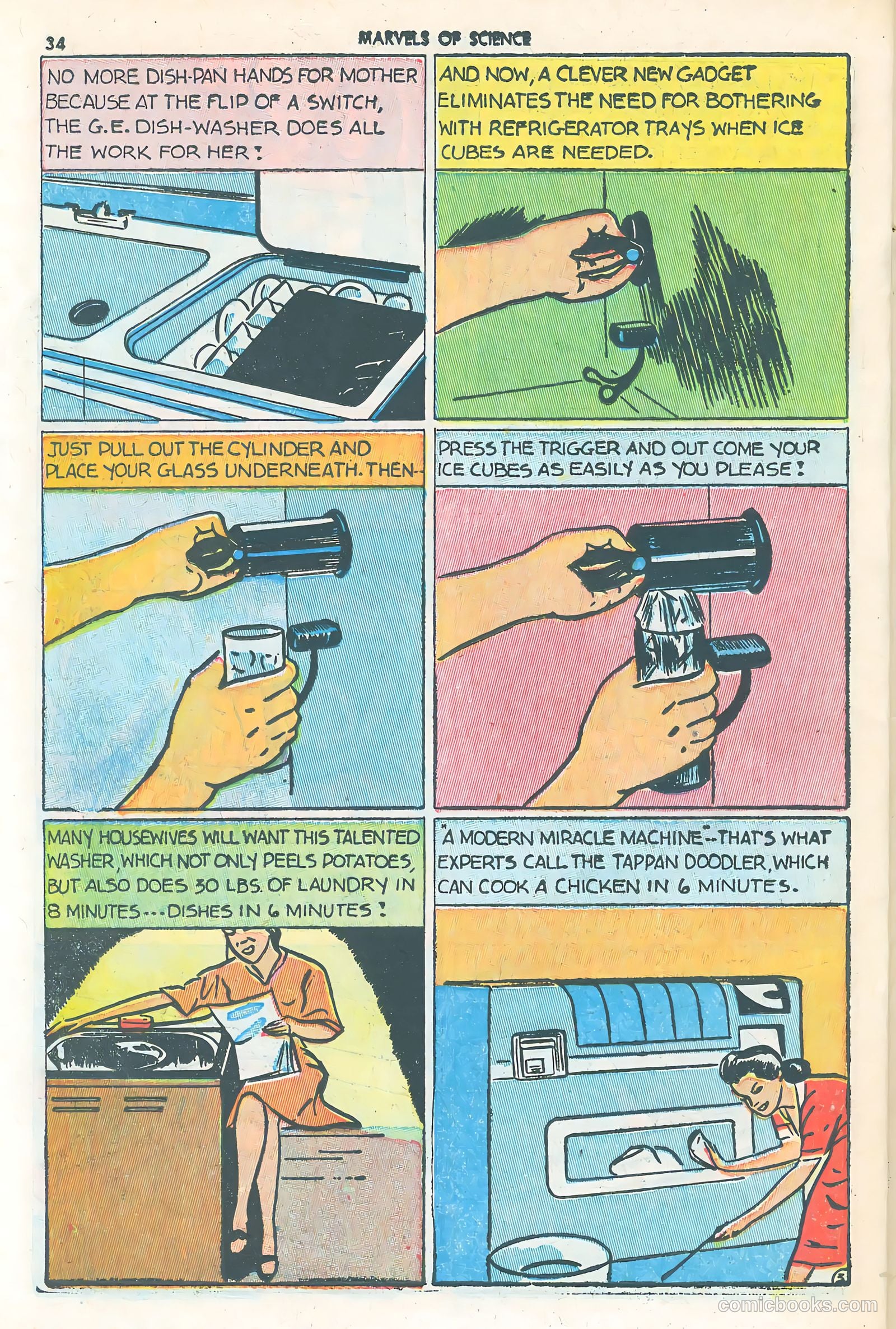
Marvels of Science #3 (1946) — page 34 of 52
34 / 52
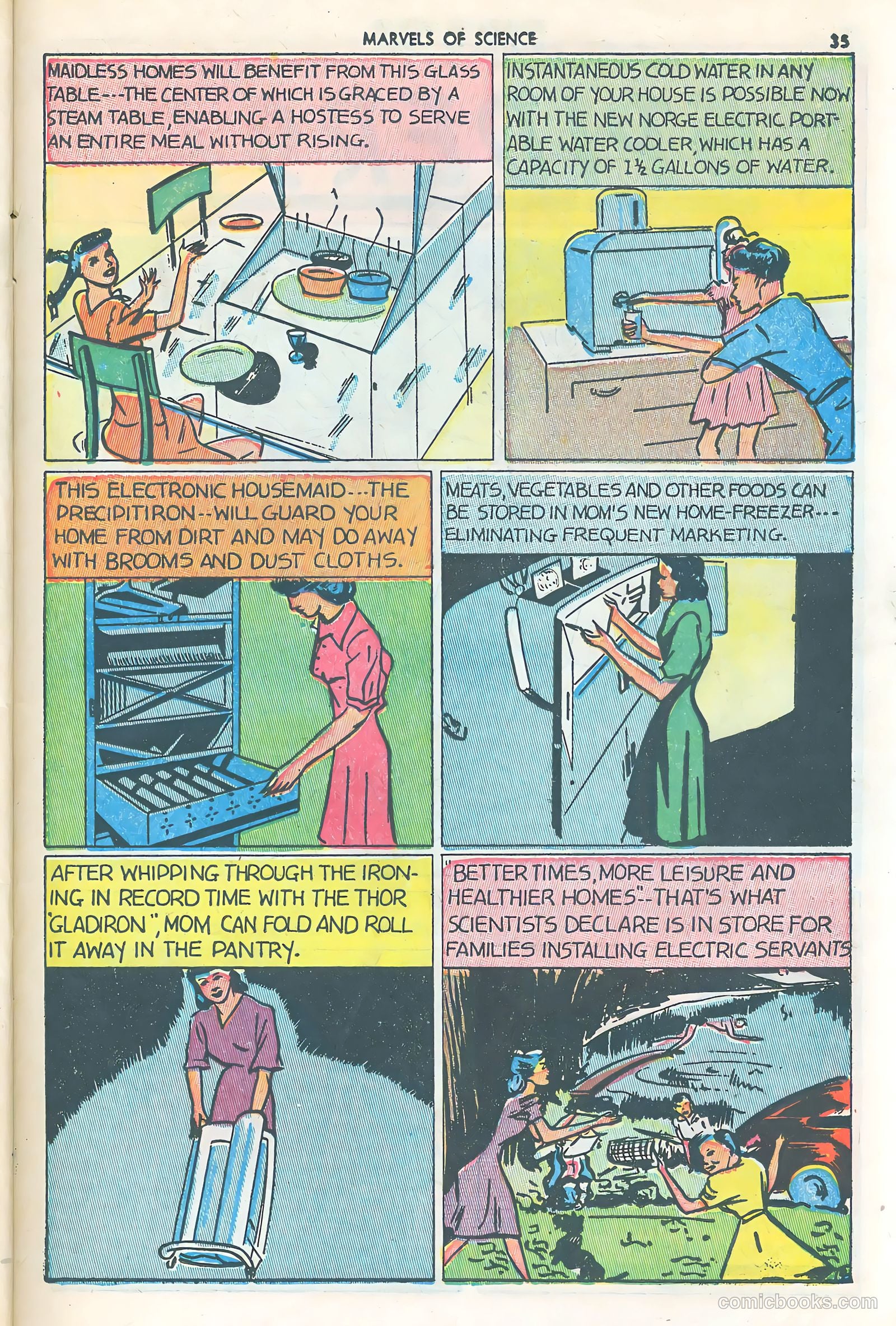
Marvels of Science #3 (1946) — page 35 of 52
35 / 52
Marvels of Science #3 (1946) — page 36 of 52
36 / 52
Marvels of Science #3 (1946) — page 37 of 52
37 / 52
Marvels of Science #3 (1946) — page 38 of 52
38 / 52
Marvels of Science #3 (1946) — page 39 of 52
39 / 52
Marvels of Science #3 (1946) — page 40 of 52
40 / 52
Marvels of Science #3 (1946) — page 41 of 52
41 / 52
Marvels of Science #3 (1946) — page 42 of 52
42 / 52
Marvels of Science #3 (1946) — page 43 of 52
43 / 52
Marvels of Science #3 (1946) — page 44 of 52
44 / 52
Marvels of Science #3 (1946) — page 45 of 52
45 / 52
Marvels of Science #3 (1946) — page 46 of 52
46 / 52
Marvels of Science #3 (1946) — page 47 of 52
47 / 52
Marvels of Science #3 (1946) — page 48 of 52
48 / 52
Marvels of Science #3 (1946) — page 49 of 52
49 / 52
Marvels of Science #3 (1946) — page 50 of 52
50 / 52
Marvels of Science #3 (1946) — page 51 of 52
51 / 52
Marvels of Science #3 (1946) — page 52 of 52
52 / 52
ContinueMarvels of Science #4 →
Contains 15 stories
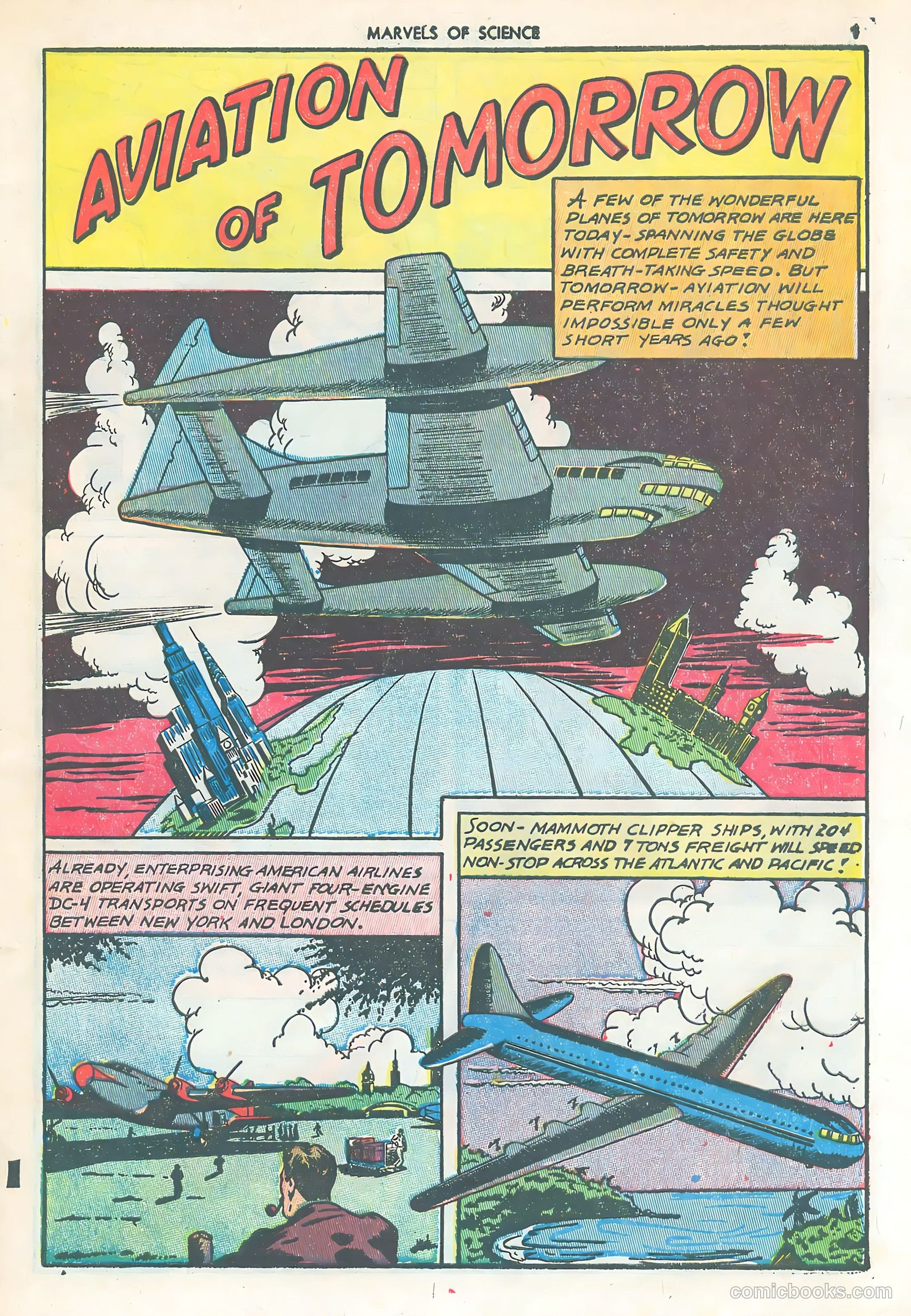
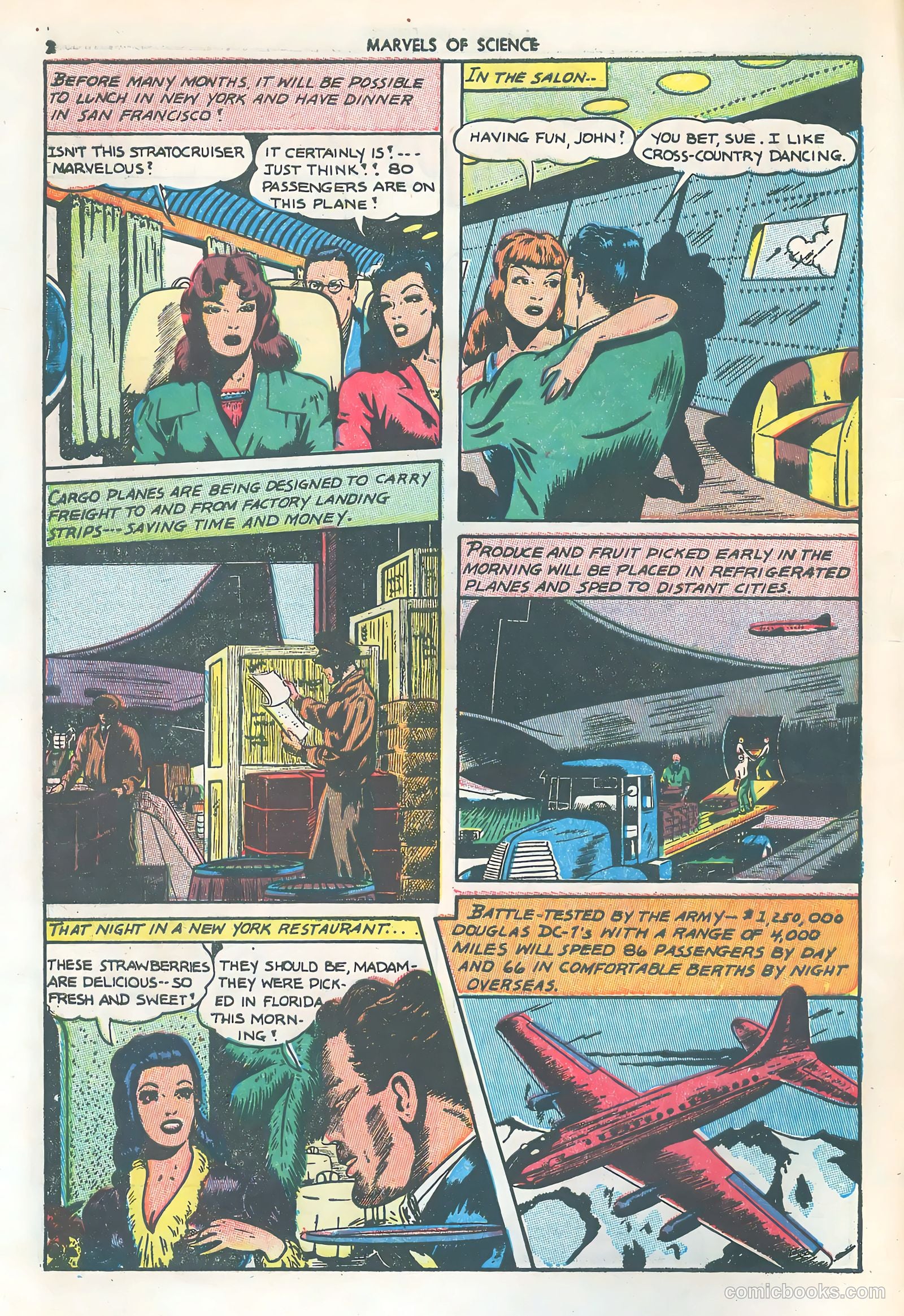
Aviation of Tomorrow
5 pp · non-fiction

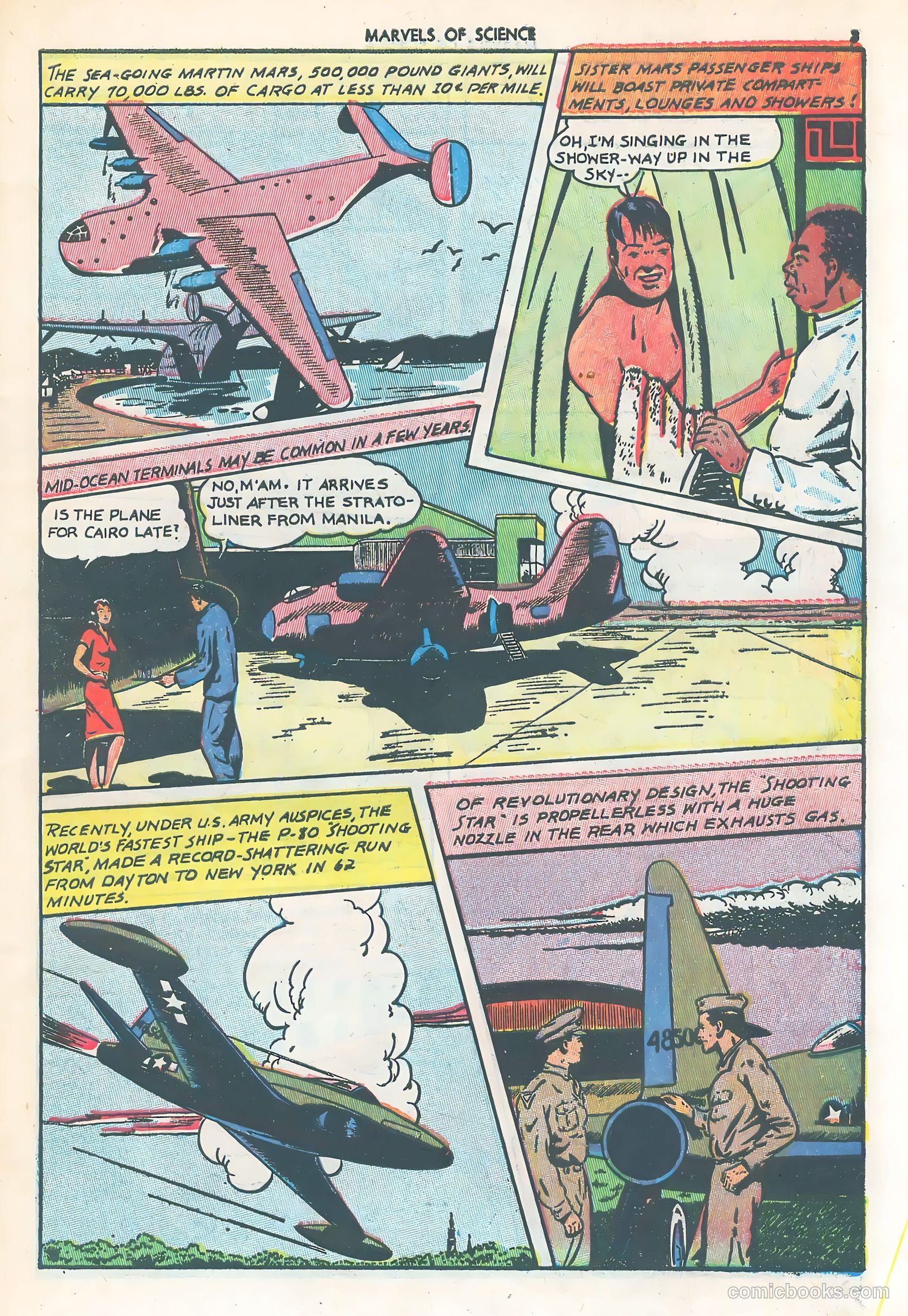
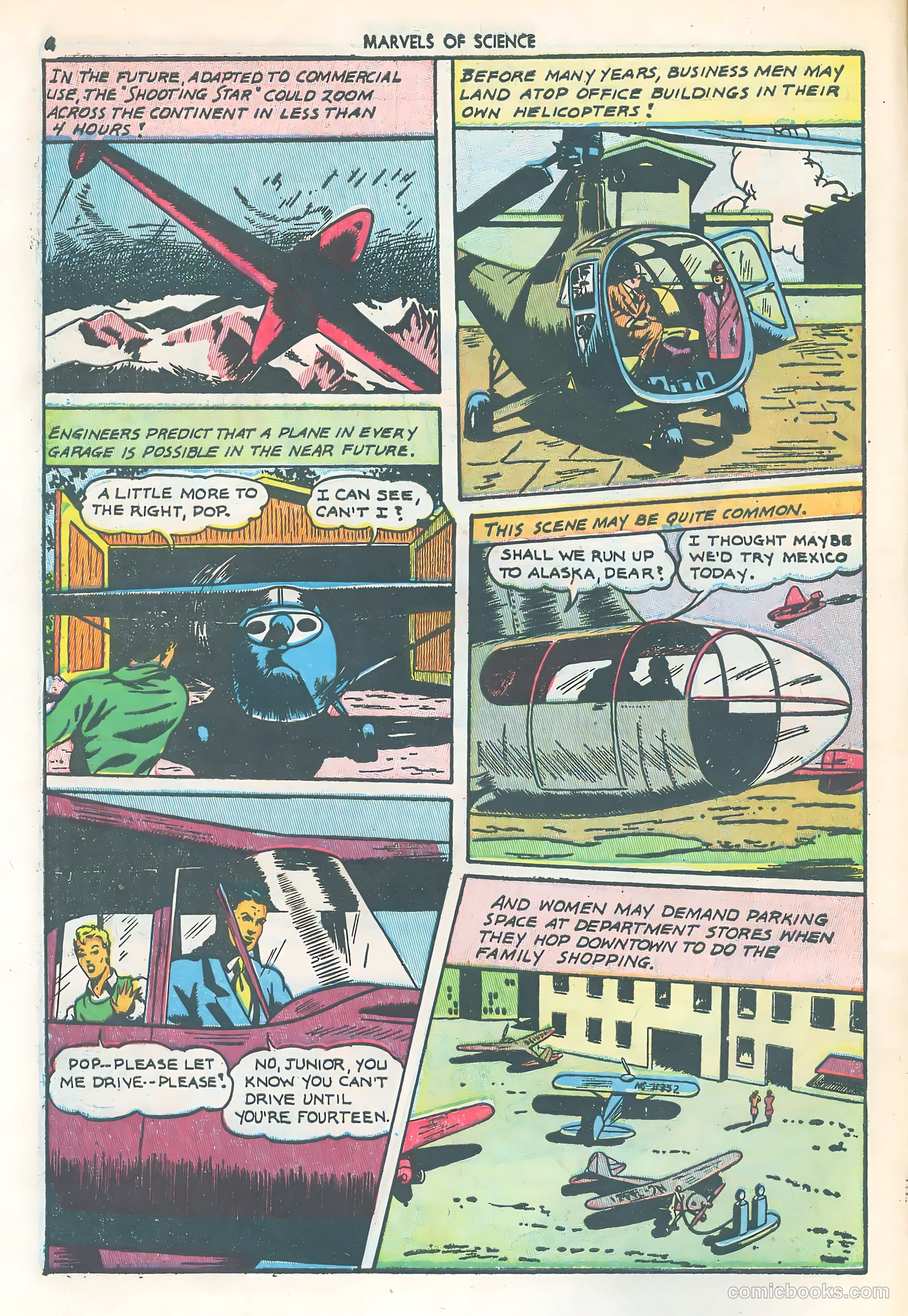
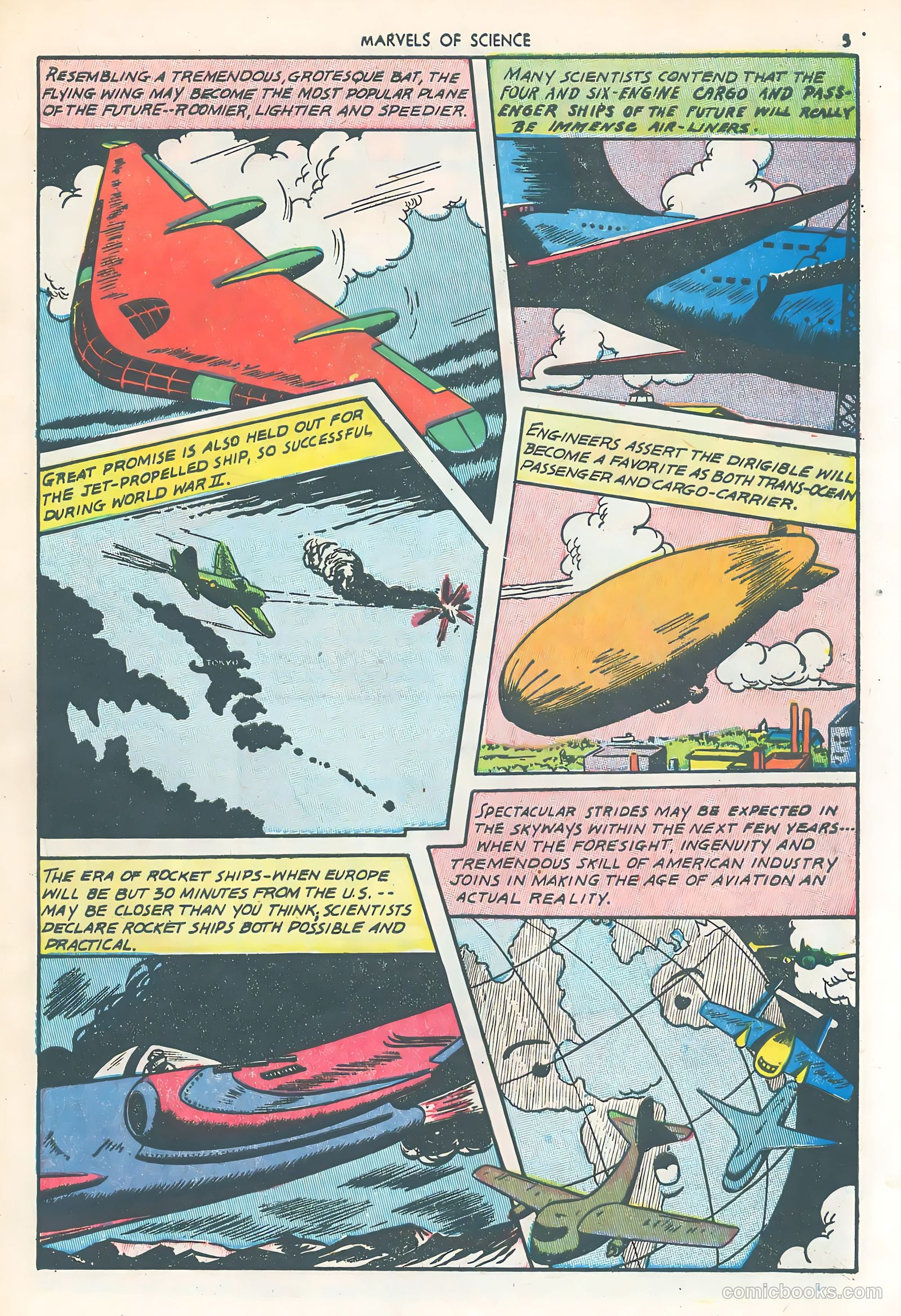
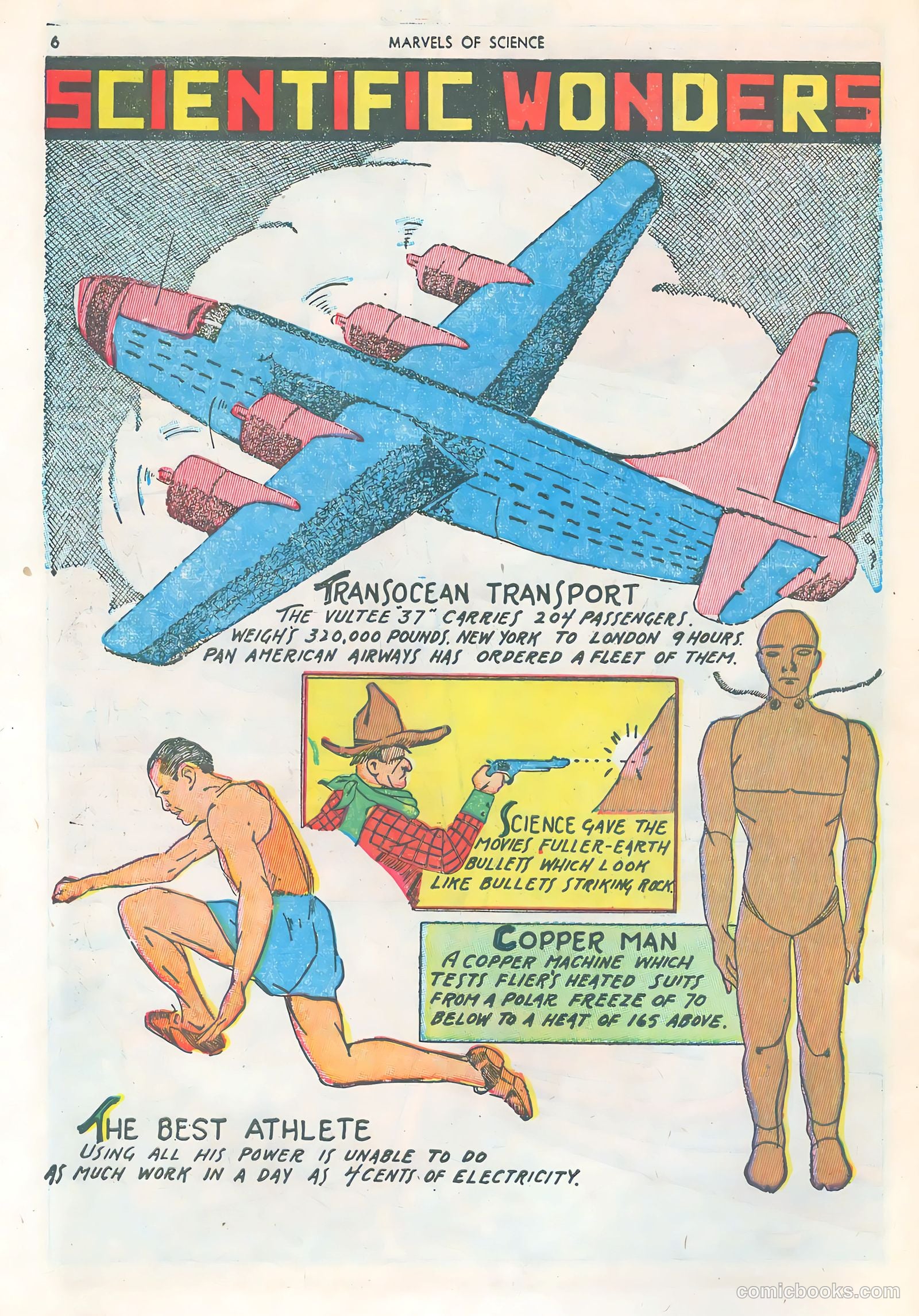
This non-fiction feature explores the revolutionary aircraft and aviation concepts poised to transform global travel in the years ahead, from massive transatlantic clippers carrying 204 passengers to experimental jet-propelled ships and sleek flying wings. Through vivid illustrations and commentary, the story showcases real aircraft like the DC-4 and the record-breaking P-80 Shooting Star, while speculating on near-future marvels such as personal helicopters, continental flights completed in mere hours, and even rocket ships that could span the Atlantic in half an hour. It's a fascinating snapshot of 1946 optimism about what the skies—and human ingenuity—might deliver.

Untitled story
1 pp · non-fiction
Inventors' Paradise!
6 pp · non-fiction

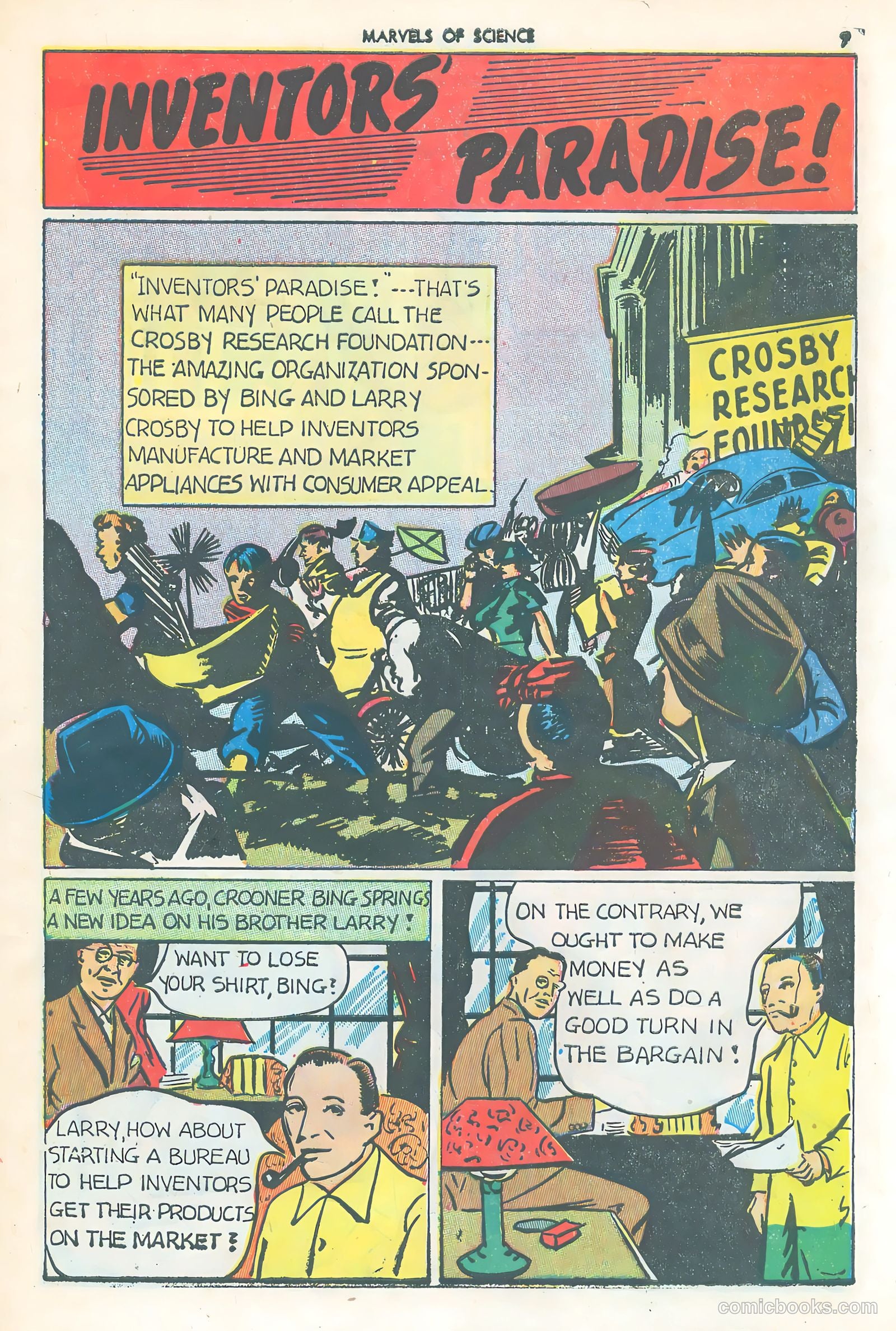
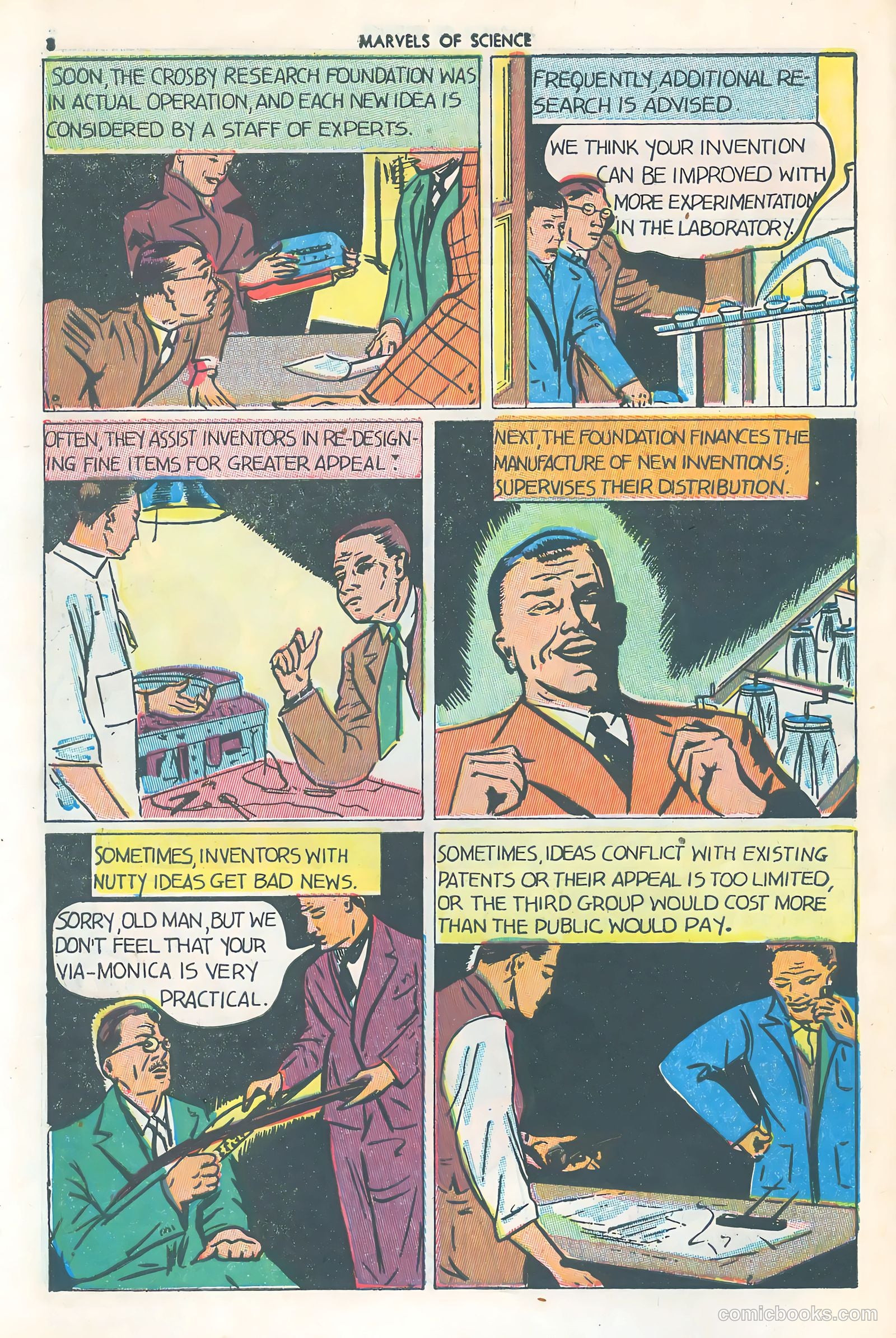
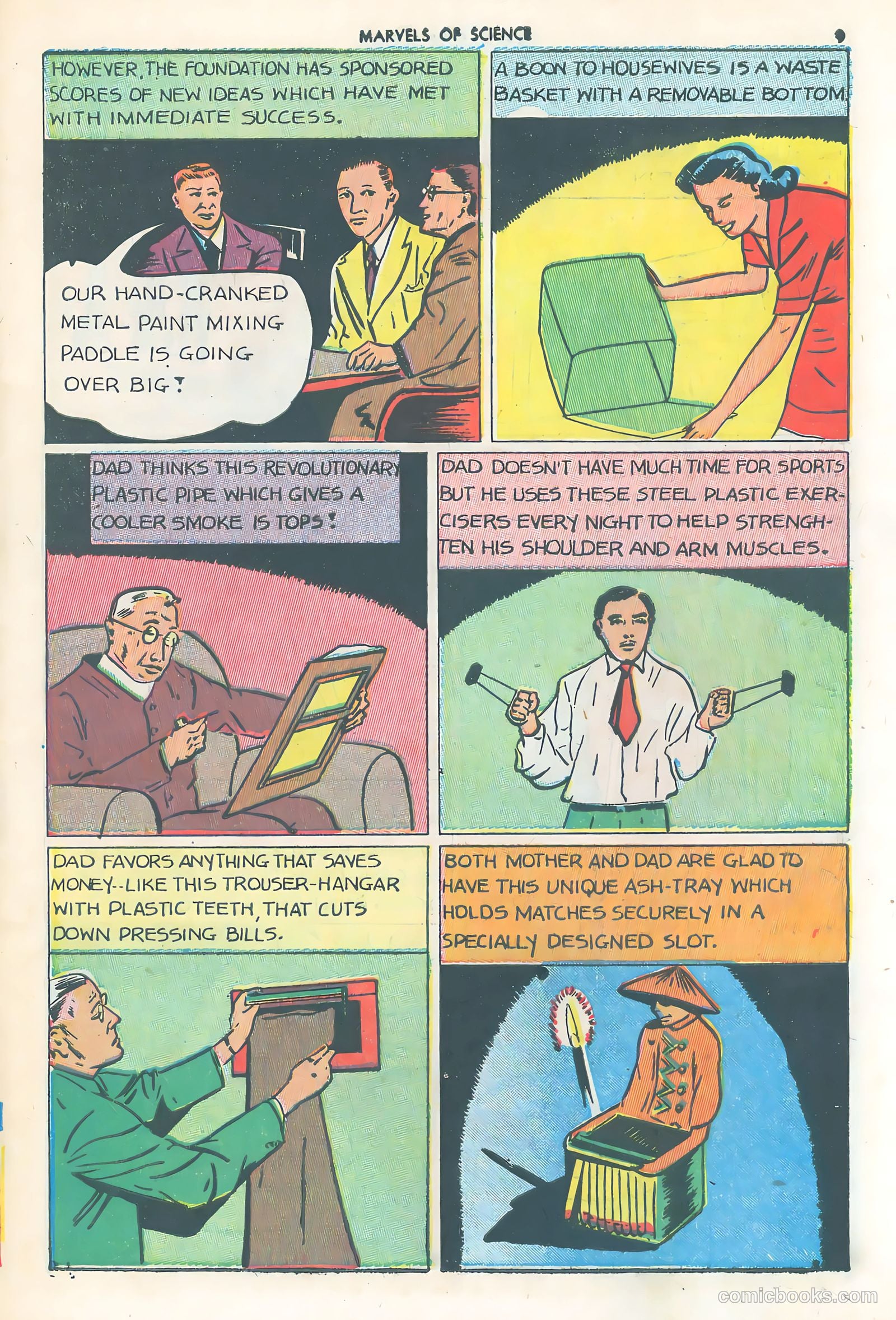
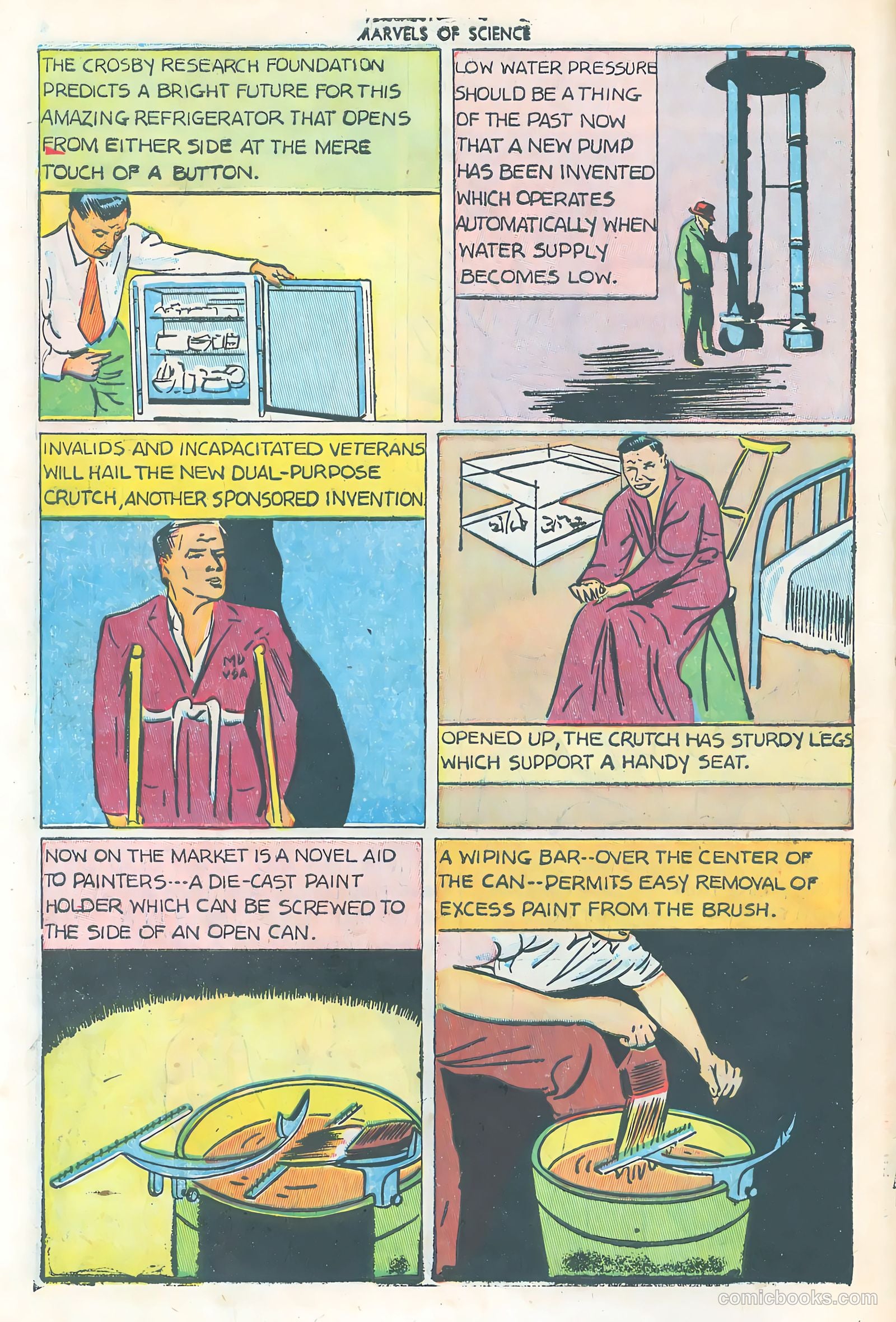
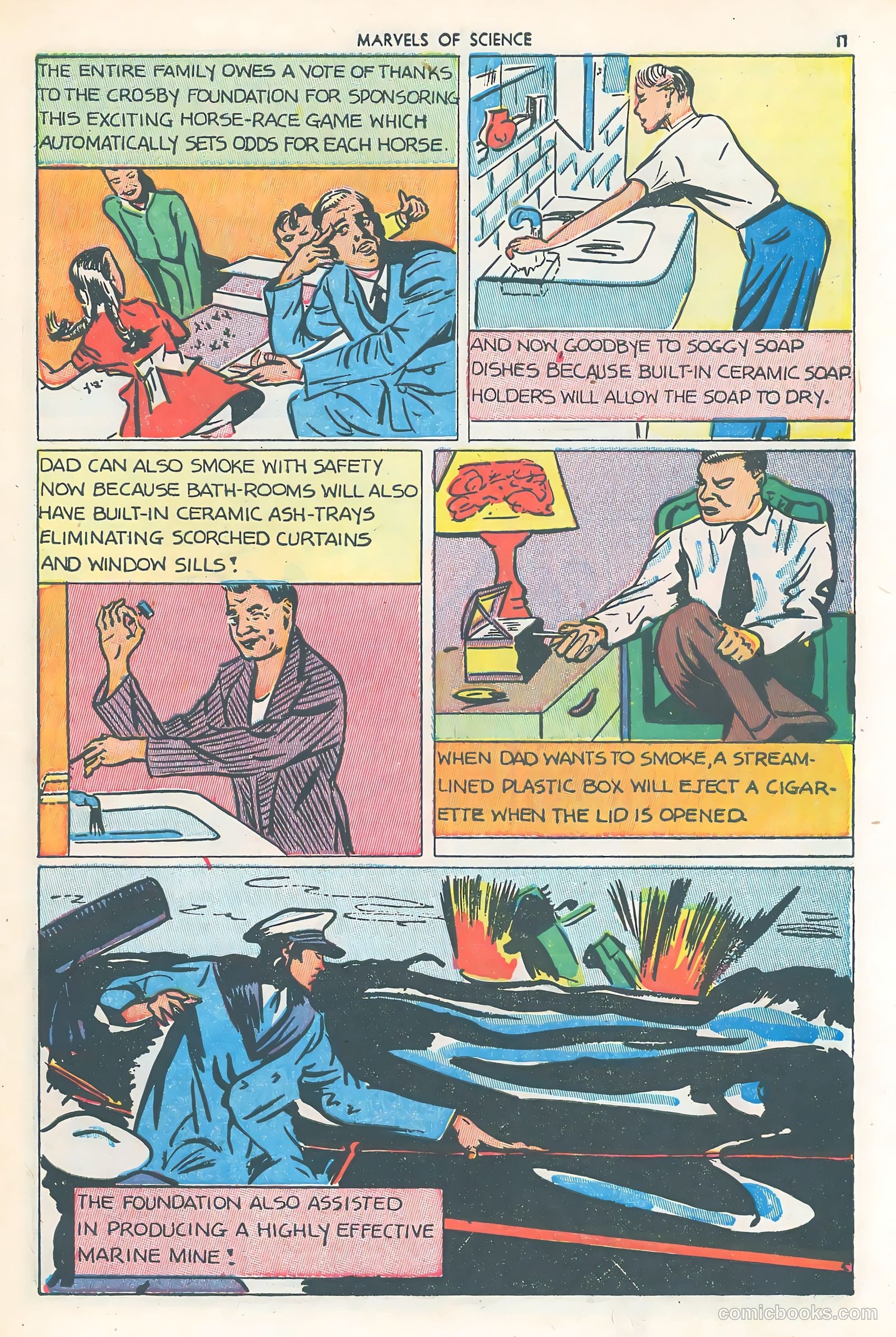
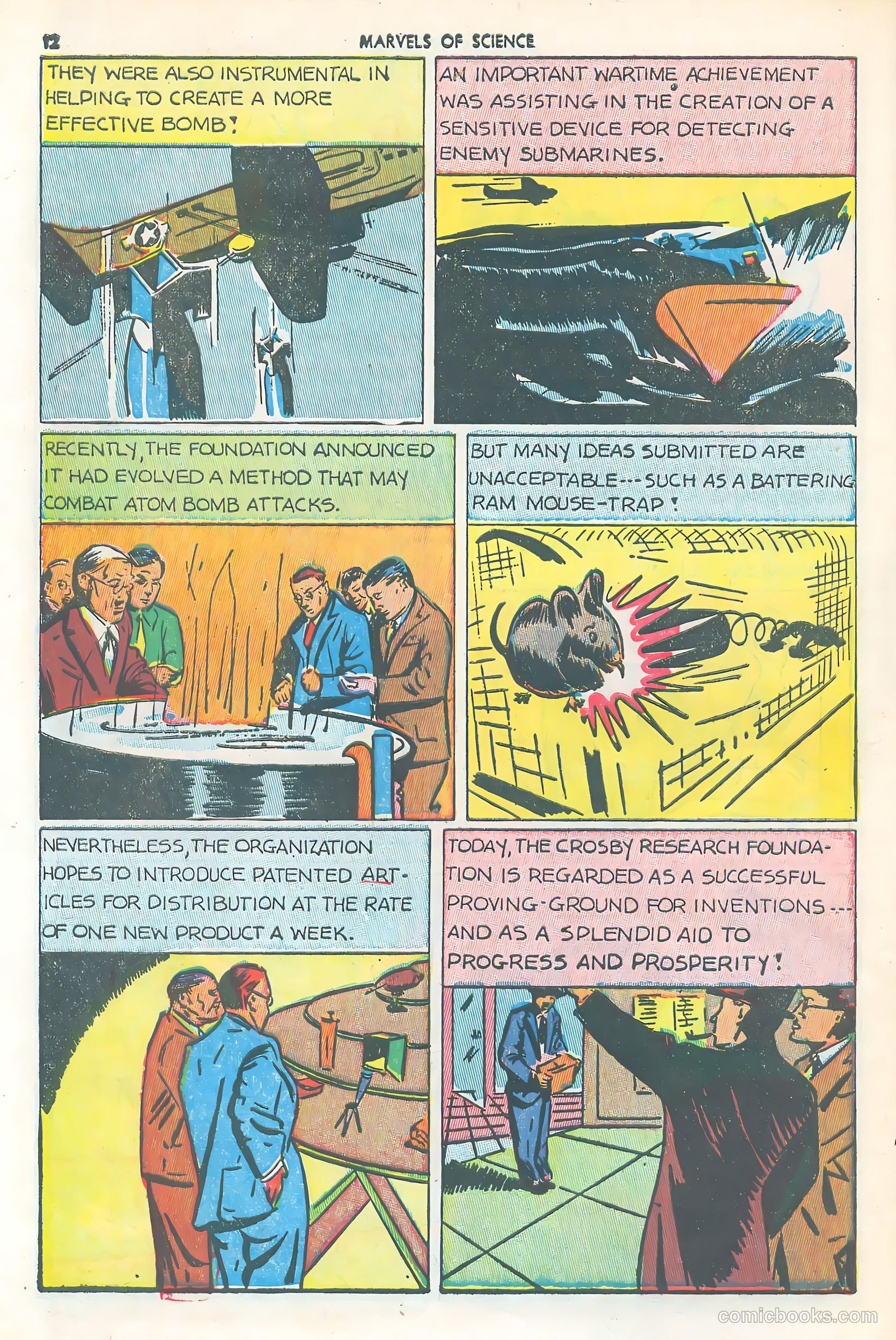
The Crosby Research Foundation, sponsored by Bing and Larry Crosby, stands as an inventors' paradise—a forward-thinking organization dedicated to helping inventors develop, refine, and bring their creations to market. From household conveniences like dual-sided refrigerators and innovative soap dishes to critical wartime innovations and safety devices, the Foundation evaluates promising ideas through rigorous expert review, provides laboratory research and redesign assistance, and finances manufacture and distribution of products with genuine consumer appeal. Though not every submission makes the cut, the Foundation's track record demonstrates that combining entrepreneurial vision with scientific rigor can turn brilliant ideas into everyday solutions that improve lives across the entire family.

Your Own Aquarium
2 pp · non-fiction · pencils Robert Sanders · inks Robert Sanders?

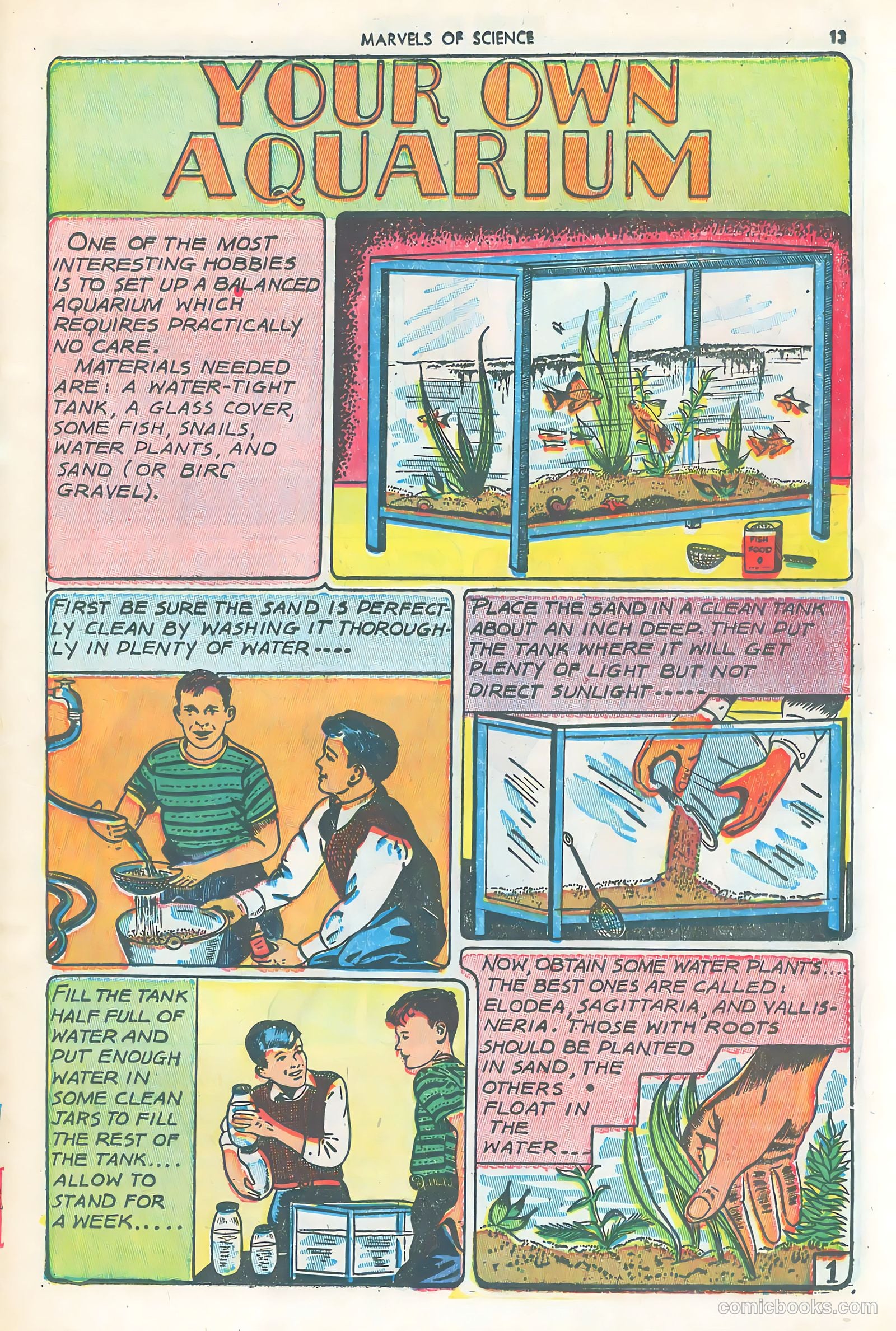
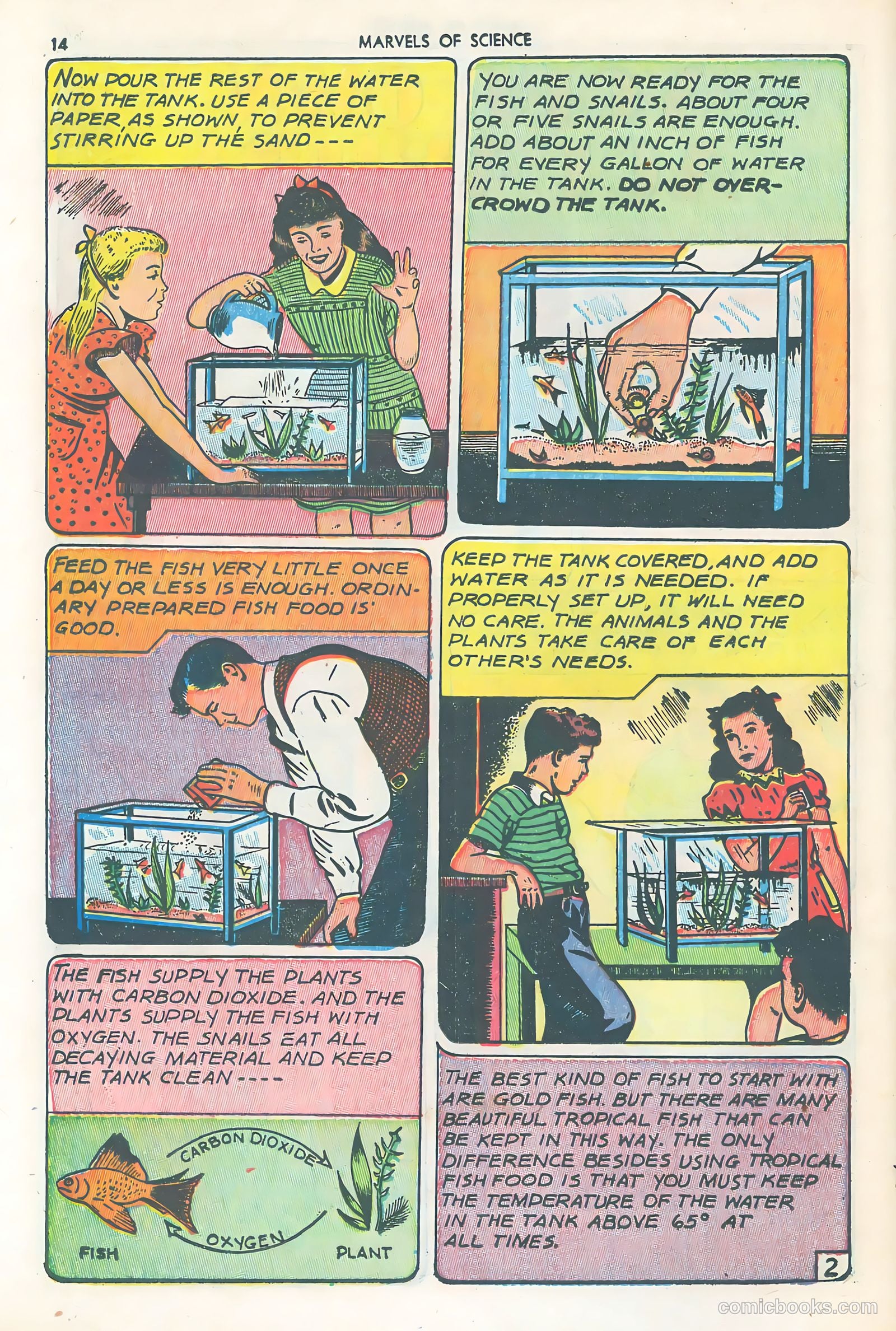
Discover how to create a self-sustaining aquarium that practically runs itself—a fascinating hobby that combines the right tank setup, plants, and fish in perfect balance. Artist Robert Sanders walks you through every step, from preparing the sand and selecting the best water plants to adding the right number of fish and snails so they all thrive together. Once you understand how the plants and fish support each other's survival, you'll have a low-maintenance window into aquatic life.

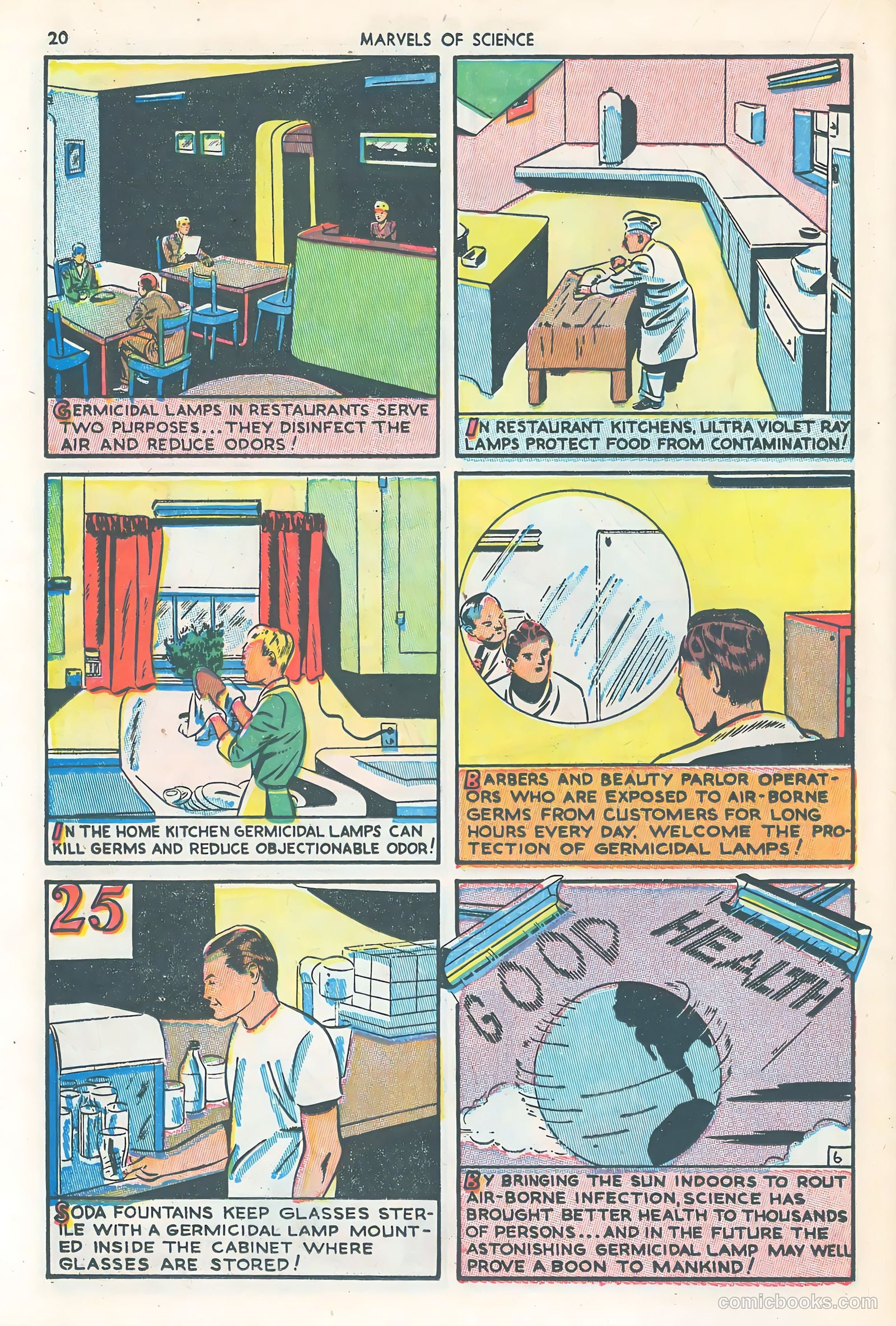
Bringing the Sun Inside
6 pp · non-fiction

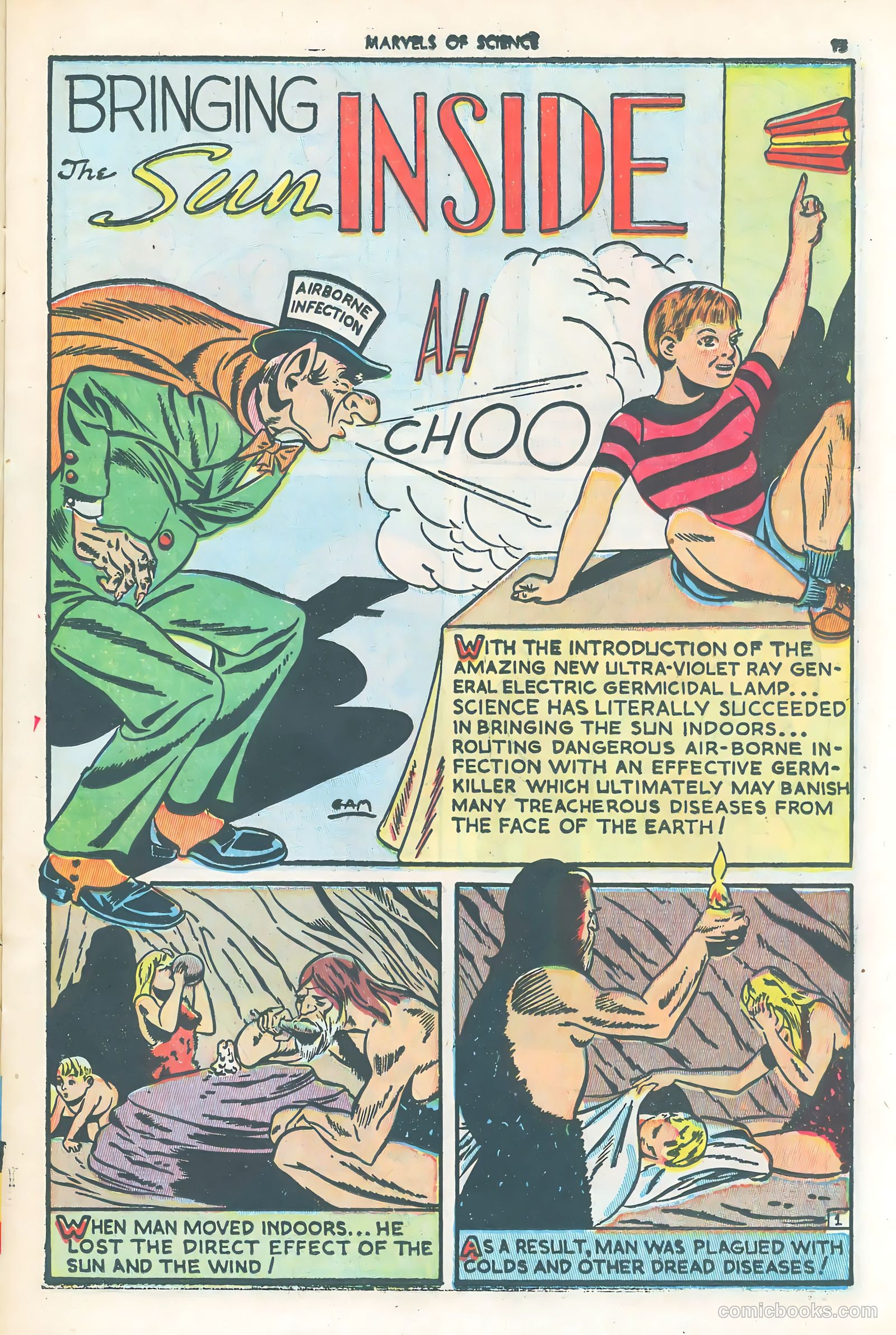
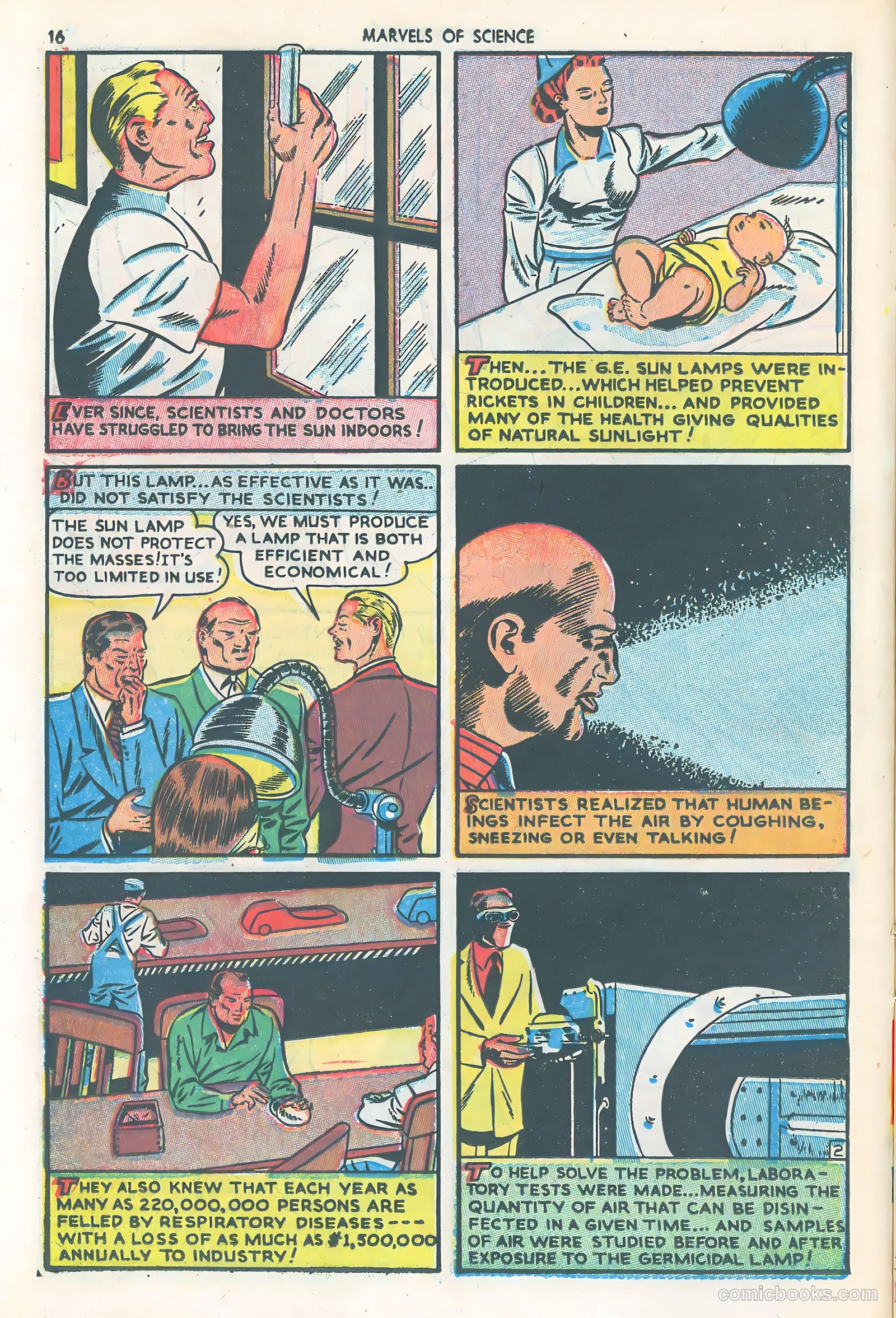
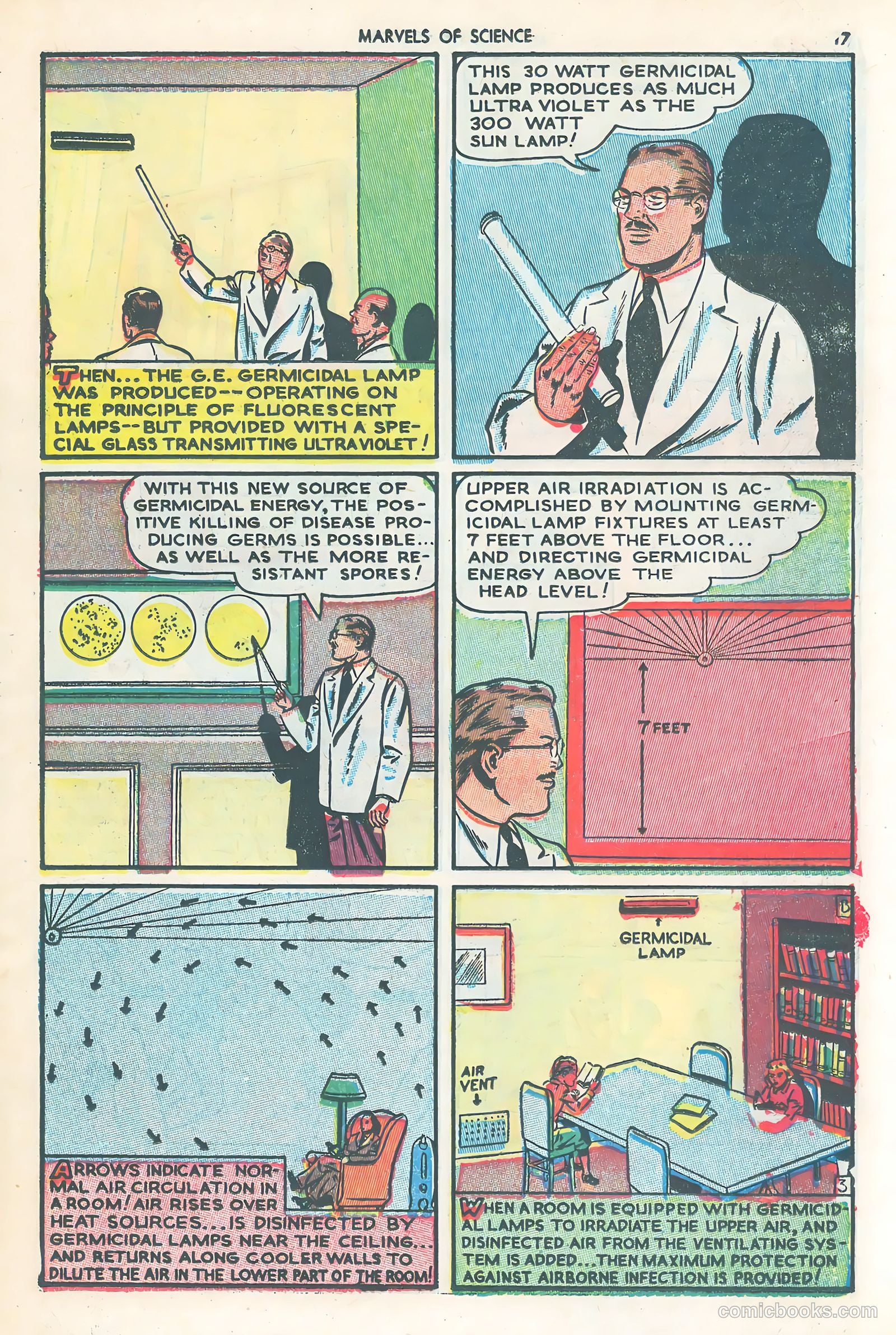
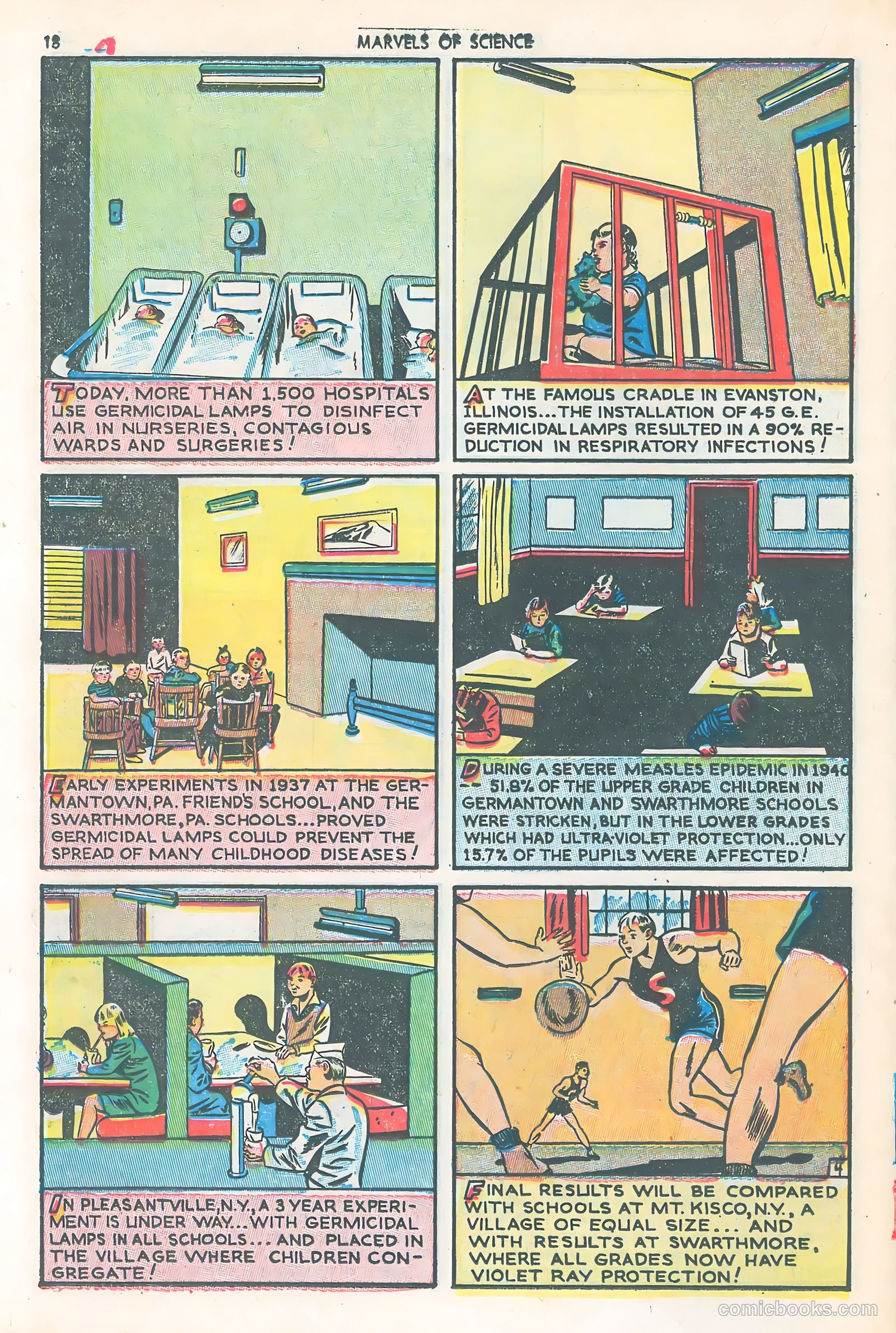
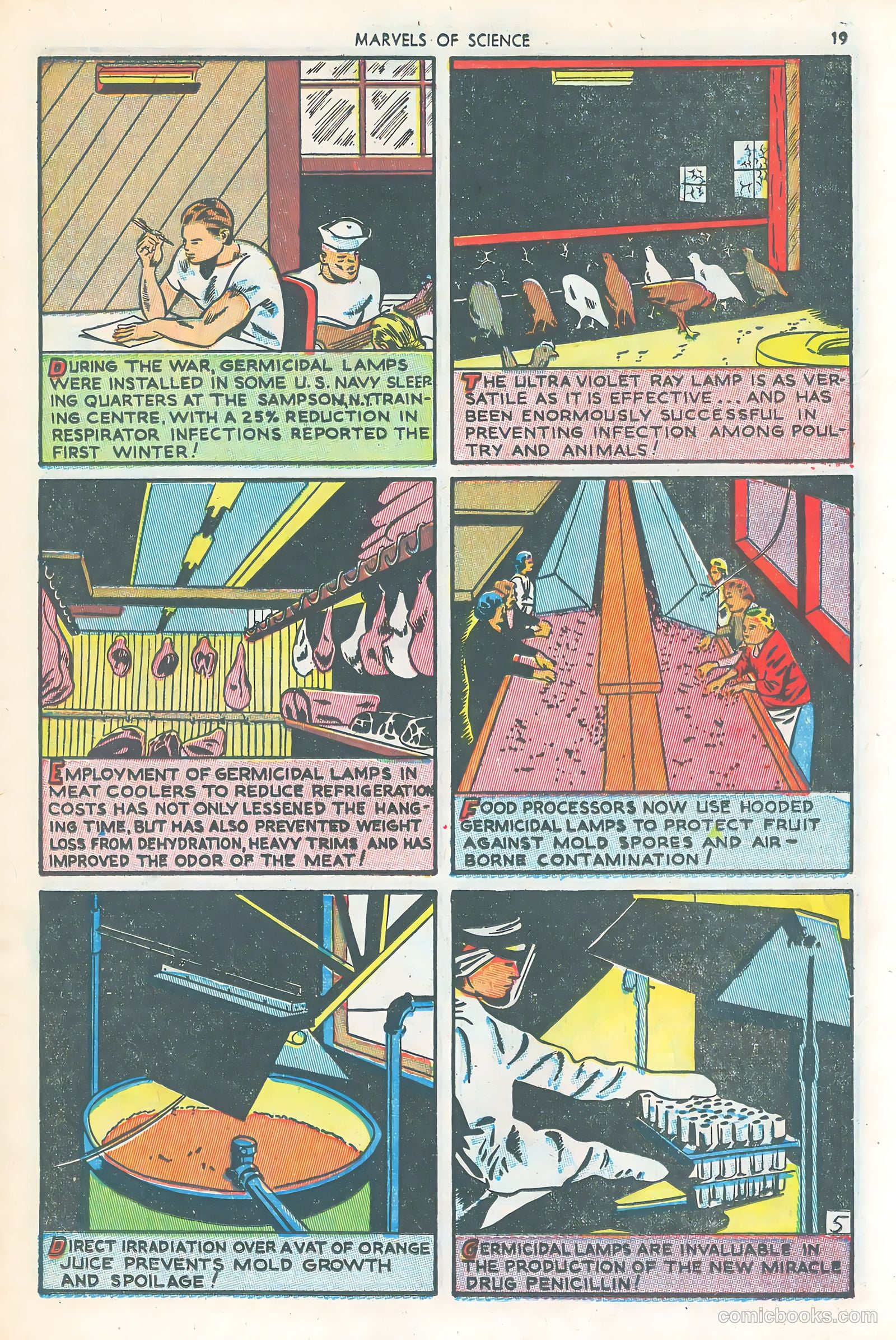
Science has found a way to harness the sun's germ-killing power indoors through the General Electric Germicidal Lamp, a fluorescent ultraviolet device designed to eliminate airborne infections that plague hospitals, schools, and homes alike. Through laboratory testing and real-world applications—from naval training centers to poultry farms—this innovative technology demonstrates its effectiveness at stopping the spread of respiratory diseases and contamination across countless settings. The story explores how this remarkable invention, operating on principles similar to standard fluorescent lamps but transmitting ultraviolet radiation, may reshape public health and sanitation for generations to come.

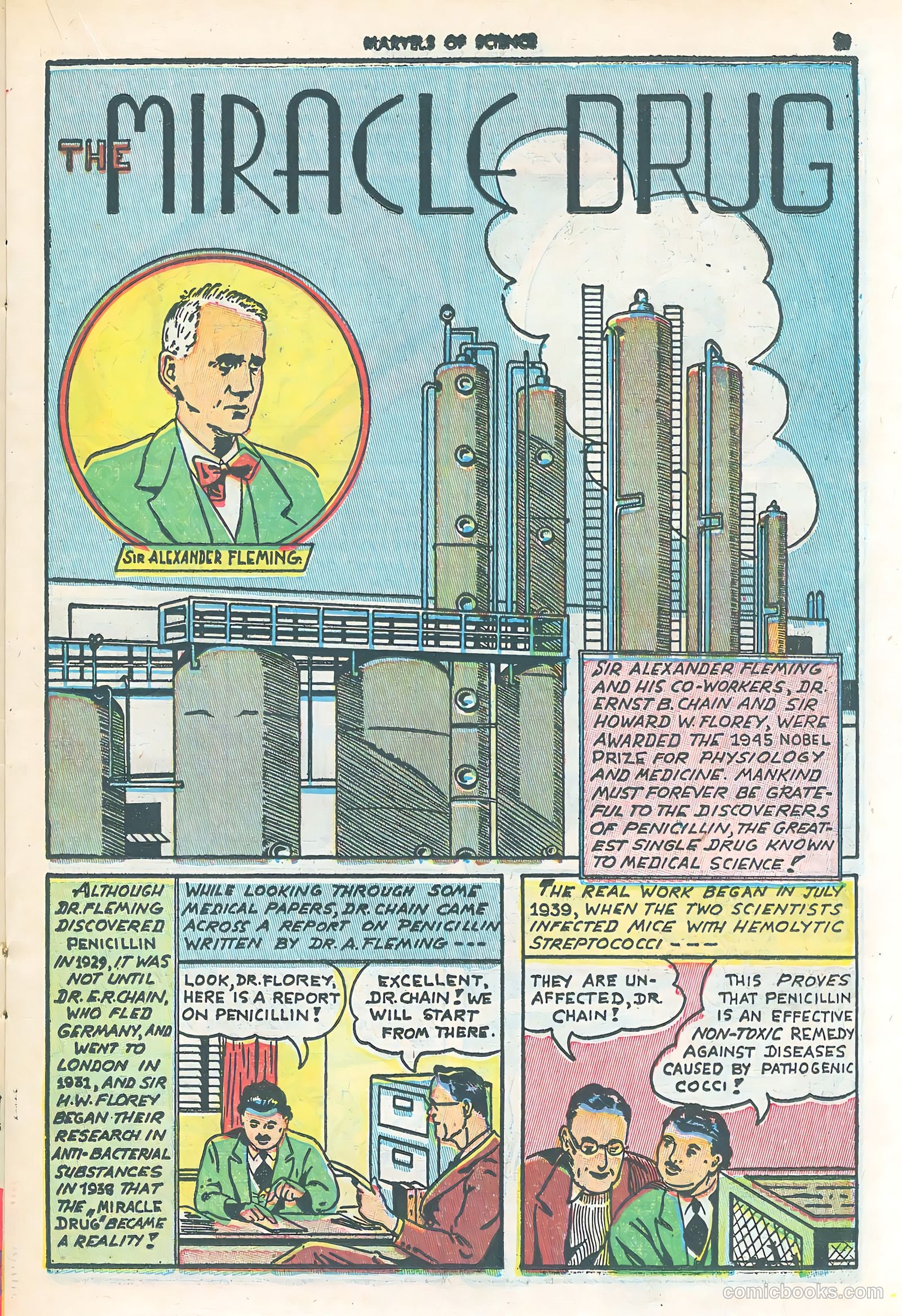
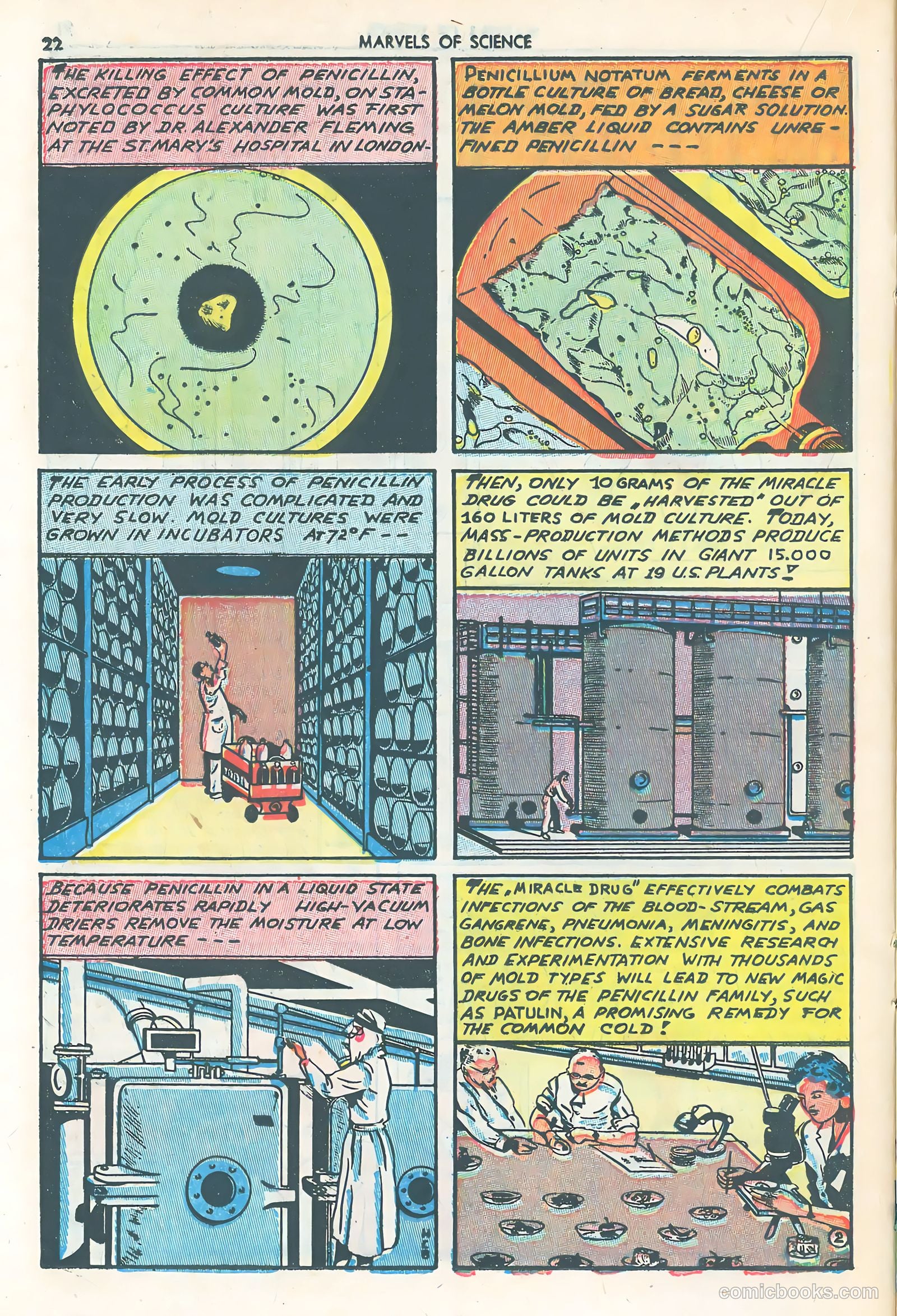
The Miracle Drug
2 pp · non-fiction · pencils Herman C. Browner (signed)[as HCB] · inks Herman C. Browner (signed)[as HCB]

Sir Alexander Fleming and his colleagues discovered penicillin's remarkable power against bacterial infection, but it took years of dedicated research by Sir Howard W. Florey and Dr. Ernst B. Chain to transform the mold's secretion into a practical medicine. From painstaking laboratory work with infected mice to the development of mass-production methods that would eventually yield billions of units, this account celebrates the breakthrough that turned a scientific curiosity into one of medicine's greatest weapons against disease.

Coaxial Cable Miracle
5 pp · non-fiction · pencils Robert Sanders · inks Robert Sanders

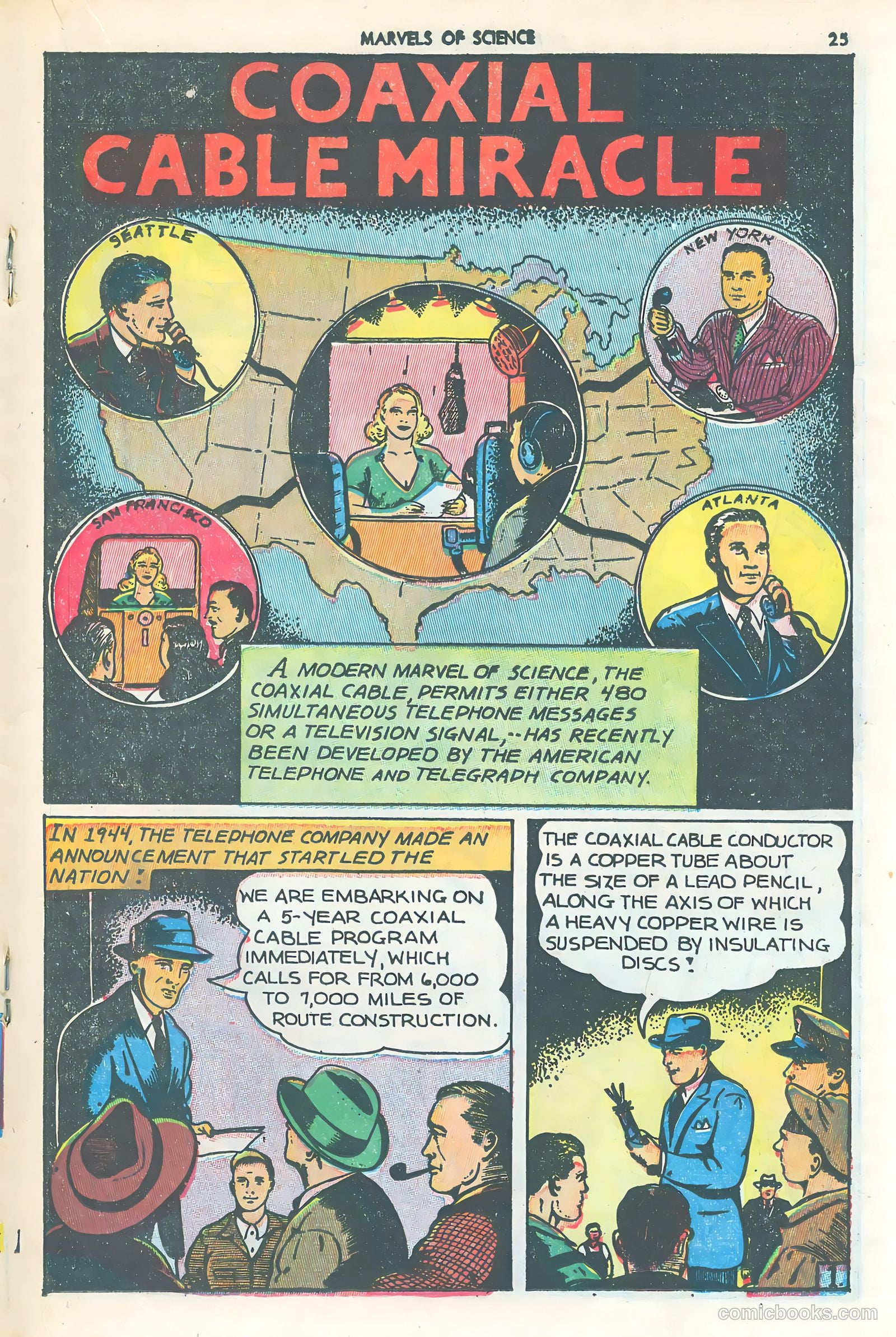
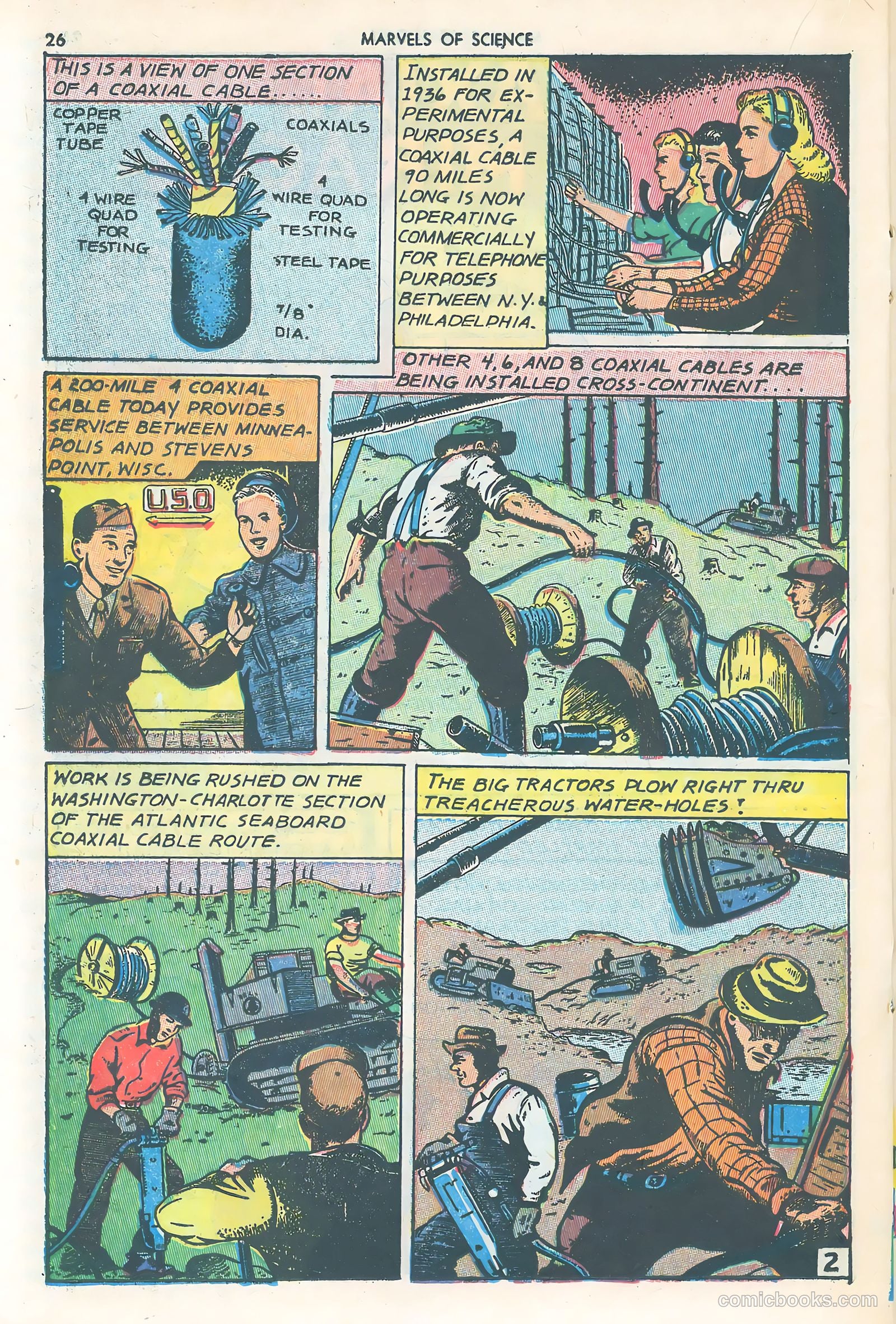
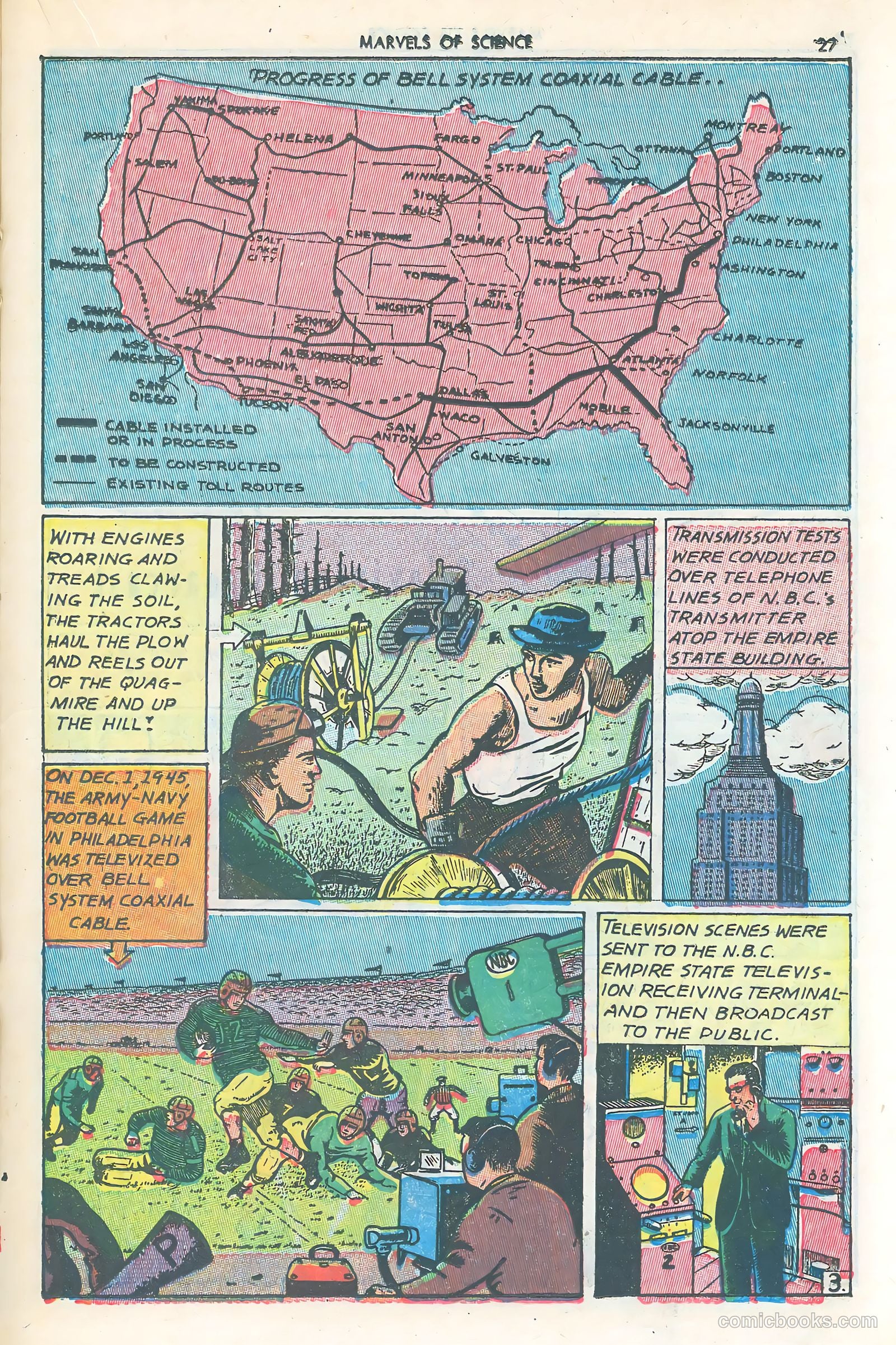
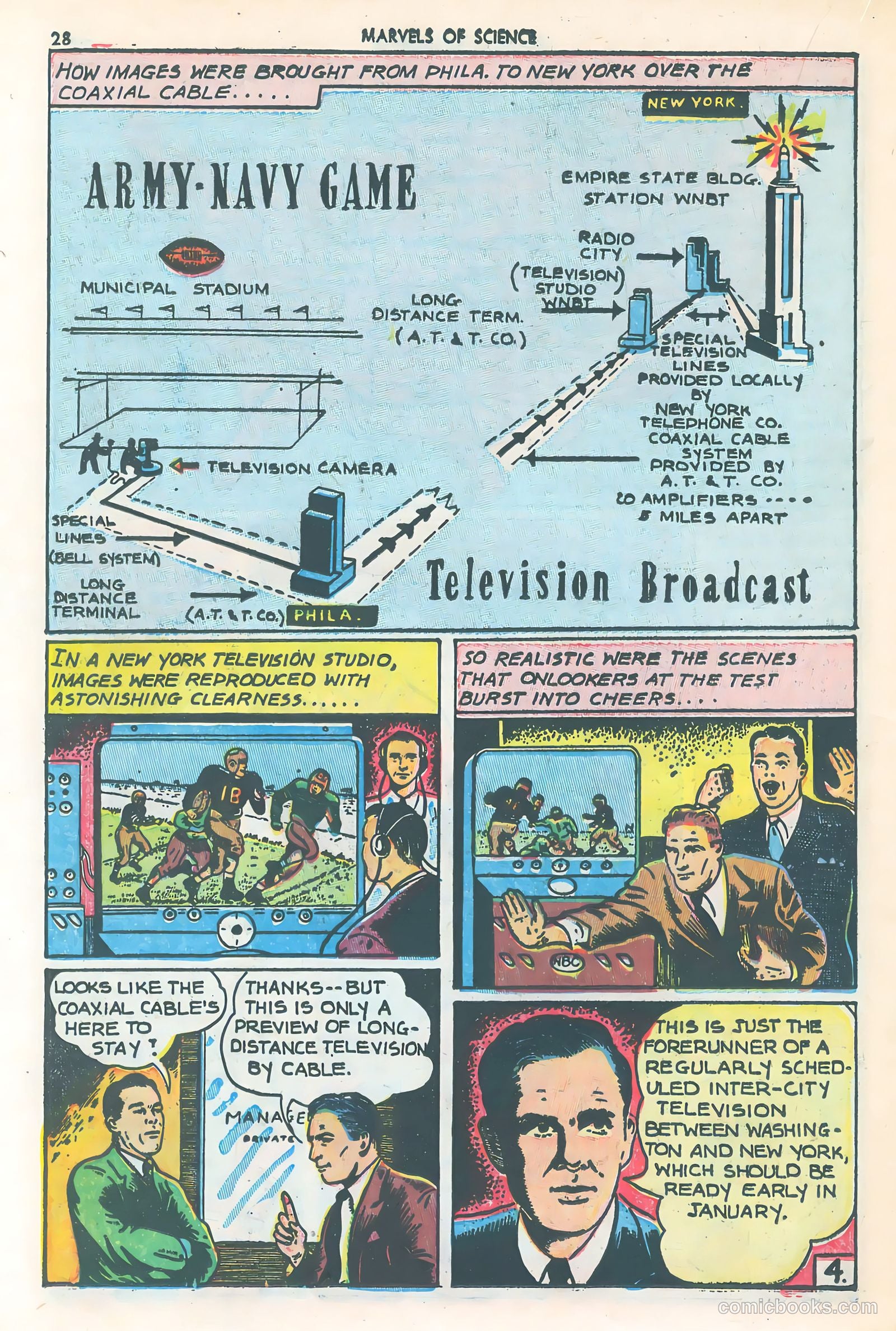
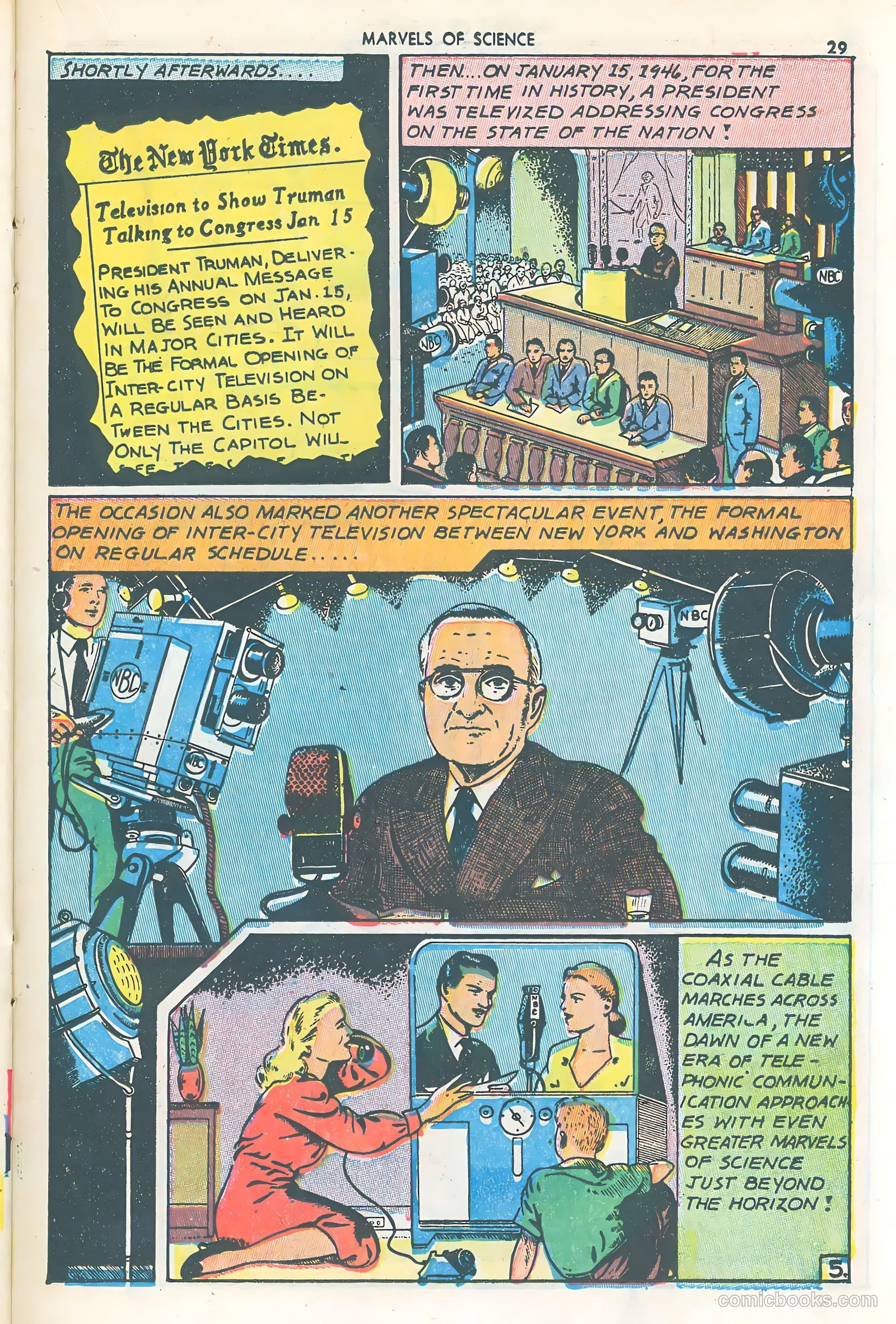
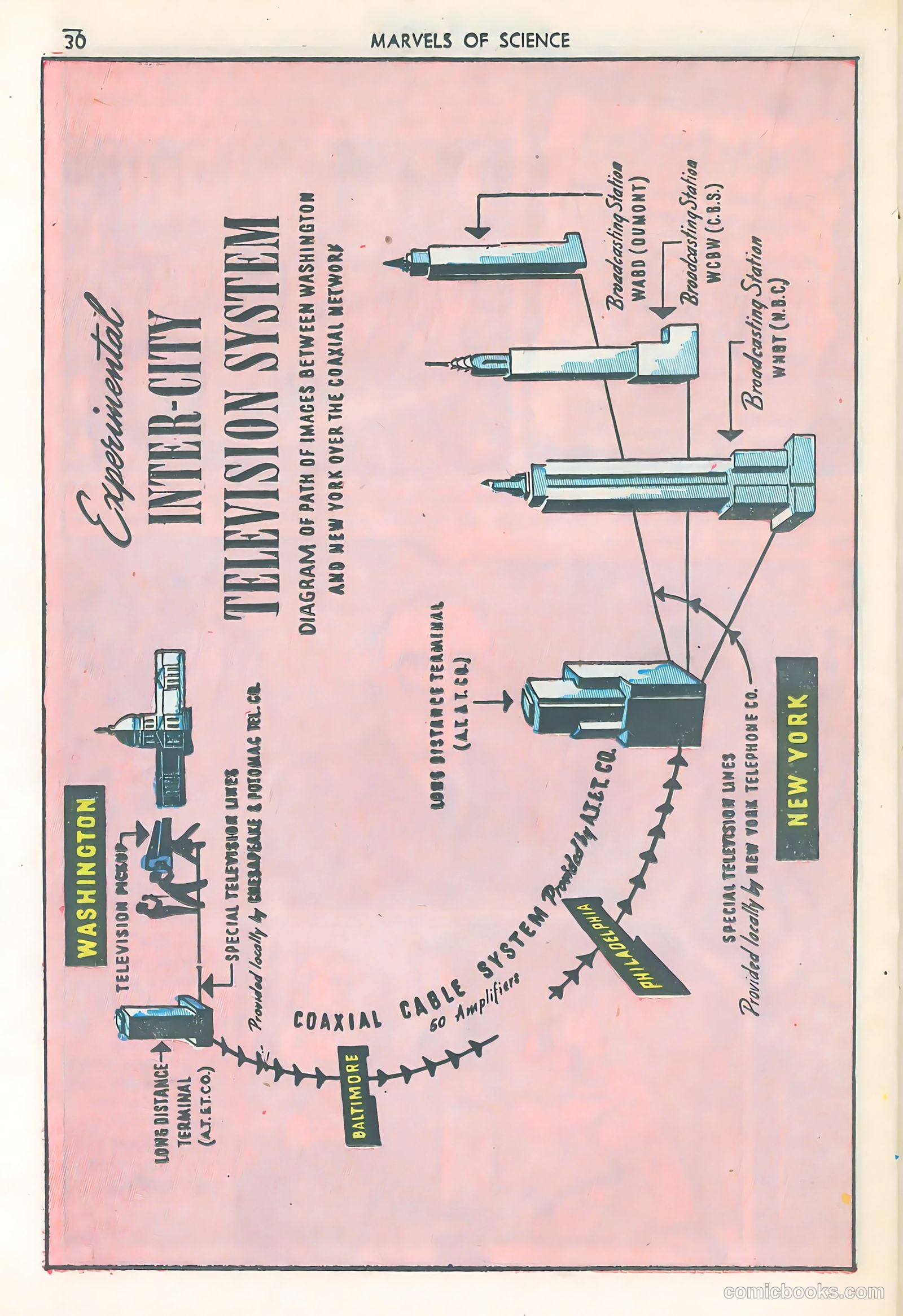
Discover how the coaxial cable—a technological marvel developed by the American Telephone and Telegraph Company—revolutionized long-distance communication by enabling both multiple telephone messages and television signals to travel across the nation simultaneously. Illustrated by Robert Sanders, this 1946 account follows the ambitious 5,000-7,000-mile installation program, from the historic televising of the 1945 Army-Navy Game to President Truman's historic address to Congress, as America witnesses the dawn of a new era in telephonic and television transmission.

Experimental Inner-City Television System
1 pp · non-fiction
Odd Inventions
2 pp · humor; non-fiction

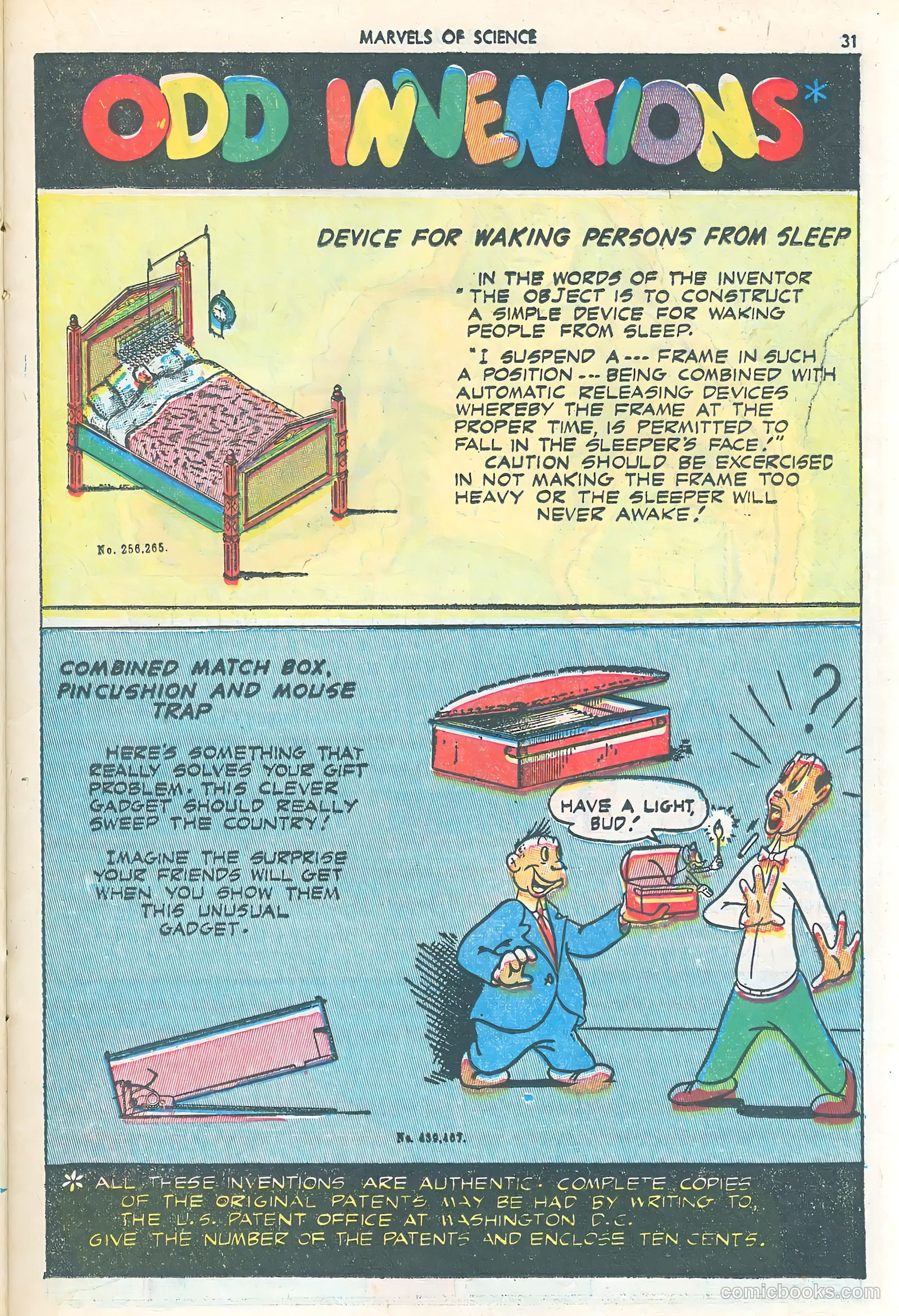
This humorous tour through genuine U.S. patents showcases some of history's most wonderfully impractical inventions—including a face-dropping alarm clock contraption and a baffling three-in-one gadget combining a matchbox, pincushion, and mousetrap. A tongue-in-cheek look at real patent office submissions that proves innovation doesn't always equal practicality, complete with the inventors' own breathlessly earnest explanations of their creations.

Electric Servants!
4 pp · non-fiction

American housewives in 1946 are discovering a parade of labor-saving electric appliances designed to free them from kitchen and laundry drudgery. From washing machines that complete a load in 27 minutes to the Tappan Doodler cooker that roasts a chicken in six, these modern marvels promise to transform household chores into automated ease. Scientists predict that these electric servants will deliver better times, more leisure, and healthier homes for families who embrace this technological revolution.

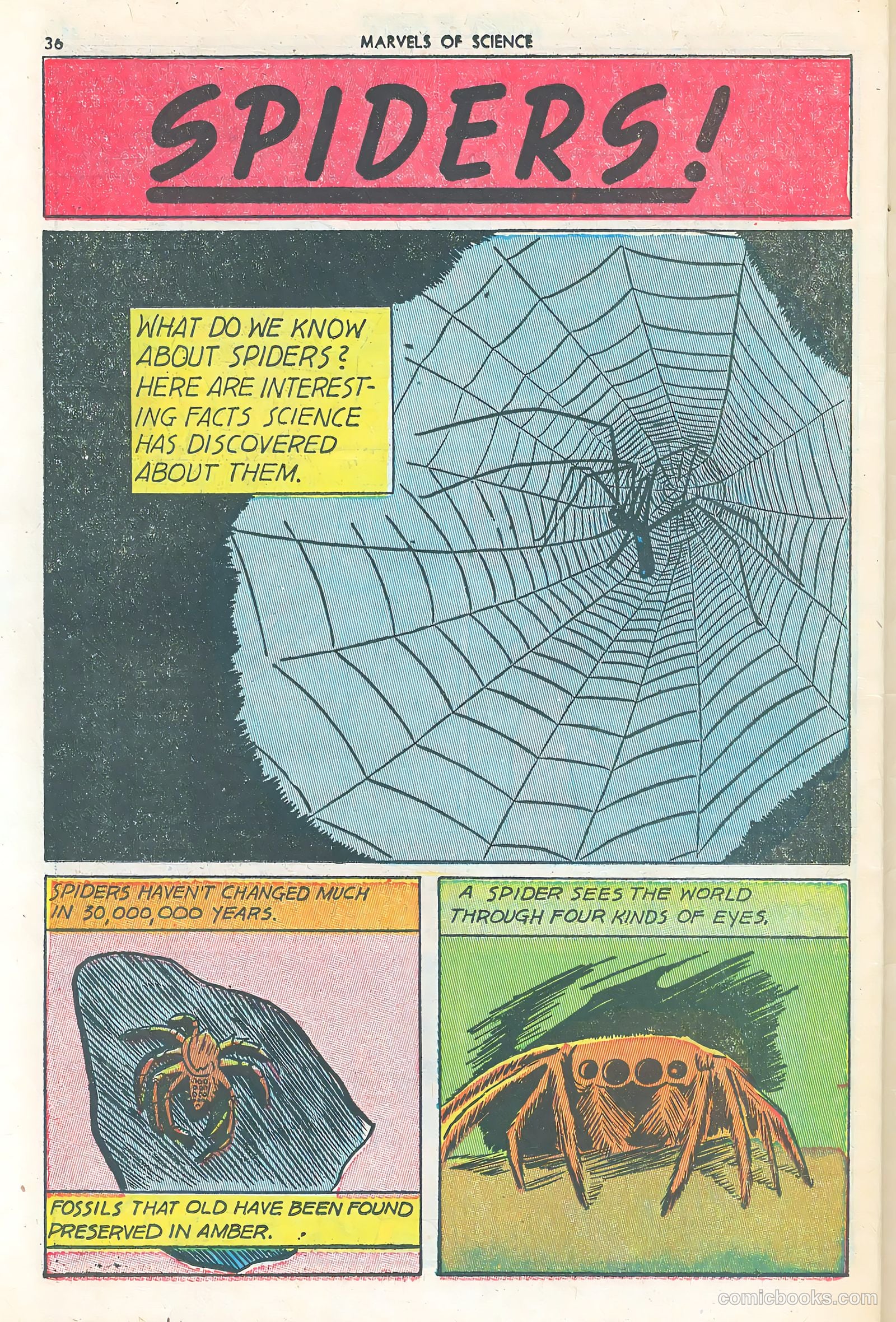
Spiders!
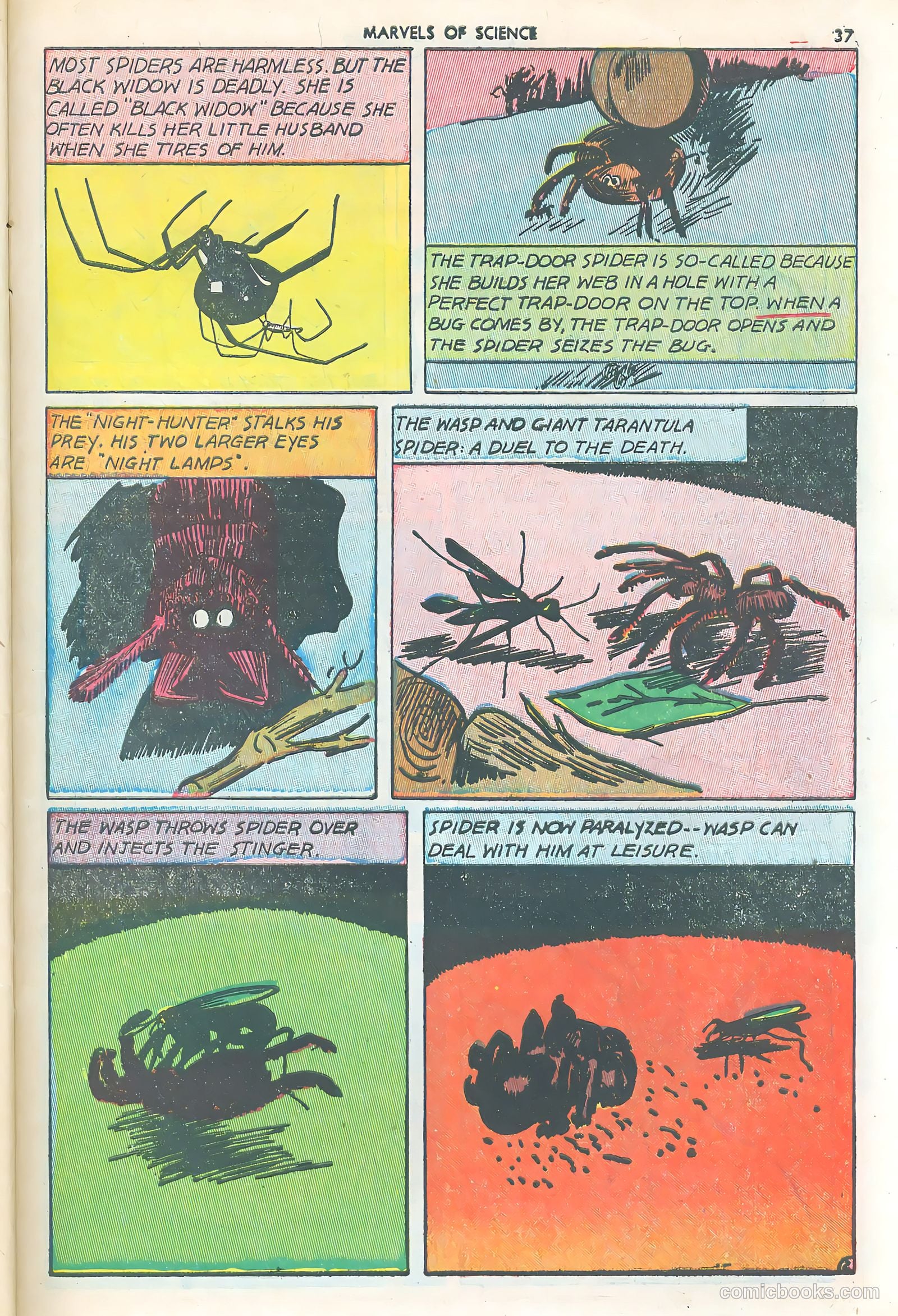
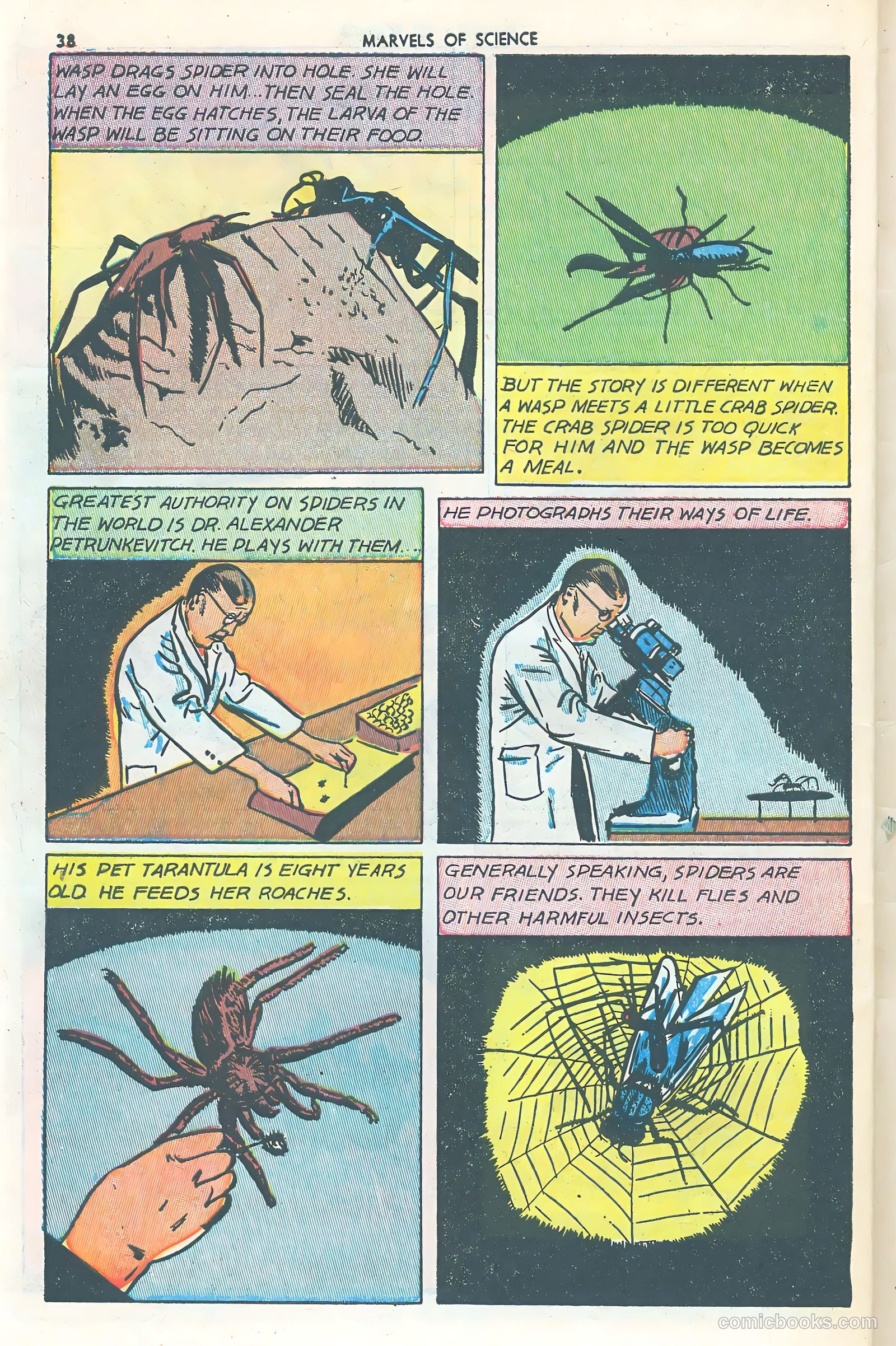
3 pp · non-fiction
The Torpedo Auto
5 pp · non-fiction

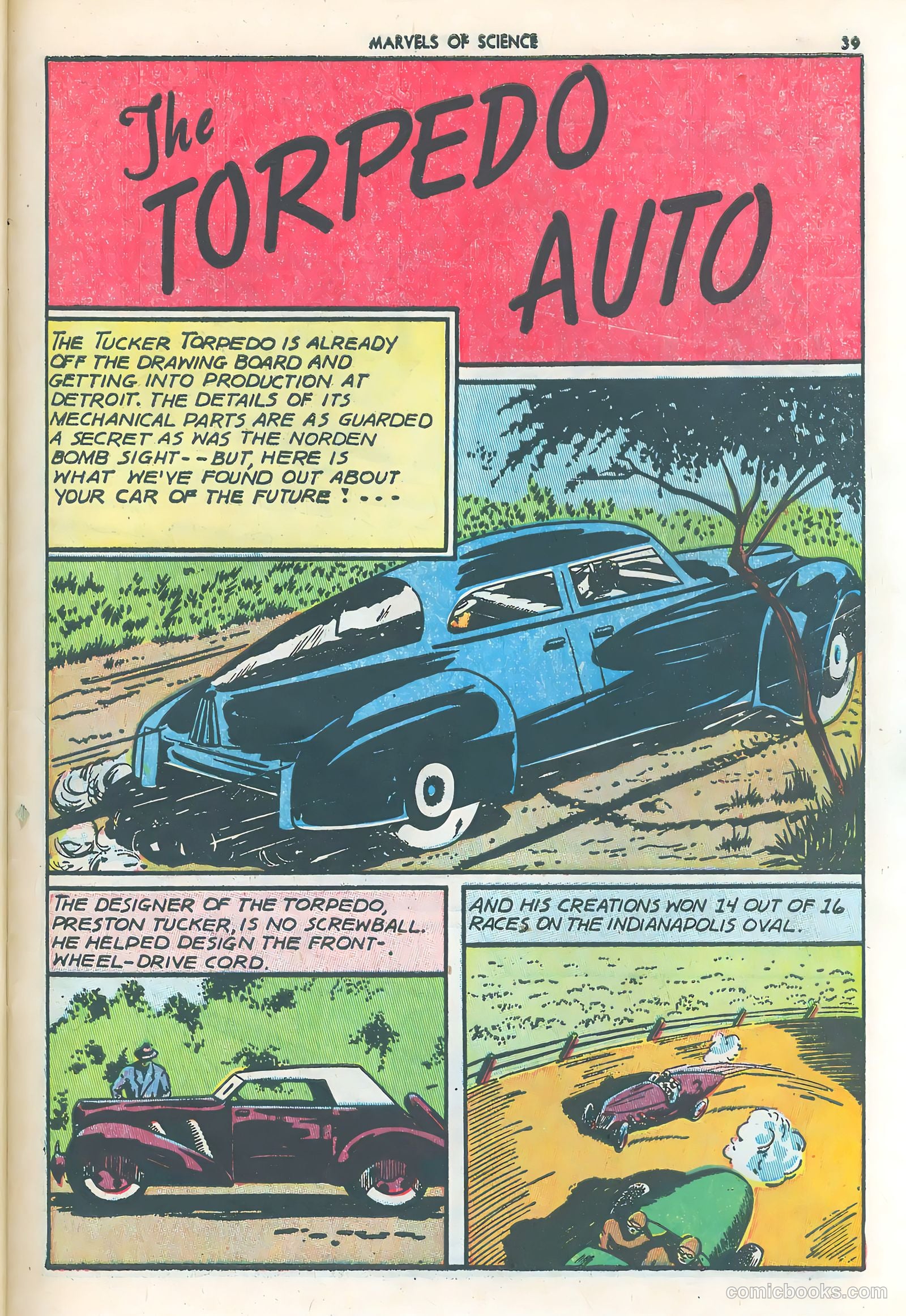
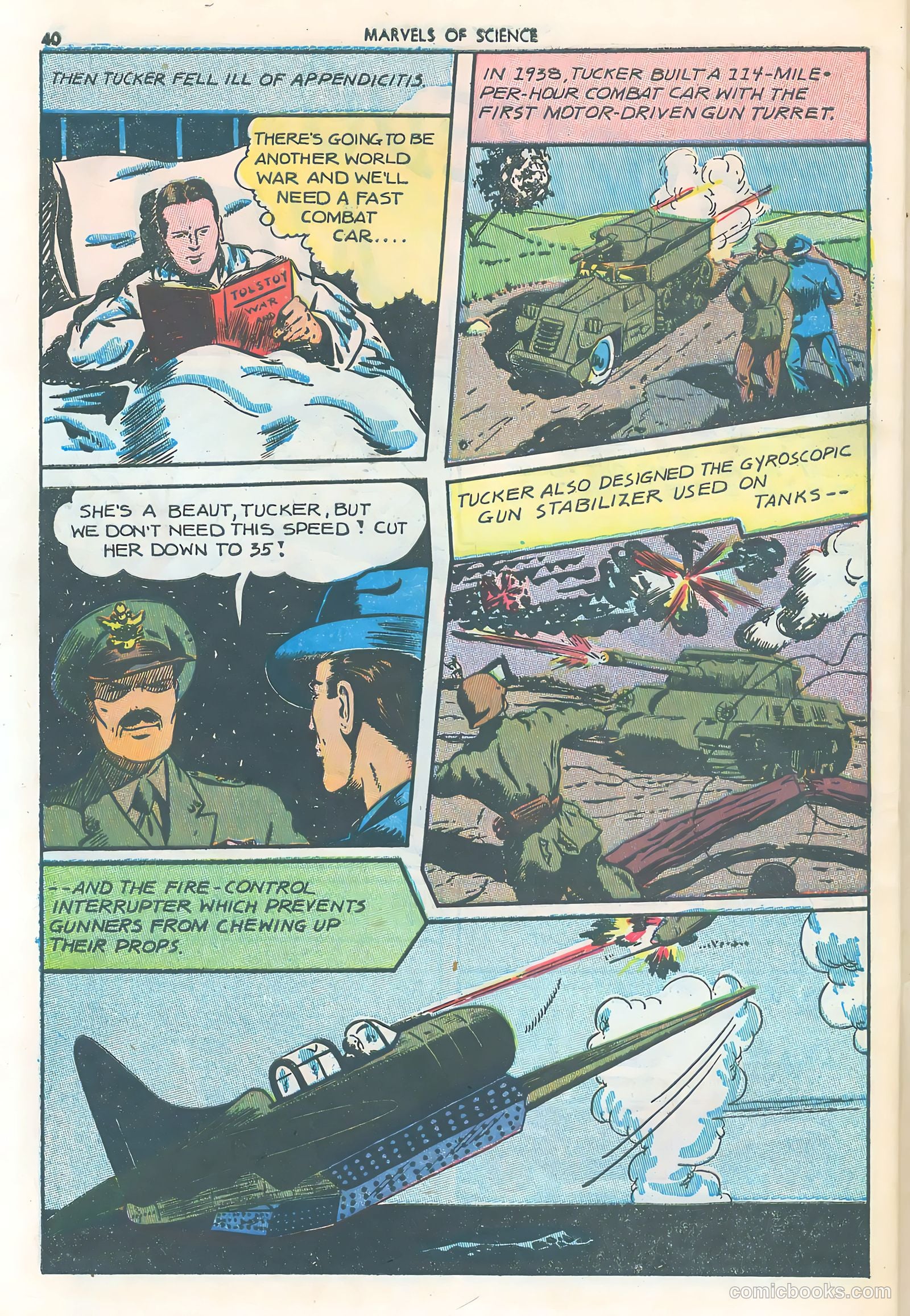
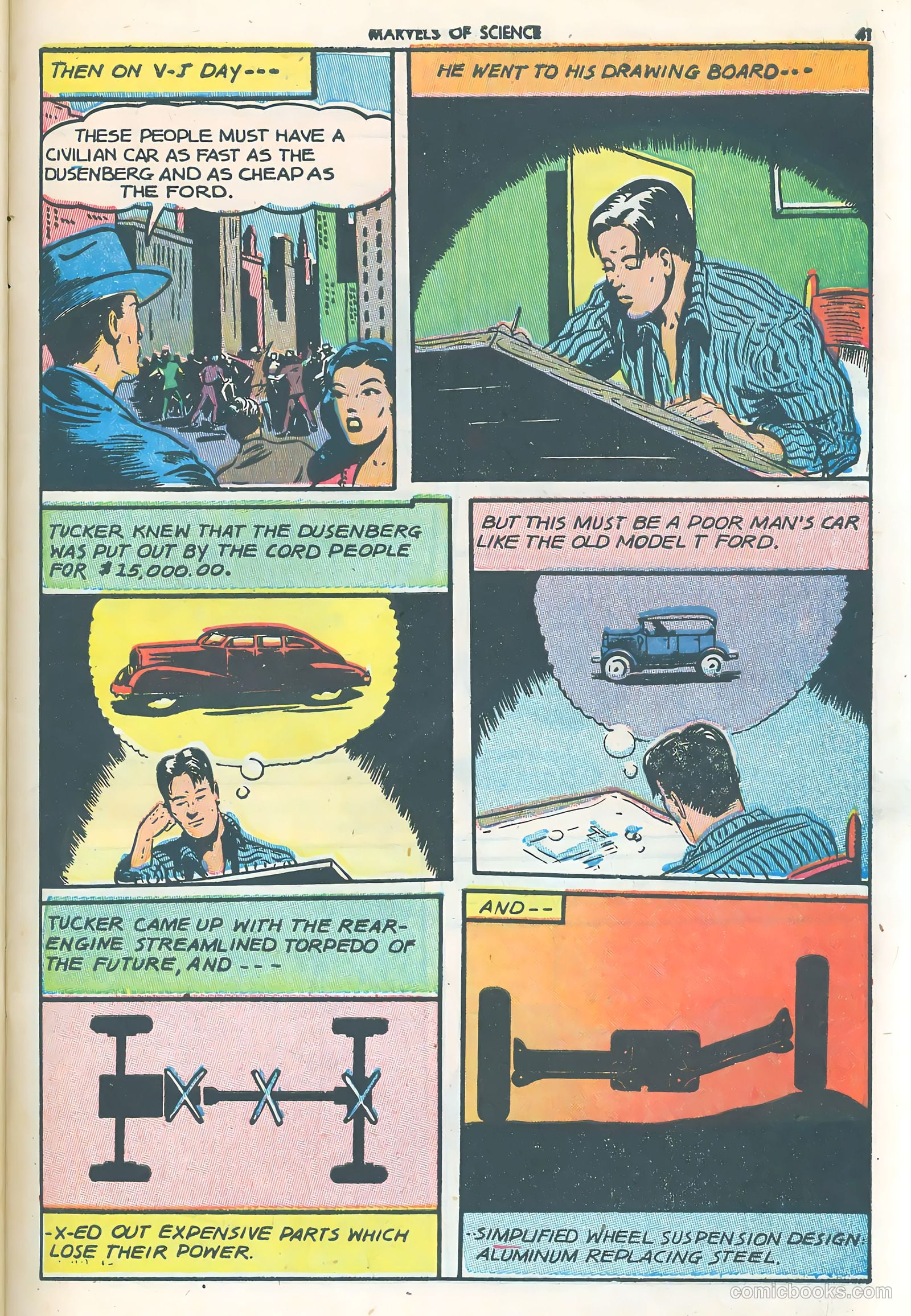
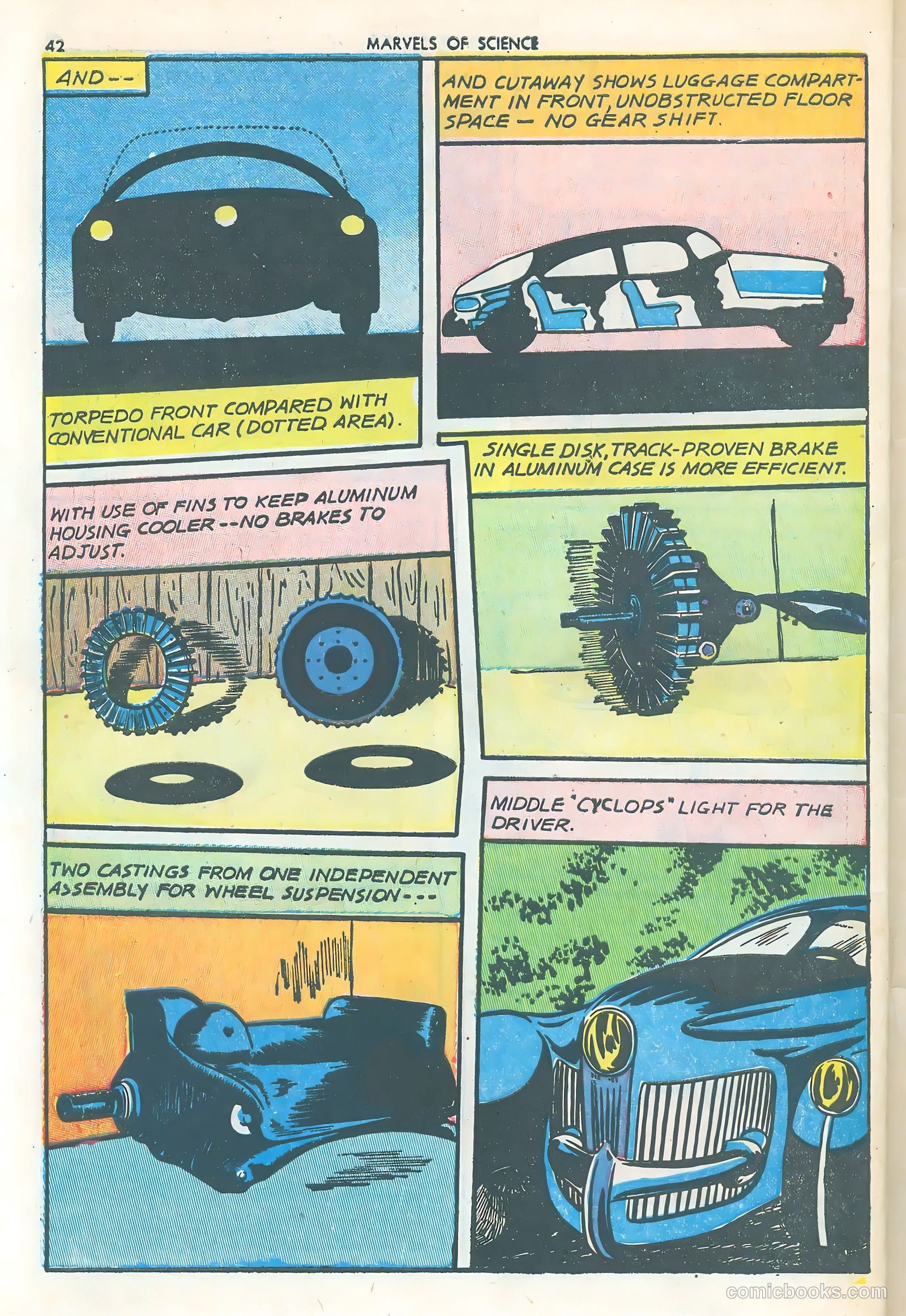
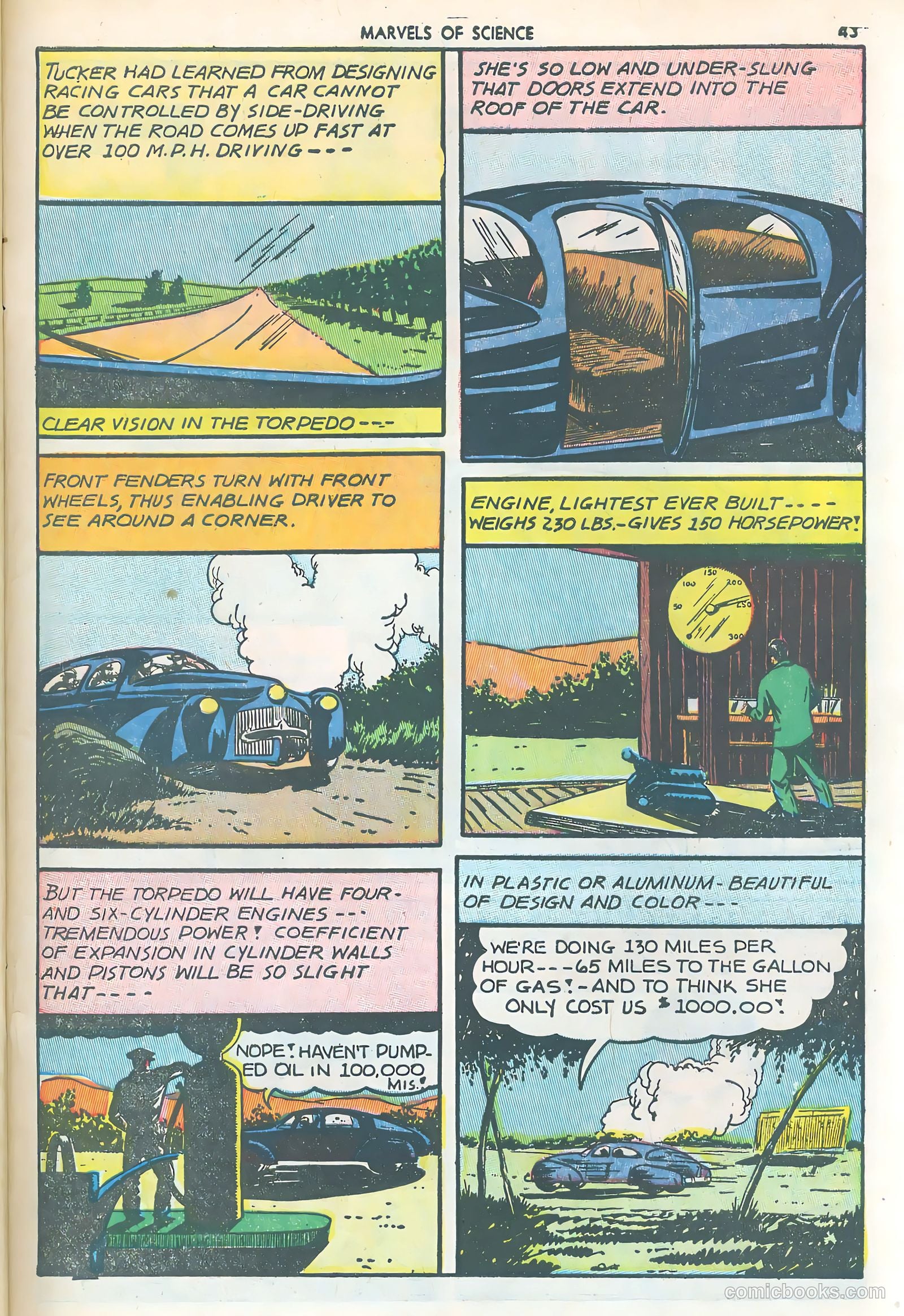
Preston Tucker, the designer behind the Tucker Torpedo, set out after V-J Day to create a car that combines the speed of a luxury Dusenberg with the affordability of a Model T Ford—a streamlined vision of the future that's already moving into production in Detroit. Drawing on his experience designing racing cars and military vehicles, Tucker engineered a rear-engine marvel packed with innovations: simplified suspension, aluminum construction, a single disk brake, and thoughtful touches like a center "Cyclops" headlight and unobstructed interior space. Here's an inside look at the mechanical ingenuity that makes the Torpedo tick.

Buna-S
4 pp · non-fiction

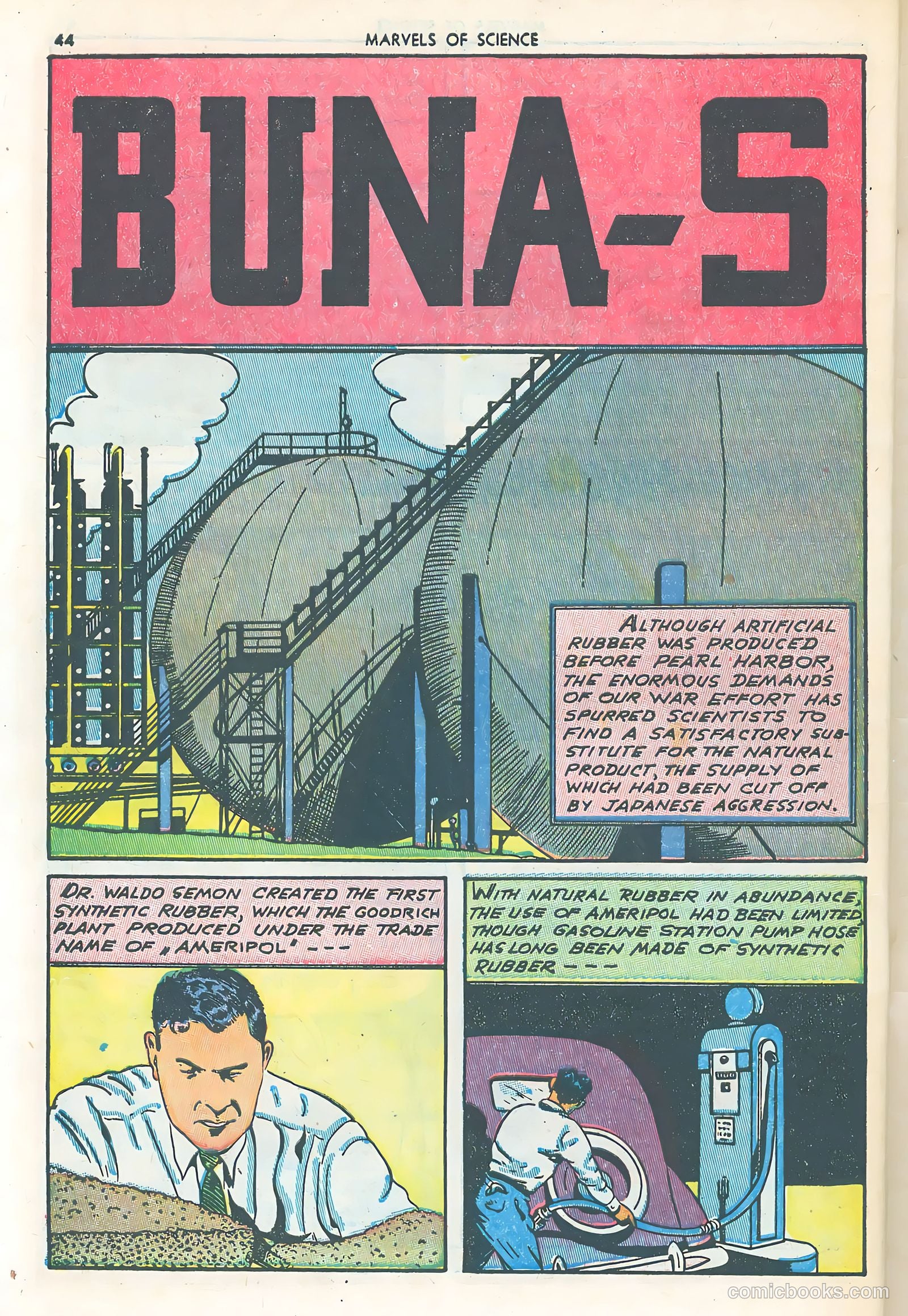
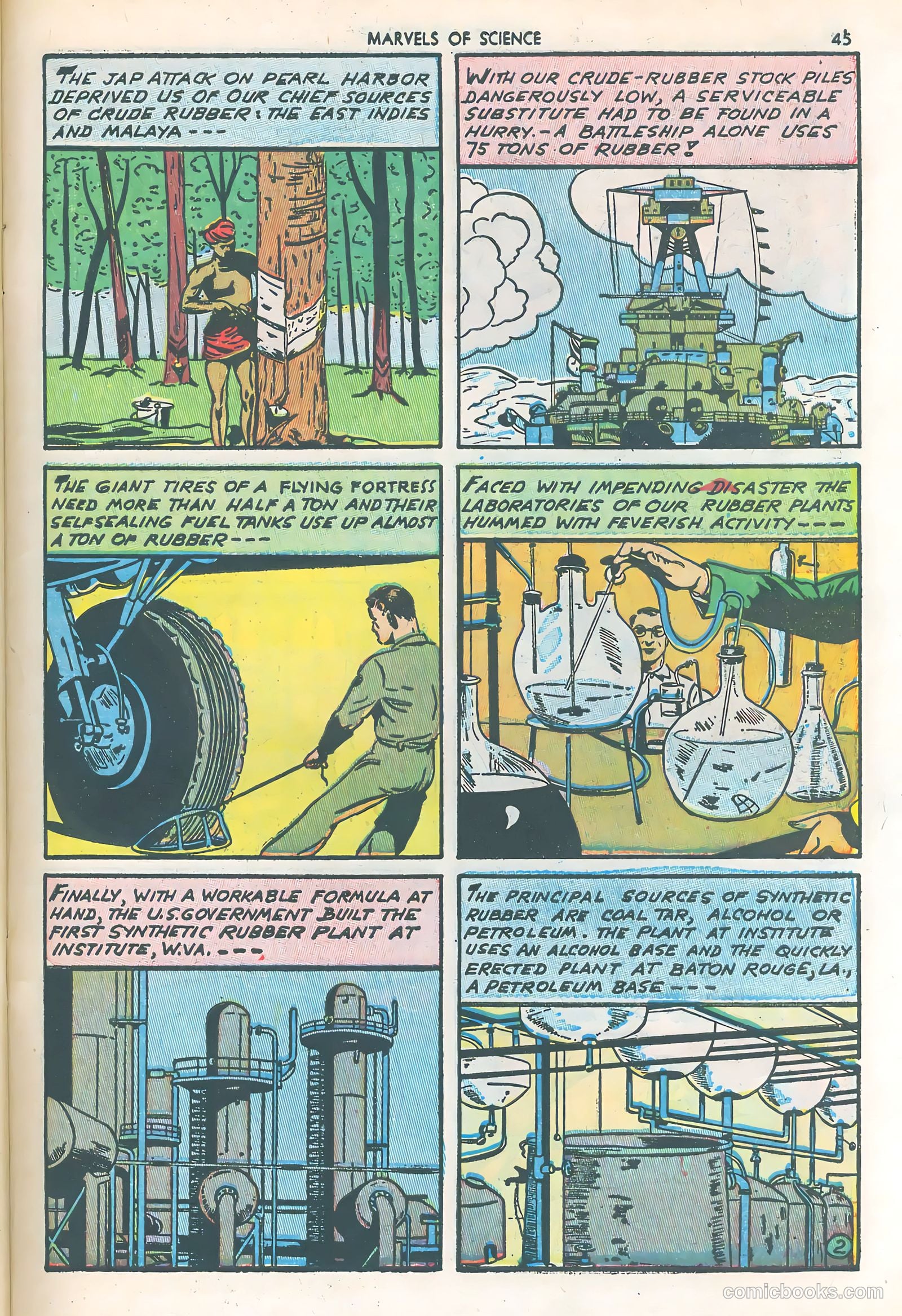
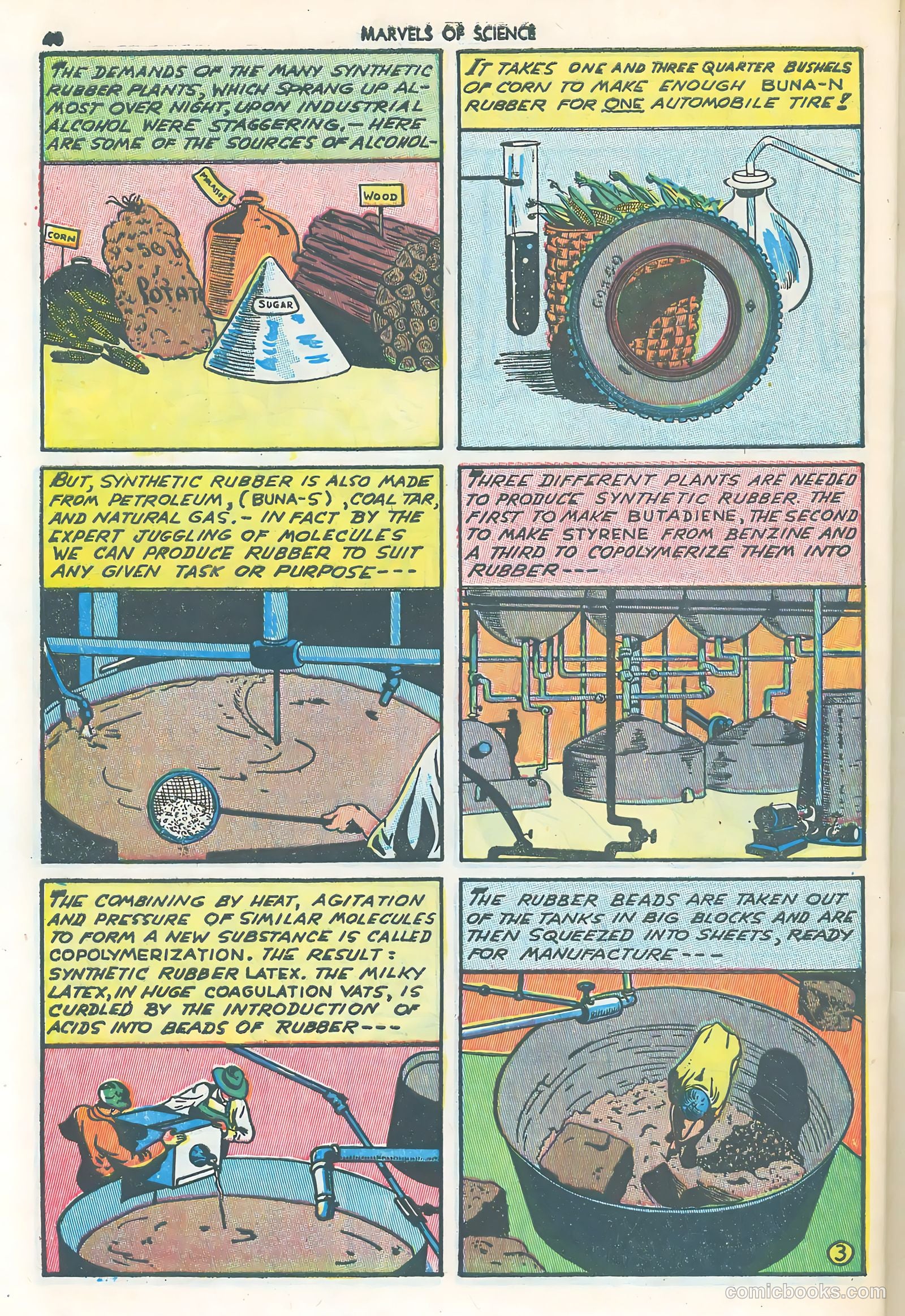
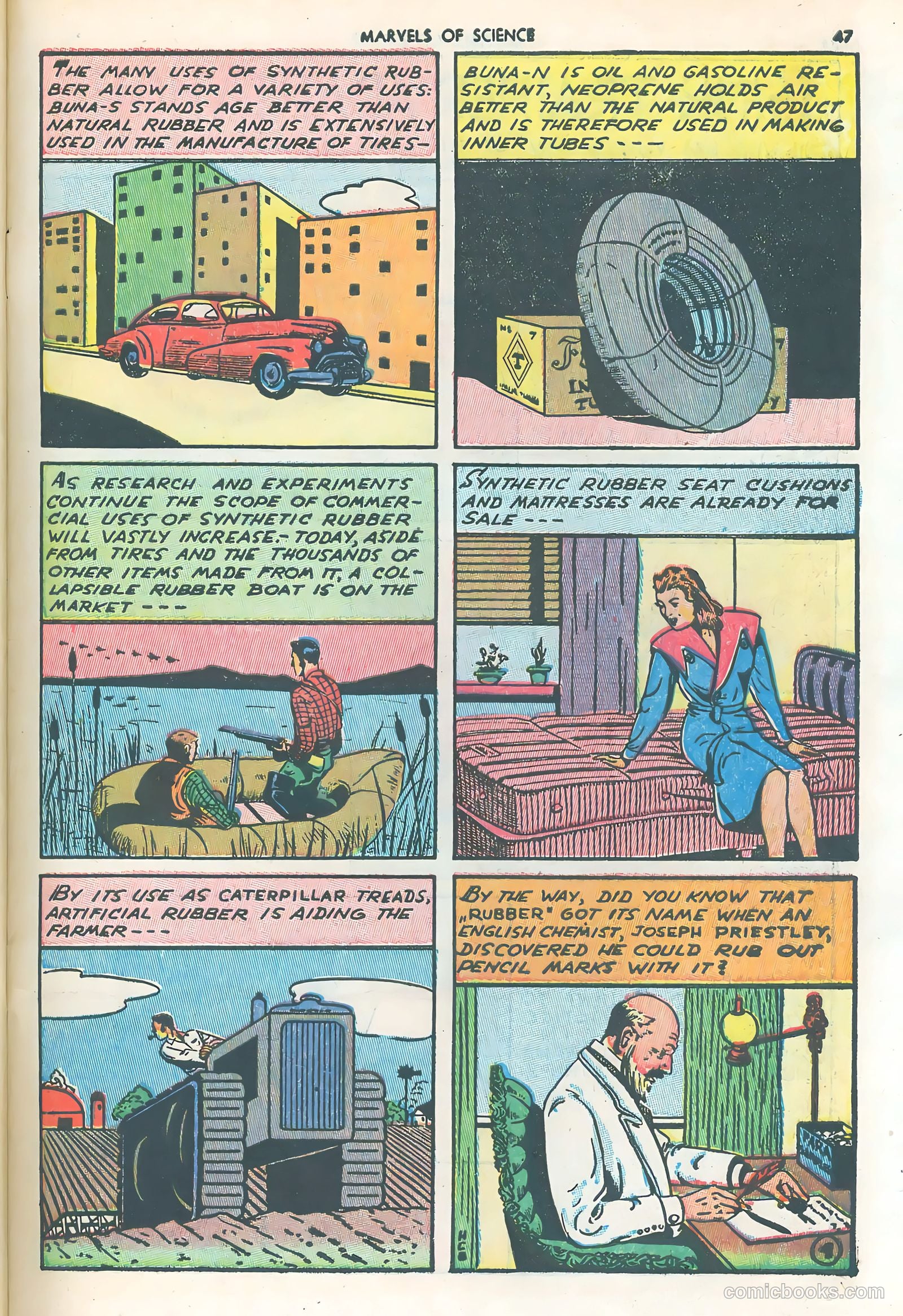
When Japan's attack on Pearl Harbor cut off America's natural rubber supply, scientists faced an urgent challenge: develop a synthetic substitute that could meet the massive demands of wartime production. This story explores how researchers created Buna-S and other synthetic rubbers through innovative chemistry, transforming raw materials like petroleum, alcohol, and coal tar into a vital resource for everything from battleship tires to aircraft fuel tanks. From the first experimental plants to the practical applications keeping the war effort rolling, it's a fascinating look at how American ingenuity solved a crisis through molecular manipulation.

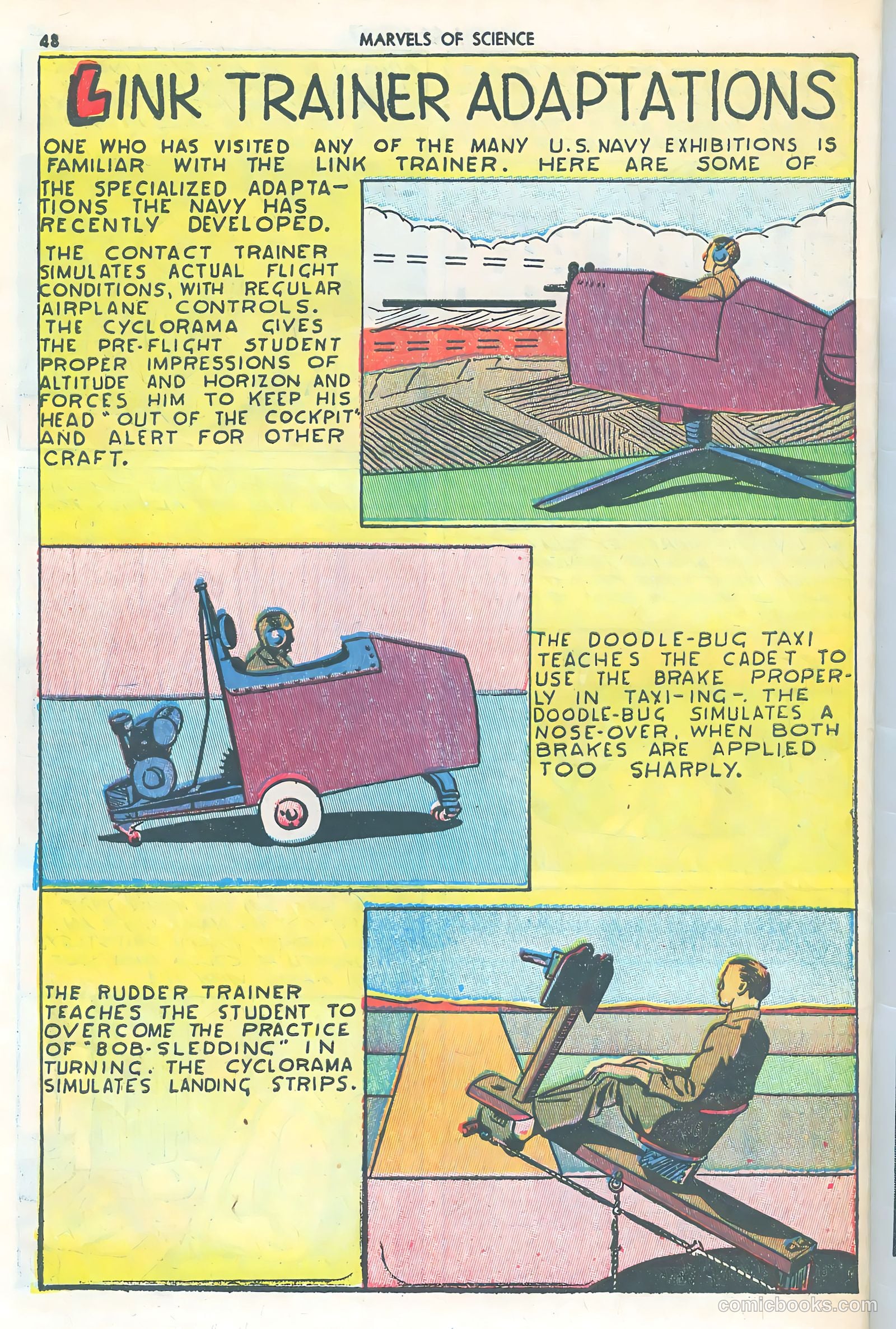
Link Trainer Adaptations
1 pp · non-fiction
Untitled story
1 pp · non-fiction

Restored edition © comicbooks.com. Our digitization, remastering, and presentation are our own work.

See something wrong with this issue? Report it.