ComicBooks.com Register / Loginit's free!
HomeHow Does It Work?#nnRead

★ ComicBooks.com Reading Room

How Does It Work? #nn (1950)

Westinghouse · 1950 · 15 pages

Free to read · restored edition by ComicBooks.com · Issue details →
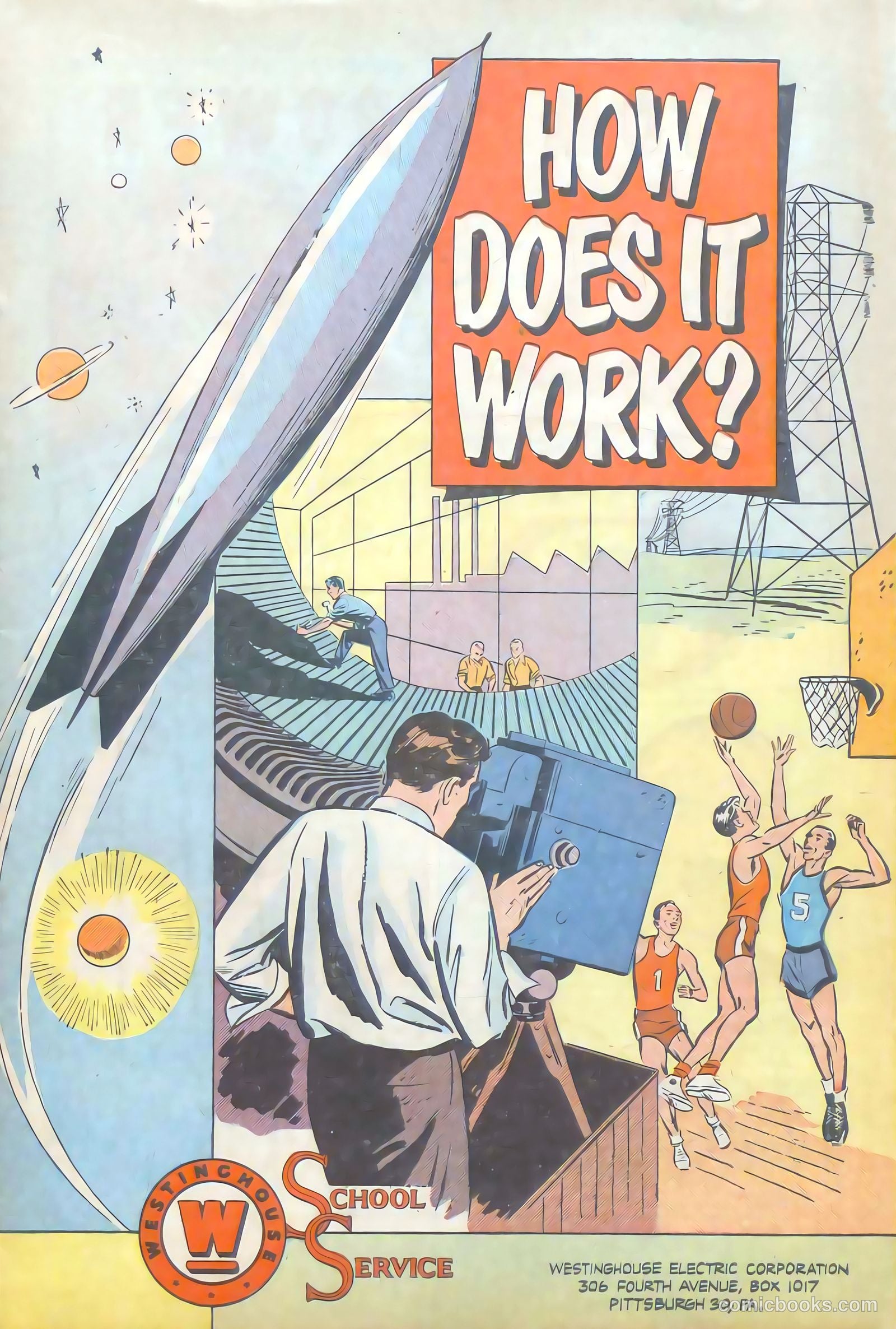
How Does It Work? #nn (1950) — page 1 of 15
1 / 15
How Does It Work? #nn (1950) — page 2 of 15
2 / 15
How Does It Work? #nn (1950) — page 3 of 15
3 / 15
How Does It Work? #nn (1950) — page 4 of 15
4 / 15
How Does It Work? #nn (1950) — page 5 of 15
5 / 15
How Does It Work? #nn (1950) — page 6 of 15
6 / 15
How Does It Work? #nn (1950) — page 7 of 15
7 / 15
How Does It Work? #nn (1950) — page 8 of 15
8 / 15
How Does It Work? #nn (1950) — page 9 of 15
9 / 15
How Does It Work? #nn (1950) — page 10 of 15
10 / 15
How Does It Work? #nn (1950) — page 11 of 15
11 / 15
How Does It Work? #nn (1950) — page 12 of 15
12 / 15
How Does It Work? #nn (1950) — page 13 of 15
13 / 15
How Does It Work? #nn (1950) — page 14 of 15
14 / 15
How Does It Work? #nn (1950) — page 15 of 15
15 / 15

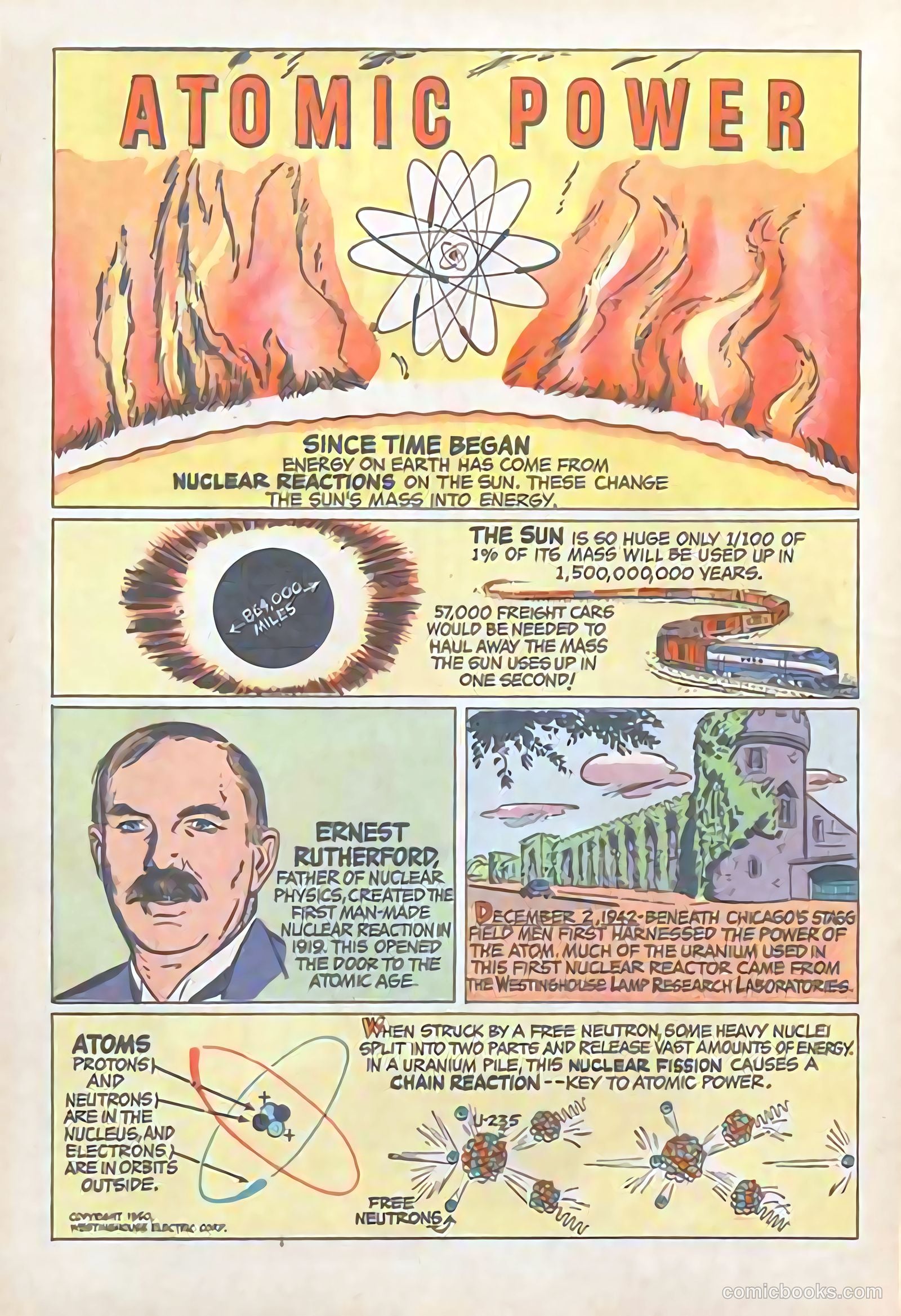
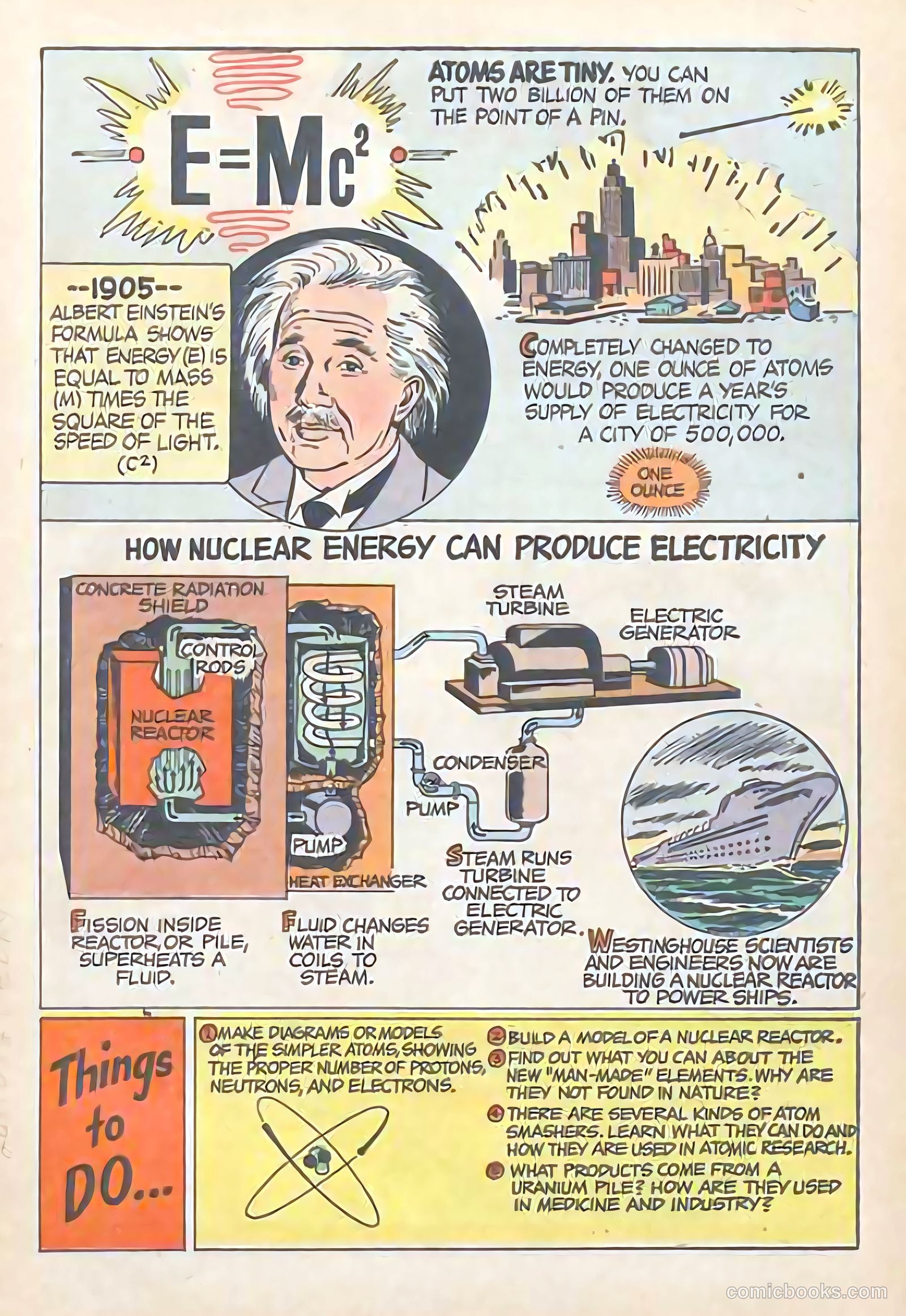
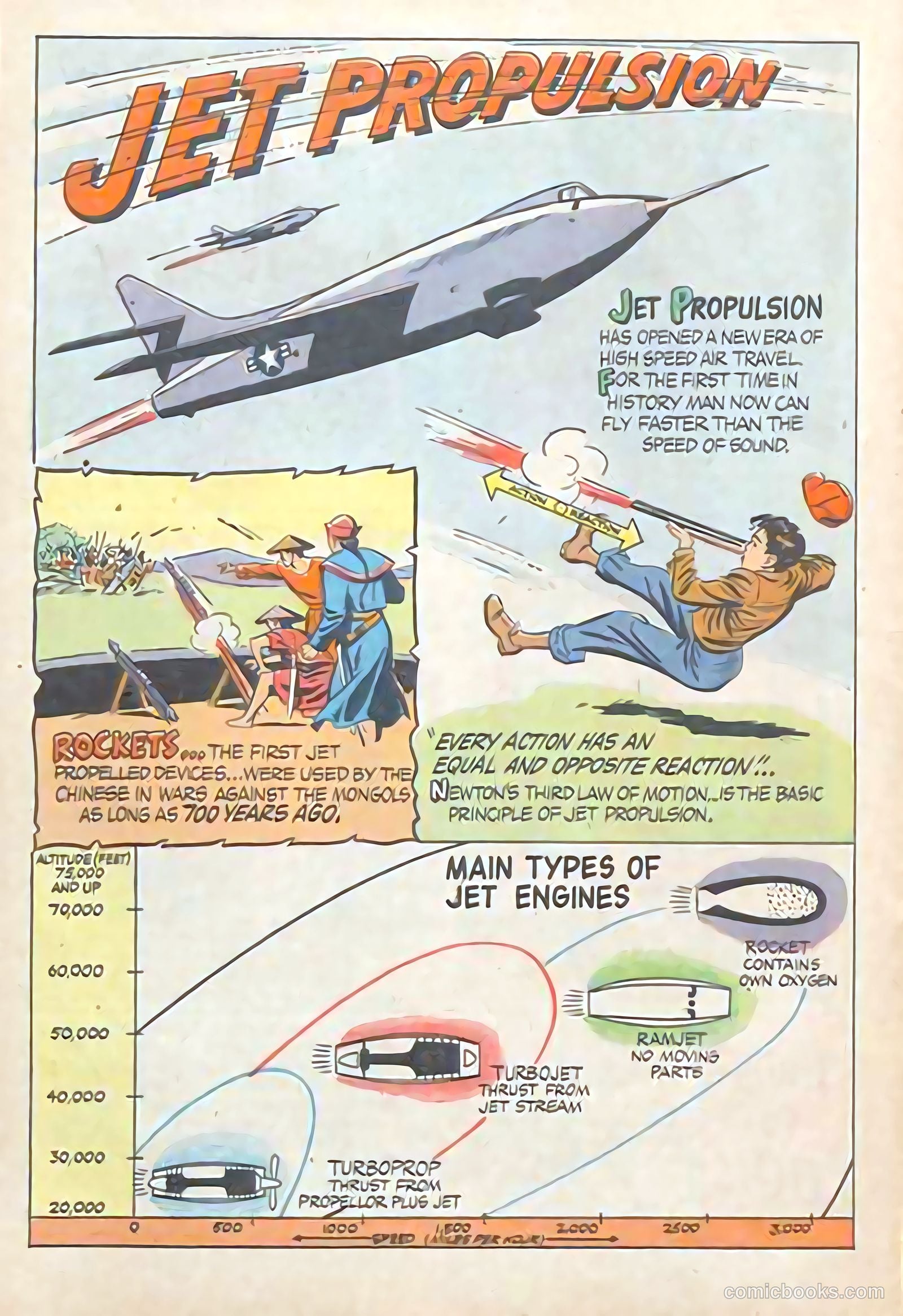
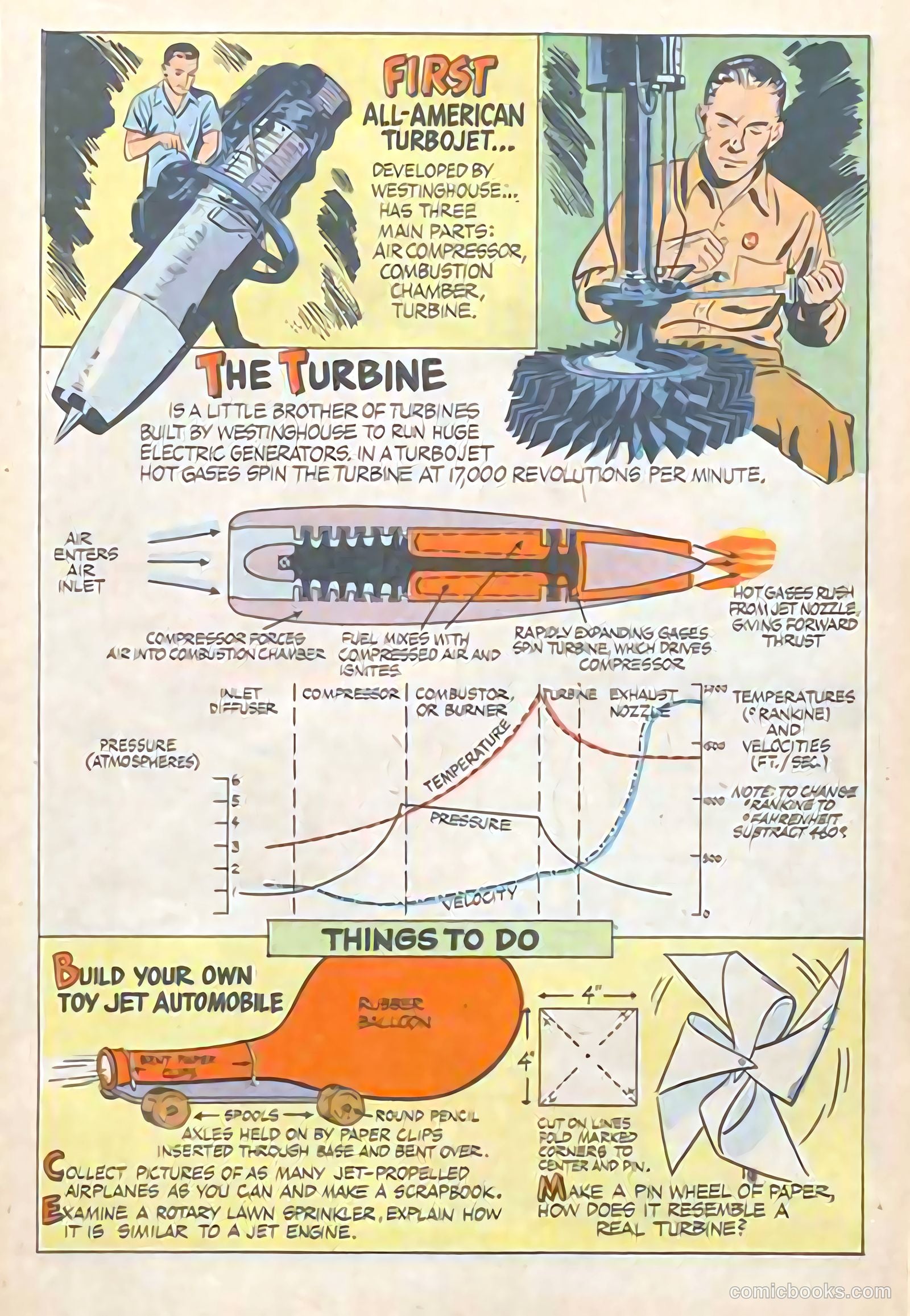
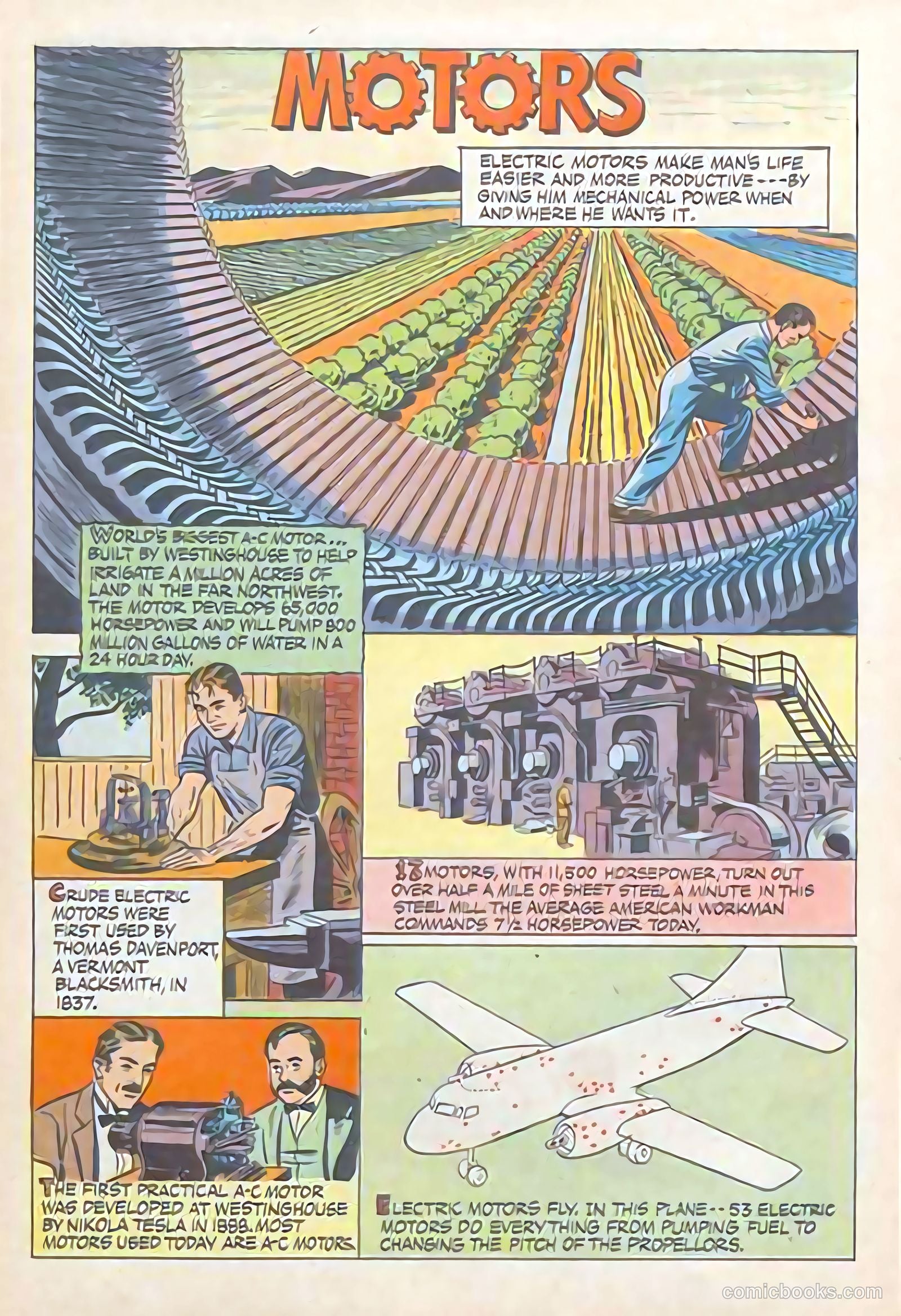
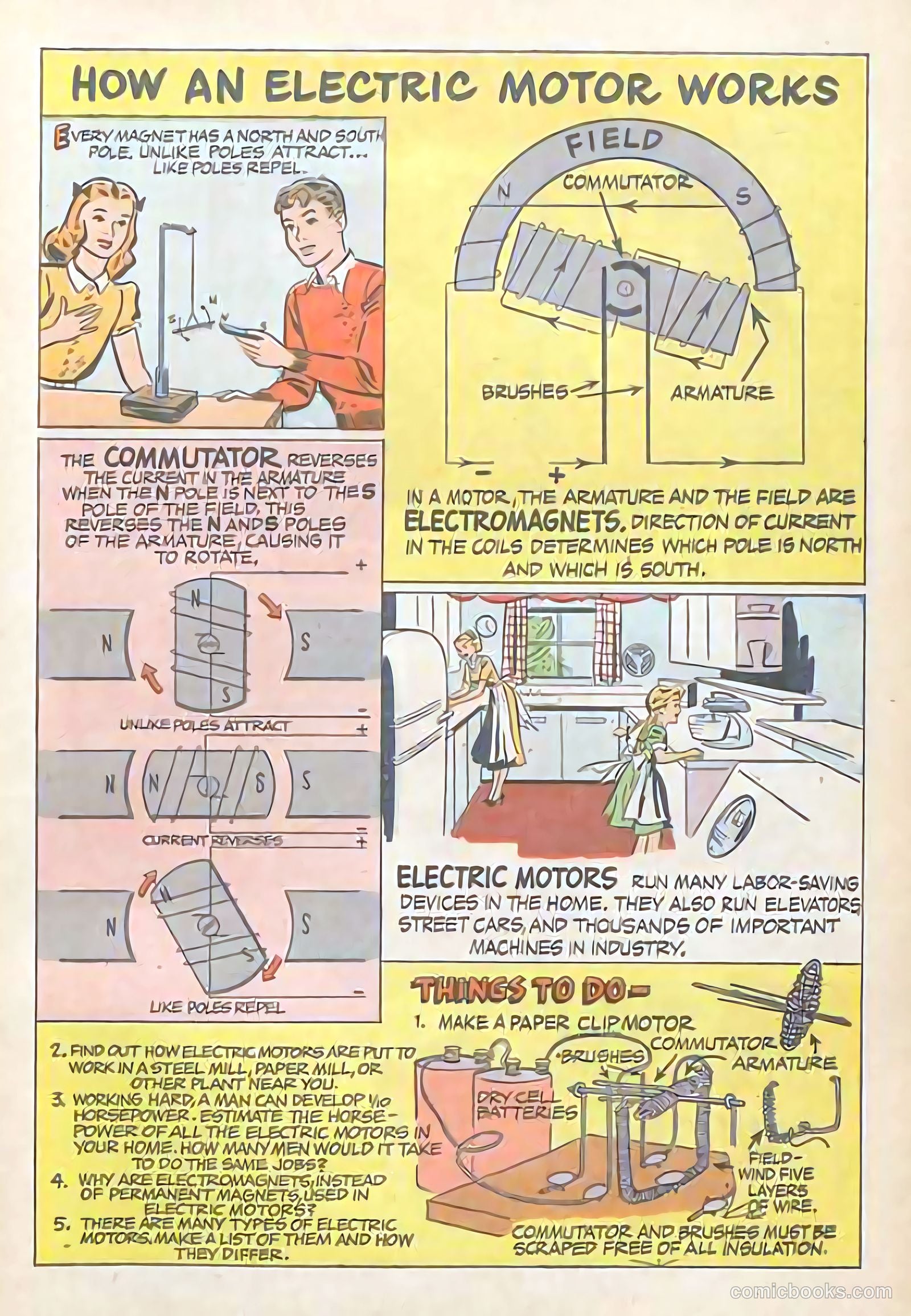
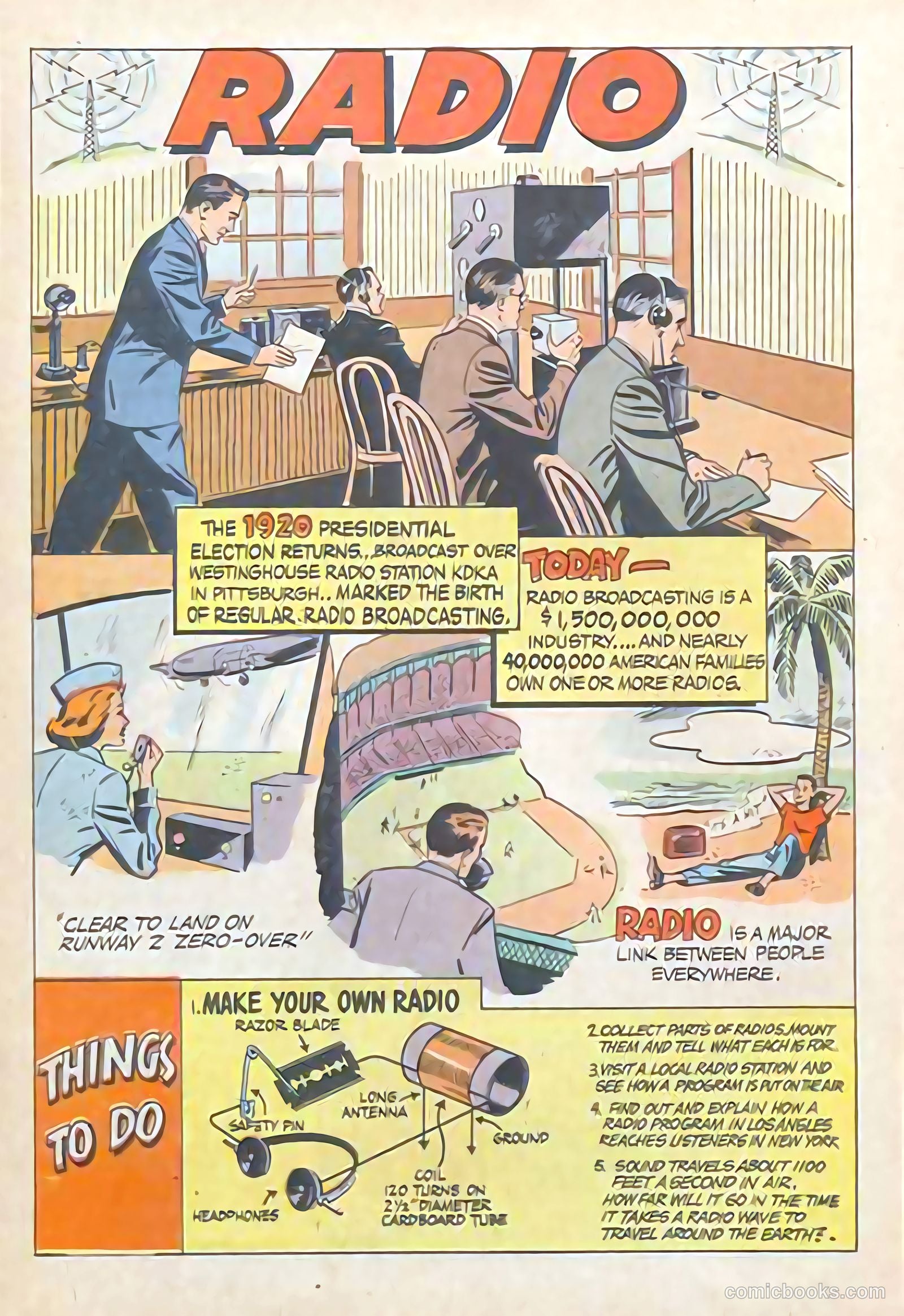
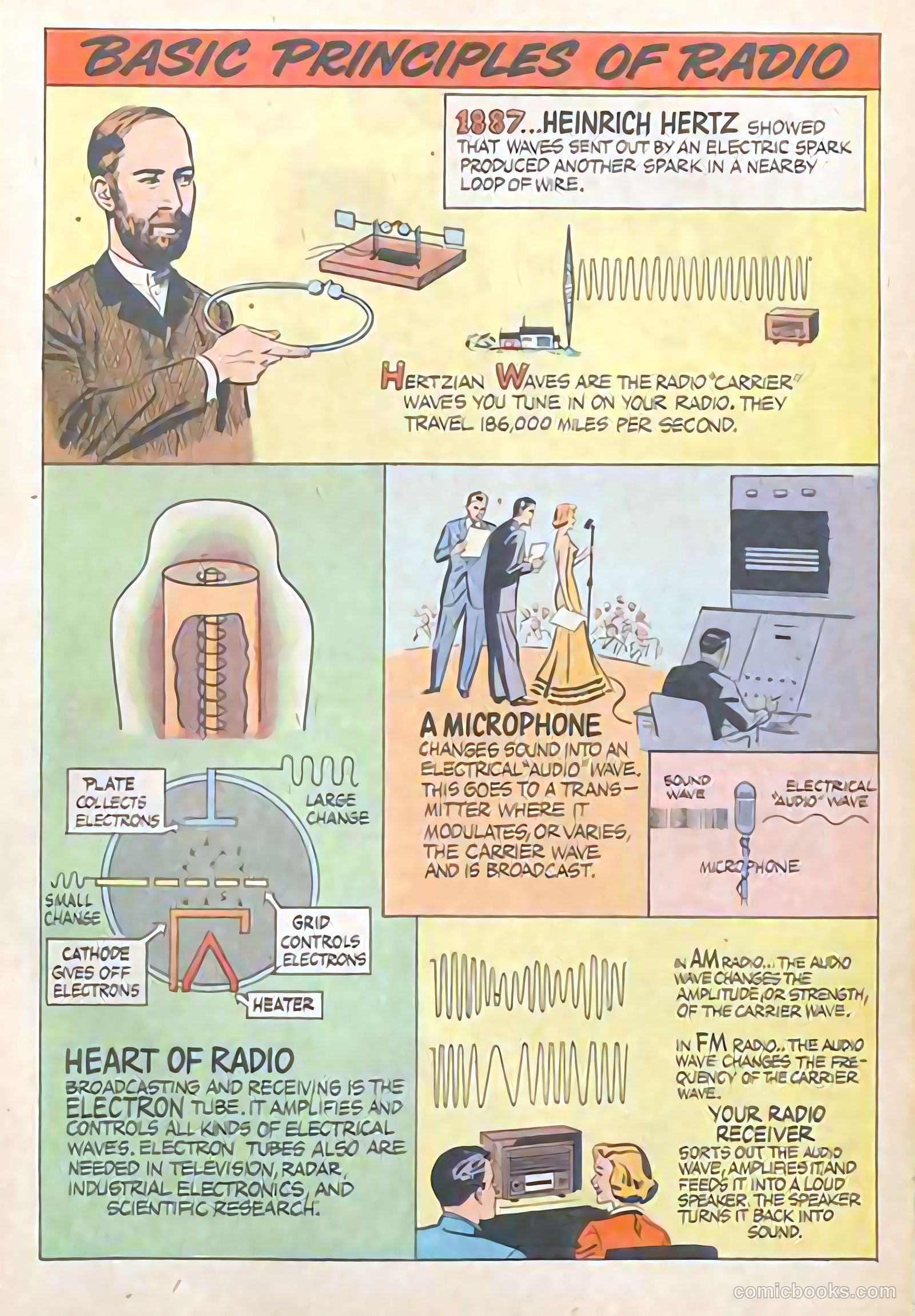
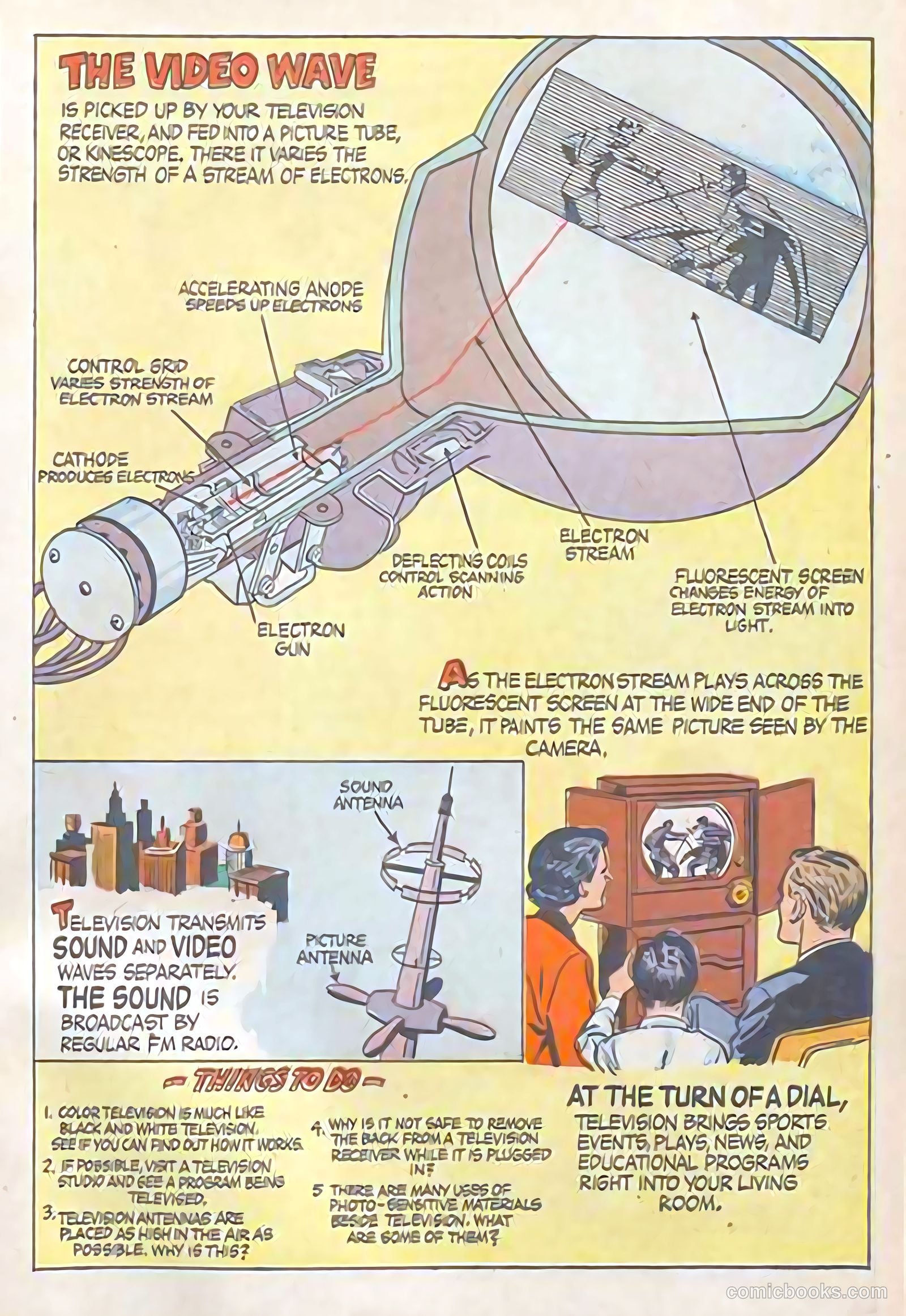
This Westinghouse educational comic explains how various technologies work. Featured topics include the turbojet engine, with diagrams of its three main components (air compressor, combustion chamber, and turbine) and how hot gases spin the turbine at 17,000 revolutions per minute to create forward thrust. The issue also covers electric motors, explaining how they provide mechanical power for industrial and agricultural applications, and details the basic principles of radio technology, including Heinrich Hertz's discovery of electromagnetic waves, the function of the electron tube as the heart of radio broadcasting and reception, and how microphones convert sound into electrical audio waves that modulate carrier waves for AM and FM transmission.

Restored edition © ComicBooks.com. Our digitization, remastering, and presentation are our own work.

See something wrong with this issue? Report it.