comicbooks.com Join Free
HomeBadge of Justice#22Read

★ comicbooks.com Reading Room

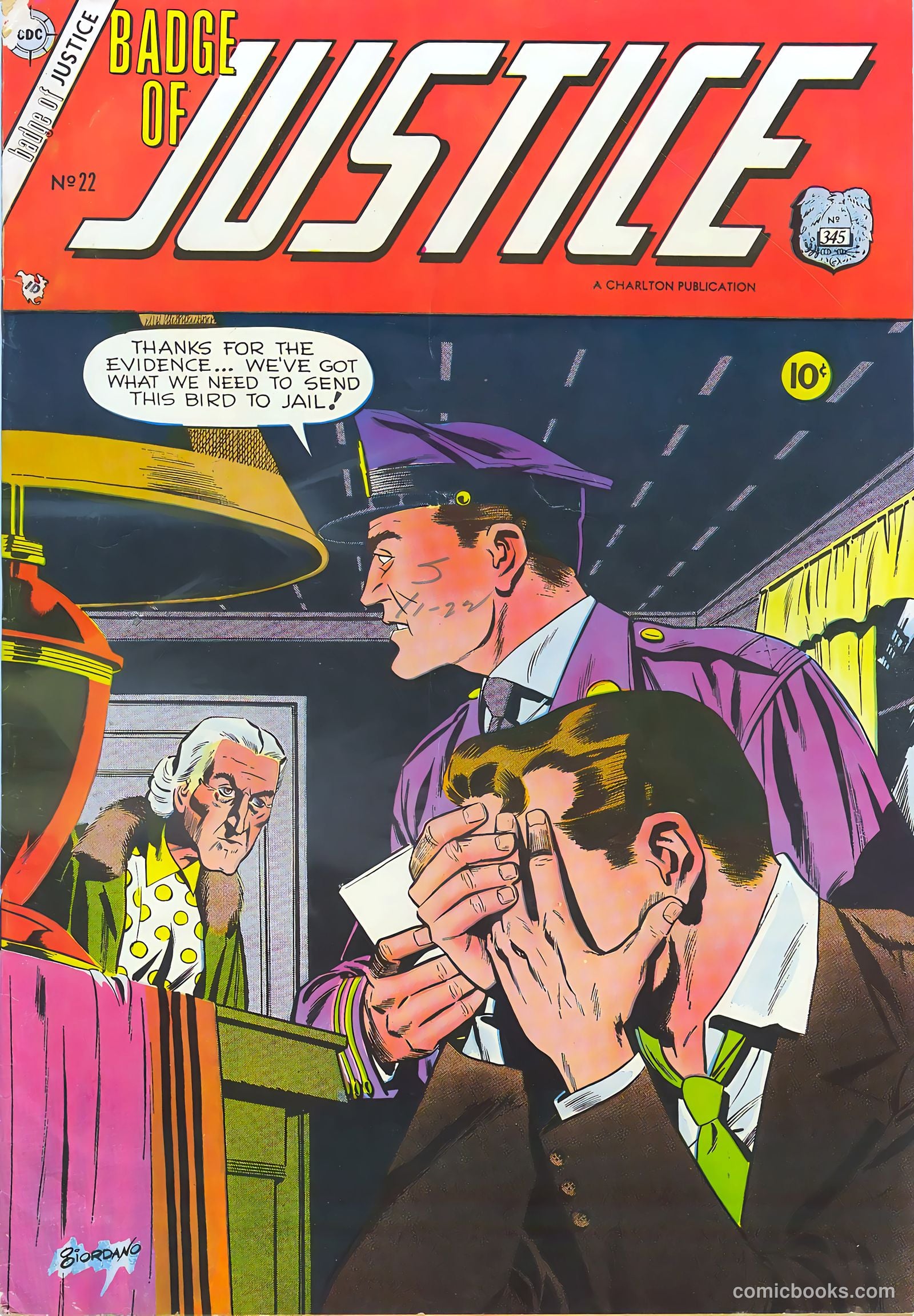
Badge of Justice #22 (1955)

Charlton · 1955 · 32 pages

Free to read · restored edition by comicbooks.com · Issue details →
Contains 4 stories
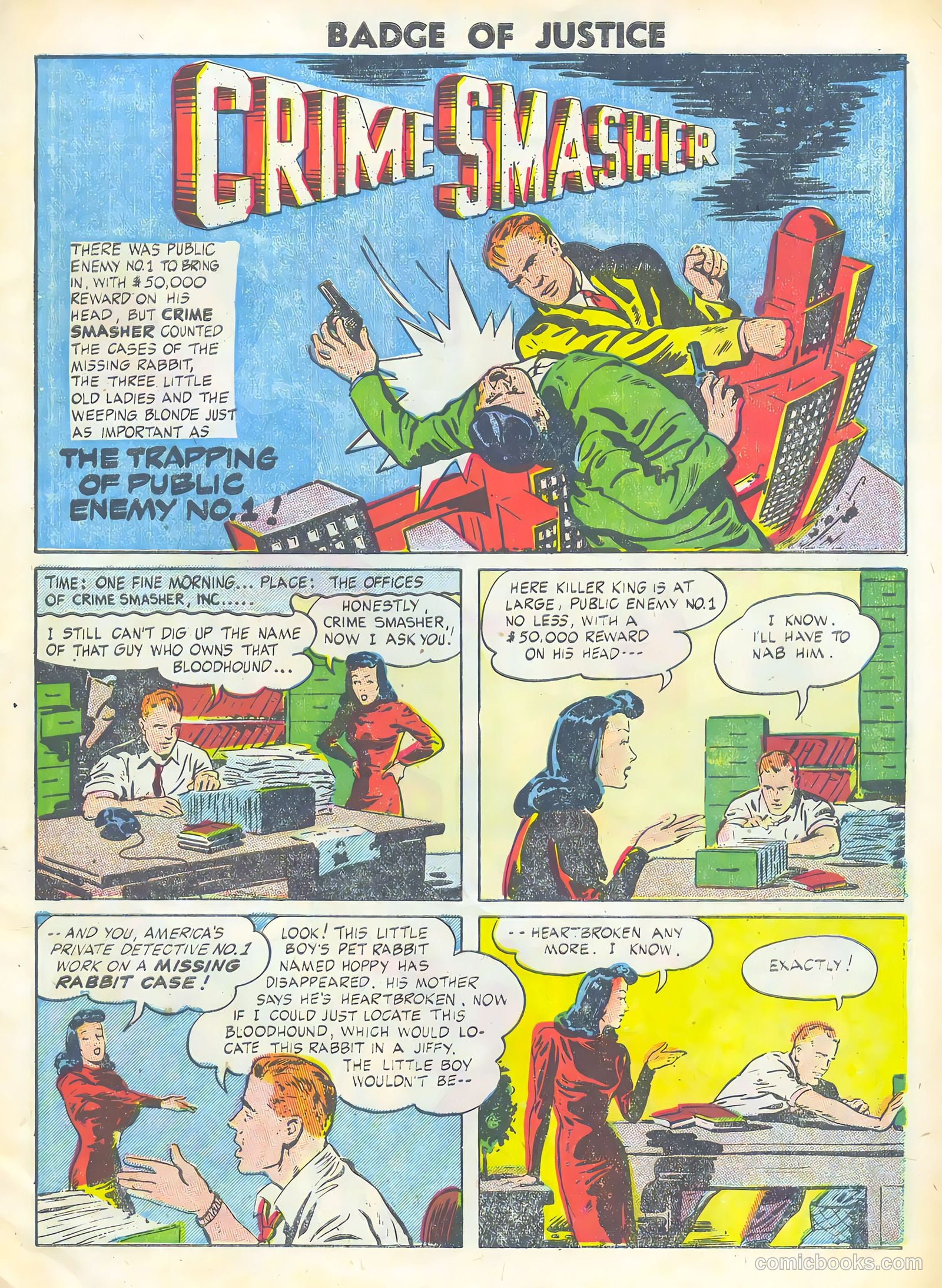
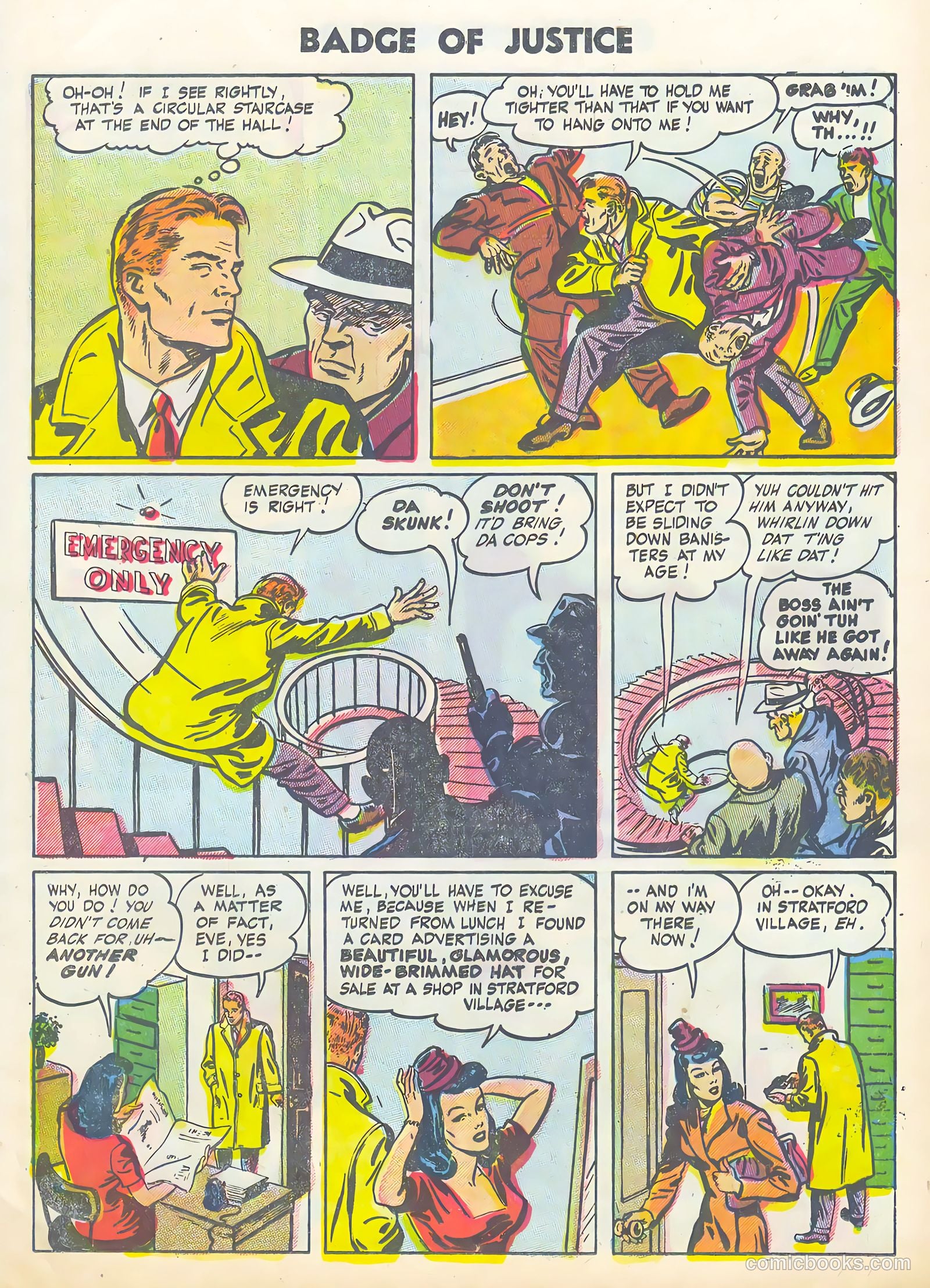
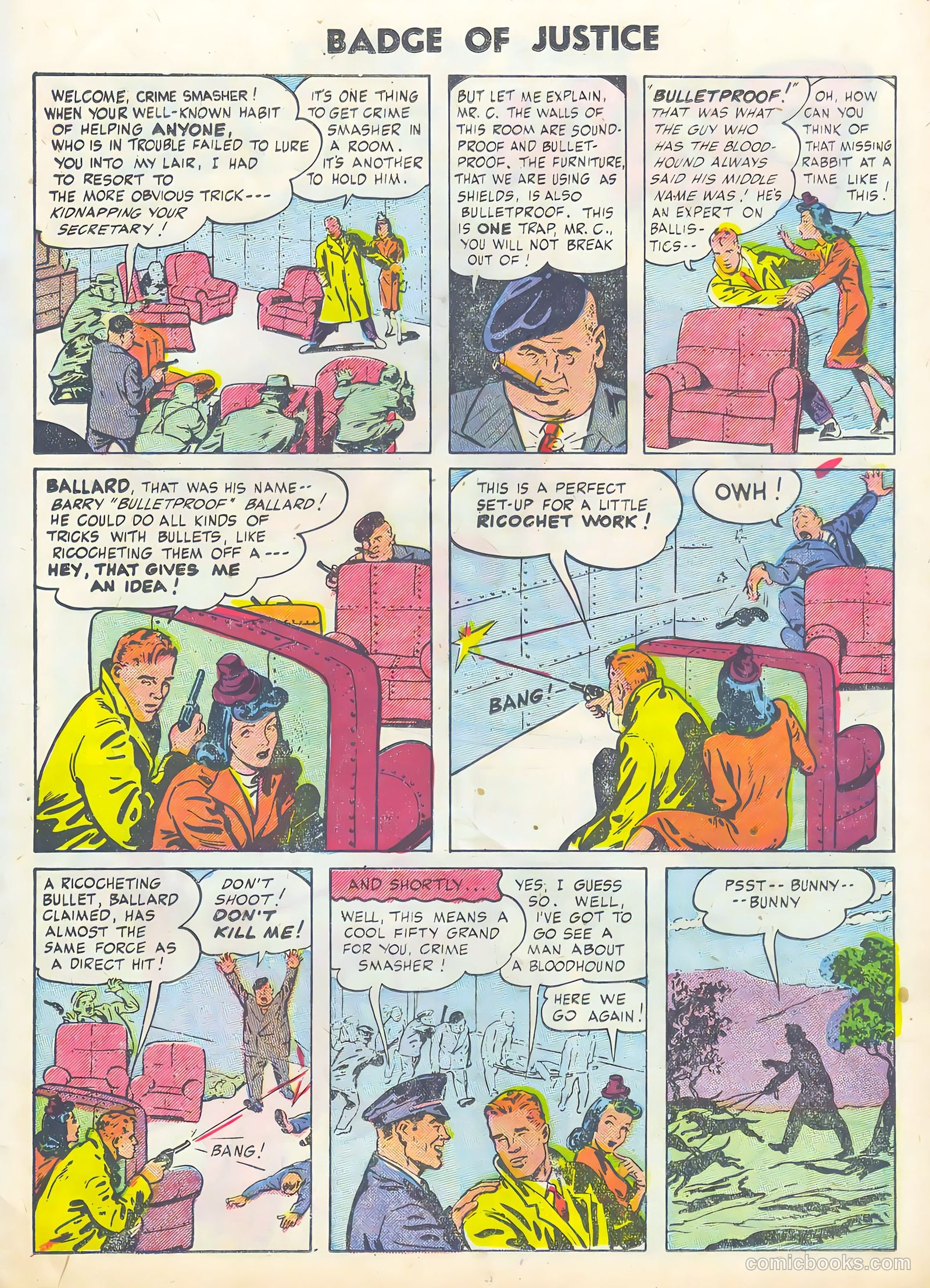
The Trapping of Public Enemy No. 1!
13 pp · crime
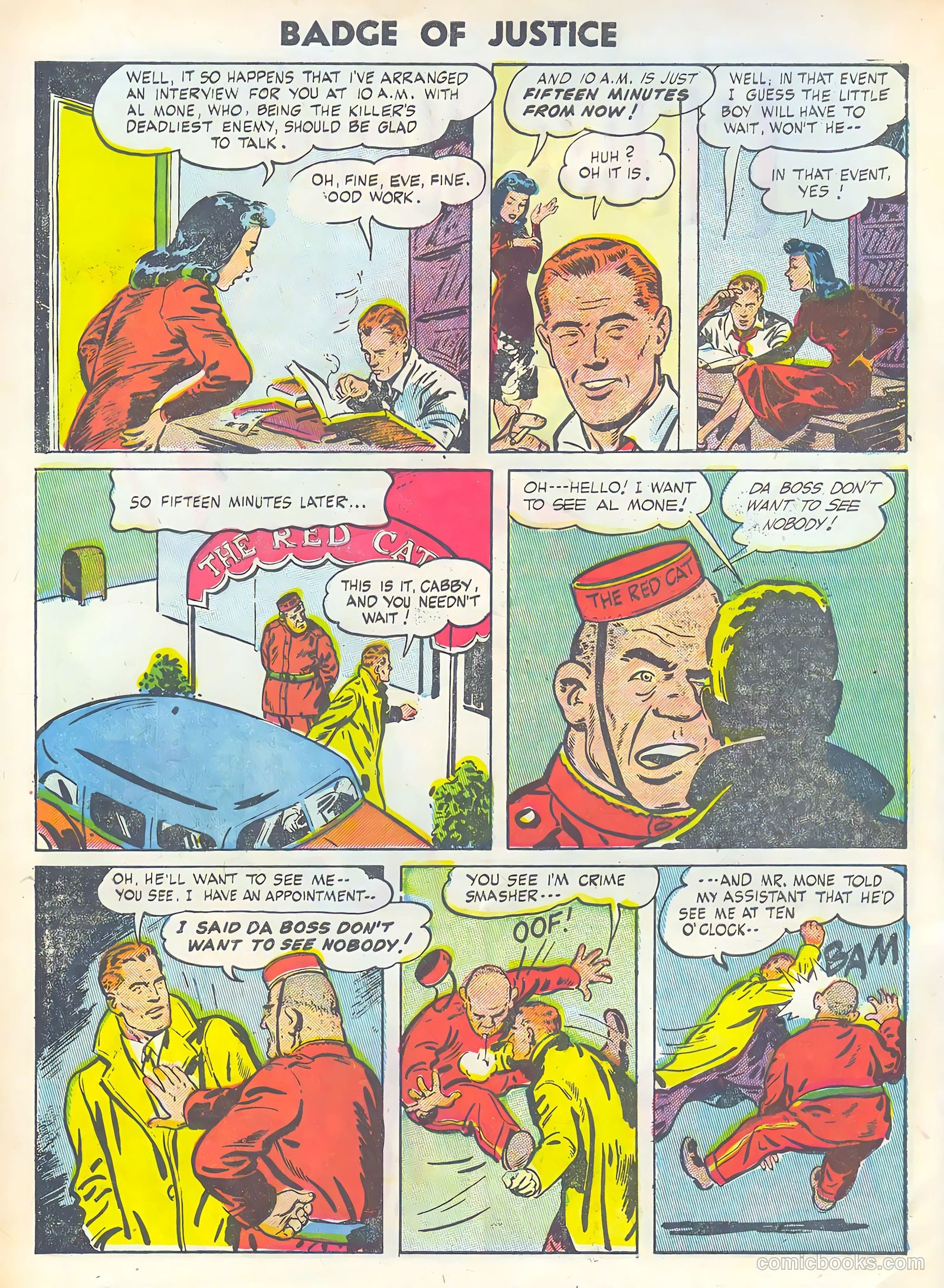
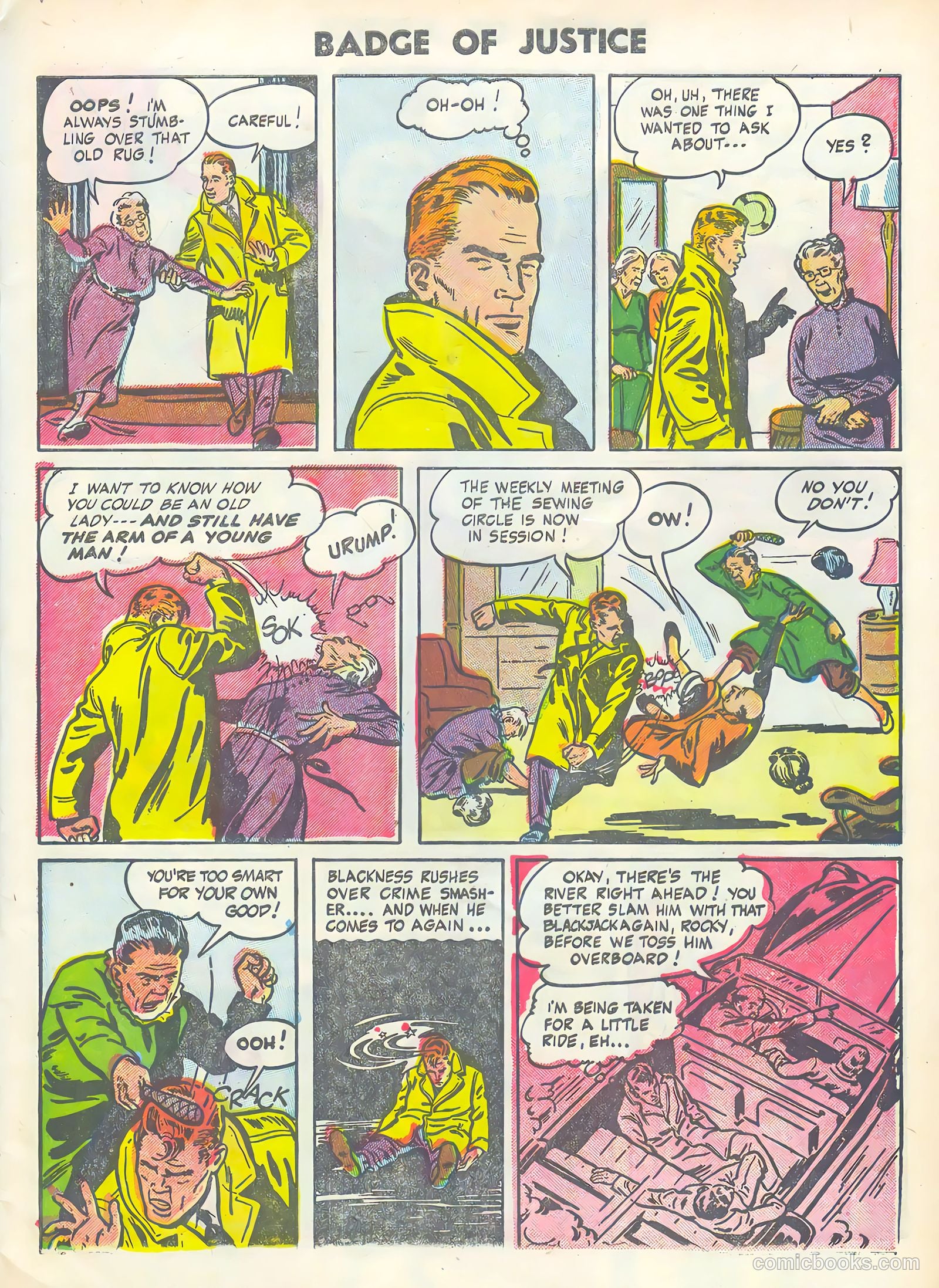
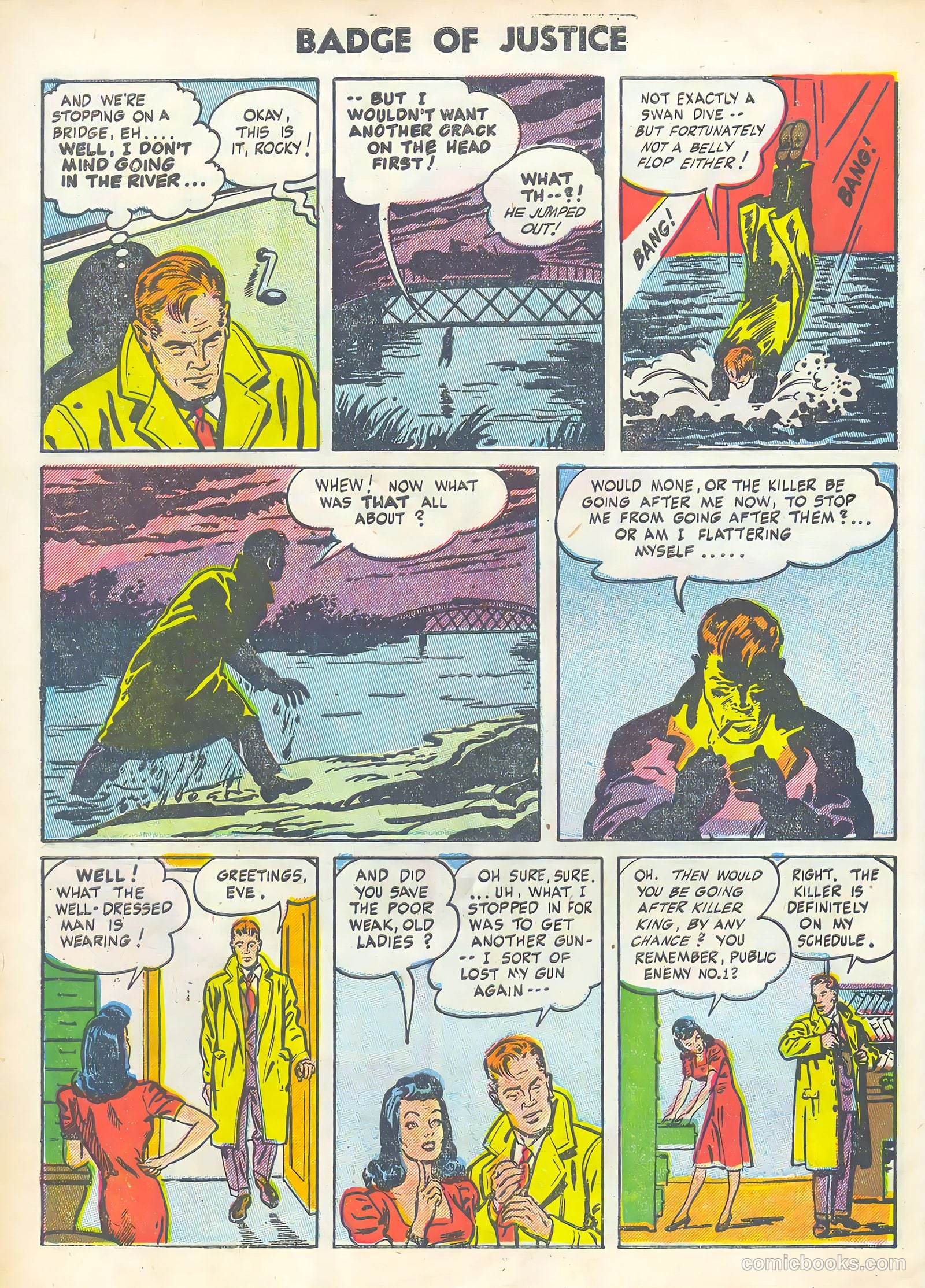
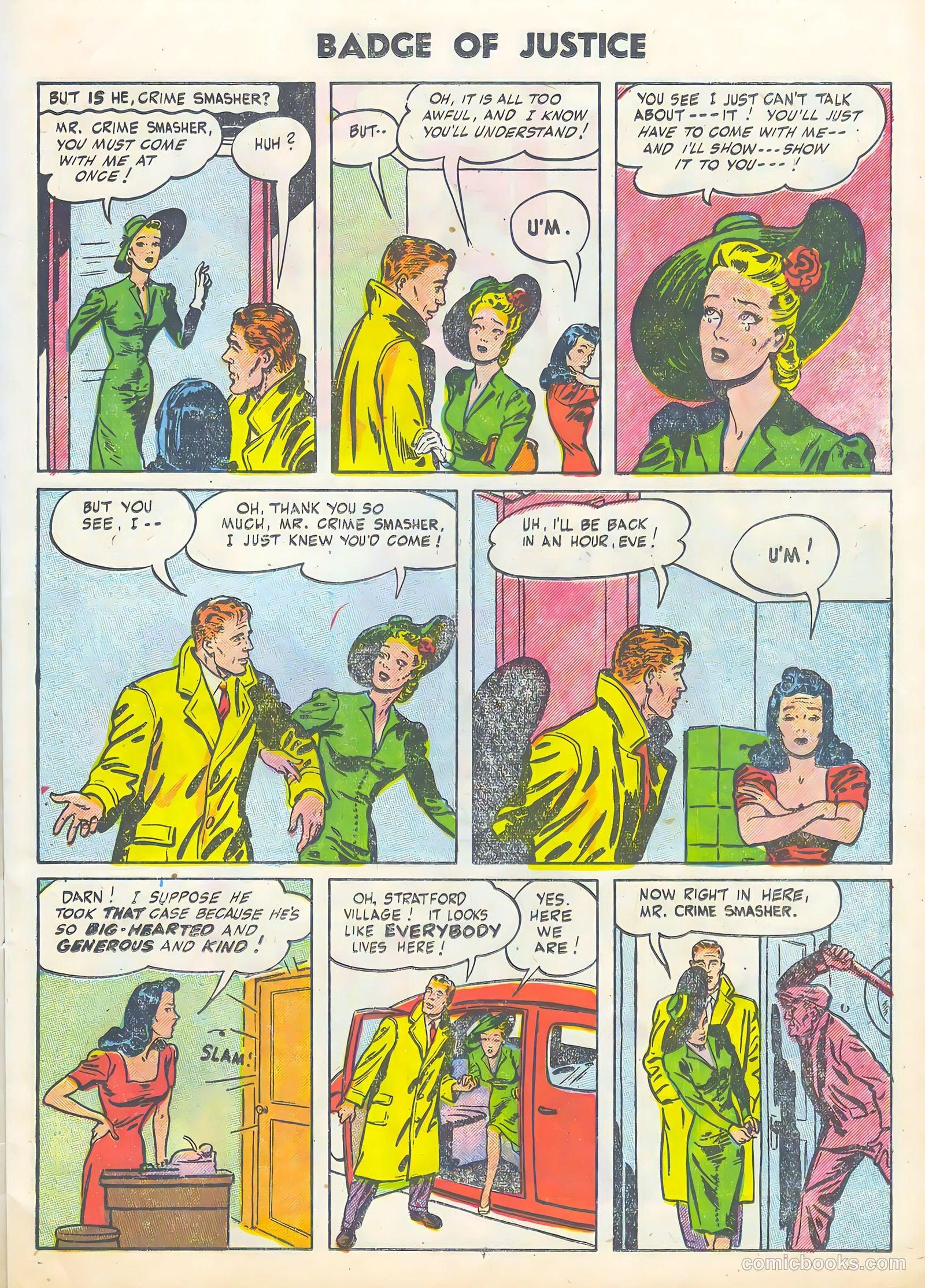
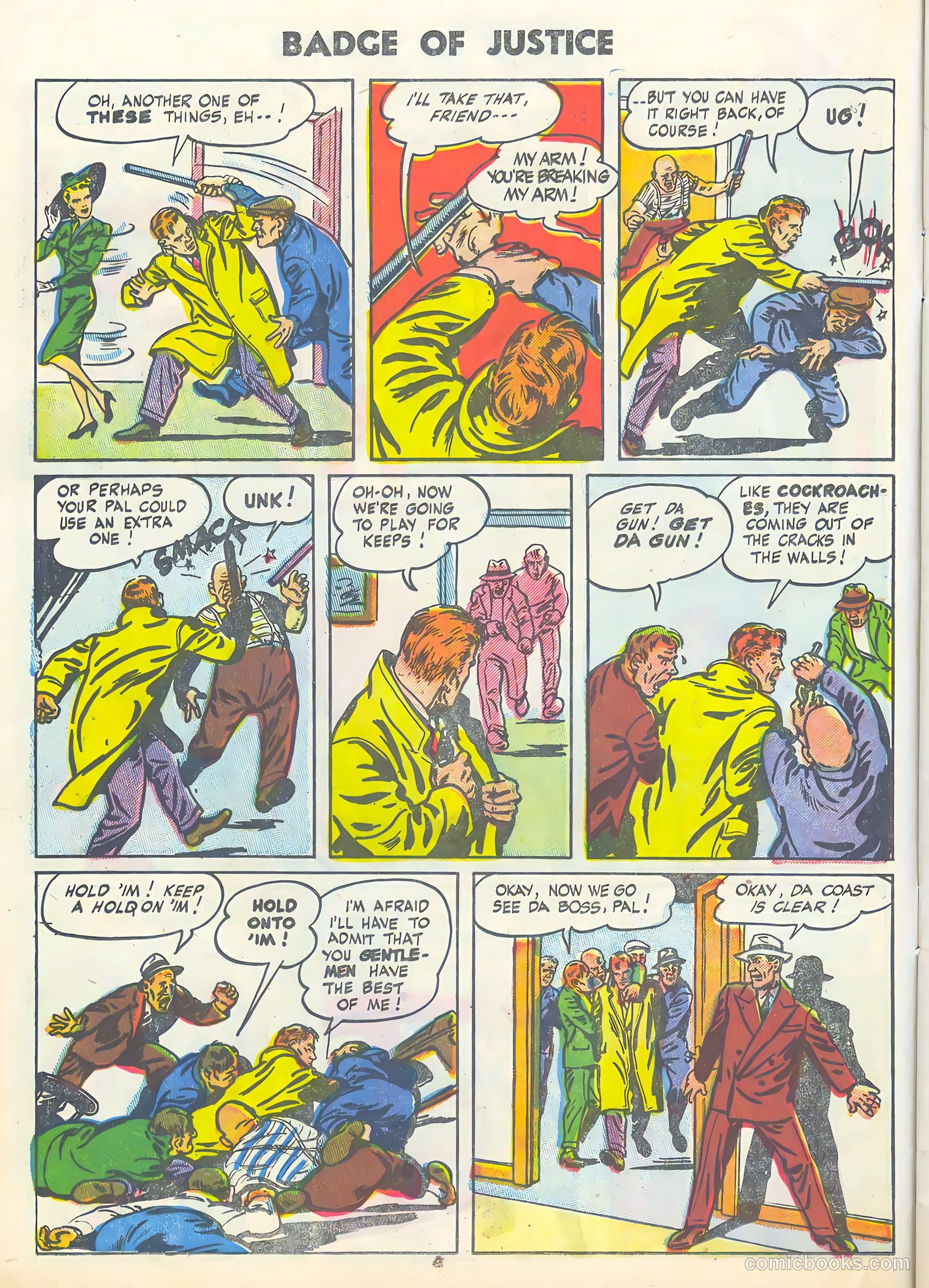
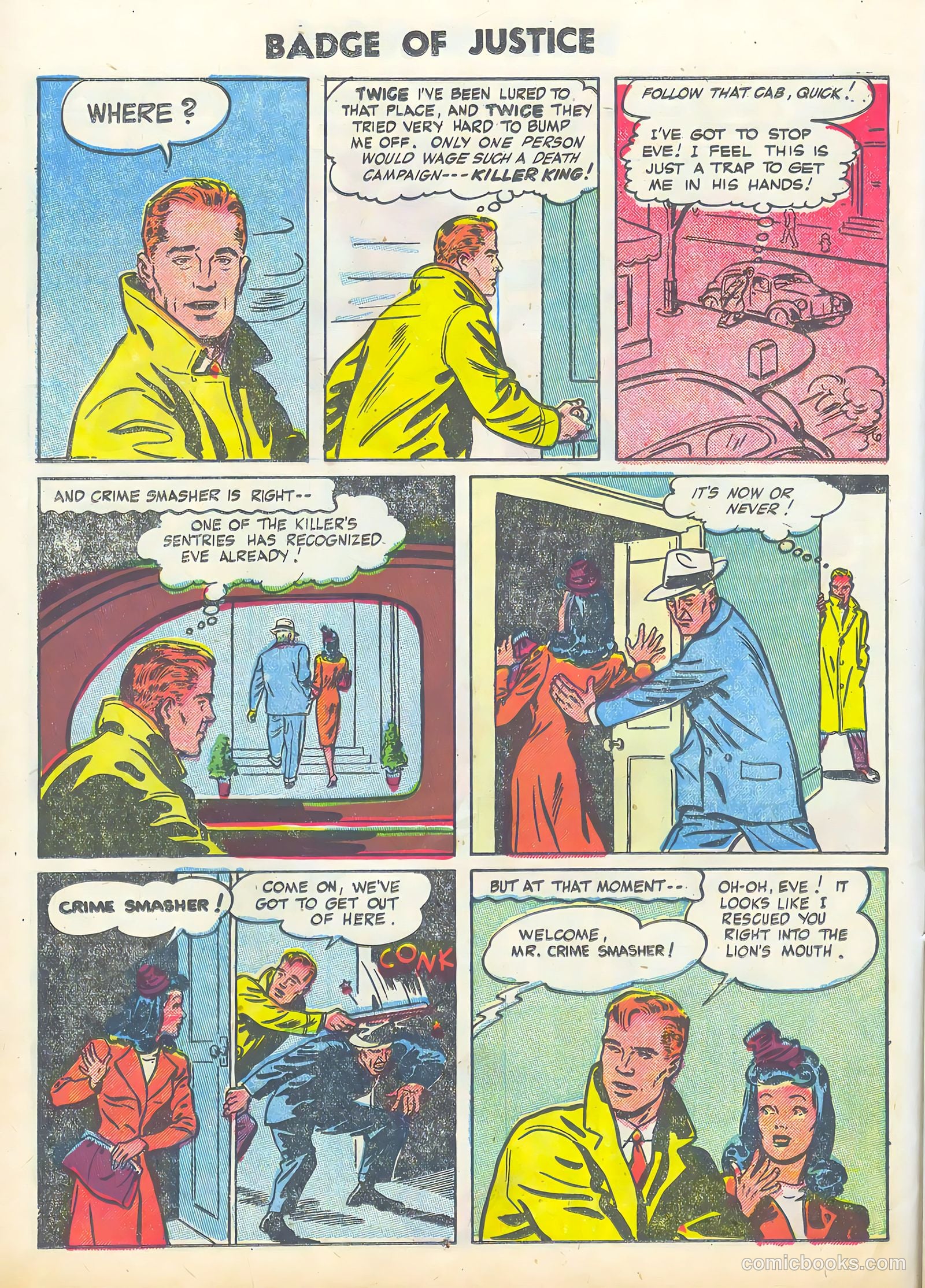
Crime Smasher

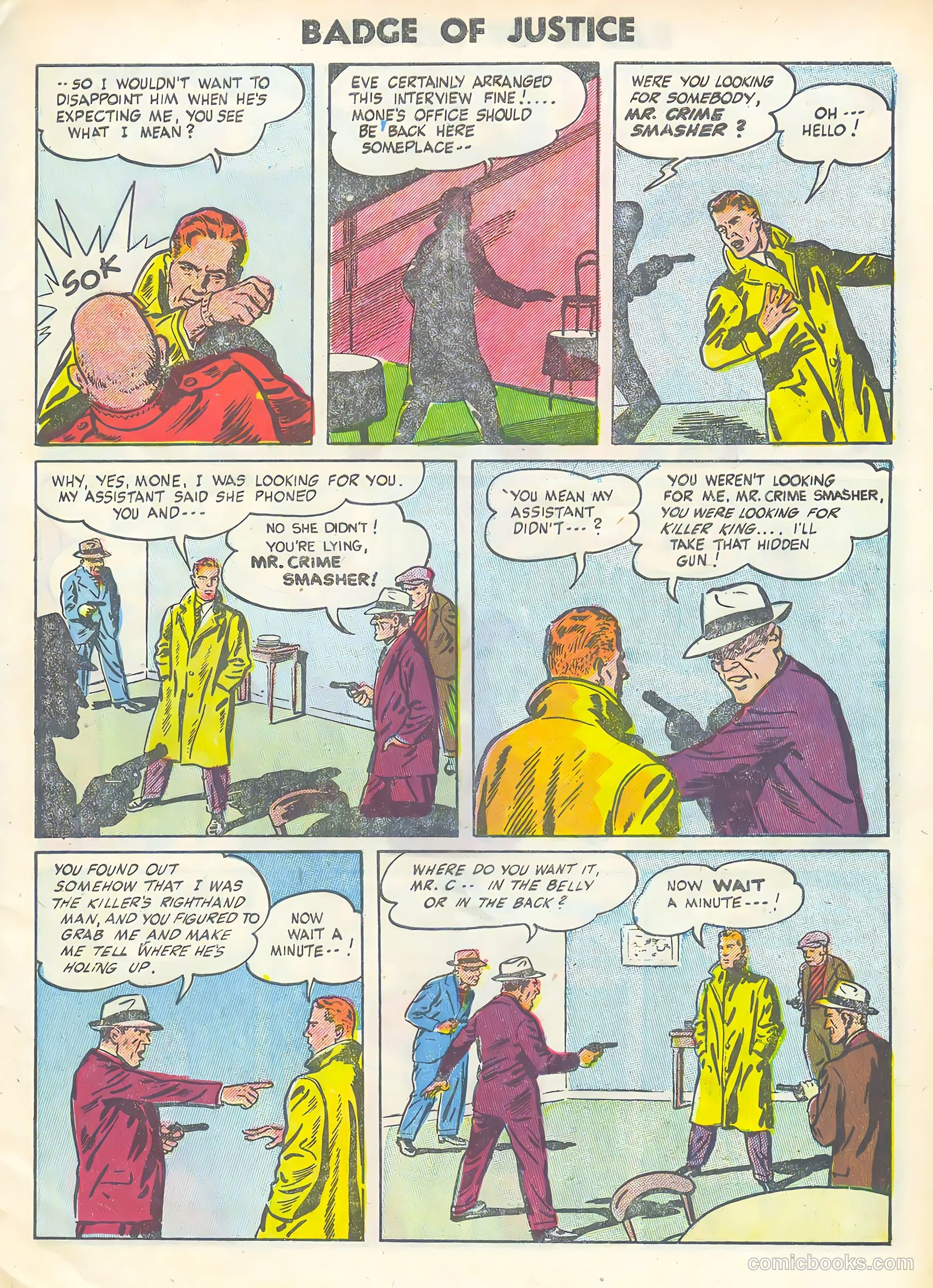
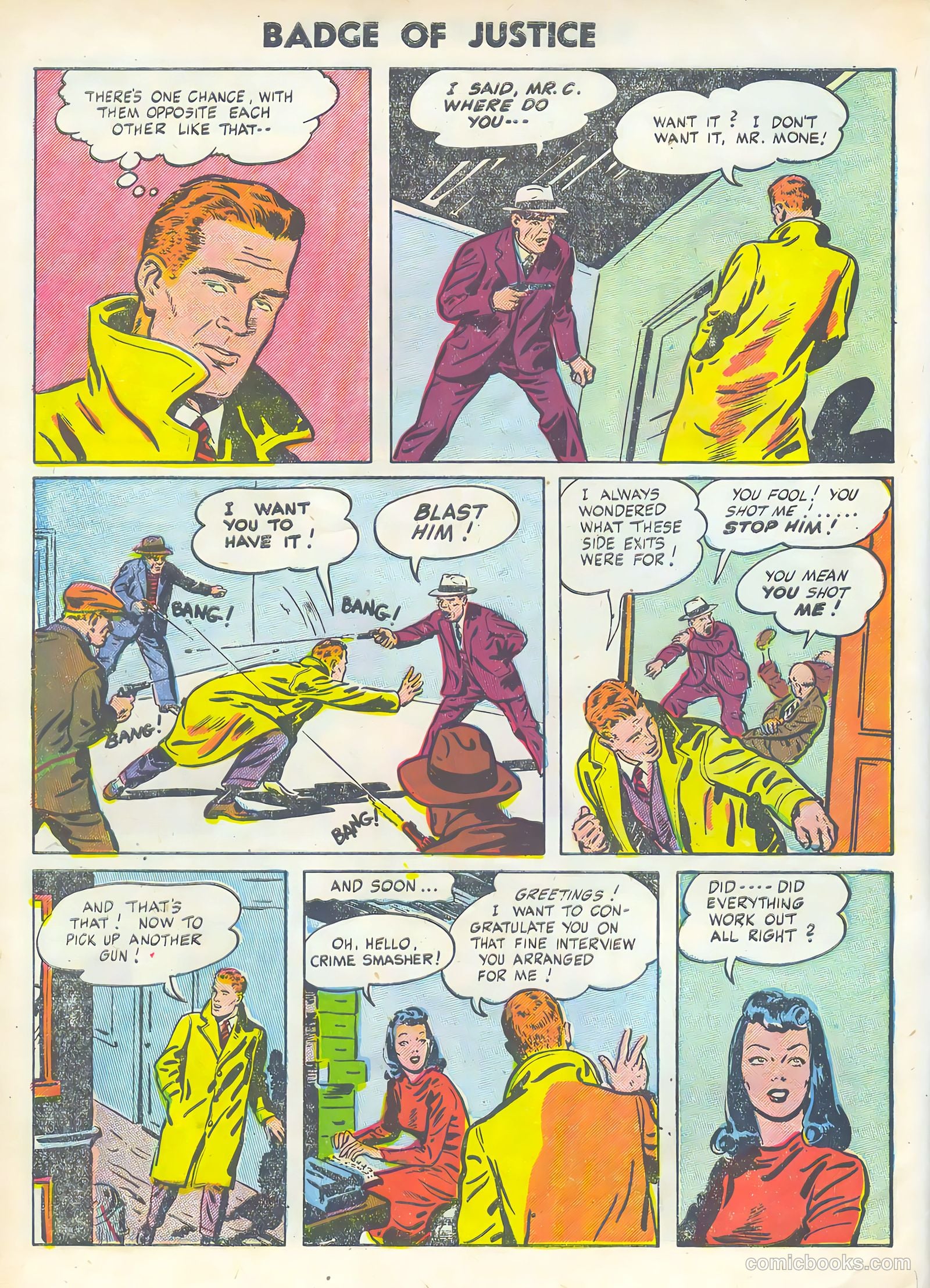
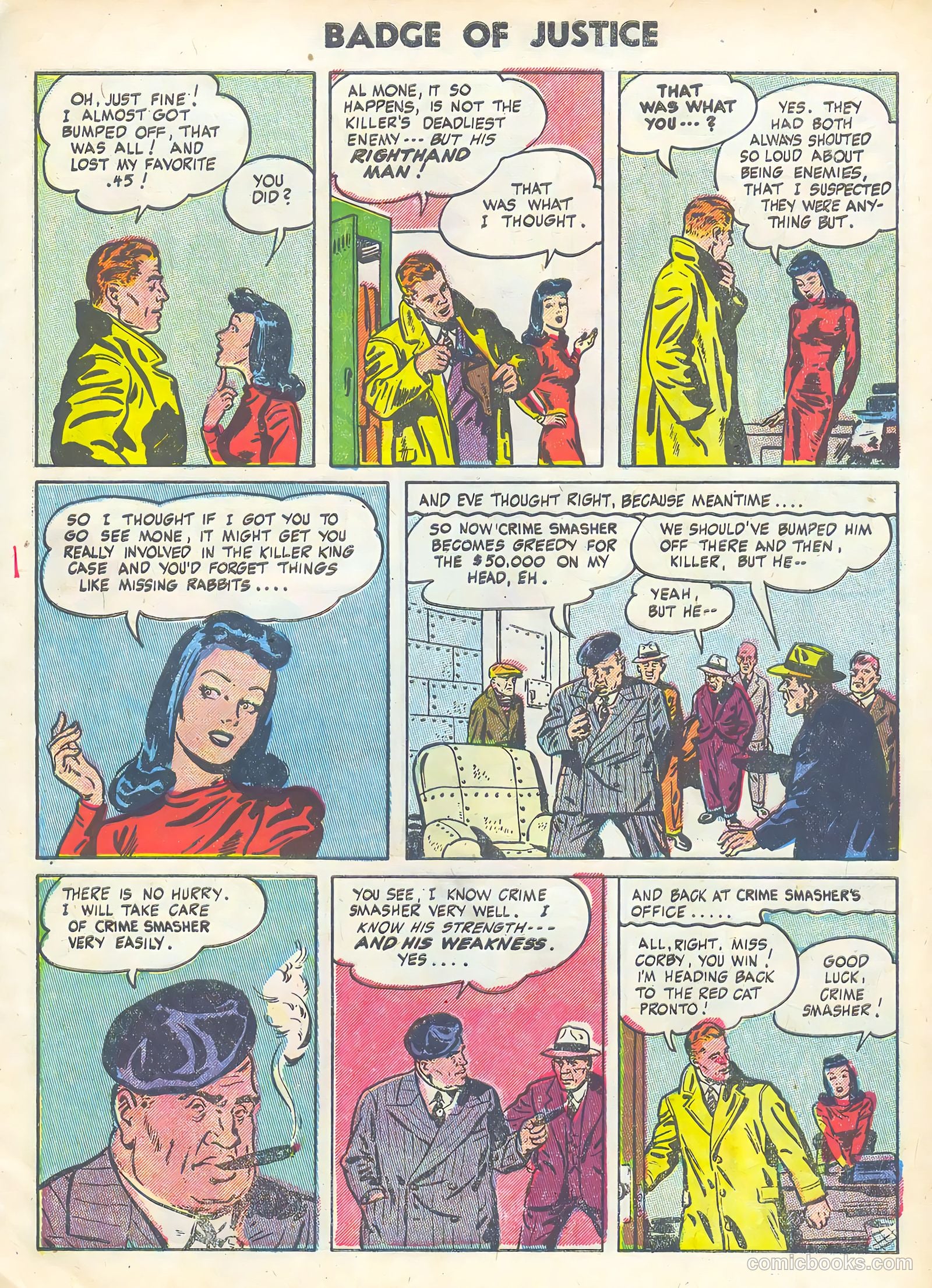
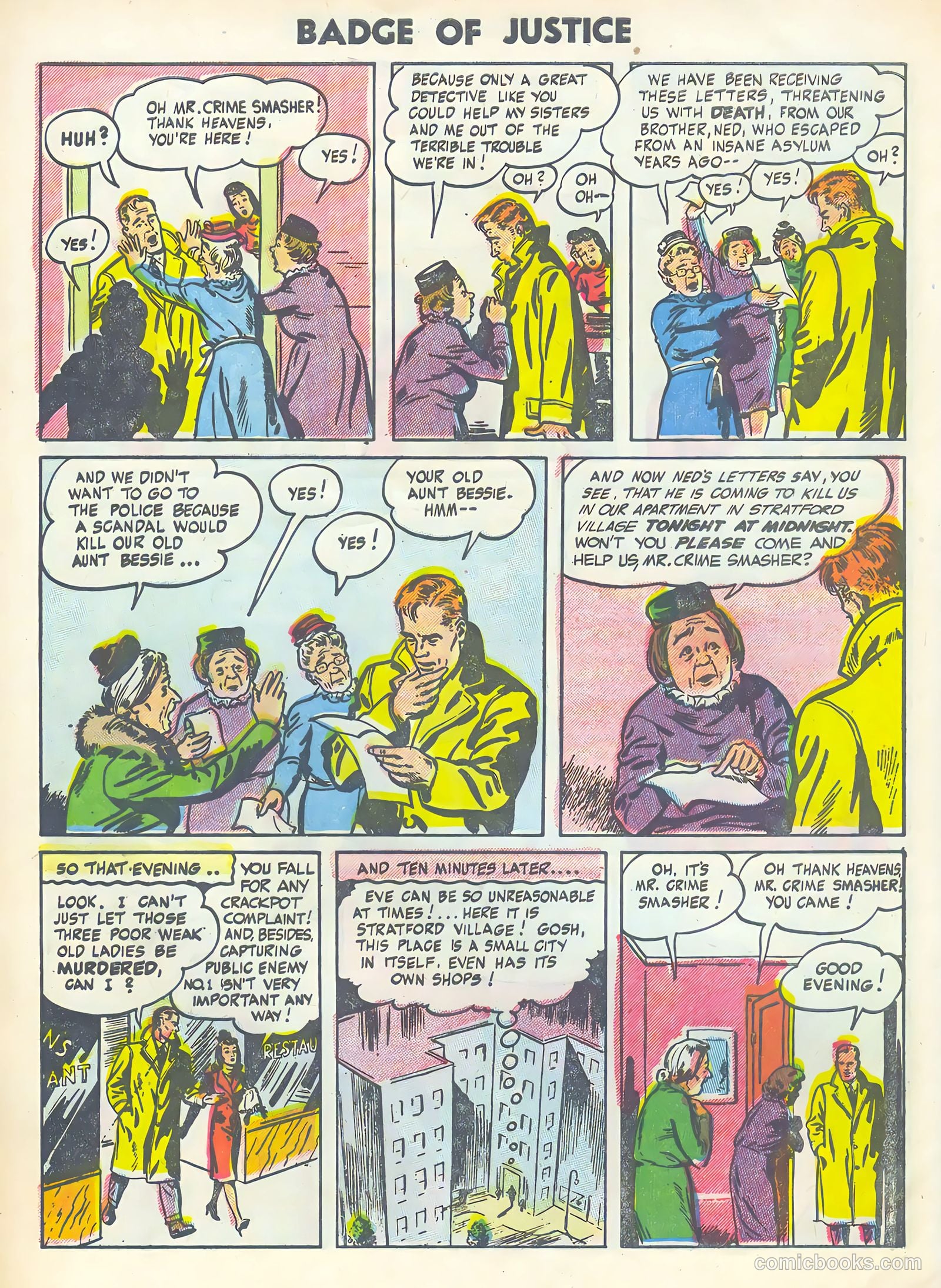
Crime Smasher is pulled into a web of deception when he’s led to confront Al Mone, only to discover the man is not the killer’s enemy—but his right-hand man. While tracking down leads on the elusive Public Enemy No. 1, Crime Smasher finds himself entangled in a series of bizarre cases, from a missing rabbit to three terrified old ladies threatened by their escaped brother, all while dodging ambushes and unraveling a conspiracy that turns every ally into a suspect.

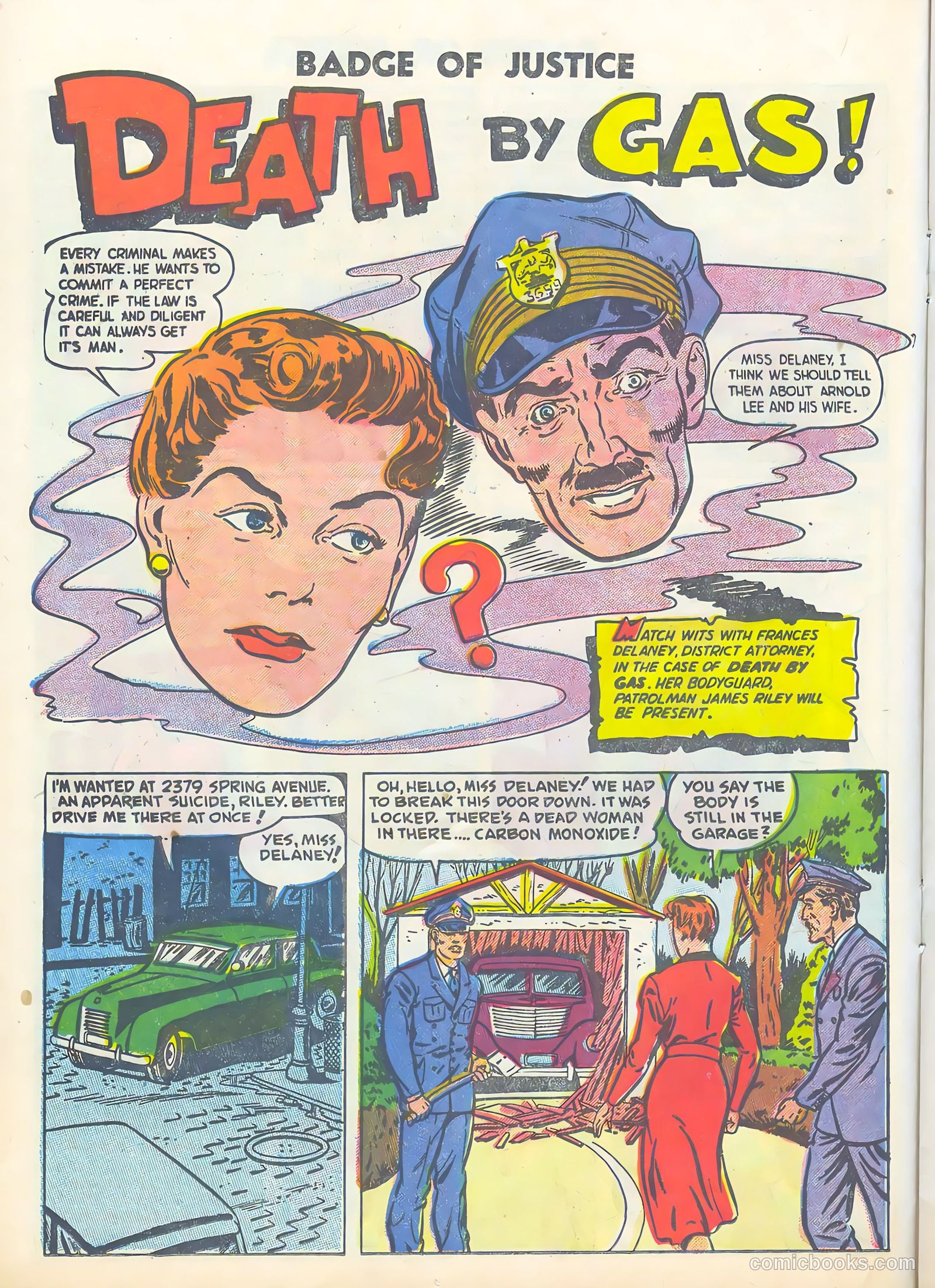
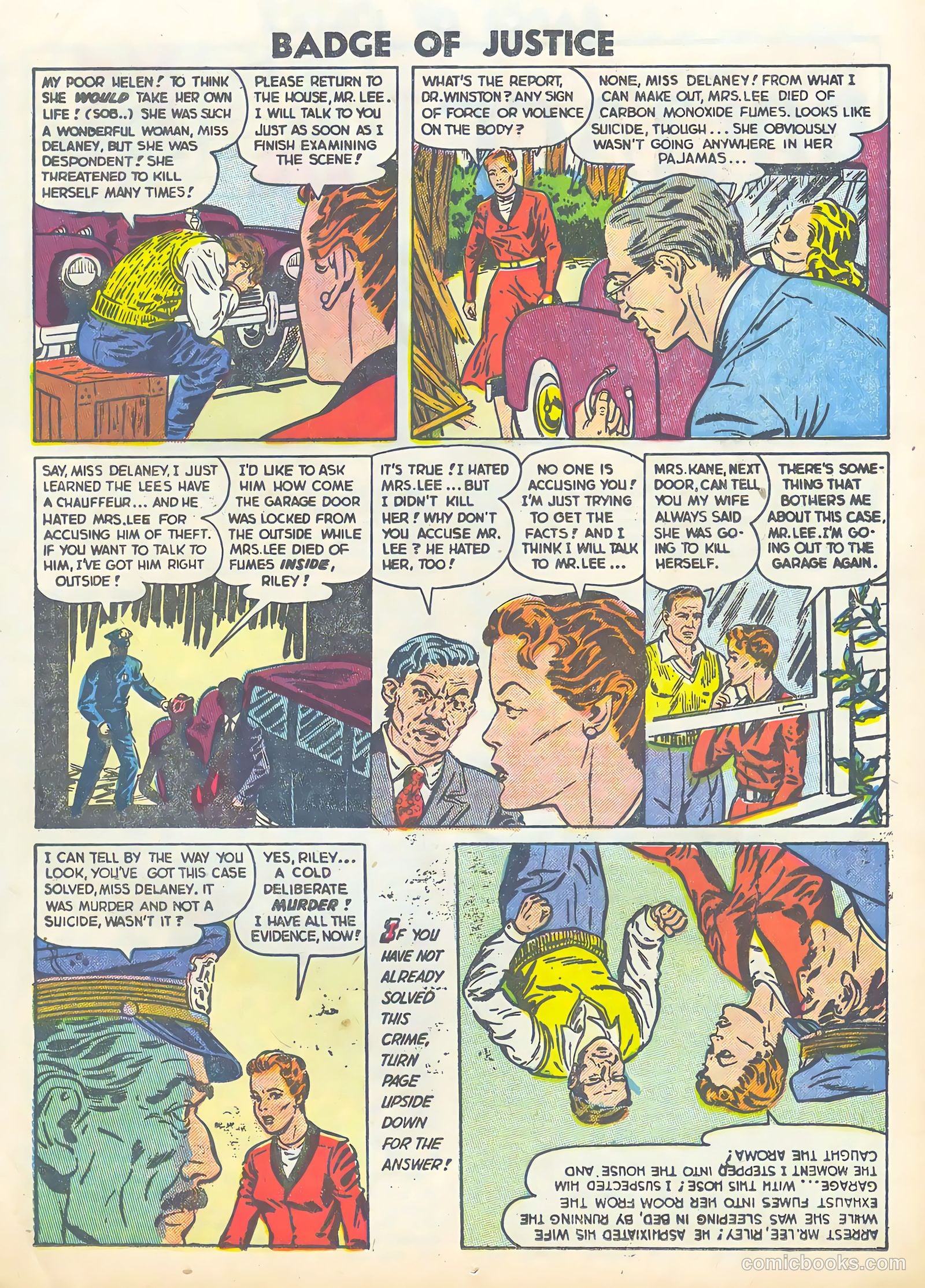
Death by Gas!
2 pp · crime

In a locked garage, a woman is found dead from carbon monoxide poisoning, ruled a suicide by her distraught husband, Arnold Lee. District Attorney Frances Delaney, aided by Patrolman James Riley, begins to question the scene when inconsistencies arise—especially the garage door locked from the outside—and a jealous chauffeur with a motive comes into focus.

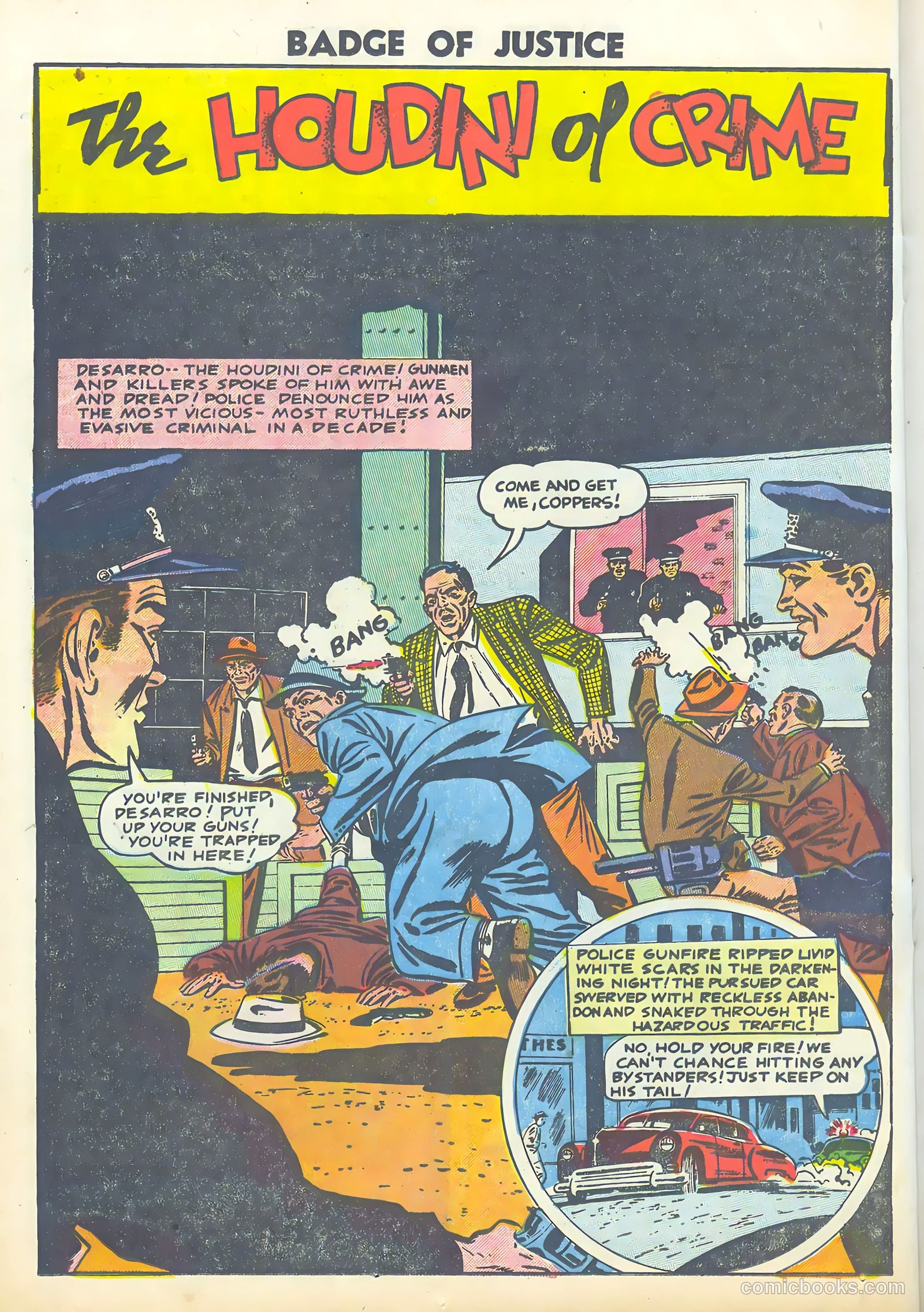
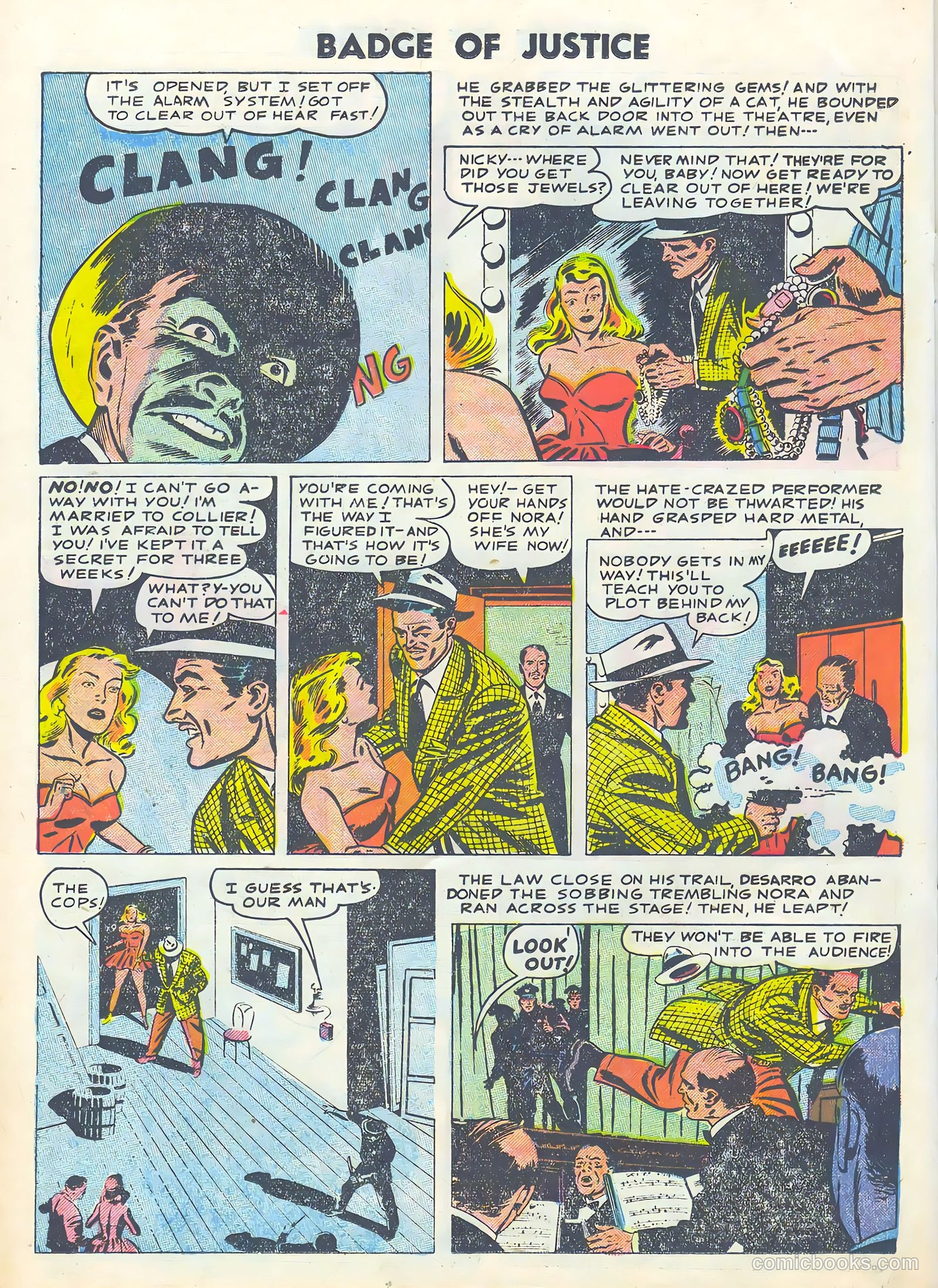
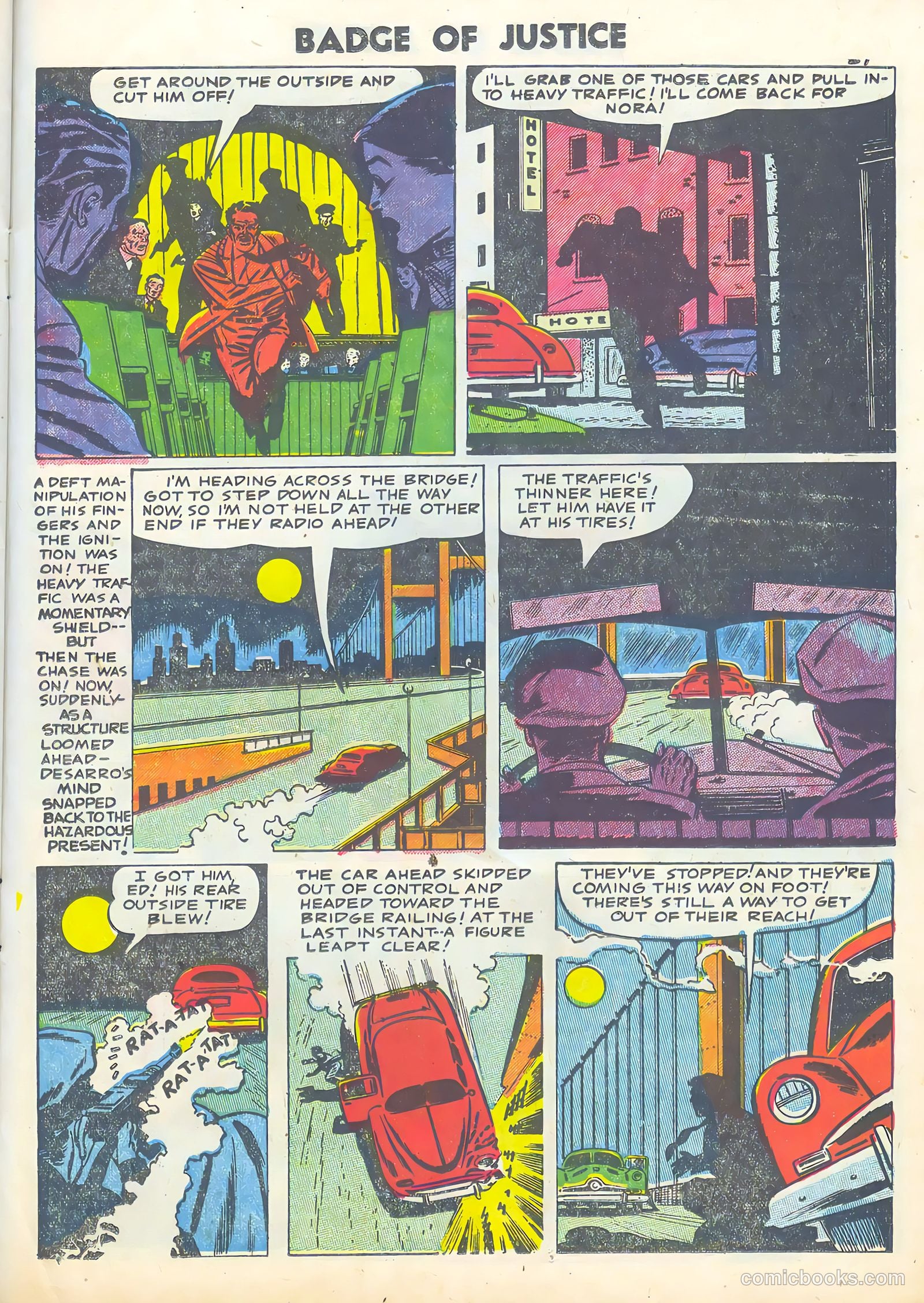
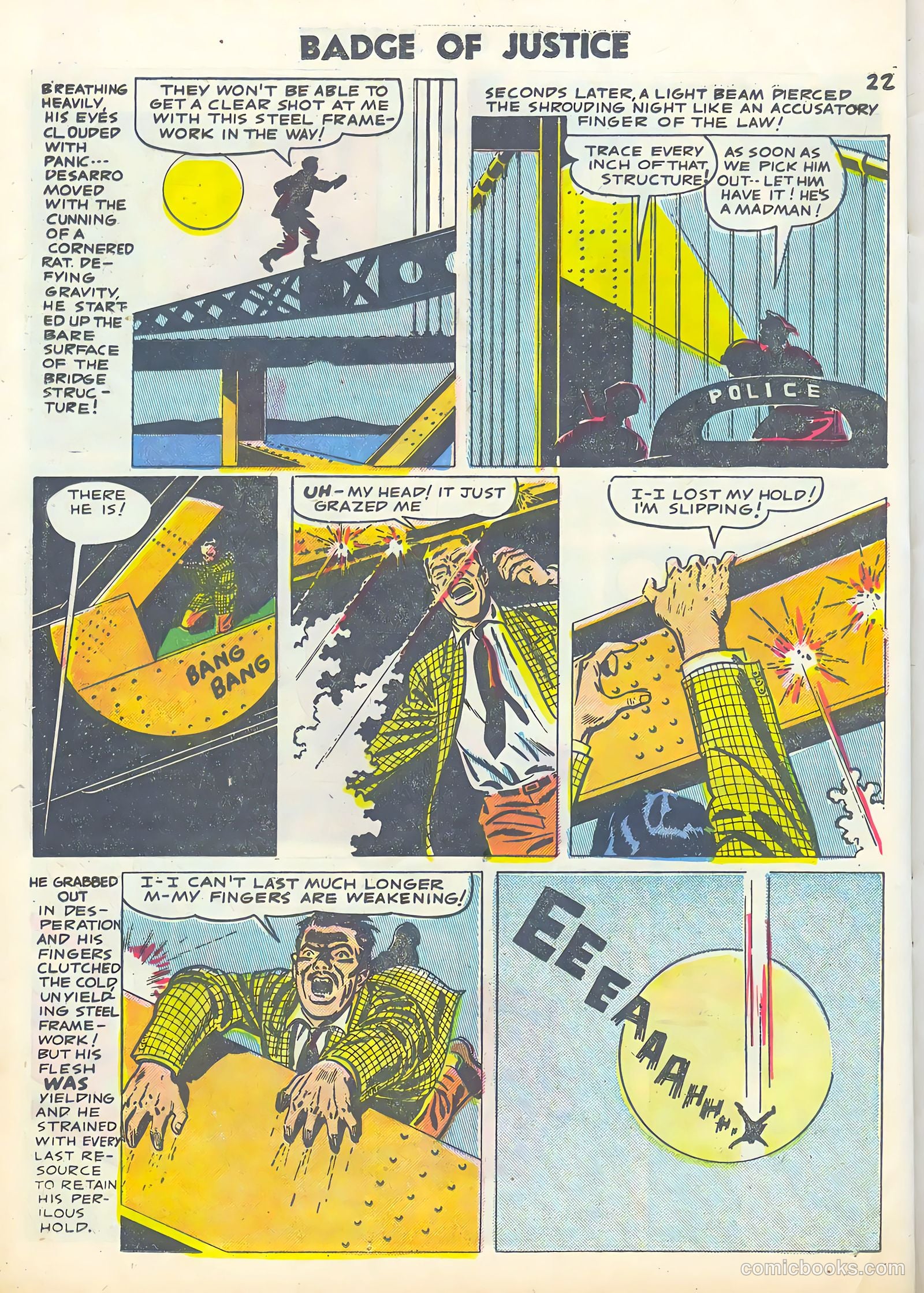
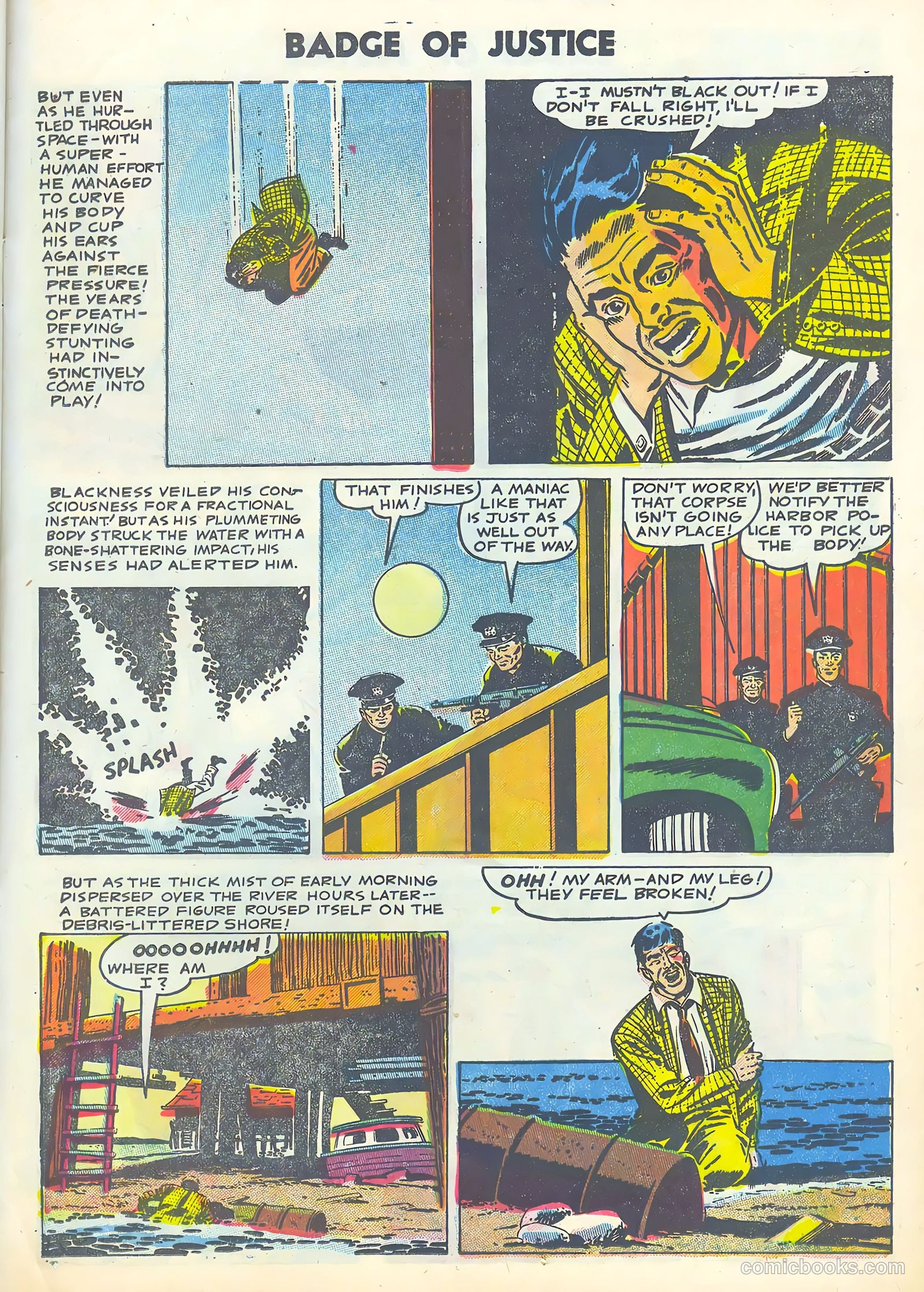
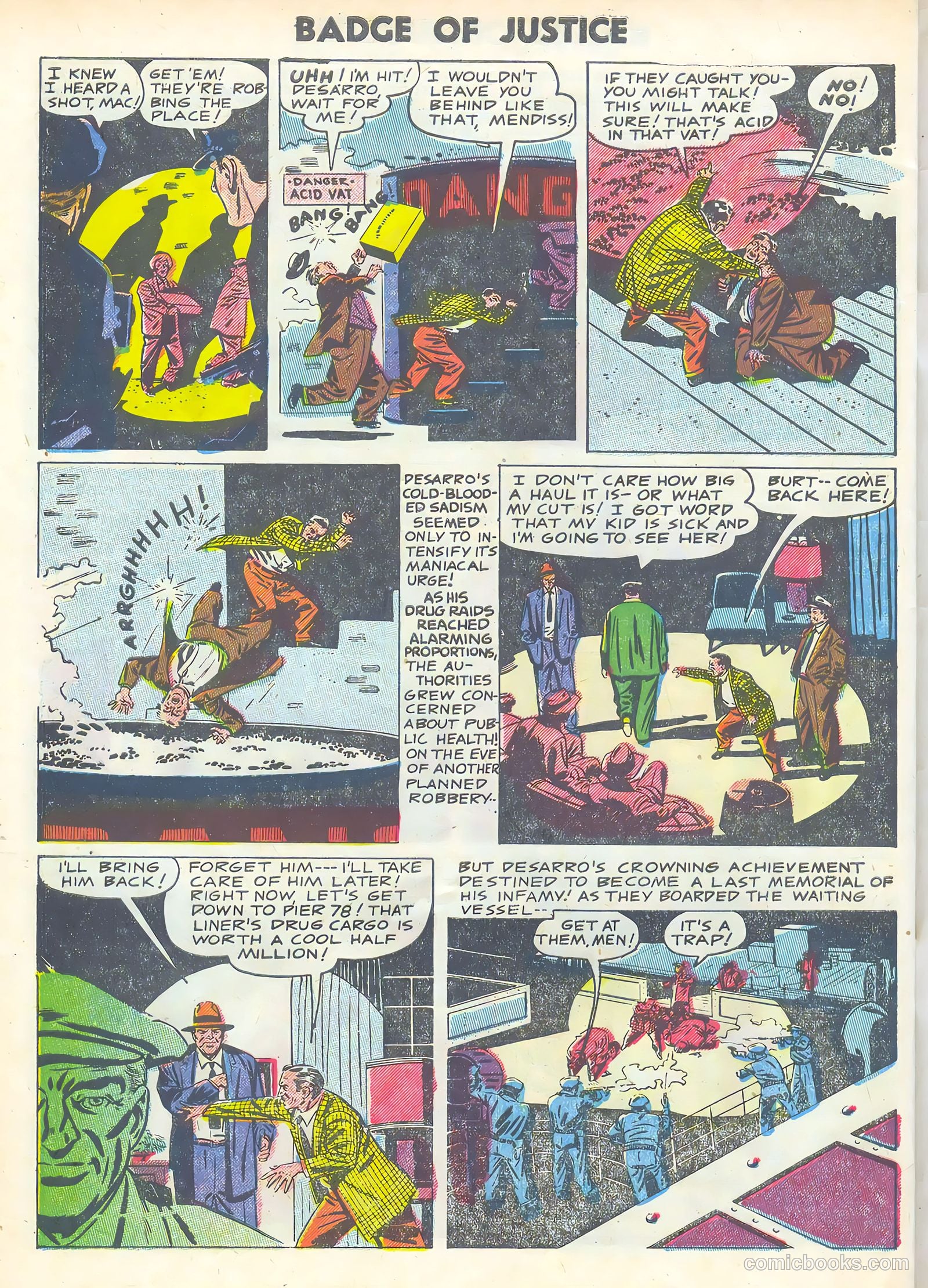
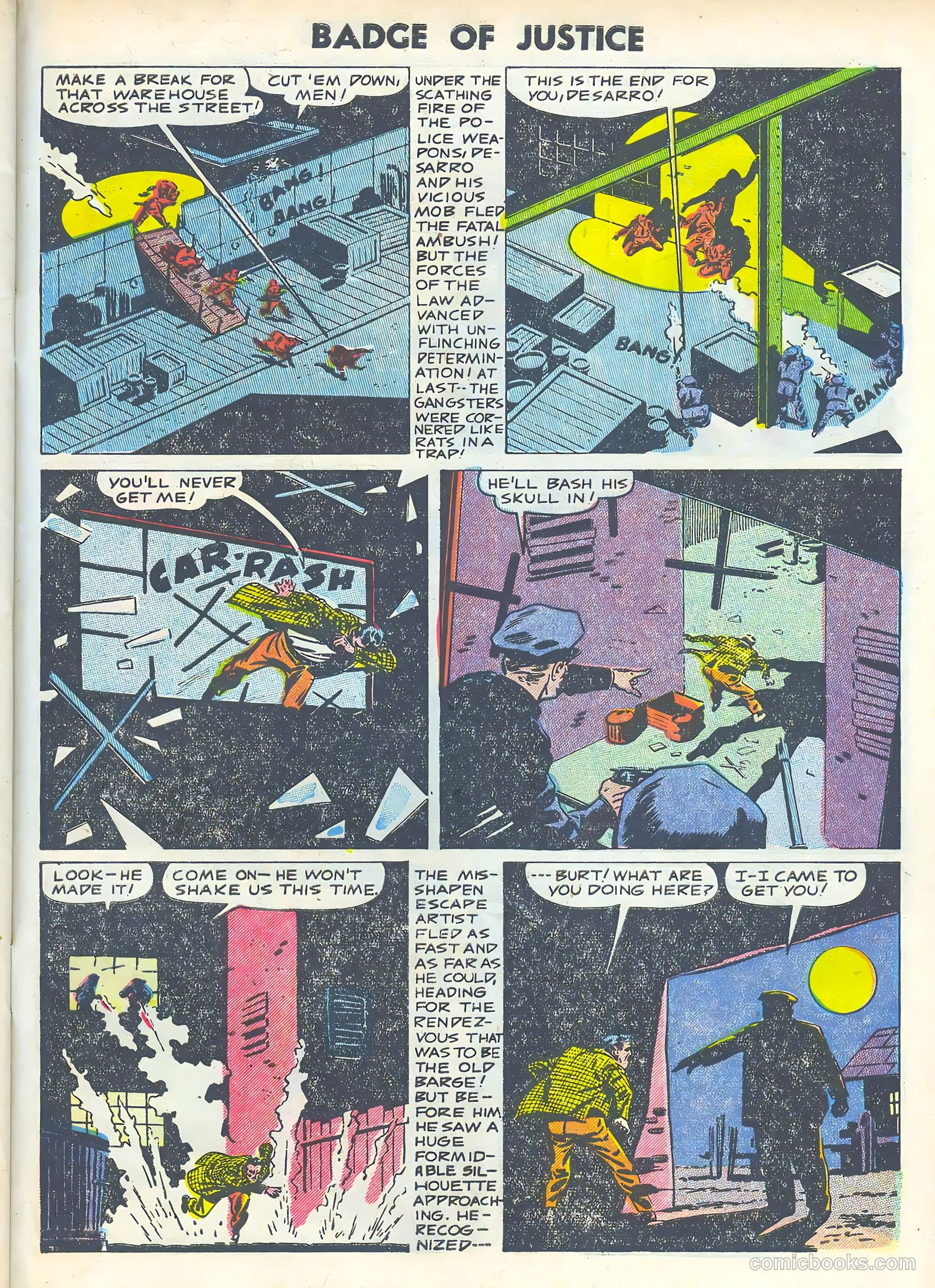
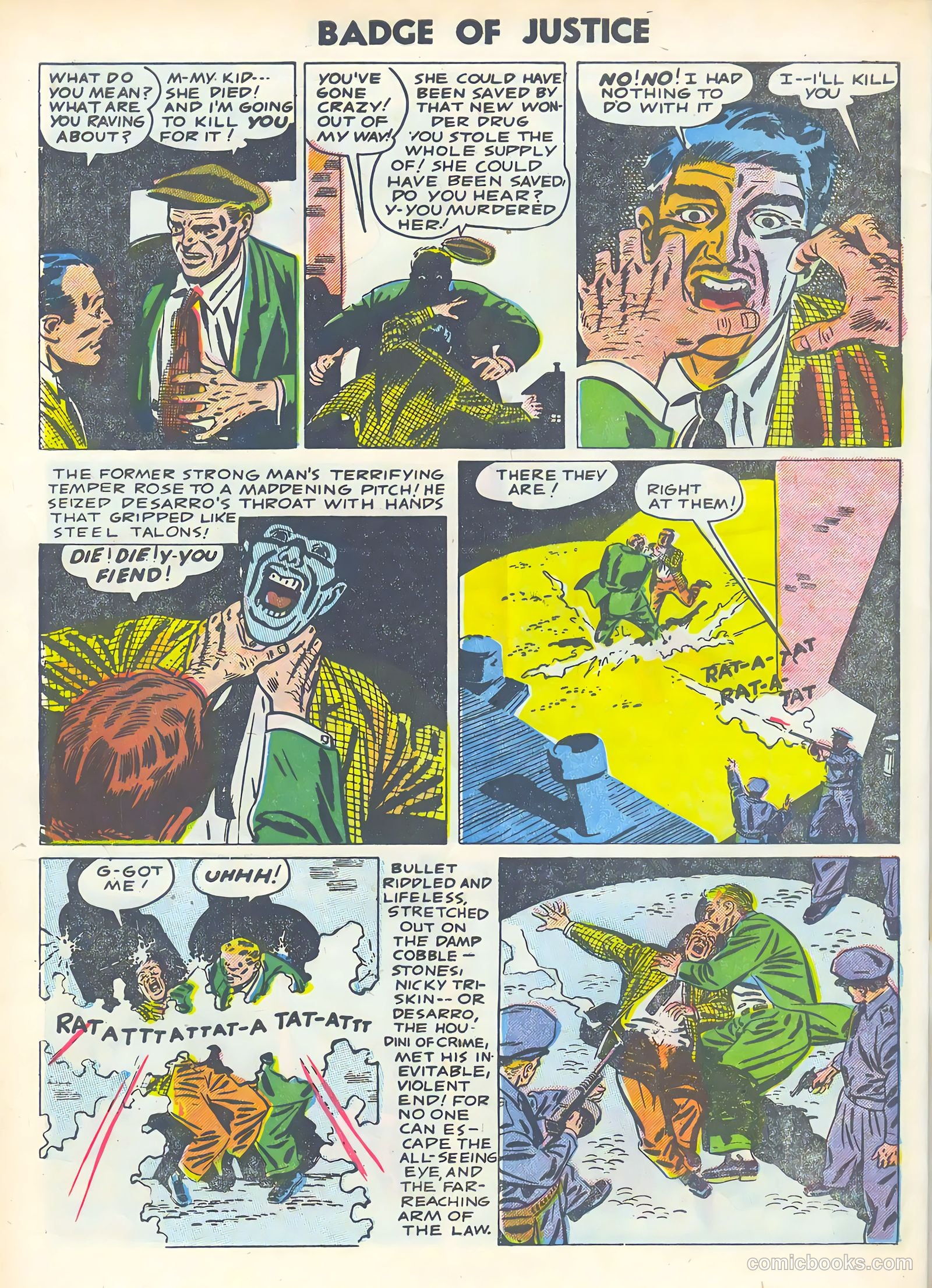
The Houdini of Crime
13 pp · crime

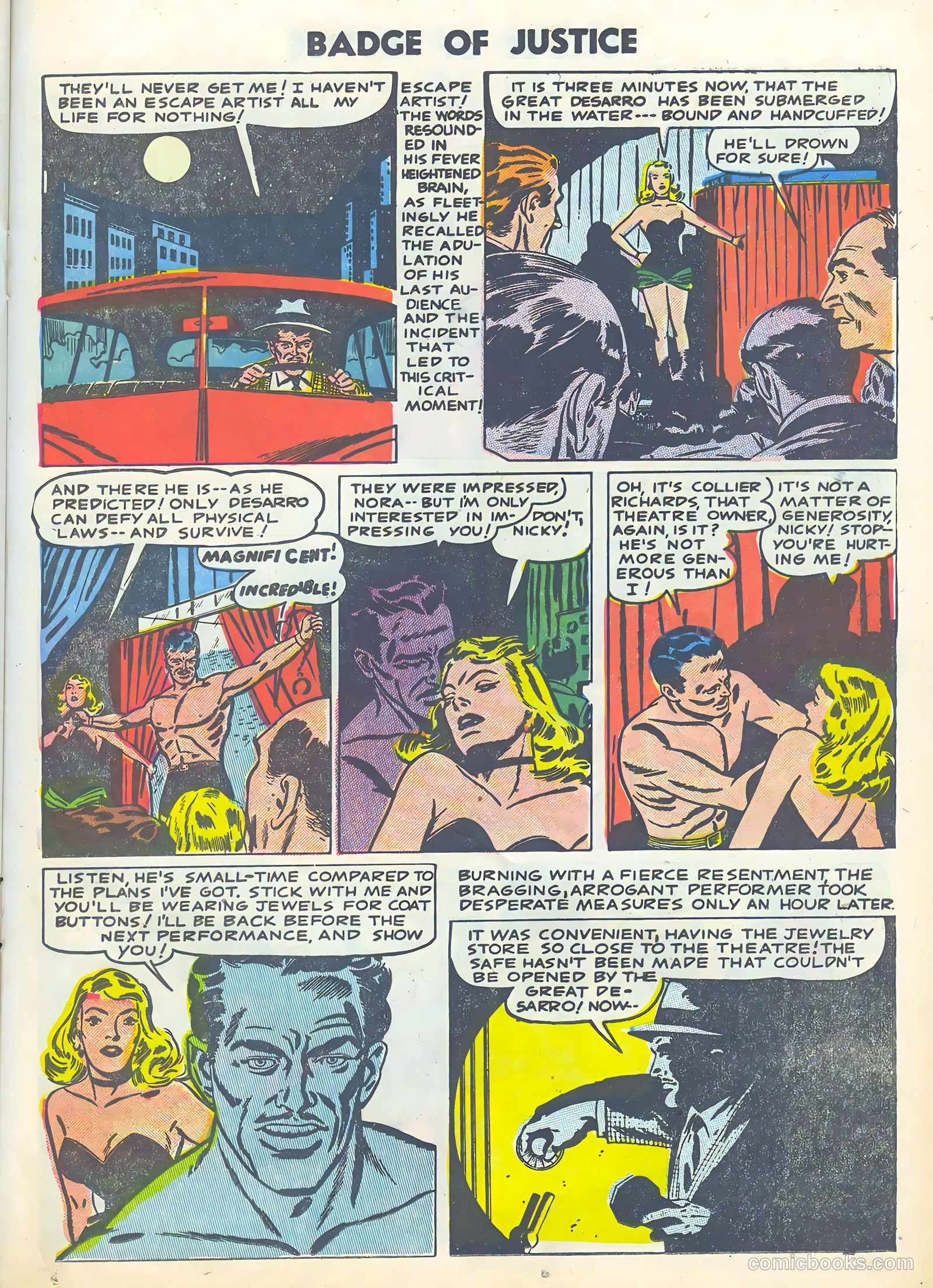
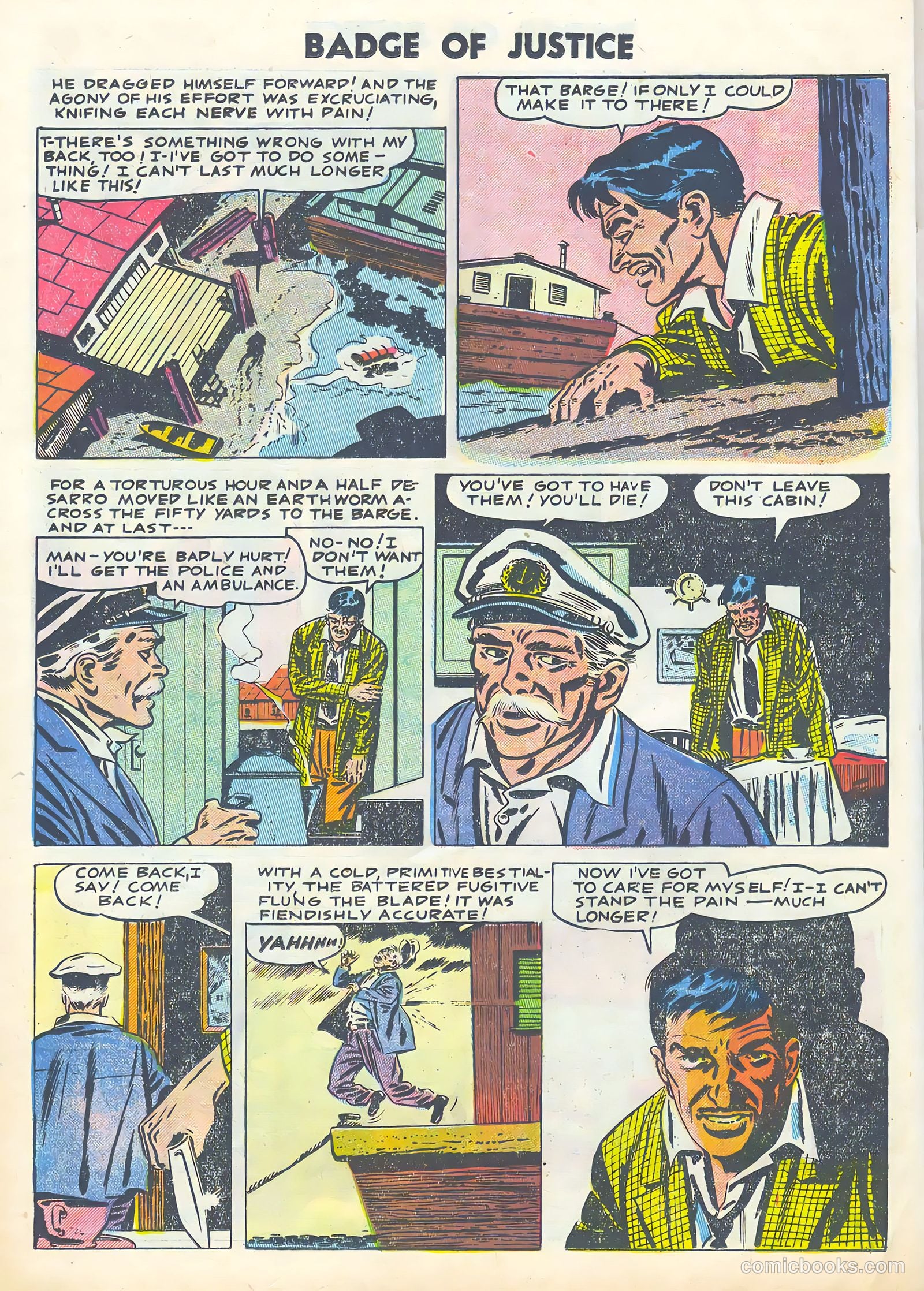
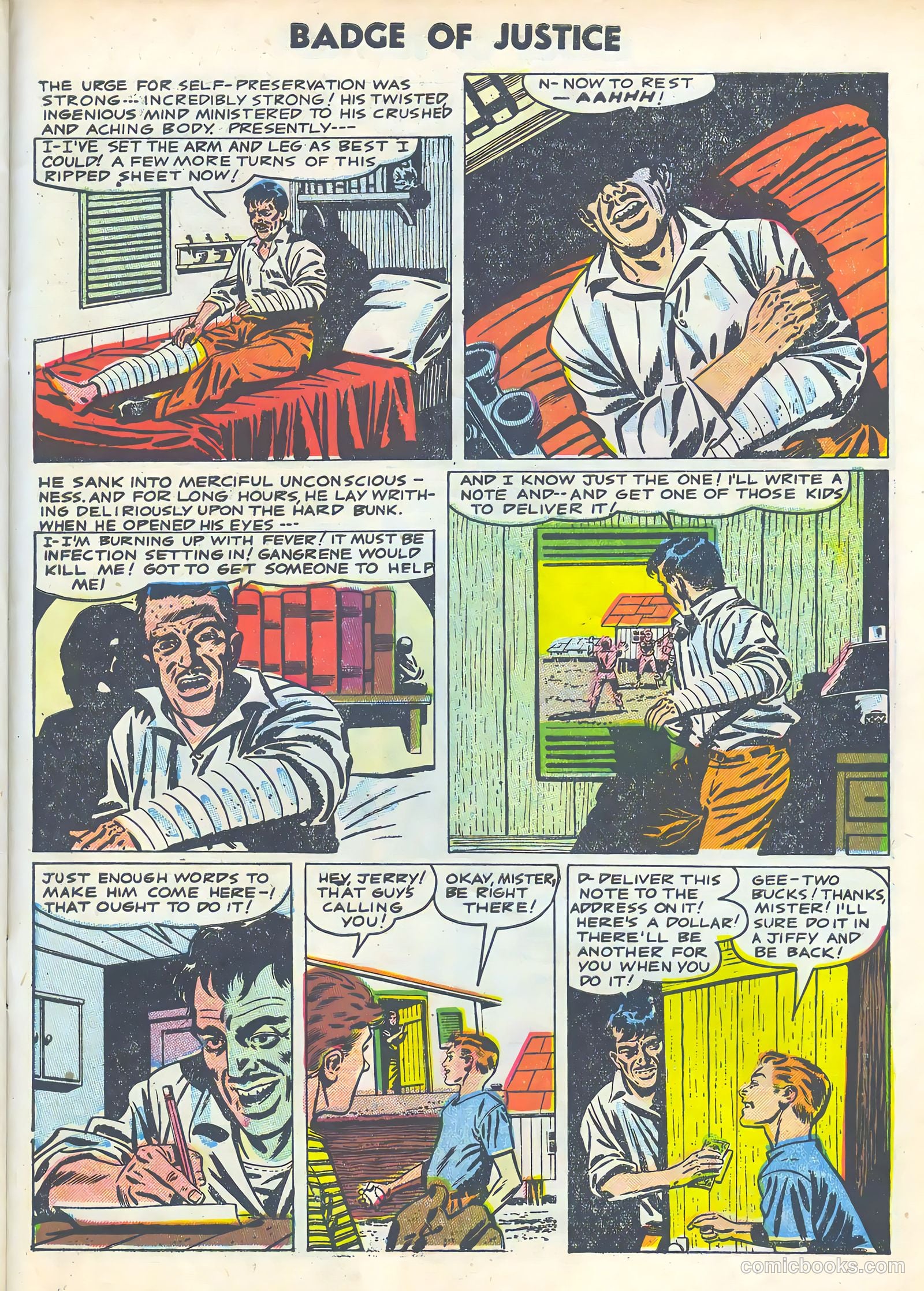
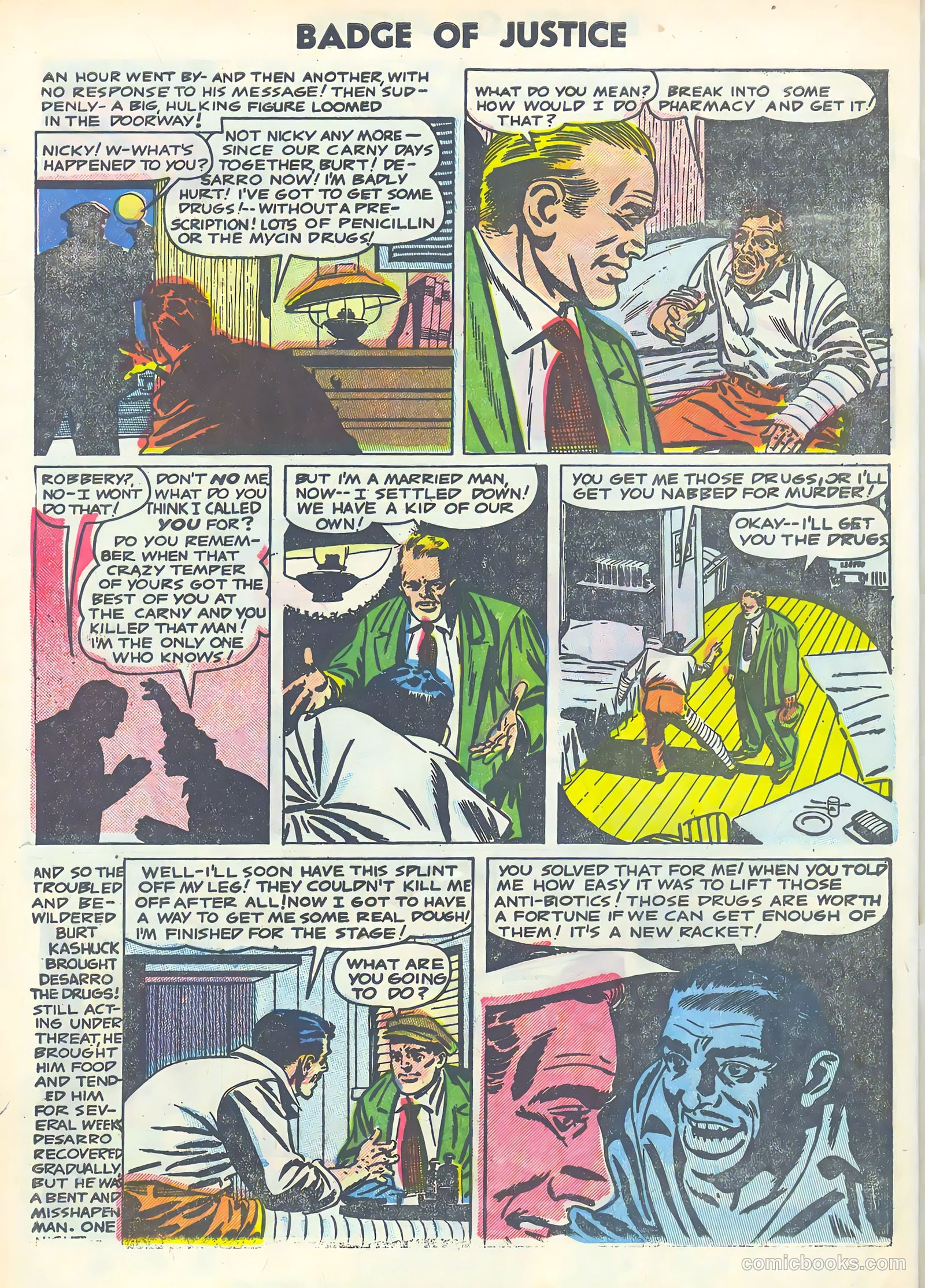
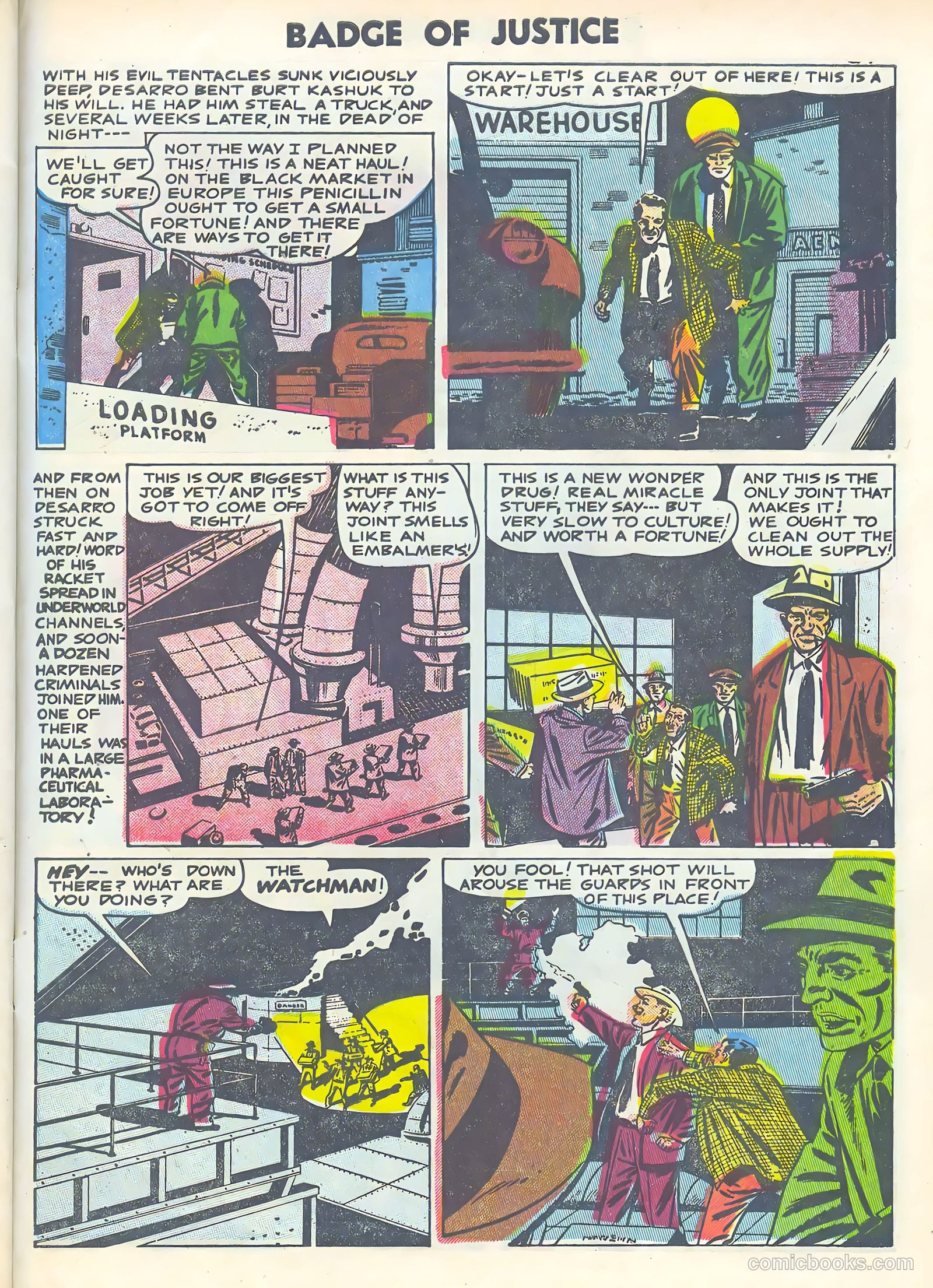
In a high-stakes chase that unfolds across a city’s streets and a river bridge, the elusive criminal Desarro—known as the "Houdini of Crime"—evades capture through a series of daring escapes, including a plunge into the river after a near-fatal fall. As police close in, Desarro’s desperate flight leads him to a barge, where he seeks refuge but is soon confronted by a lone man who may not be the savior he appears.

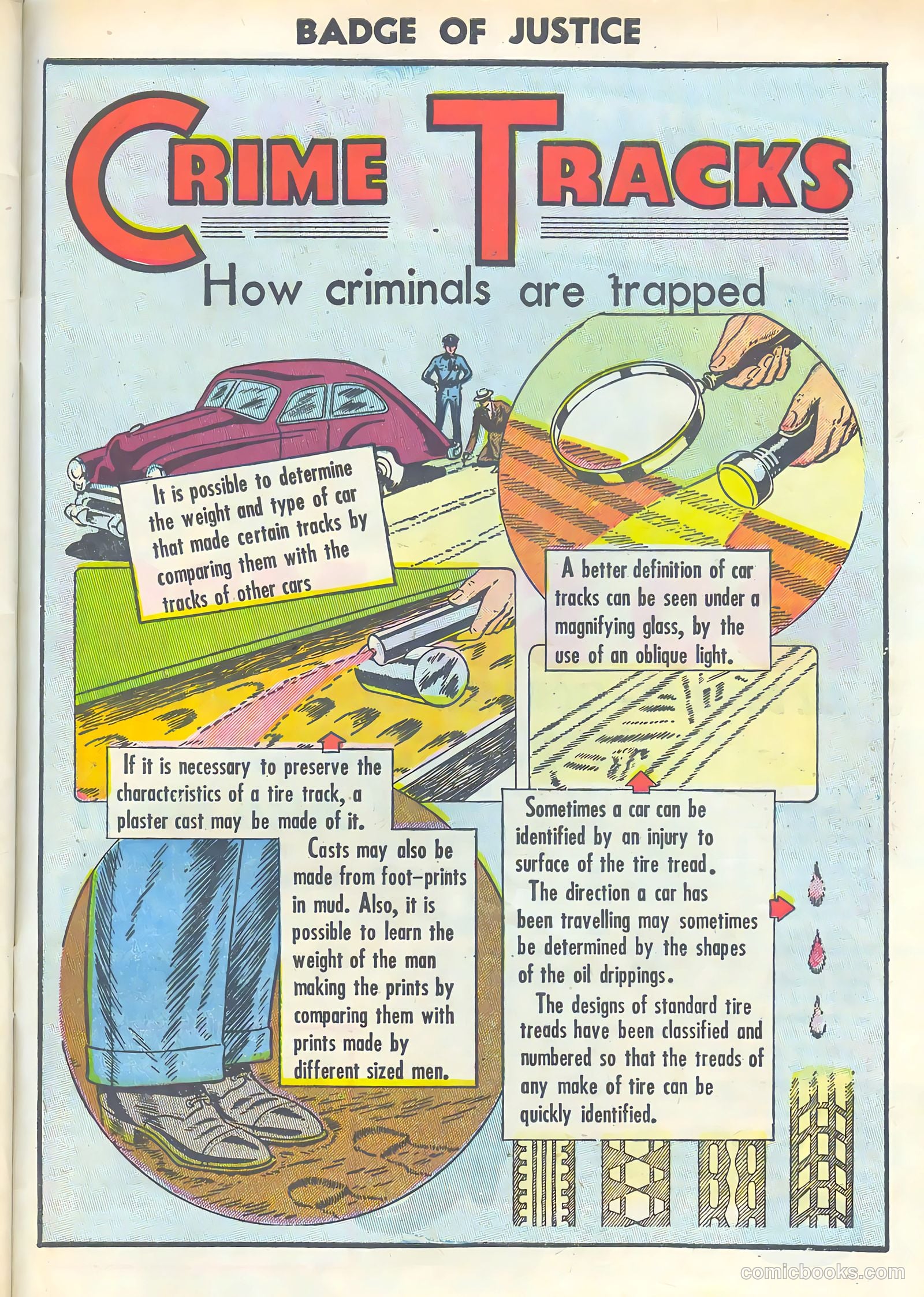
How Criminals Are Trapped
1 pp · non-fiction; crime

In this non-fiction feature from Badge of Justice #22, readers learn the forensic techniques used to identify and track criminals through physical evidence like tire tracks and footprints. By examining details such as tread patterns, weight impressions, and irregularities in tire surfaces, investigators can link vehicles and individuals to crime scenes. The story demonstrates how careful observation and scientific methods—like making plaster casts or using magnification—help solve cases without relying on guesswork.

Badge of Justice #22 (1955) — page 1 of 32
1 / 32
Badge of Justice #22 (1955) — page 2 of 32
2 / 32
Badge of Justice #22 (1955) — page 3 of 32
3 / 32
Badge of Justice #22 (1955) — page 4 of 32
4 / 32
Badge of Justice #22 (1955) — page 5 of 32
5 / 32
Badge of Justice #22 (1955) — page 6 of 32
6 / 32
Badge of Justice #22 (1955) — page 7 of 32
7 / 32
Badge of Justice #22 (1955) — page 8 of 32
8 / 32
Badge of Justice #22 (1955) — page 9 of 32
9 / 32
Badge of Justice #22 (1955) — page 10 of 32
10 / 32
Badge of Justice #22 (1955) — page 11 of 32
11 / 32
Badge of Justice #22 (1955) — page 12 of 32
12 / 32
Badge of Justice #22 (1955) — page 13 of 32
13 / 32
Badge of Justice #22 (1955) — page 14 of 32
14 / 32
Badge of Justice #22 (1955) — page 15 of 32
15 / 32
Badge of Justice #22 (1955) — page 16 of 32
16 / 32
Badge of Justice #22 (1955) — page 17 of 32
17 / 32
Badge of Justice #22 (1955) — page 18 of 32
18 / 32
Badge of Justice #22 (1955) — page 19 of 32
19 / 32
Badge of Justice #22 (1955) — page 20 of 32
20 / 32
Badge of Justice #22 (1955) — page 21 of 32
21 / 32
Badge of Justice #22 (1955) — page 22 of 32
22 / 32
Badge of Justice #22 (1955) — page 23 of 32
23 / 32
Badge of Justice #22 (1955) — page 24 of 32
24 / 32
Badge of Justice #22 (1955) — page 25 of 32
25 / 32
Badge of Justice #22 (1955) — page 26 of 32
26 / 32
Badge of Justice #22 (1955) — page 27 of 32
27 / 32
Badge of Justice #22 (1955) — page 28 of 32
28 / 32
Badge of Justice #22 (1955) — page 29 of 32
29 / 32
Badge of Justice #22 (1955) — page 30 of 32
30 / 32
Badge of Justice #22 (1955) — page 31 of 32
31 / 32
Badge of Justice #22 (1955) — page 32 of 32
32 / 32