ComicBooks.com Register / Loginit's free!
HomeA Man Named Stevenson#nnRead

★ ComicBooks.com Reading Room

A Man Named Stevenson #nn (1952)

Democratic National Committee · 1952 · 20 pages

Free to read · restored edition by ComicBooks.com · Issue details →
A Man Named Stevenson #nn (1952) — page 1 of 20
1 / 20
A Man Named Stevenson #nn (1952) — page 2 of 20
2 / 20
A Man Named Stevenson #nn (1952) — page 3 of 20
3 / 20
A Man Named Stevenson #nn (1952) — page 4 of 20
4 / 20
A Man Named Stevenson #nn (1952) — page 5 of 20
5 / 20
A Man Named Stevenson #nn (1952) — page 6 of 20
6 / 20
A Man Named Stevenson #nn (1952) — page 7 of 20
7 / 20
A Man Named Stevenson #nn (1952) — page 8 of 20
8 / 20
A Man Named Stevenson #nn (1952) — page 9 of 20
9 / 20
A Man Named Stevenson #nn (1952) — page 10 of 20
10 / 20
A Man Named Stevenson #nn (1952) — page 11 of 20
11 / 20
A Man Named Stevenson #nn (1952) — page 12 of 20
12 / 20
A Man Named Stevenson #nn (1952) — page 13 of 20
13 / 20
A Man Named Stevenson #nn (1952) — page 14 of 20
14 / 20
A Man Named Stevenson #nn (1952) — page 15 of 20
15 / 20
A Man Named Stevenson #nn (1952) — page 16 of 20
16 / 20
A Man Named Stevenson #nn (1952) — page 17 of 20
17 / 20
A Man Named Stevenson #nn (1952) — page 18 of 20
18 / 20
A Man Named Stevenson #nn (1952) — page 19 of 20
19 / 20
A Man Named Stevenson #nn (1952) — page 20 of 20
20 / 20

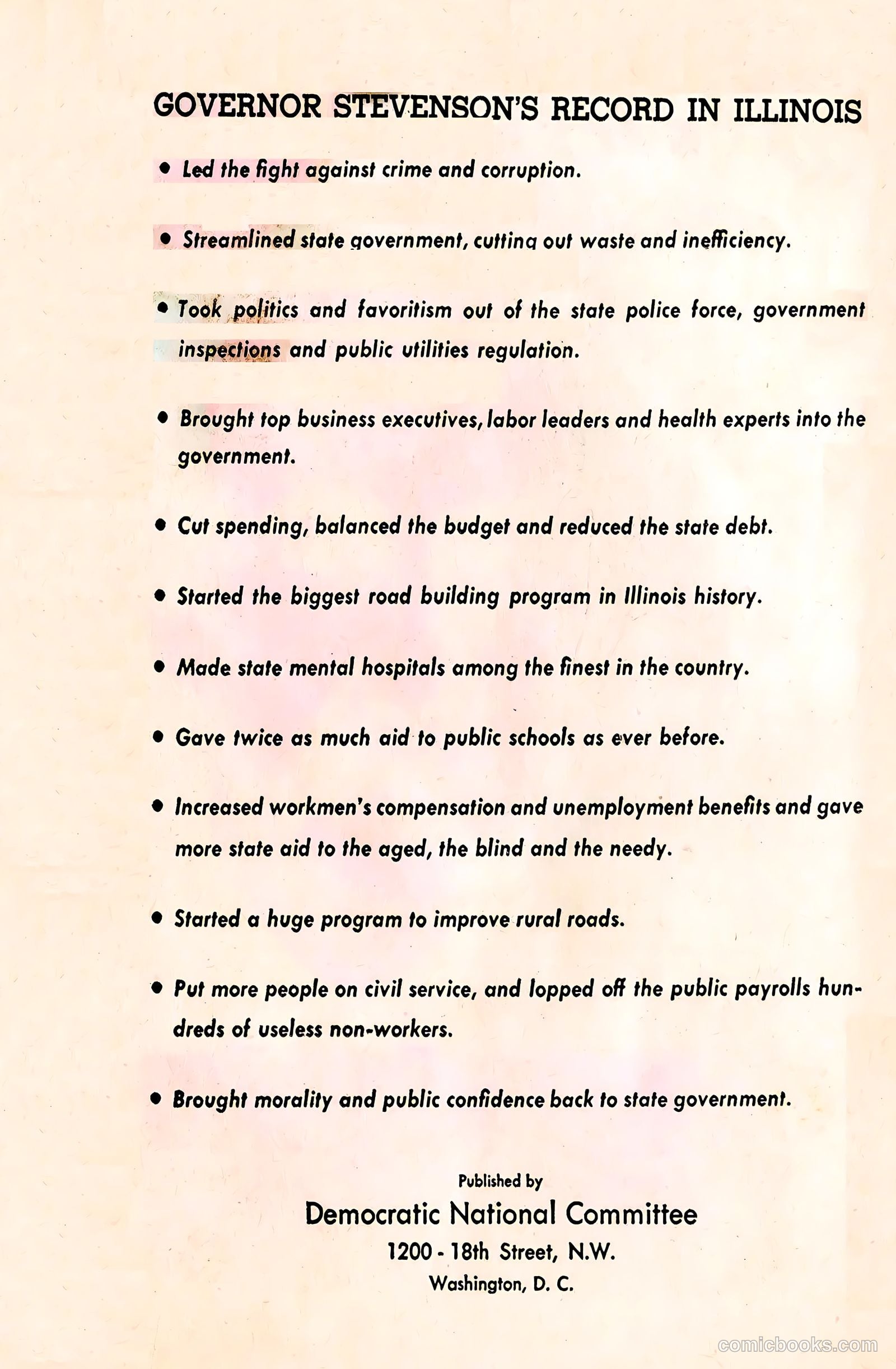
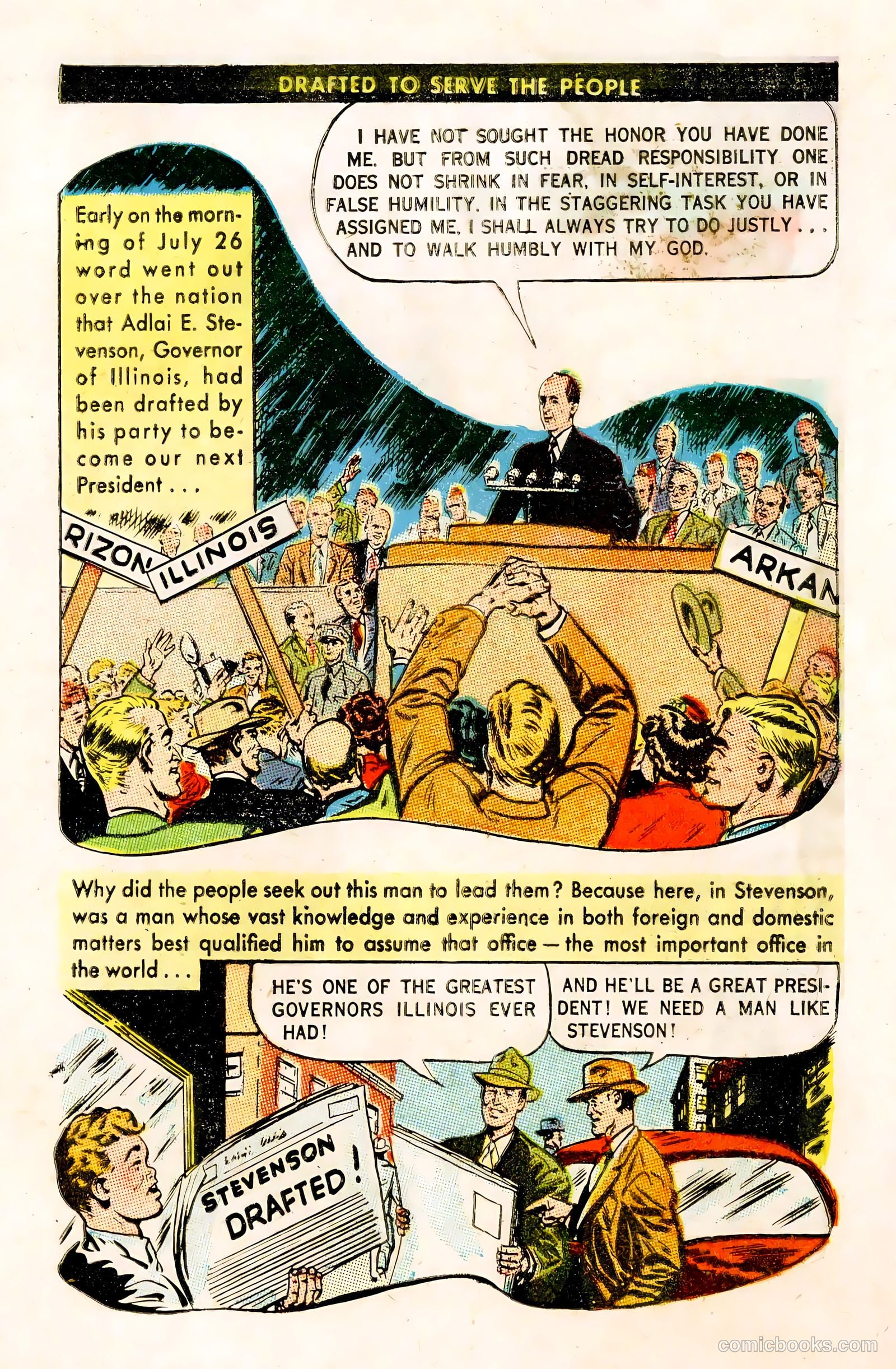
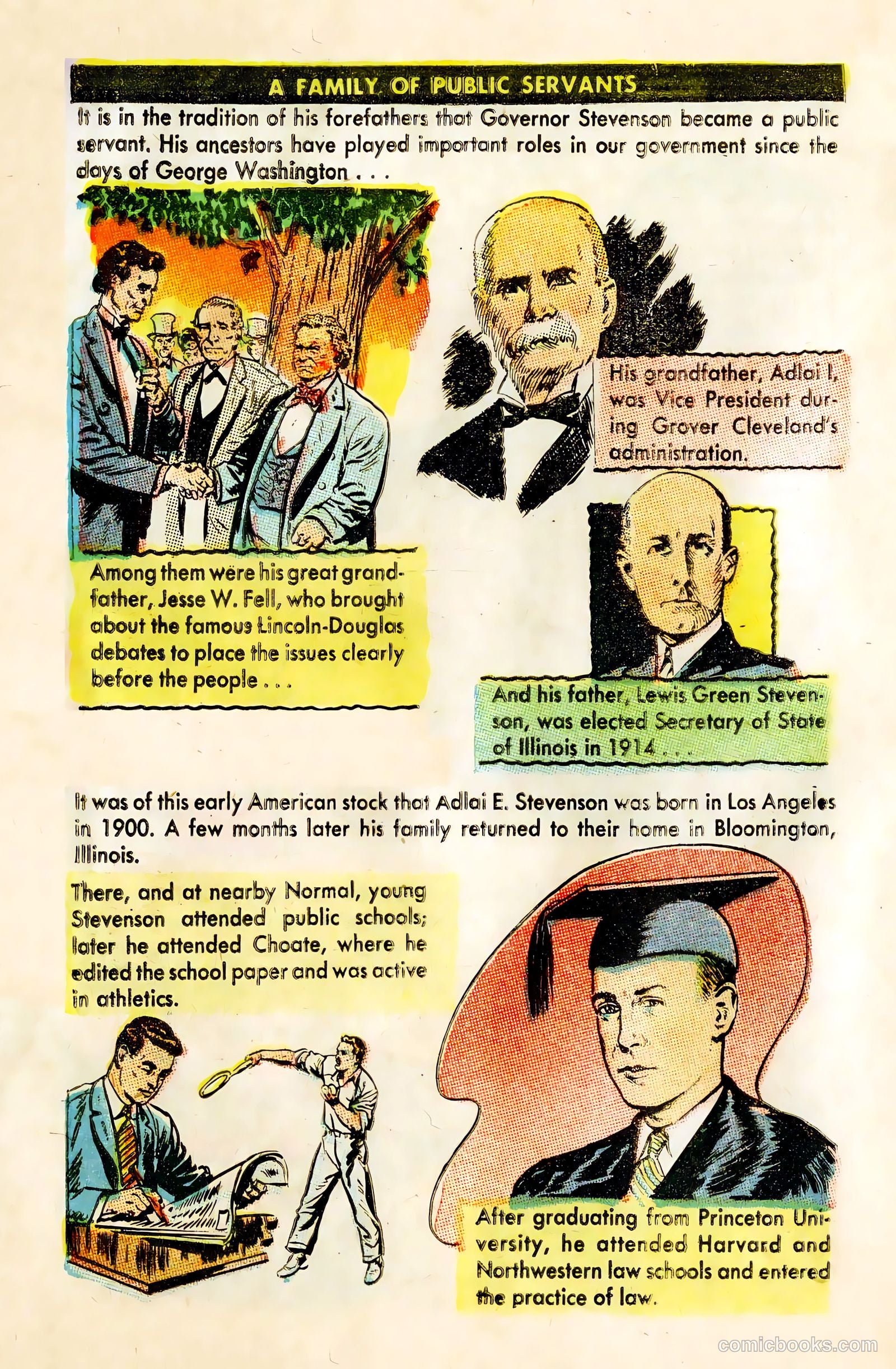
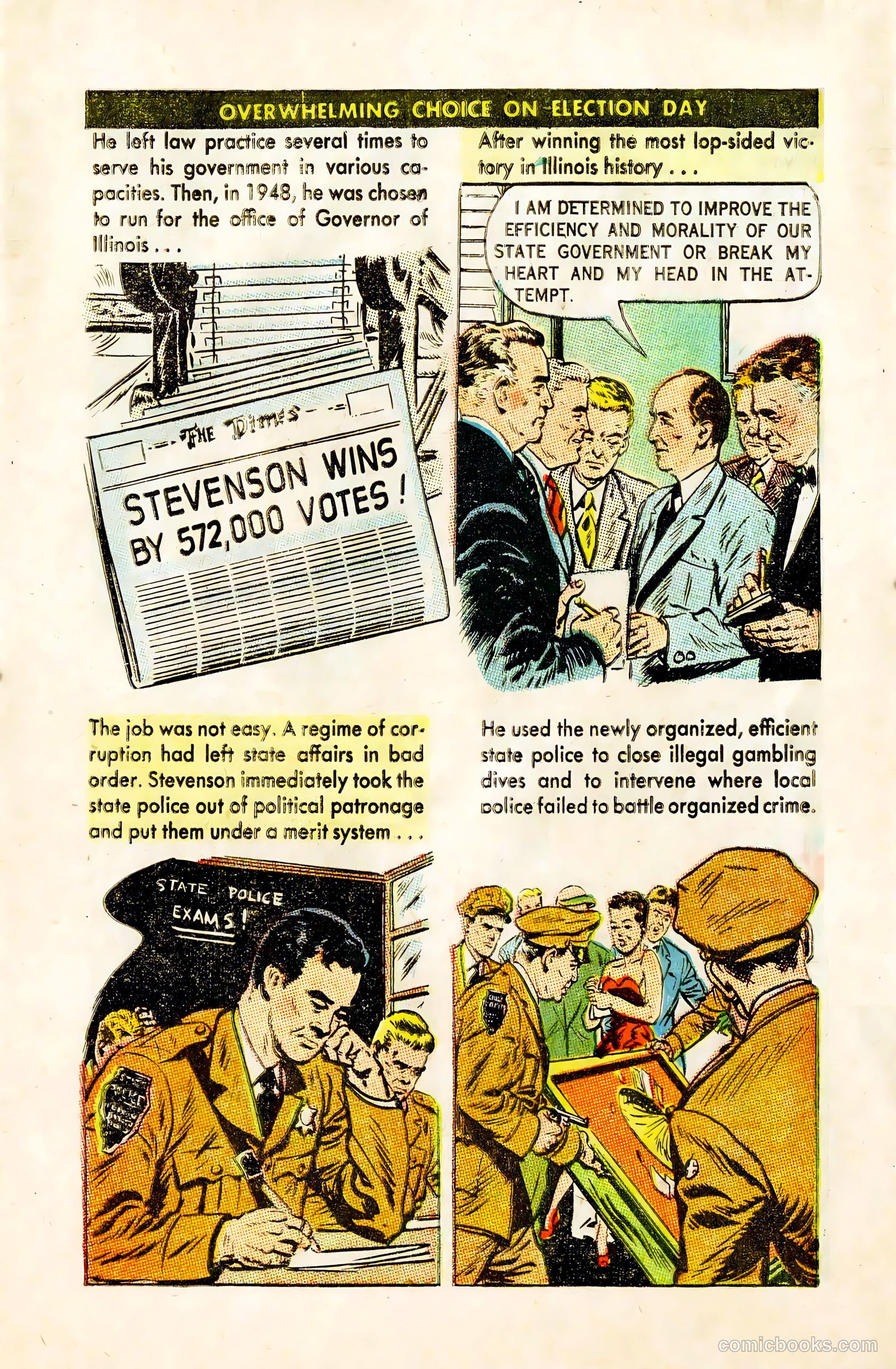
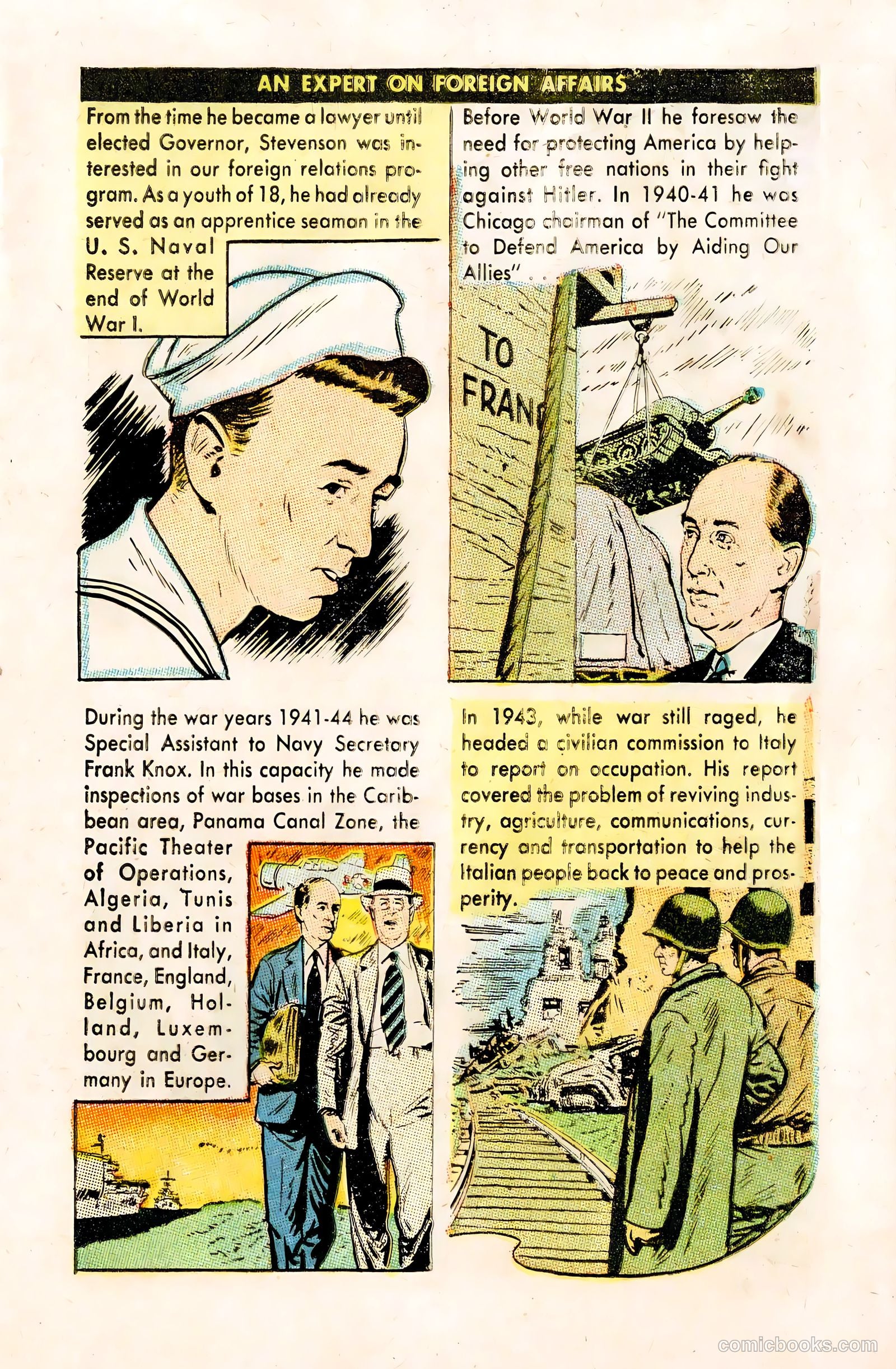
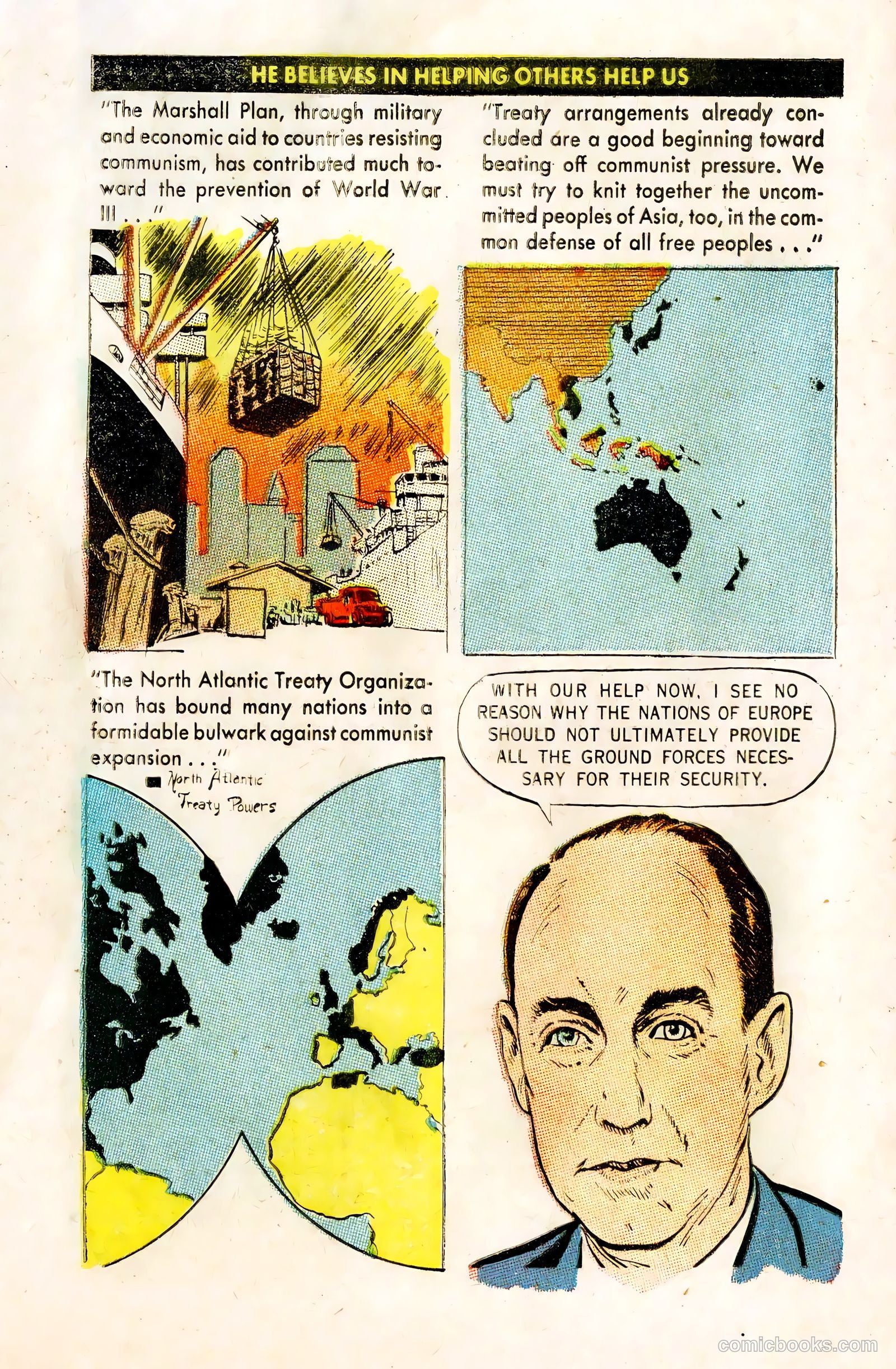
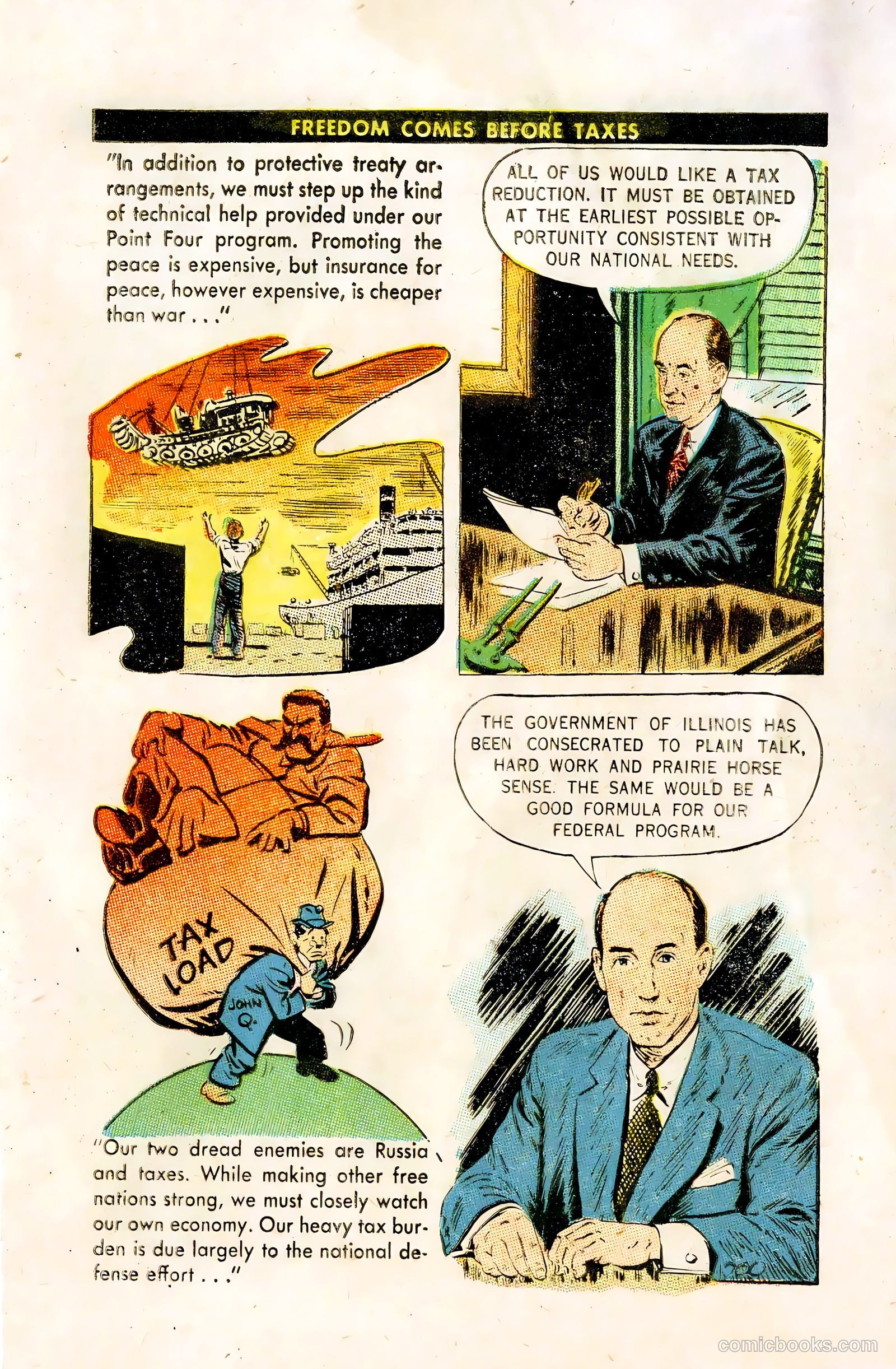
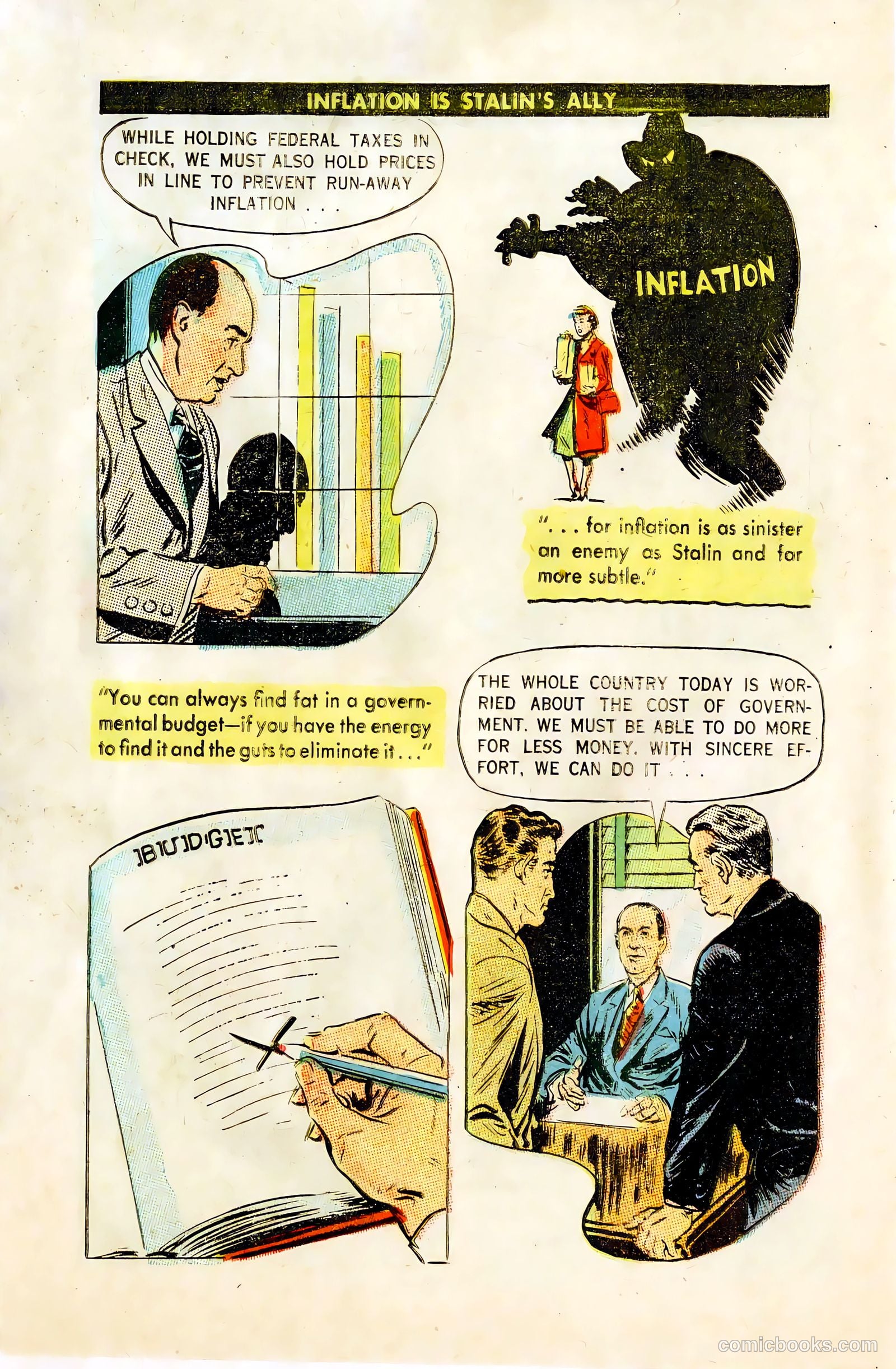
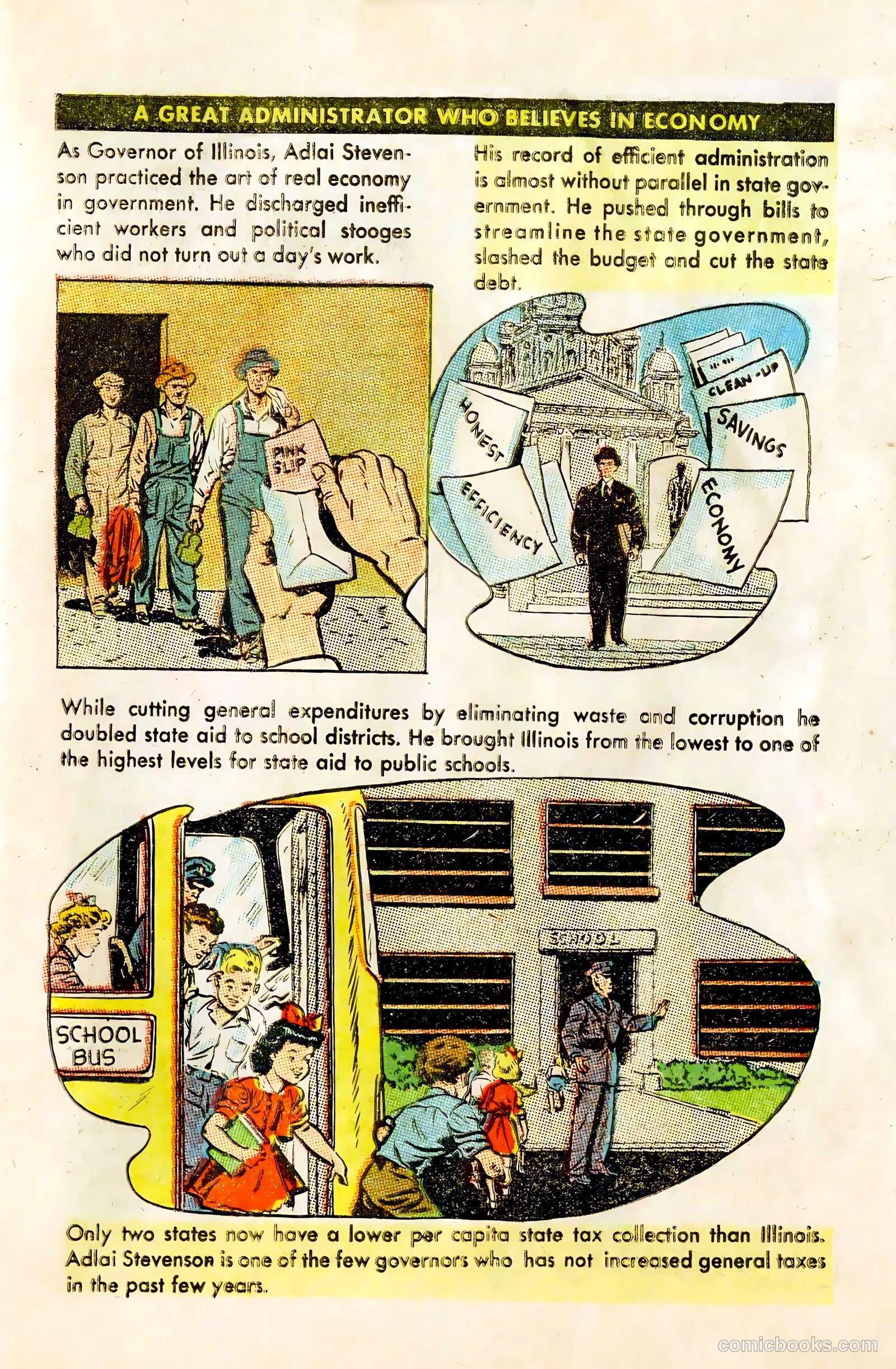
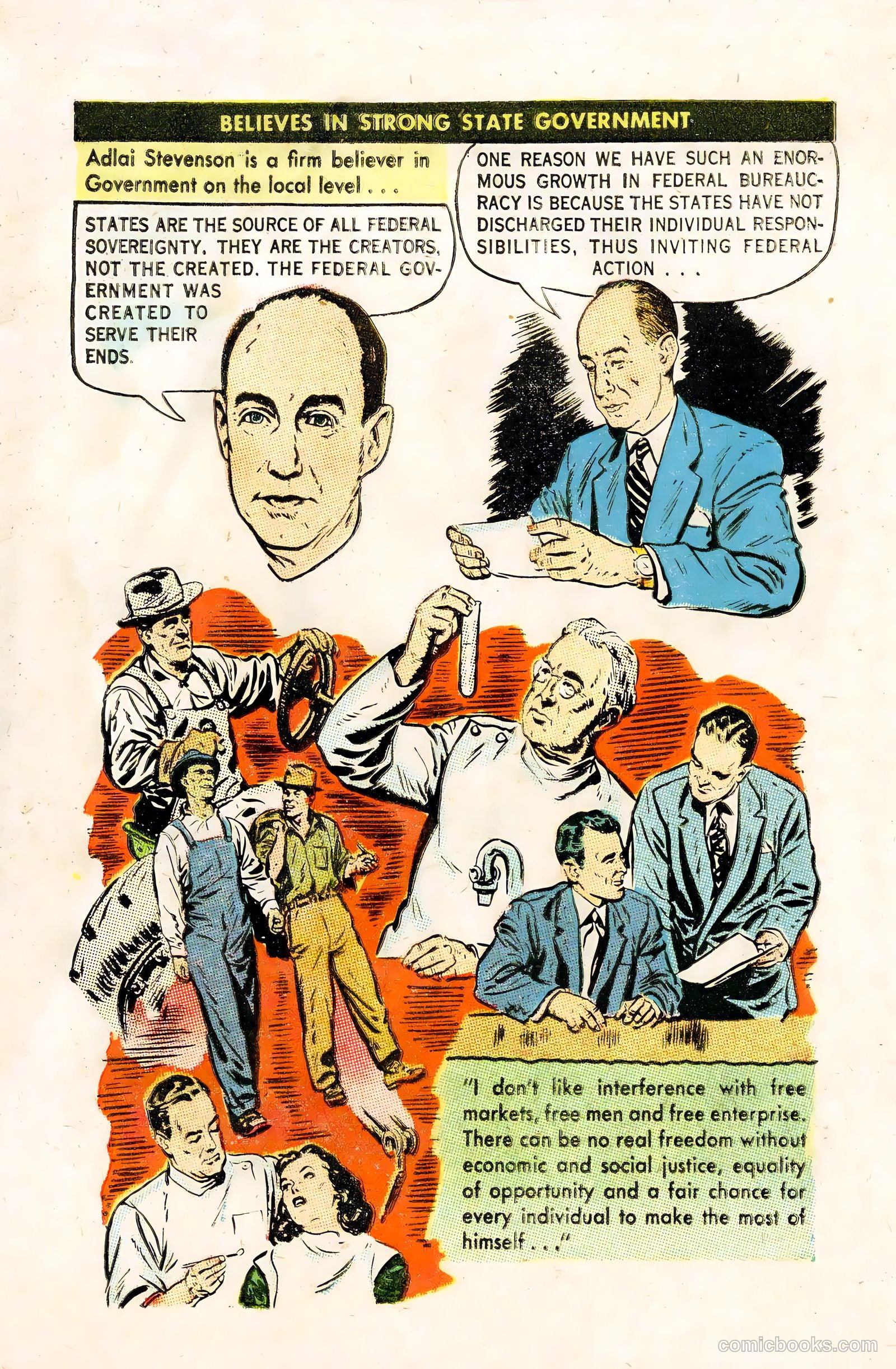
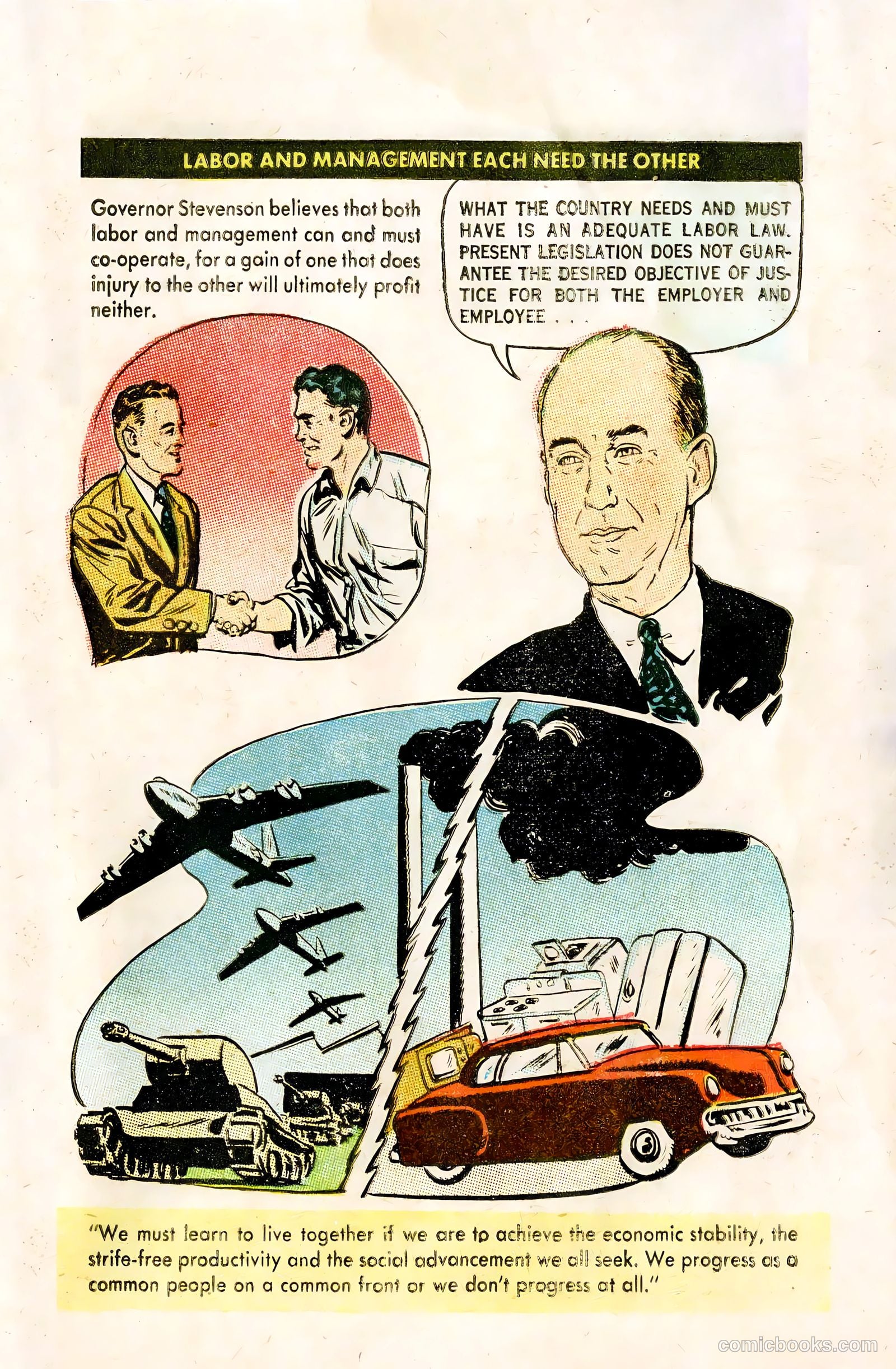
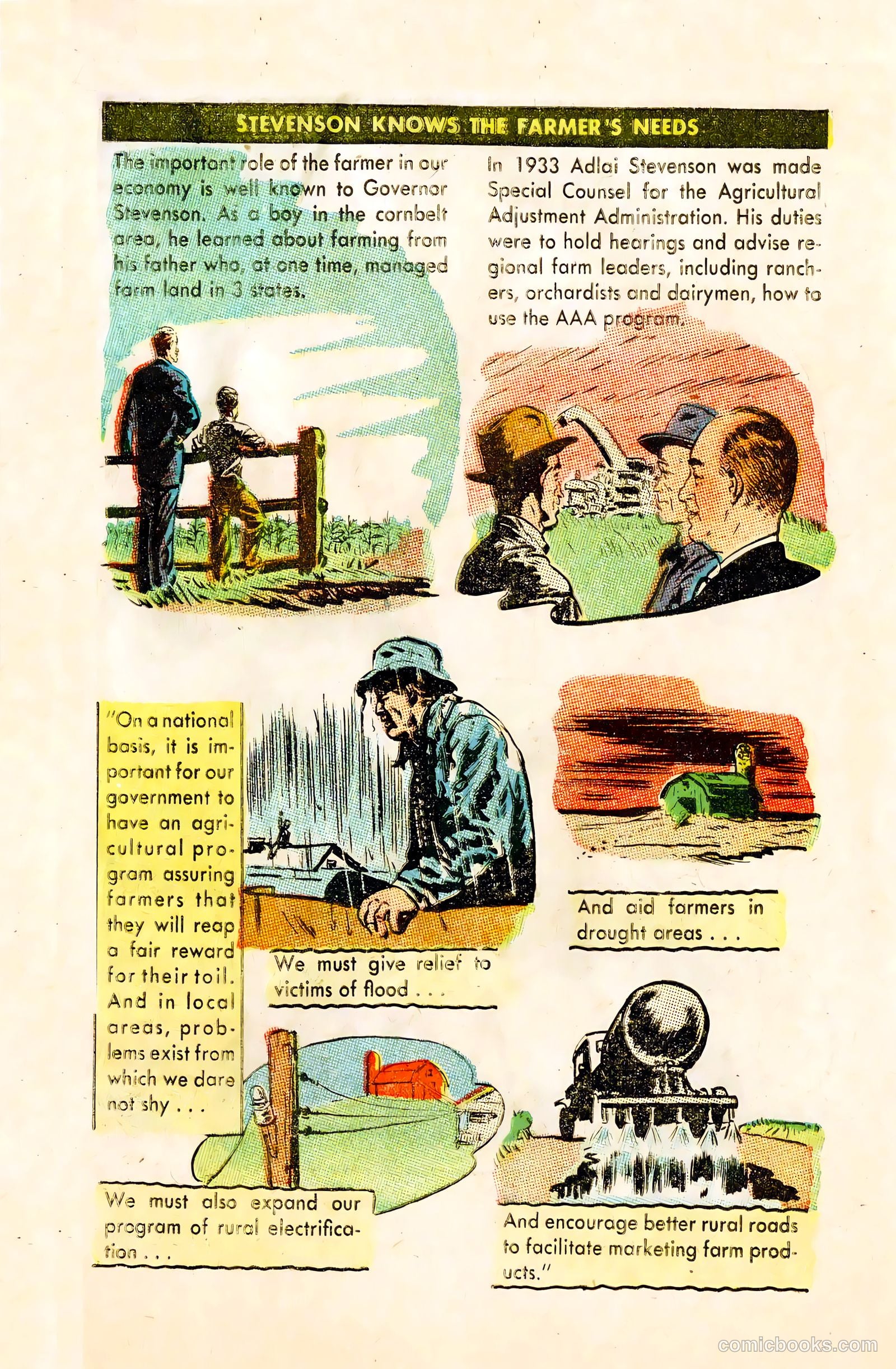
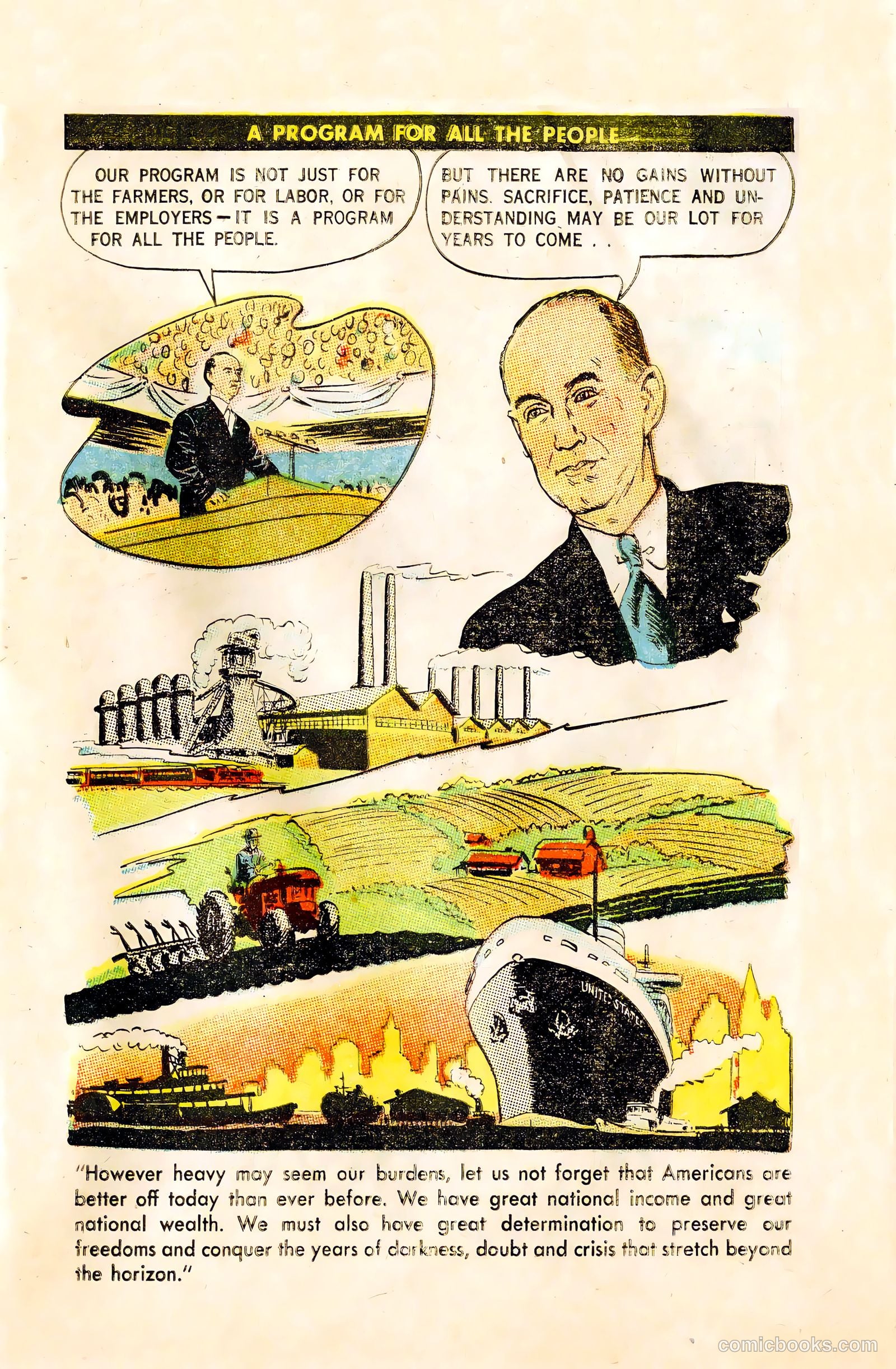
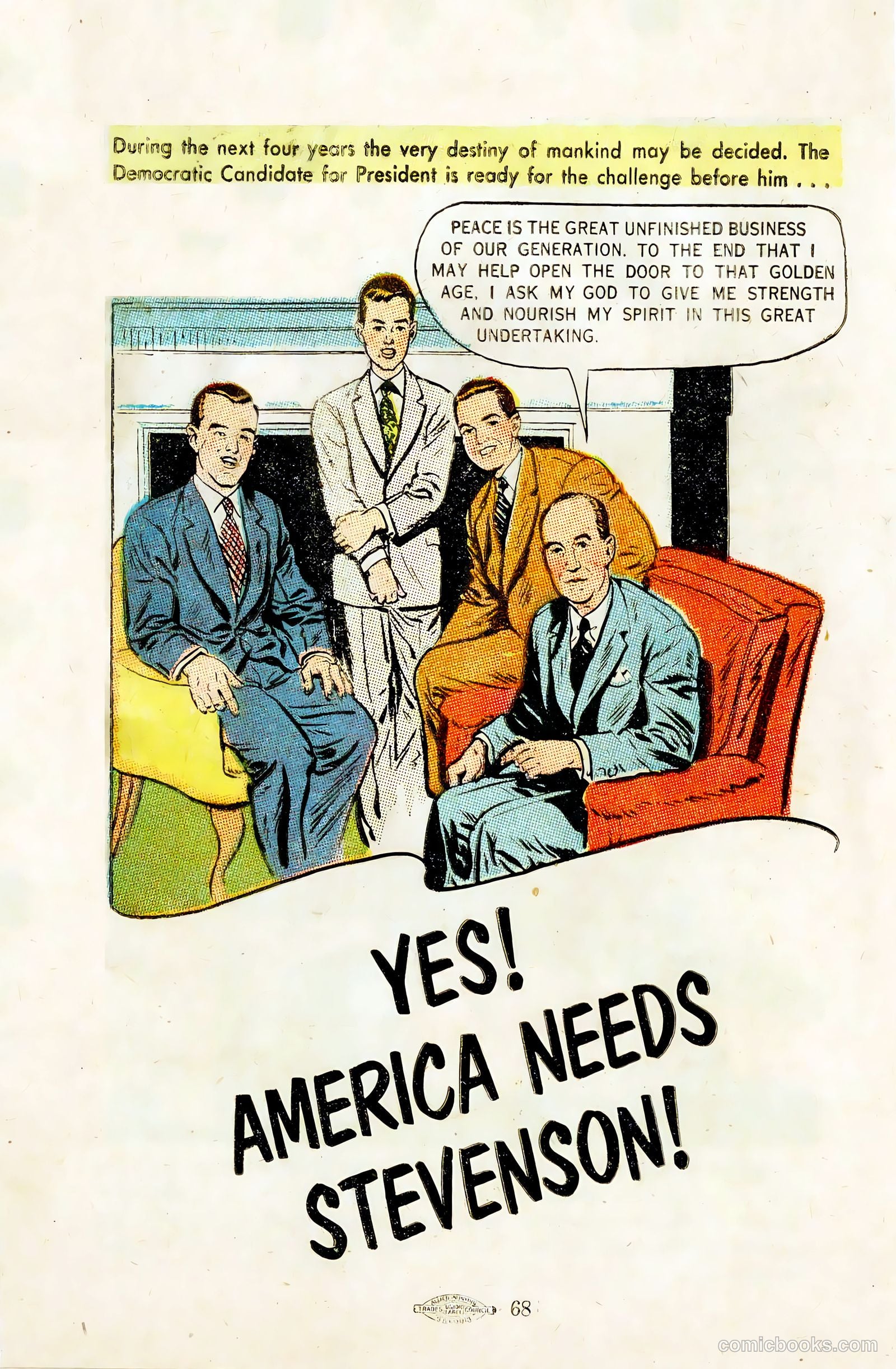
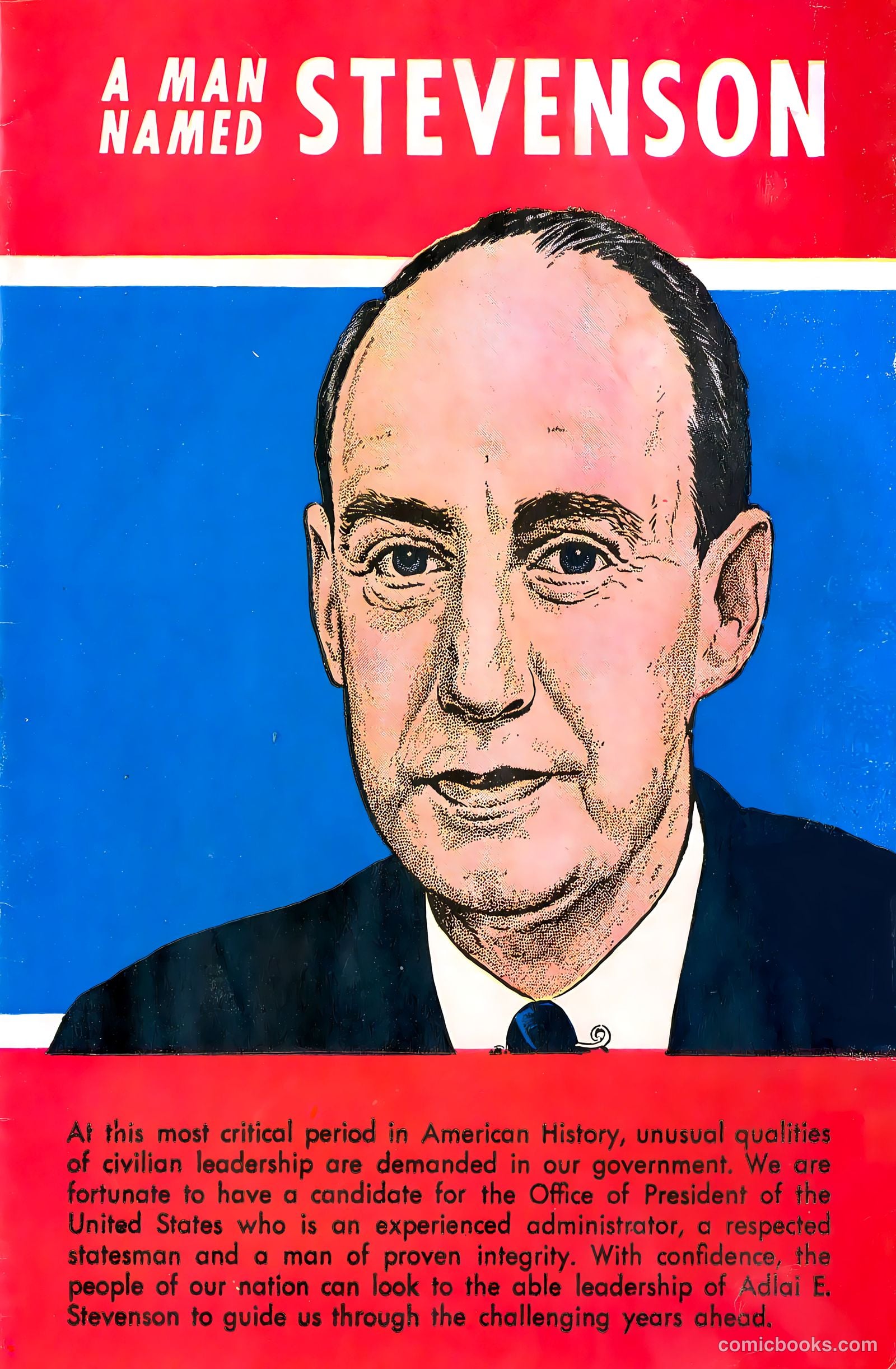
This Democratic National Committee campaign comic presents Adlai E. Stevenson as a qualified presidential candidate, detailing his background as an experienced administrator and statesman. The narrative highlights his expertise on foreign affairs, including his early service as an apprentice seaman in World War I, his role as Special Assistant to Navy Secretary Frank Knox during World War II with inspections across multiple theaters, and his 1943 civilian commission to Italy to report on postwar reconstruction. The comic emphasizes Stevenson's understanding of domestic issues, particularly his work as Special Counsel for the Agricultural Adjustment Administration in 1933, where he advised regional farm leaders on AAA programs, and his commitment to agricultural relief, rural electrification, and addressing farmers' needs. Additional sections address his economic policies, positioning him as capable of controlling inflation and reducing government spending while maintaining essential programs.

Restored edition © ComicBooks.com. Our digitization, remastering, and presentation are our own work.

See something wrong with this issue? Report it.