
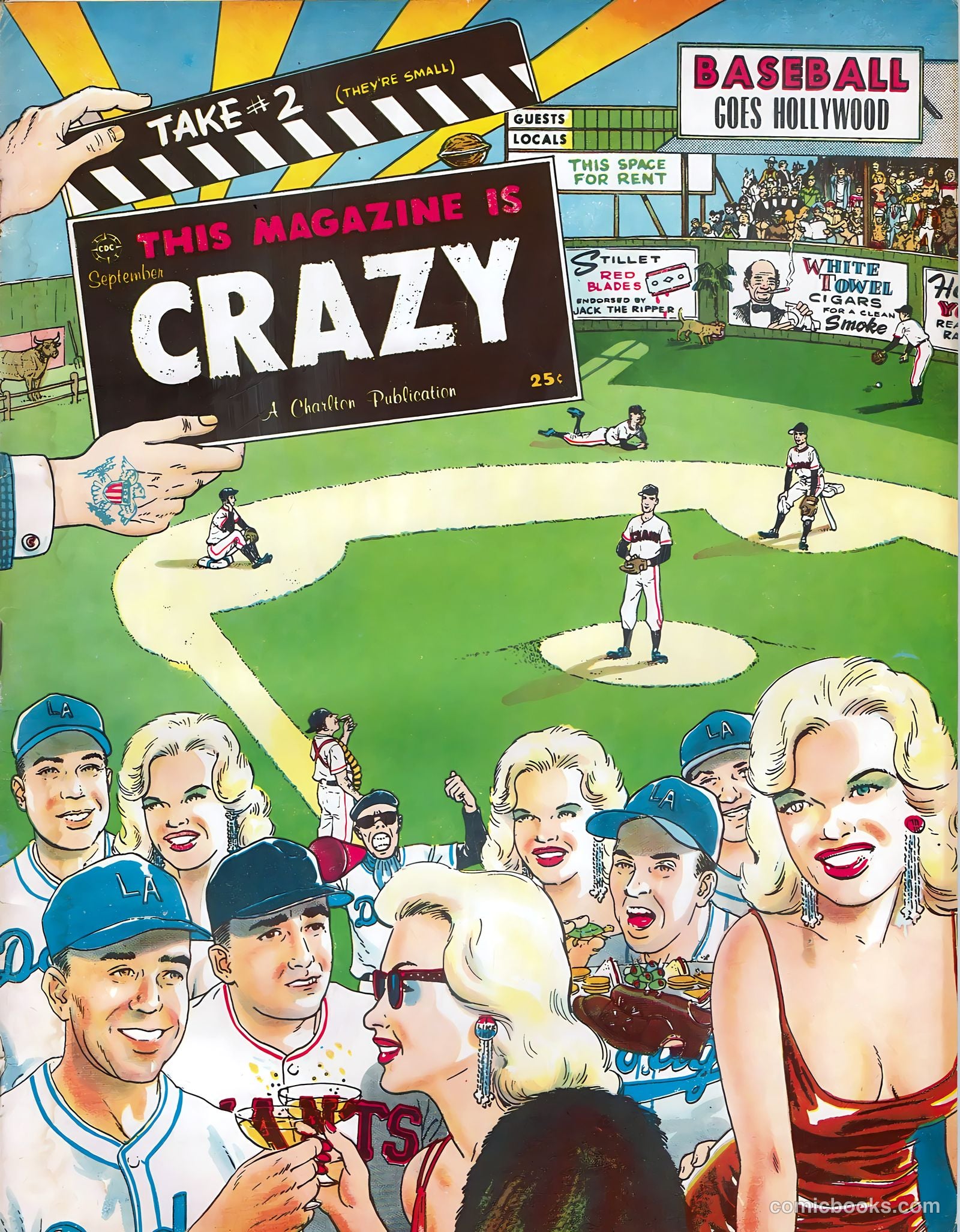
This Magazine Is Crazy #6
☆ Be the first to review + Add to your collection — Join freeAn anthology issue featuring "The Frozen One" by Realard Tickle, a humorous profile of a jazz clarinetist named Particular Frosty who performed at Carnegie Hall in April 1958 and became known for his distinctive style and unconventional attitudes toward commercialism and musical innovation. The issue also includes a board game featuring Soviet-themed cards labeled "Trial" and "Party Meeting," various mail-order advertisements for novelty items like the Egghead kit and Stuffed Wheat cereal, and a "Name the Calculator" contest with prizes including MIT and Georgia Tech scholarships.
In this satirical romp, Ed Zorrow attempts to interview the legendary masked avenger Morro about his life in California, only to find the conversation—and the interviewer himself—spiraling into increasingly absurd and dangerous territory. What begins as a simple Q&A quickly devolves into accusations, swordplay, and a series of comedic reversals that poke fun at both the Western hero archetype and the interview format itself. This 1958 parody from *This Magazine Is Crazy* gleefully skewers the gap between a masked hero's noble reputation and the messy reality of their actual dealings.
When the Brooklyn Dodgers relocate to Los Angeles, manager Cecil B. D. Alston and his team find themselves caught between their old baseball roots and the glitz of Hollywood, taking acting classes and landing film roles even as they try to maintain their identity as lovable underdogs. This exclusive report from CRAZY follows the Bums as they navigate stardom, glamorous dugouts, and the persistent reality that no amount of Hollywood magic can help them beat the Yankees. A sharp-eyed satire of sports, celebrity, and the clash between two American dreams.
Hugh Pepper, an ambitious young boy, seizes control of the publishing industry and transforms children's magazines into provocative, irreverent publications filled with taboo subjects and sensational content—all while invoking "freedom of the press." This 1958 satire skewers both juvenile publishing and the hidden persuasion tactics of Madison Avenue, as Hugh's controversial empire thrives despite the moral outrage of his critics. The story is a sharp parody of postwar media manipulation and the commercialization of youth culture.
What would happen if women laid eggs? This 1958 comic riff imagines how everyday human situations would shift with a biological twist—from relationships and workplace dynamics to basic household dealings—all played for maximum absurdist humor. With puns and sight gags sprinkled throughout, it's a playful two-page romp through an upside-down world where human nature adapts just enough to keep civilization running, albeit with a decidedly different flavor.
ComicBooks.com Value
Find on ebay
Read it digitally
Sell my copy
Have this issue — or a whole collection? Get a fair offer from us, skip the marketplace fees and the hassle.
We Buy Collections ▸Reviews
Reader reviews
No reader reviews yet.