
The X-Men #1
The X-Men #1 is the foundation of one of Marvel's most culturally durable franchises, introducing a team whose central premise — gifted young outsiders persecuted for what they were born as — carried a quiet allegorical charge about prejudice and difference that no superhero comic had quite attempted before. By grounding superpowers in genetics rather than accidents or radioactive mishaps, Stan Lee and Jack Kirby invented a scalable storytelling engine: every new mutant could join the universe without requiring an origin story, and the human-versus-mutant tension gave writers a perpetual sociopolitical canvas. The issue's eight simultaneous debut characters (the five founding X-Men, Professor X, Magneto, and the concept of Xavier's School for Gifted Youngsters itself) made it arguably the most first-appearance-dense single issue of the Silver Age. Though the title was a commercial underperformer for its first run, the framework laid here proved so resilient that it eventually spawned one of the longest and most influential superhero franchises in publishing history.
Find on ebay
Read it digitally
Sell my copy
Have this issue — or a whole collection? Get a fair offer from us, skip the marketplace fees and the hassle.
We Buy Collections ▸History
Stan Lee conceived the X-Men in mid-1963, riding the momentum of the Fantastic Four's success, and chose to sidestep the problem of writing individual origin stories by making his new heroes born with their powers — 'mutants,' as he called them. Publisher Martin Goodman rejected Lee's preferred title, 'The Mutants,' on the grounds that young readers would not know what the word meant, so Lee pivoted to 'X-Men,' justifying it in-universe with Professor Xavier's 'X-tra power' explanation. Jack Kirby designed all the characters and contributed the concept of the Danger Room as a built-in device for action-sequence openings. The issue went on sale July 2, 1963, sharing its newsstand date with Avengers #1, also by Lee and Kirby; some historians, citing internal Marvel job-number sequencing, have theorized that X-Men #1 may have been assembled quickly to fill a scheduling gap left by a delayed Daredevil project — a theory supported by the relatively sparse panel backgrounds and the uncharacteristically loose inking. Initial sales were modest compared to Spider-Man and the Fantastic Four, and Lee and Kirby departed the series by issues #19 and #17 respectively, with the original run eventually halting new stories entirely with issue #66 in 1970.
Trivia · 8 facts
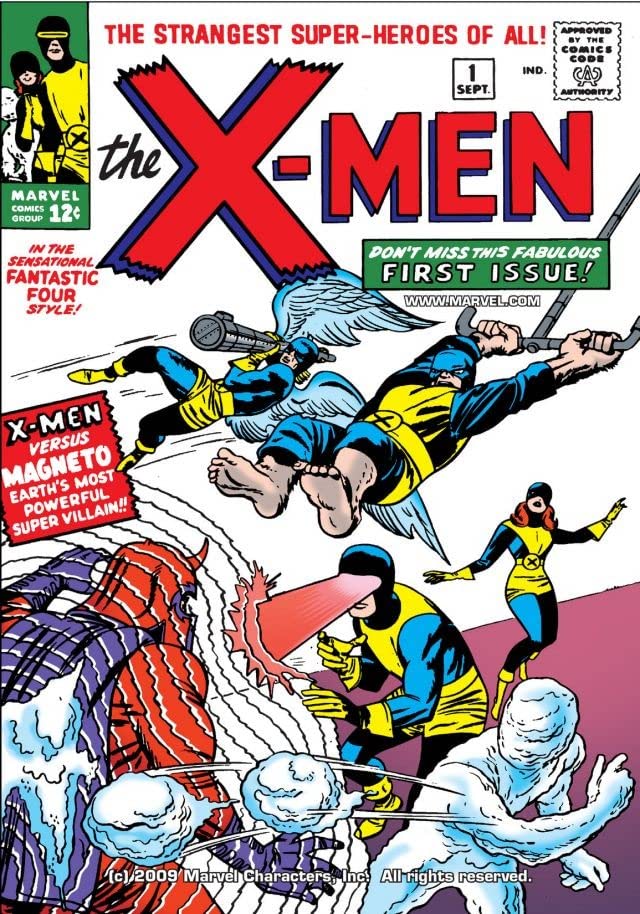
- Cover-dated September 1963, with an on-sale date of July 2, 1963; original cover price was 12 cents.
- First appearances of all five founding X-Men — Cyclops (Scott Summers, here nicknamed 'Slim'), Beast (Hank McCoy), Iceman (Bobby Drake), Angel (Warren Worthington III), and Marvel Girl (Jean Grey) — plus Professor Charles Xavier and the villain Magneto (Erik Lehnsherr), who first uses the term 'Homo superior' to describe mutants in this issue.
- Written and edited by Stan Lee, pencilled by Jack Kirby; interior inks are credited to Paul Reinman, while the cover is most consistently attributed to Sol Brodsky, though at least three different inkers have been proposed across various indexes and the credit remains disputed among researchers.
- Lee originally wanted to name the series 'The Mutants'; publisher Martin Goodman vetoed it, believing readers would not understand the word, leading Lee to coin 'X-Men' — explained in the issue itself as shorthand for 'extra power.'
- The Danger Room, the X-Men's training facility at Xavier's Westchester school, debuts here; it was Jack Kirby's specific conceptual contribution, giving the creative team a reliable action-sequence hook for future issues.
- The story's plot: Jean Grey arrives at Xavier's School as its newest student, the team trains, and the X-Men are then dispatched to Cape Citadel to stop Magneto — who has seized a military missile base — in their first field mission.
- A British price-variant edition of the issue was distributed in the United Kingdom, distinguishing it from the standard American printing.
- The issue has been reprinted extensively, including the Marvel Milestone Edition (1991), two separate Facsimile Editions from Marvel (2019 and 2023), the X-Men Omnibus, Marvel Masterworks Vol. 1, and the Penguin Classics Marvel Collection (2023); one panel from the issue also served as the source artwork for Pop artist Roy Lichtenstein's painting 'Image Duplicator.'
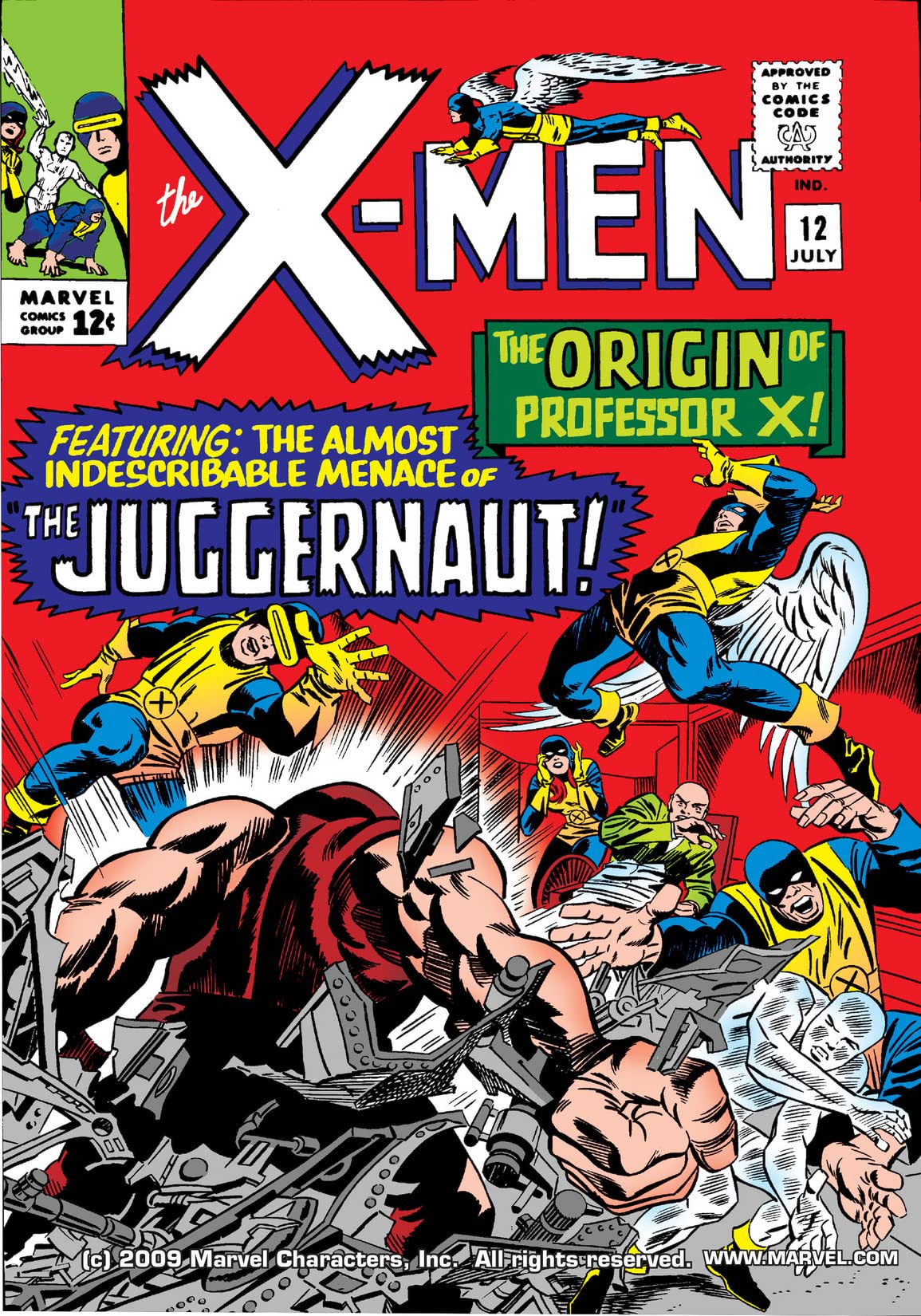
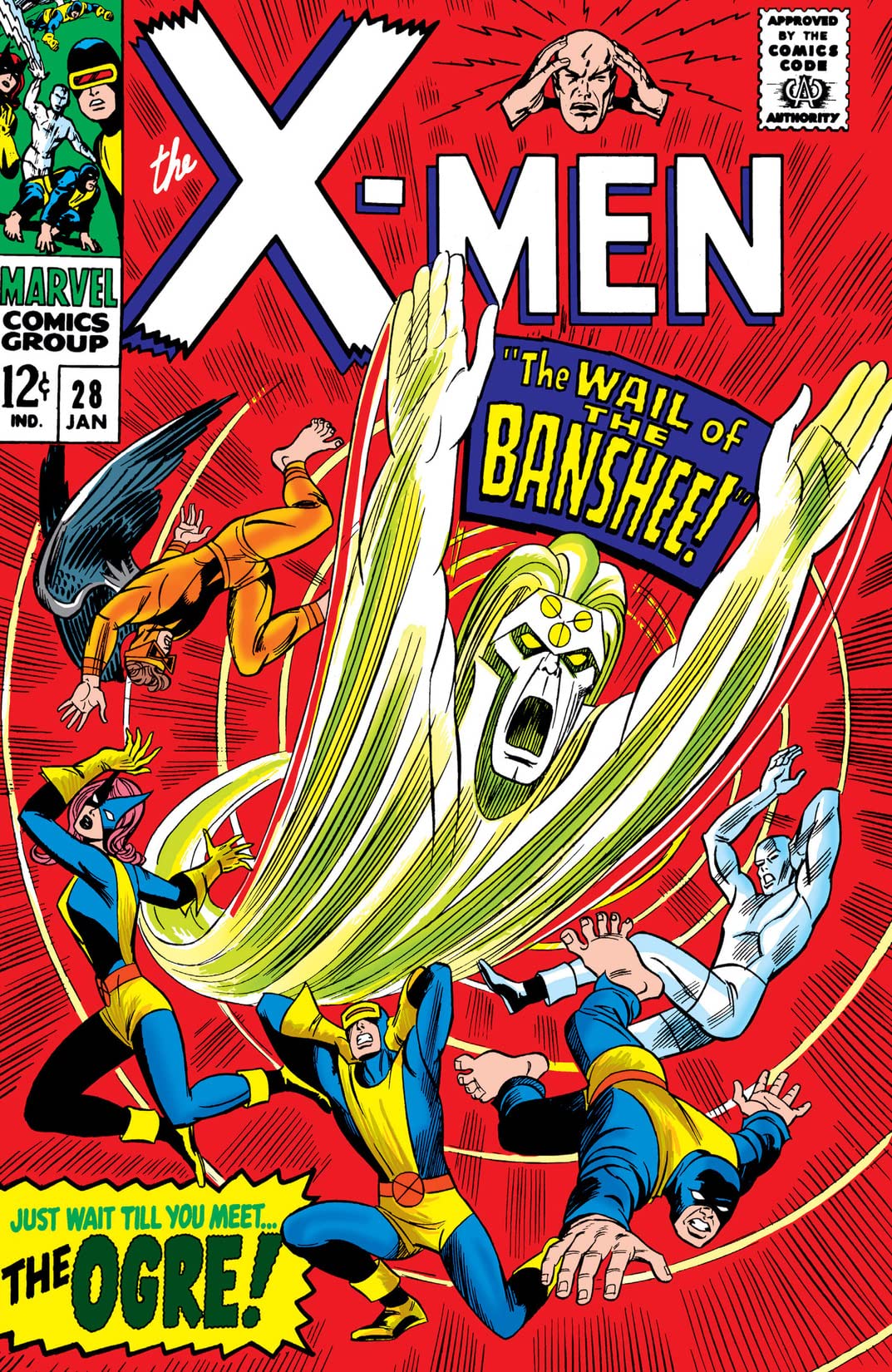
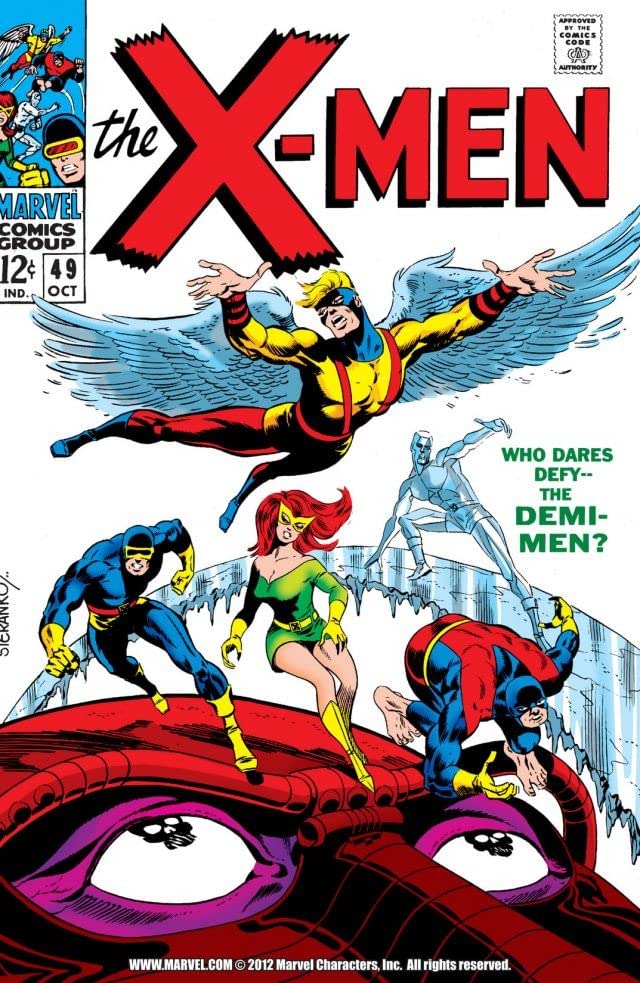
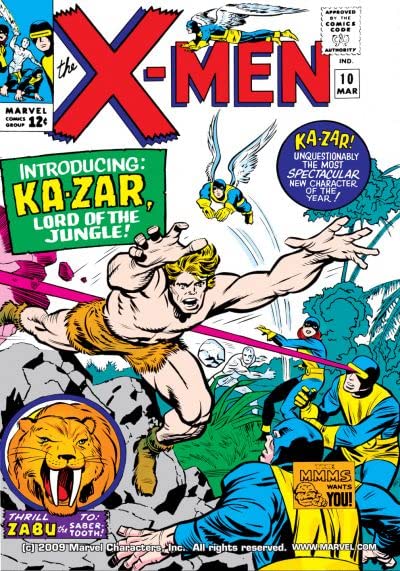
Key issues in The X-Men
Reviews
Reader reviews
No reader reviews yet.